Digital Punjab: Top IT Projects Launched by PITB
Discover how Digital Punjab is being built through PITB's groundbreaking IT projects — from e-Khidmat centers to Safe Cities and e-Rozgaar programs.
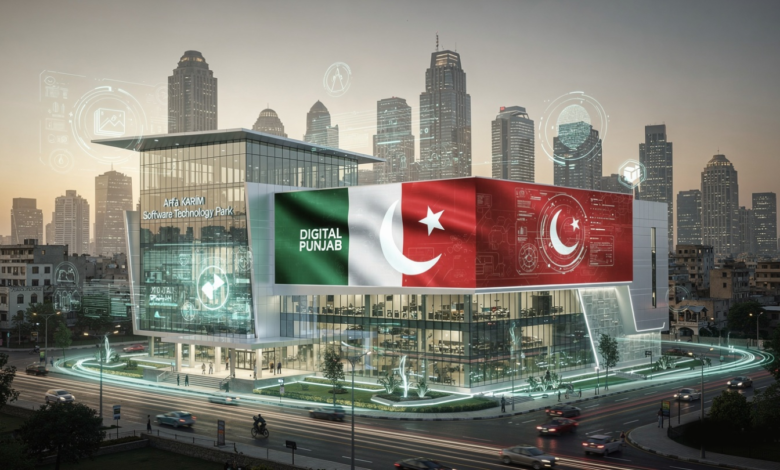
Digital Punjab is not just a slogan. It is a deliberate, years-long effort to bring technology into the everyday lives of millions of people in Pakistan’s most populous province. At the center of this work sits the Punjab Information Technology Board (PITB) — an autonomous body set up in 1999 by the Government of Punjab that has grown into one of the most productive e-governance organizations in South Asia.
Over the past decade, PITB has moved well beyond building government websites. It has digitized land records, deployed AI-powered surveillance systems, created freelancing training programs for unemployed youth, built startup incubators, and connected citizens to government services through one-window facilitation centers. The board completed over 270 IT projects between 2012 and 2017 alone — a pace that is difficult to match even in well-funded environments.
What makes PITB’s story interesting is not just the volume of projects but the variety. From healthcare to law enforcement, agriculture to education, and citizen services to entrepreneurship, PITB has touched nearly every corner of public life in Punjab. This article walks through the most significant IT projects the board has launched, explains what each one actually does, and looks at the real impact these initiatives are having on governance and the people of Punjab.
What Is PITB? A Quick Background
The Punjab Information Technology Board (PITB) is an autonomous body set up by the Government of Punjab to drive digital transformation across the province — covering health, law and order, education, agriculture, transport, and citizen services. It was founded in 1999 under the Department of Industries and later came under the Planning and Development Department of Punjab after the Information Technology Department was dissolved in 2011.
The board’s headquarters are at the Arfa Software Technology Park (ASTP) on Ferozepur Road, Lahore. PITB works directly with every major government department to design, build, and roll out ICT solutions at scale.
The common thread running through all PITB projects is the same: better public services, more transparency, and more accountability. With more technology built into day-to-day government work, Punjab is steadily moving toward one-stop shops for citizen services — something that would have been hard to imagine fifteen years ago.
Digital Punjab: Top IT Projects Launched by PITB
1. e-Khidmat Markaz — One-Window Citizen Service Centers
One of the most visible achievements under the Digital Punjab program is the e-Khidmat Markaz network. These are fully automated, one-window citizen facilitation centers across Punjab that put multiple government services under a single roof.
Almost all commonly used citizen services are now digitized through these centers — domicile certificates, birth and death certificates, driving licenses, vehicle registration, vehicle token tax, marriage and divorce certificates, and route permits. Each center delivers 17 government services within a fixed timeframe, with real-time tracking for every application.
Before these centers existed, getting a domicile certificate meant visiting multiple offices, dealing with middlemen, and waiting for weeks. Now it is one counter, one visit, one tracking number. That is what e-governance looks like in practice.

Key features of e-Khidmat Markaz:
- Single-window access to 17+ government services
- Real-time application tracking
- Biometric verification built into service delivery
- Accessible to citizens across urban and semi-urban areas of Punjab
2. Punjab Safe Cities Authority (PSCA) — Smart Surveillance and Crime Prevention
The most ambitious project connected to PITB and the Digital Punjab initiative is the Punjab Safe Cities Authority (PSCA). What started as a camera surveillance project in Lahore has grown into a province-wide smart policing platform.
PSCA deploys thousands of CCTV cameras across major cities including Lahore, Rawalpindi, and Faisalabad, monitoring public spaces around the clock. Footage is analyzed using artificial intelligence and machine learning to flag suspicious activity so law enforcement can respond faster. Emergency response systems, including smart traffic management, are tied into the same platform so police, fire, and medical units can be dispatched more efficiently.
The numbers are hard to ignore. Crime-related emergency calls in Lahore dropped by 13% in 2023. Robbery reports fell by 14% and vehicle theft by nearly 19%. Between October 2023 and September 2024, heinous crimes in Lahore fell by 39%.
In March 2024, PSCA signed an expansion agreement with the National Radio and Telecommunication Corporation (NRTC) to bring Smart Safe City projects to 18 more cities across Punjab, including Multan, Gujranwala, Bahawalpur, DG Khan, Sahiwal, Sargodha, and Jhang.
What makes PSCA technically notable:
- AI-powered ANPR (Automatic Number Plate Recognition) cameras
- e-Challan system covering 19 types of traffic violations, launched July 2024
- Machine learning-based weapon detection built in-house by the PSCA team
- Integrated Command, Control, and Communication (IC3) centers
3. e-Rozgaar Program — Digital Skills for Unemployed Youth
If PSCA represents PITB’s work in law enforcement, then e-Rozgaar represents its work in economic inclusion. This program was built to give unemployed and underemployed youth the digital skills they need to earn income through freelancing.
Training covers graphic design, digital marketing, web development, content writing, and e-commerce. Each course runs between 50 and 100 hours and focuses on practical, marketable skills rather than theory. The goal is straightforward: train someone, and they can start earning from platforms like Upwork or Fiverr within months.
The program has since grown into e-Rozgaar 2.0, expanding through partnerships with training institutions across South Punjab and smaller cities. PITB has signed agreements with universities, private institutes, Digital South Punjab, and Hunarmand Punjab to reach areas that previously had very little access to this kind of training.
Impact of e-Rozgaar:
- Thousands of trained freelancers now earning foreign exchange for Pakistan
- Partnerships with universities, private institutes, and NGOs across Punjab
- Open to all citizens of Punjab regardless of academic background
4. Global IT Certifications Program — International Credentials for Punjab’s Youth
Building on e-Rozgaar, PITB launched the Global IT Certifications Program to help young people earn internationally recognized credentials that make them competitive in the global tech job market.
Since September 2024, the program has received around 16,759 applications. Eligibility has been verified for over 9,200 candidates. The program is open to all Punjab residents regardless of academic or professional background.
The logic is simple. Many talented young people in Punjab have the skills but lack the credentials to prove it to international employers. A recognized certification from Google, Microsoft, or Cisco changes that.
5. Plan9 Incubator and Regional Expansion — Building Punjab’s Startup Ecosystem
Plan9 is PITB’s flagship technology incubation program and widely considered the largest tech incubator in Pakistan. Since launch, it has helped hundreds of startups go from idea to working product, with many of them now operating internationally.
The incubator runs on a zero equity model — startups keep full ownership of their companies. In return, they get office space, mentorship from industry professionals, access to investors, and networking through the flagship “Launchpad” events held each cohort.
The program was then scaled province-wide through Regional Plan9, which opened 9 incubation centers at public sector universities in Lahore, Dera Ghazi Khan, Bahawalpur, Faisalabad, Multan, Gujranwala, Rawalpindi, Sahiwal, and Sargodha.
What Plan9 offers startups:
- Zero equity model so founders keep full ownership
- Office space and infrastructure
- Mentorship from industry professionals
- Access to investors and markets
- Networking through “Launchpad” events each cohort cycle
6. Motor Vehicle Registration System (MVRS) — Digitizing Punjab’s Vehicle Records
One of the most practically useful collaborations between PITB and the Excise and Taxation Department is the Motor Vehicle Registration System (MVRS), which later evolved into the Motor Transport Management Information System (MTMIS).
Before this system existed, vehicle registration data in Punjab was fragmented across district offices, paper-based, and almost impossible to verify centrally. Buying a used car meant taking the seller’s word on whether the vehicle was legitimately registered and tax-paid. That created a lot of room for fraud.
PITB built a centralized, web-based registration database that connects all district Excise and Taxation offices across Punjab through a common system. The department has built a database covering 18 million motor vehicles, with all registration records, ownership histories, and tax payment statuses stored centrally and accessible online.
The Centralised Motor Vehicle Registration System (CMVRS) is now running in all 36 districts of Punjab. The Dealer Vehicle Registration System (DVRS) has been extended to dealerships so buyers can get their vehicles registered at the point of purchase rather than running to government offices separately.
What MVRS and MTMIS deliver:
- Central database of 18 million registered vehicles across Punjab
- Online vehicle verification using number plate or CNIC
- Web-based tax calculator for new registrations and post-registration transactions
- Online connectivity with Customs for verification of imported vehicles
- Data sharing with other provinces and law enforcement agencies
- Elimination of fake vehicle registrations through live web-based processing
- Mobile registration vans for efficient tax collection in the field
Citizens can now verify vehicle ownership and tax status from any internet connection before completing a purchase. Law enforcement agencies can check a plate in seconds. Token tax can be paid online. The whole system — which used to require multiple in-person visits and a lot of paperwork — is now largely digital.
7. Land Record Digitization — Property Rights for Millions
Land disputes are one of the oldest sources of conflict in South Asia. Fraudulent transfers, missing records, and corrupt middlemen have caused problems for generations. PITB’s land record digitization program tackled this directly.
Punjab has fully computerized its land revenue system, covering records for over 54 million rural land owners. More than 4.5 million property transactions have been processed through the system. Citizens can now verify and transfer ownership digitally with far less room for manipulation.
This is not just a convenience upgrade. When records are digital and auditable, the kind of manipulation that used to happen routinely in patwari offices becomes much harder.
8. e-Stamping and e-Registration — Ending the Stamp Paper Problem
Property transactions in Pakistan traditionally required physical stamp papers — a process well known for producing counterfeit documents and creating unnecessary delays. e-Stamping replaced this system entirely.
The project made multiple government agencies available both online and under one physical roof, so citizens no longer have to visit different departments to complete a single transaction. PITB has expanded e-Stamping to other provinces as well, making it one of its most replicated projects across Pakistan.
Counterfeit stamp papers are gone. Processing time is shorter. The process is now transparent in a way it simply was not before.
9. Hospital Management and Health Information Systems
Healthcare has been a consistent focus for PITB. The board has built and deployed several digital health systems across government hospitals and clinics.
PITB developed an Electronic Medical Record (EMR) and Hospital Information Management System (HIMS) for the Hepatitis Prevention and Treatment Centre at the Pakistan Kidney and Liver Institute (PKLI). The system handles patient registration, billing, pharmacy automation, waste management, payroll, and more — replacing paper records that were slow, error-prone, and hard to audit.
Across the broader health sector, PITB-built systems include the Hospital Management Information System (HMIS), e-Vaccination tracking, and Drug Regime management. These tools help doctors and administrators track patient histories, manage prescriptions, and monitor drug availability in facilities that used to run entirely on paper.
Digital health systems built by PITB:
- Hospital Management Information System (HMIS)
- Electronic Medical Records (EMR)
- Biometric Attendance System for healthcare workers
- e-Vaccination tracking
- Drug Regime management
10. School Information System (SIS) and Education Technology
Education reform has been another consistent thread in Digital Punjab, and PITB has built the digital infrastructure to support it.
PITB’s education portfolio includes the School Information System (SIS), the Online College Admission System (OCAS), the Learning Information Management System (LIMS), and the Training Information Management System (TIMS). Together these give administrators, teachers, students, and parents a connected view of educational data across Punjab.
The Punjab Education Sector Reform Program (PESRP) used technology to equip schools with digital tools and e-learning platforms. PITB’s Learning Management System (LMS) lets teachers and students access content, track academic progress, and communicate in real time.
On the admin side, an HRMS for Punjab’s education sector let teachers apply for transfers and promotions digitally — removing the bureaucratic layers that previously made those processes slow and prone to favoritism.
11. e-Pay Platform — Paying Government Dues Without the Hassle
One of the most financially significant PITB projects is the e-Pay platform — a digital payment gateway that lets citizens pay government taxes and fees online without visiting a bank or government office.
More than 21 levies and taxes have been fully digitized through e-Pay, and the Government of Punjab set a target of collecting over Rs. 350 billion through the portal. Less friction in paying government dues means fewer opportunities for cash-related corruption and better real-time data on revenue collection.
It is not the kind of project that gets headlines, but it quietly changes how government finances actually work.
12. Smart Monitoring of Development Projects (SMDP)
Accountability in government spending is a real problem in most developing countries. Money gets allocated for roads, schools, and hospitals. Projects drag on. Funds get misused. Nobody gets a clear picture of what is actually happening on the ground.
PITB’s Smart Monitoring of Development Projects (SMDP) system was built to address that. It provides real-time data on government development project progress, letting administrators and officials track timelines, spending, and physical progress through dashboards and mobile apps.
Field workers submit geo-tagged photos and progress updates from project sites, which supervisors can see immediately. Accountability that was simply not possible with paper-based reporting is now built directly into the workflow.
13. Complaint Management System (CMS) for Police
Filing a complaint at a police station in Pakistan has historically been frustrating, with real risks that complaints get suppressed, manipulated, or simply lost. PITB’s Complaint Management System digitized this process.
PITB computerized the CMS at police stations across Punjab, bringing structure to how complaints are registered, verified, and investigated. The board also built a CNIC-based system to digitize criminal records — names, photos, criminal histories — into searchable digital profiles.
Every complaint gets a tracking number. Citizens can check their complaint status without returning to the police station. That one change has meaningful implications for accountability in law enforcement.
14. Digital Services for Farmers — Agriculture Technology at Scale
PITB is building a digital system to provide essential services to 9 million farmers in Punjab — one of the largest agricultural digitization efforts in the country.
The initiative connects farmers to credit schemes, crop data systems, and government advisory services through digital platforms. Collecting essential crops data centrally also helps with better planning and food security across the province.
Rural communities have historically been last in line when it comes to digitization. This project is specifically designed to change that.
15. Punjab e-Government Portal — One Gateway for Citizens
The PITB Portal serves as a central hub for digital services, data sharing, and e-governance across Punjab. Through the portal, citizens can access government services online — applying for domicile certificates, checking land records, registering businesses, and more.
The portal also has open data dashboards showing statistics on governance, education, health, and law enforcement. This gives both policymakers and ordinary citizens a transparent look at how the province is actually performing.
The portal supports Urdu-language interfaces and mobile access, which matters enormously in a province where many people are not comfortable with English. Accessibility was built in from the start.
16. BizLinks Initiative — Connecting PITB with the Private Tech Sector
PITB’s BizLinks Initiative was launched in collaboration with private tech companies to explore partnership opportunities and improve Pakistan’s IT exports.
The idea is straightforward: government cannot build a tech ecosystem on its own. By actively partnering with private sector tech firms, PITB is creating pipelines for joint projects, talent sharing, and export-oriented IT development — all of which contribute to Pakistan’s foreign exchange earnings and long-term economic growth.
How Digital Punjab Fits Into Pakistan’s Broader Tech Ambitions
The Digital Punjab initiative connects to Pakistan’s wider national agenda of improving e-governance, growing IT exports, and expanding digital access. Punjab, with over 110 million people, is both the hardest and most impactful place to run these programs.
What PITB has shown is that government-led digital transformation is possible even in resource-constrained settings — if there is technical talent, political support, and a focus on real outcomes rather than just activity.
According to PITB’s official website, the board continues to expand its portfolio across healthcare, education, law enforcement, and citizen services, with new projects added regularly.
For a broader look at how e-governance is developing globally, the World Bank’s GovTech initiative offers useful context on what technology-driven public sector reform looks like when done well.
Challenges PITB Still Faces
No honest look at Digital Punjab is complete without acknowledging the gaps. Real challenges remain:
- Digital literacy: A large portion of Punjab’s rural population still lacks the skills or connectivity to use digital government services.
- Internet access: Reliable broadband remains inconsistent in remote districts despite overall progress.
- System integration: Many PITB projects work well on their own but are not yet connected to each other, which creates information silos.
- Sustainability: Some projects have had strong initial rollouts followed by slower maintenance and updates over time.
- Cybersecurity: As more government data moves online, the risks of breaches and vulnerabilities grow and need serious attention.
Looking ahead, PITB has plans to deepen artificial intelligence integration, explore blockchain applications, and strengthen cybersecurity across government systems. The board is also focused on data interoperability so different departments can securely share and analyze information together — a foundational requirement for smart governance.
Conclusion
Digital Punjab is one of the most sustained government-led technology programs in Pakistan’s history, and the Punjab Information Technology Board (PITB) has been the engine behind it. From the e-Khidmat Markaz network that put 17 government services under one roof, to the Punjab Safe Cities Authority that used AI to cut serious crime in Lahore by 39%, to the Motor Vehicle Registration System (MVRS) that built a centralized database of 18 million vehicles for the Excise and Taxation Department, to the e-Rozgaar program that has trained thousands of young people for careers in the global digital economy, PITB has shown that meaningful e-governance is achievable even in complex, resource-constrained environments. The board’s work on land record digitization, e-Pay, e-Stamping, Plan9, health systems, and education technology adds up to a province genuinely moving toward digital governance — not just in policy documents but in the daily lives of ordinary citizens. The road ahead is long, with digital literacy gaps, connectivity challenges, and integration work still to be done, but the foundation PITB has built over more than two decades is real, and the Digital Punjab vision is closer to an everyday reality than at any point before.