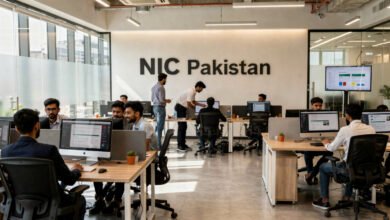
How to apply for Plan9 startup incubator in Pakistan is one of the most searched questions among Pakistani entrepreneurs, and it is not hard to see why. Plan9 is the country’s largest and longest-running technology incubator, run by the Punjab Information Technology Board (PITB), and it has helped launch more than 160 startups since it began in 2012. If you have a tech idea and no idea how to fund the early stages, Plan9 offers something rare: free office space, a monthly stipend, mentorship, and zero equity taken in return.
But here is the catch. Getting into Plan9 is not as simple as filling out a form. The process runs through a flagship event called The Launchpad, a multi-stage pitch competition held across several Pakistani cities, and only a small fraction of applicants make it through to the final incubation cohort. Founders who go in without understanding the eligibility rules, the pitch format, and what judges are actually looking for tend to get eliminated early, often for avoidable reasons.
This guide walks you through everything you need to know to apply for Plan9 incubation in 2026: who is eligible, how the Launchpad selection process works, what documents and pitch materials you need to prepare, and the mistakes that knock most applicants out before they even reach the final round. Whether you are a fresh graduate with an MVP or a small team already testing a product in the market, this is the roadmap.
What Is Plan9 and Why It Matters for Pakistani Startups
Plan9 is a project of the Punjab Information Technology Board (PITB), founded in August 2012 with the explicit goal of building a sustainable entrepreneurial ecosystem in Pakistan. It is housed on the 9th floor of the Arfa Software Technology Park in Lahore, and it operates as a government-funded, zero-equity tech incubator—meaning Plan9 takes no ownership stake in any startup it supports.
Each incubation cycle at Plan9 runs for six months, and the program inducts new cohorts twice a year. Over more than a decade, Plan9 has graduated over 160 startups across 10-plus cycles, with alumni companies collectively valued at roughly $70 million and having raised more than $2.5 million in follow-on investment.
What makes Plan9 attractive compared to private accelerators is simple: no equity, no upfront fees, and direct government backing. For early-stage founders who do not want to give away ownership before they have even validated their product, this is a meaningful advantage over many private-sector alternatives.
What Plan9 Offers Incubated Startups
Before getting into the application process, it helps to understand exactly what you are applying for. Plan9’s incubation services typically include:
- Free office space at Arfa Software Technology Park for the full six-month cycle, including uninterrupted electricity and high-speed internet
- Monthly stipends to help cover basic operating costs during incubation
- Mentorship and capacity-building workshops run by Plan9’s team and its alumni network
- Legal and marketing advisory support for early-stage operational needs
- Access to the Plan9 Angel Investors Club, giving incubated startups a direct channel to pitch for funding
- Hiring assistance, helping startups recruit interns and team members through Plan9’s network
- Domain-specific networking with national and international partner organizations
It is worth being clear about one thing: Plan9 does not provide direct financial funding to startups. Instead, it creates the conditions and connections that make it easier to raise funding elsewhere, primarily through its angel investor network.
Eligibility Criteria: Who Can Apply for Plan9 Startup Incubator
This is where most applicants either qualify or get filtered out immediately, so read this section carefully.


Core Eligibility Requirements
To apply for Plan9 incubation in Pakistan, your startup and team generally need to meet these conditions:
- Pakistani nationality – All team members must be Pakistani nationals.
- Minimum age of 18 years – Every team member applying must be at least 18 years old.
- Technology component is mandatory – Your startup idea must have a clear tech element, regardless of which industry or sector it falls under (fintech, edtech, agritech, healthtech, e-commerce, and so on all qualify, as long as technology is core to the solution).
- Minimum team size of two – At least two committed team members are required, structured around a clear leadership split.
- CEO and CTO requirement – Plan9 specifically looks for a strong, self-motivated, and skillful team that includes at least one CEO (Chief Executive Officer) and one CTO (Chief Technical Officer). This requirement reflects Plan9’s emphasis on having both business leadership and technical execution capability within the founding team.
- Full-time commitment – Founders should not be employed elsewhere during the incubation period. Plan9 expects founders to commit to working on their startup full-time (typically 9 AM to 5 PM) at the incubator facility throughout the six-month cycle.
- Willingness to relocate to Lahore – Since the physical incubation facility is based at Arfa Software Technology Park in Lahore, all team members of a selected startup need to be physically present at the facility during office hours on working days. For applicants from other cities, this means planning for relocation if selected.
- Team size limit – Startup teams can typically include up to five members.
Who Should Apply
Plan9 is designed for early-stage, product-based tech startups—not service-based businesses or freelance consultancies. If your idea involves building an actual product (whether software, hardware, or a hybrid), and you have not yet scaled to the point of being self-sustainable, Plan9’s incubation model is built for you. This includes:
- Fresh graduates with a validated idea or working prototype
- Small teams already building an MVP (Minimum Viable Product)
- Early-stage founders who have informal traction but lack structured mentorship and resources
Step-by-Step: How to Apply for Plan9 Startup Incubator
Now let’s get into the actual Plan9 application process.
Step 1: Watch for the Launchpad Announcement
Plan9 does not accept incubation applications on a rolling basis. Instead, applications open roughly one month before each new incubation cycle begins, tied to Plan9’s flagship recruitment event called The Launchpad. Keep an eye on Plan9’s official website and social channels (Facebook, LinkedIn, Instagram) for the announcement of each new Launchpad cycle, since this is when the application window opens.
Step 2: Fill Out the Online Application Form
Once a Launchpad cycle is announced, the online application form becomes available under the “Apply Now” or “Launchpad” section of Plan9’s website. The form typically asks for:
- Basic startup and founder information
- A description of your product or service idea
- Details about the technology component of your solution
- Team composition (confirming you have a CEO, CTO, and any additional members)
- Your target market and the problem you are solving
- Any traction, prototypes, or existing user data you can show
Take your time on this form. It is the first filter, and a vague or generic submission can eliminate you before you ever get a chance to pitch in person.
Step 3: Wait for Shortlisting
After the application deadline closes, Plan9’s evaluation team reviews submissions and shortlists candidates to participate in the city rounds of The Launchpad. Shortlisted teams are notified and invited to attend an in-person event in one of the participating cities.
Step 4: Attend the Launchpad City Round (Day 1 – Elevator Pitch)
The Launchpad is typically held across multiple cities in Pakistan, including Lahore, Karachi, Islamabad, and additional cities depending on the cycle (past cycles have included Faisalabad as well). The event usually runs across two days:
- Day 1: Elevator Pitch Round – Shortlisted applicants deliver a short elevator pitch to a panel of judges, followed by a brief Q&A session. Judges score each pitch, and results are announced the same day.
Step 5: Mentoring and Prototype Development (Day 2)
Teams that pass Day 1 move on to Day 2, where they receive focused mentoring from Plan9’s team and industry experts. This session is designed to help you refine your business idea, tighten your pitch, and—if needed—develop or improve a working prototype ahead of the final presentation.
Step 6: Final Presentation and Selection
After mentoring, shortlisted teams deliver a more developed final presentation, which is again evaluated by a panel of judges. Based on these scores, the highest-performing teams are selected to join the incubation cohort. Historically, Plan9 inducts around 15 startups per cycle through this competitive process.
Step 7: Onboarding into the Six-Month Incubation Cycle
Selected startups officially begin their six-month incubation cycle at Arfa Software Technology Park in Lahore. From this point, founders relocate (if necessary), commit to full-time hours at the facility, and begin working with Plan9’s mentorship, legal, and marketing support structure.
What Judges Look for During the Launchpad Pitch
Understanding the evaluation criteria can significantly improve your odds. Based on Plan9’s stated priorities and consistent patterns across cycles, judges generally weigh:
- Clarity of the problem being solved – Can you explain, in under a minute, the specific pain point your product addresses?
- Strength of the technology component – Is the tech central to your solution, or is it a thin layer on top of a non-tech business model?
- Team composition and capability – Do you have a credible CEO and CTO split, with relevant skills to actually execute?
- Market potential – Is there a realistic, sizable market for what you are building in Pakistan or beyond?
- Commitment level – Are you prepared to work on this full-time for six months, including relocating if needed?
- Early traction or proof of concept – Even informal traction (early users, a working prototype, pilot customers) makes a meaningful difference.
Common Mistakes That Get Applicants Rejected
If you want to get selected for Plan9 incubation, avoid these frequent missteps:
- Vague problem statements – Pitches that cannot clearly articulate the specific problem being solved tend to lose judges’ attention within the first thirty seconds.
- Weak or missing technical co-founder – Teams without a credible CTO often struggle to convince judges they can actually build and maintain the product.
- Underestimating the commitment requirement – Some applicants assume they can balance Plan9 with another job. This directly conflicts with eligibility expectations and can disqualify a team.
- Service-based business models disguised as tech startups – Plan9 is built for product-based startups. Agencies, consultancies, and pure service businesses generally do not fit the model, even if they use some technology internally.
- Ignoring the relocation requirement – Founders from outside Lahore sometimes apply without fully planning for the relocation commitment, which becomes a problem if selected.
- Poor pitch structure – Rambling through background information instead of leading with the problem, solution, and market opportunity wastes valuable pitch time.
- No supporting materials – Teams that show up without even basic visuals, mockups, or a working demo struggle to stand out against teams that do.
Tips to Strengthen Your Plan9 Application
A few practical recommendations that consistently help applicants improve their chances:
- Build a working prototype before applying, even a rough one. Judges respond far better to something tangible than to a slide deck of promises.
- Practice your elevator pitch out loud, repeatedly, with people outside your immediate team who can give honest feedback.
- Be specific about your target market—”everyone in Pakistan” is not a target market. Define a clear, addressable customer segment.
- Bring your CEO-CTO dynamic into the pitch itself—judges want to see that the technical and business sides of the team genuinely understand and complement each other.
- Research past Plan9 alumni startups to understand the kind of ideas and sectors that have historically succeeded in the program.
- Apply early in the application window rather than waiting until the deadline, giving yourself buffer time to fix form errors or gather missing materials.
Plan9 vs Other Pakistani Startup Incubators
It is worth understanding how Plan9 compares to other incubation options in Pakistan before committing your application effort:
| Feature | Plan9 | Private Accelerators (general) |
|---|---|---|
| Equity taken | None (zero-equity) | Often 5–10% |
| Funding provided | No direct funding; investor access only | Sometimes direct seed funding |
| Location requirement | Lahore-based, physical presence required | Varies, sometimes remote-friendly |
| Cost to apply | Free | Usually free, but equity cost |
| Cycle length | 6 months | Varies (3–6 months typical) |
| Government backing | Yes (PITB, Punjab Government) | No, privately funded |
For founders who specifically want to avoid giving up equity in the earliest stage of their company, Plan9’s model is hard to match within Pakistan’s startup ecosystem.
Beyond Incubation: Plan9’s Additional Programs
If the core six-month incubation cycle does not fit your current stage, Plan9 also runs related initiatives worth knowing about:
- Plan9 Fellowship – An internship program allowing students to work directly with Plan9’s management team and its incubated startups, useful for building experience and networks before launching your own venture.
- Network Partner Program (NPP) – An initiative to establish technology-based incubators in partnership with universities and institutions across Pakistan, extending Plan9’s model beyond Lahore.
- WhizKids Initiative – A youth-focused program aimed at building early entrepreneurial and tech thinking among younger students.
- Expo Day – An open event where startups from across Pakistan showcase their products, useful for visibility even outside the formal incubation track.
These programs can serve as useful stepping stones if your idea is not yet mature enough for full incubation, or if you simply want exposure to Plan9’s ecosystem before formally applying.
Frequently Asked Questions About Applying to Plan9
Does Plan9 charge any fees to apply or join the incubation program? No. Plan9 is funded by the Government of Punjab and does not charge fees or take equity from incubated startups.
Can applicants from outside Lahore apply? Yes. Plan9 is a nationwide initiative, and Launchpad rounds are held in multiple cities including Karachi and Islamabad. However, if selected, all team members must relocate to Lahore for the duration of the six-month incubation cycle.
How many startups get selected per cycle? Plan9 typically inducts around 15 startups per incubation cycle through the Launchpad competition.
Is funding provided directly by Plan9? No. Plan9 does not provide direct financial funding, but it connects incubated startups to its Angel Investors Club and other potential investor channels.
What happens after the six-month incubation cycle ends? Graduating startups become part of the Plan9 Alumni Network, which continues to offer connections, mentorship opportunities, and visibility within Pakistan’s startup ecosystem long after the formal incubation period ends.
Why This Matters for Pakistan’s Startup Ecosystem
Pakistan’s tech startup scene has grown substantially over the past decade, and institutions like Plan9 have played a foundational role in that growth by lowering the barrier to entry for early-stage founders. According to data from organizations like the Global Entrepreneurship Monitor, early-stage entrepreneurial activity tends to scale fastest in ecosystems with strong public-private support structures—exactly the role Plan9 plays through its government-backed, zero-equity model. For founders evaluating their options, resources like the Punjab Information Technology Board’s official site provide ongoing updates on Plan9 cycles, application windows, and related entrepreneurship initiatives across the province.
Conclusion
Applying for Plan9 startup incubator in Pakistan is a structured, competitive process built around the flagship Launchpad event, and success depends heavily on meeting Plan9’s eligibility criteria, particularly around team composition, full-time commitment, and the strength of your technology component. From the moment applications open through the elevator pitch round, mentoring day, and final selection, founders who walk in with a validated idea, a credible CEO-CTO team, and a clear, well-rehearsed pitch consistently perform better than those who treat the process casually. With zero equity taken, free office space, monthly stipends, and direct access to angel investors, Plan9 remains one of the most founder-friendly paths into Pakistan’s startup ecosystem—provided you understand exactly what the program expects and prepare accordingly before the next Launchpad cycle opens.