How to Join NIC Pakistan to Launch Your Startup: Complete Guide (2026)
How to Join NIC Pakistan: a real, no-fluff walkthrough of eligibility, the application, pitch decks, and what happens after.
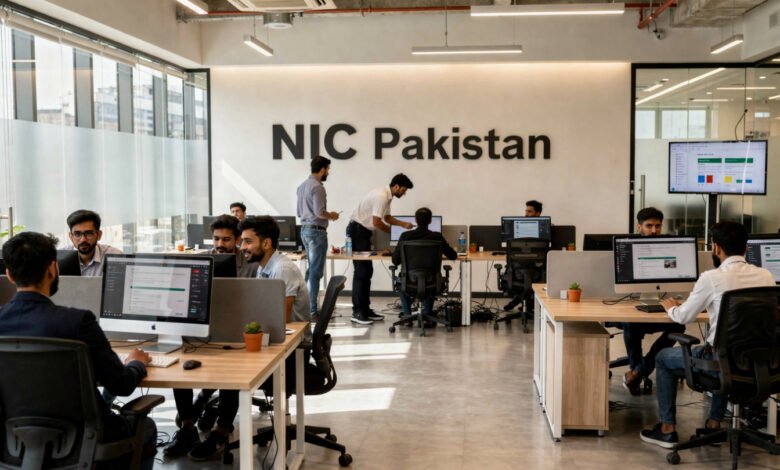
If you’ve spent any time around Pakistan’s startup scene, you’ve probably heard founders talk about NIC Pakistan the way people talk about a turning point. Not because it hands out magic, but because it removes a few of the biggest obstacles early founders face: no office, no mentors, no warm intros to investors, and no idea how to structure a business that can actually scale. The National Incubation Center network, funded by Ignite (the National Technology Fund) and the Ministry of IT and Telecommunication, was built to fix exactly that.
Here’s the thing though: knowing NIC exists and knowing how to actually get in are two different problems. Every cohort, hundreds of founders submit applications and most get turned down, not because their ideas are bad, but because they didn’t understand what the selection committees are actually looking for, or they applied to the wrong center, or their pitch deck fell apart under basic questions.
This guide walks through the entire process of joining NIC Pakistan in 2026: which centers exist, who qualifies, how the cohort cycle works, what your application needs to include, and what life looks like once you’re accepted. Whether you’re a university student with a rough idea or a founder already testing a product, this is the realistic, step-by-step version of how it works.
What is NIC Pakistan and Why It Matters for Startups
NIC Pakistan refers to the National Incubation Center network, a group of government-backed startup incubators spread across major Pakistani cities. Each center operates somewhat independently, with its own management partner and sector focus, but they all share the same backbone: funding from Ignite under the Ministry of IT and Telecom, and a mission to help early-stage Pakistani startups survive their hardest years.
The first NIC opened its doors in Islamabad back in 2016, and the model proved successful enough that the government expanded it into a nationwide network. Today there are centers operating in Islamabad, Karachi, Lahore, Peshawar, Quetta, Faisalabad (agritech-focused), Hyderabad, and a newer aerospace and deep-tech-focused center called NICAT in Rawalpindi, among others. Each one runs its own cohorts, but the underlying offer is consistent.
What NIC Actually Provides
When people ask what they “get” from NIC, the honest answer is a combination of practical support and access, not a guaranteed check. Typical benefits across centers include:
- Free co-working space for up to a year, which matters more than it sounds when you’re bootstrapping
- Mentorship from founders, industry experts, and operators who’ve actually built and scaled companies
- Access to investors and corporate partners for pilot projects, funding conversations, and market validation
- Structured curriculum covering everything from legal registration to go-to-market strategy
- Pitch events and Demo Days where startups present to investors and media
- Connections to global programs like Founder Institute, MassChallenge, and various accelerator partnerships
- Cloud credits, legal advisory, and operational support so founders can focus on the product instead of paperwork
None of this costs the startup money. The incubation programs are fully funded by Ignite, which is one reason competition for spots is intense.
Why Founders Choose NIC Over Private Incubators
There’s no shortage of accelerator programs in Pakistan now, so it’s fair to ask why NIC Pakistan specifically is worth the application effort. A few reasons keep coming up when you talk to founders who’ve gone through it.
First, it’s free. Most private accelerators in Pakistan and internationally take equity or charge fees. NIC programs don’t require startups to give up equity to join, which matters a lot at the pre-seed stage when every percentage point counts.


Second, the network effect is real. With over a decade of operation and thousands of startups incubated across the country, NIC alumni networks include some of Pakistan’s better-known startups in fintech, healthtech, and e-commerce. That alumni density means warm introductions are easier to come by once you’re in.
Third, it’s government-backed, which opens doors that private programs sometimes can’t. Pilot projects with public sector partners, access to state-owned enterprises, and credibility with conservative investors all become more accessible once “NIC-incubated” is on your pitch deck.
NIC Pakistan Locations: Choosing the Right Center
This part trips up a lot of first-time applicants. NIC isn’t a single building, it’s a network, and which NIC center you apply to can affect your odds and your experience.
Major NIC Centers in Pakistan
- NIC Islamabad is the original center and tends to attract the broadest mix of startups across sectors, with strong corporate partnerships through groups like Telenor, Hashoo Group, and Fauji Foundation.
- NIC Karachi, run in partnership with NED University, brands itself as Pakistan’s largest tech incubator and has run well past its 15th cohort, with a heavy focus on tech-driven, scalable businesses.
- NIC Lahore has built a strong reputation for being accessible to younger, first-time founders. Notably, more than 60% of one recent cohort’s accepted startups came from university students or recent graduates, which tells you the bar isn’t only about prior business experience.
- NIC Peshawar focuses on building out the entrepreneurial ecosystem in Khyber Pakhtunkhwa and has run dozens of cohorts, with particular interest in startups tackling regional problems in healthcare, logistics, and digital services.
NIC Faisalabad (NICF) is Pakistan’s dedicated agritech incubator, run in partnership with Fauji Fertilizer Company. If your startup touches agriculture, food supply chains, or rural commerce, this is the center built specifically for you, and it also runs a SheVentures track for women-led startups.
NIC Hyderabad serves Sindh’s interior and has been building corporate and investor visibility for startups that might otherwise struggle to get noticed outside Karachi.
NICAT (National Incubation Center for Aerospace Technologies), housed at NASTP Alpha in Rawalpindi, is the newest and most specialized addition, built specifically for deep-tech, aerospace, defense, and hardware-driven startups, in partnership with NETSOL, Air University, and the Pakistan Aeronautical Complex.
How to Decide Which One to Apply To
A few practical questions help narrow it down:
- Does your sector match a specialized center? Agritech founders should look hard at NICF; aerospace or deep-tech founders belong at NICAT.
- Where can you realistically show up? Co-working space and mentorship only help if you can actually use the physical space regularly, especially in the early months.
- Which center’s cohort timeline fits your readiness? Application windows don’t always align, so check each center’s current cycle before committing your prep time to one.
You can apply to more than one center if your startup genuinely fits multiple categories, but tailor each application rather than submitting identical copies.
Eligibility Criteria: Who Can Join NIC Pakistan
Eligibility details shift slightly between centers, but the core requirements are consistent enough to plan around.
General Requirements
- An innovative, scalable business idea. Local service businesses with no differentiation rarely make it through; the committees are looking for something that could realistically grow beyond one city or one founder’s bandwidth.
- Some proof of concept. This can be an idea backed by research, a working prototype, a minimum viable product (MVP), or an already-revenue-generating product. The further along you are, the stronger your application, but pure idea-stage founders aren’t automatically disqualified, especially at centers known for supporting early founders.
- A committed founding team. NIC programs expect founders to show up. If you’re treating this as a side project with no real time commitment, it will show in the interview.
- Valid identification documents, including your CNIC, since these are government-funded programs with formal compliance requirements.
- Willingness to register the business, typically with the Securities and Exchange Commission of Pakistan (SECP), either before or shortly after incubation.
Who Tends to Get Accepted
Looking at recent cohort data, the founders who make it in usually share a few traits: they can clearly explain the problem they’re solving in one or two sentences, they understand who their customer actually is (not a vague “everyone”), and they’ve done at least some basic market validation before applying. University students and recent graduates make up a significant share of accepted founders at several centers, so age or work experience alone isn’t a barrier.
Step-by-Step: How to Apply to NIC Pakistan
Here’s the practical sequence most founders follow, regardless of which center they’re targeting.
Step 1: Identify the Right Cohort and Deadline
NIC centers run on a cohort basis, meaning applications open during specific windows rather than year-round. Visit your chosen center’s official website (for example, nicislamabad.com, nickarachi.com, nicpeshawar.pk, or nicfaisalabad.com) and check the current application deadline before you start preparing documents. Missing the window means waiting for the next cycle, which can be several months away.
Step 2: Prepare Your Business Documentation
Before touching the application form, get these ready:
- A clear, one-paragraph description of the problem and your solution
- Market research or evidence of demand, even informal customer interviews count
- Your team structure and each founder’s role
- Financial projections or at least a rough revenue model
- Your CNIC and any existing business registration documents
Step 3: Build Your Pitch Deck
Every NIC center requires a pitch deck as part of the application, and several offer templates and video guides specifically for this step. Your deck should cover the problem, your solution, market size, business model, traction (if any), team, and what you’d do with incubation support. Keep it tight. Selection committees review dozens of decks per cohort and reward clarity over polish.
Step 4: Complete the Online Application Form
Most centers run their applications through an online portal. Note that some forms reveal additional fields as you fill out earlier sections, so allow more time than you’d expect, and don’t try to rush through it in one sitting. You’ll typically need your logo ready, your pitch deck uploaded, and in some cases a short video pitch submitted alongside the form.
Step 5: Submit and Wait for Shortlisting
Once submitted, applications go through an internal review. Centers shortlist startups that meet the eligibility criteria and show genuine potential, then invite them to the interview stage.
Step 6: The Pitch Interview
Shortlisted founders present to a selection committee, typically in a five-minute pitch followed by questions. This can happen in person or virtually depending on the center and your location. Be ready for direct, sometimes tough questions about your numbers, your competition, and why you specifically should get a spot.
Step 7: Result Announcement and Onboarding
Selected startups are notified and placed into the appropriate track, which might be the main Incubation Program, a Hatchery Program for very early-stage ideas, or a specialized track like SheVentures for women-led startups at NICF.
What Happens After You’re Accepted
Getting in is the milestone everyone talks about, but the real work starts after acceptance. Most NIC programs run on a structured timeline.
The Incubation Cycle
A typical cycle runs around one year, often split into two halves. The first phase focuses on building, meaning training, mentorship, prototyping, and hitting early milestones. The second phase shifts toward growth, covering market entry, partnerships, fundraising readiness, and culminating in a public Demo Day where startups pitch to investors and media.
Ongoing Support
Throughout the program, expect regular mentorship sessions, access to expert-led workshops, opportunities for corporate pilot projects, and help with practical operational needs like legal compliance and marketing strategy. Several centers also connect founders with international exchange programs and pitch competitions, giving startups exposure beyond Pakistan’s domestic market.
Graduation
At the end of the cycle, startups go through a graduation assessment based on predetermined performance indicators. Graduating doesn’t mean the relationship ends. NIC alumni networks remain active long after founders leave the physical incubation space, and many graduated startups continue showing up at NIC events as mentors or partners for the next cohort.
Common Reasons Applications Get Rejected
It’s worth being honest about this part, since most of the advice online glosses over it. Common reasons applications don’t make it past the first round include:
- A vague or generic business idea with no clear differentiation
- A poorly formatted or rushed pitch deck
- No demonstrated problem-solution fit, meaning the founder hasn’t clearly shown that real people have this problem
- Missing or incomplete documents
- A team that seems uncommitted or unclear on roles
If you’ve been rejected before, the fix usually isn’t a flashier pitch deck. It’s tightening the actual logic of the business: who has this problem, how big is it, why now, and why you.
Tips to Strengthen Your Application
A few things consistently improve a founder’s odds, based on patterns across successful applicants:
- Apply to the center that actually fits your sector. A generic tech startup applying to NICAT’s aerospace-focused program is wasting a slot that could go to a better fit.
- Show traction, even small traction. A handful of paying customers or a working waitlist beats a polished slide with zero proof.
- Practice your pitch out loud before the interview. Committees notice when founders haven’t rehearsed answering basic questions about their numbers.
- Be specific about funding use. “We’ll use the funding to grow” tells the committee nothing. “We’ll use the workspace and mentorship to validate our pilot with two corporate partners before our next funding round” tells them everything.
- Don’t oversell. Selection committees have seen thousands of pitches. Founders who are honest about risks and unknowns tend to come across as more credible than those promising unrealistic growth.
For founders who want a deeper technical breakdown of registering a business in Pakistan alongside the incubation process, the Securities and Exchange Commission of Pakistan maintains official guidance on company registration requirements that pairs well with your NIC application timeline. It’s also worth reviewing Ignite’s official incubation overview to understand how the funding and governance structure behind NIC actually works before you apply.
Frequently Asked Questions
Is there a fee to join NIC Pakistan?
No. NIC incubation programs are fully funded by Ignite and the Ministry of IT and Telecom, so there’s no cost to apply or participate, and startups don’t give up equity to join.
Can I apply if I only have an idea, with no prototype?
Yes, at several centers, particularly through Hatchery Programs designed for very early-stage ideas. That said, having even a rough prototype or evidence of demand significantly strengthens your application.
How long does the application process take?
From submission to a final decision, the process usually takes two to four weeks, though this varies by center and cohort deadlines.
Can university students apply?
Yes. In fact, university students and recent graduates make up a large share of accepted founders at several centers, including NIC Lahore.
Do I need to be registered with the SECP before applying?
Not necessarily before applying, but most programs expect startups to formally register during or shortly after incubation.
Conclusion
Joining NIC Pakistan isn’t complicated once you understand the actual mechanics: pick the right center for your sector, prepare a tight and honest pitch deck, apply within the cohort window, and walk into your interview ready to answer hard questions about your business rather than just your vision. The network spans Islamabad, Karachi, Lahore, Peshawar, Faisalabad, Hyderabad, and specialized centers like NICAT, each offering free workspace, mentorship, and investor access funded entirely by Ignite and the Ministry of IT and Telecom. The founders who get in aren’t necessarily the ones with the most polished ideas, they’re the ones who can clearly show a real problem, a credible plan, and a team committed enough to follow through. If you’ve got that, the application process is just a matter of timing it right and putting in the prep work.