Are Local Smart TVs a Good Alternative to Samsung and LG
Local smart TVs vs Samsung and LG on price, picture quality, software, warranty, and privacy, with real lawsuits and malware cases buyers should know.
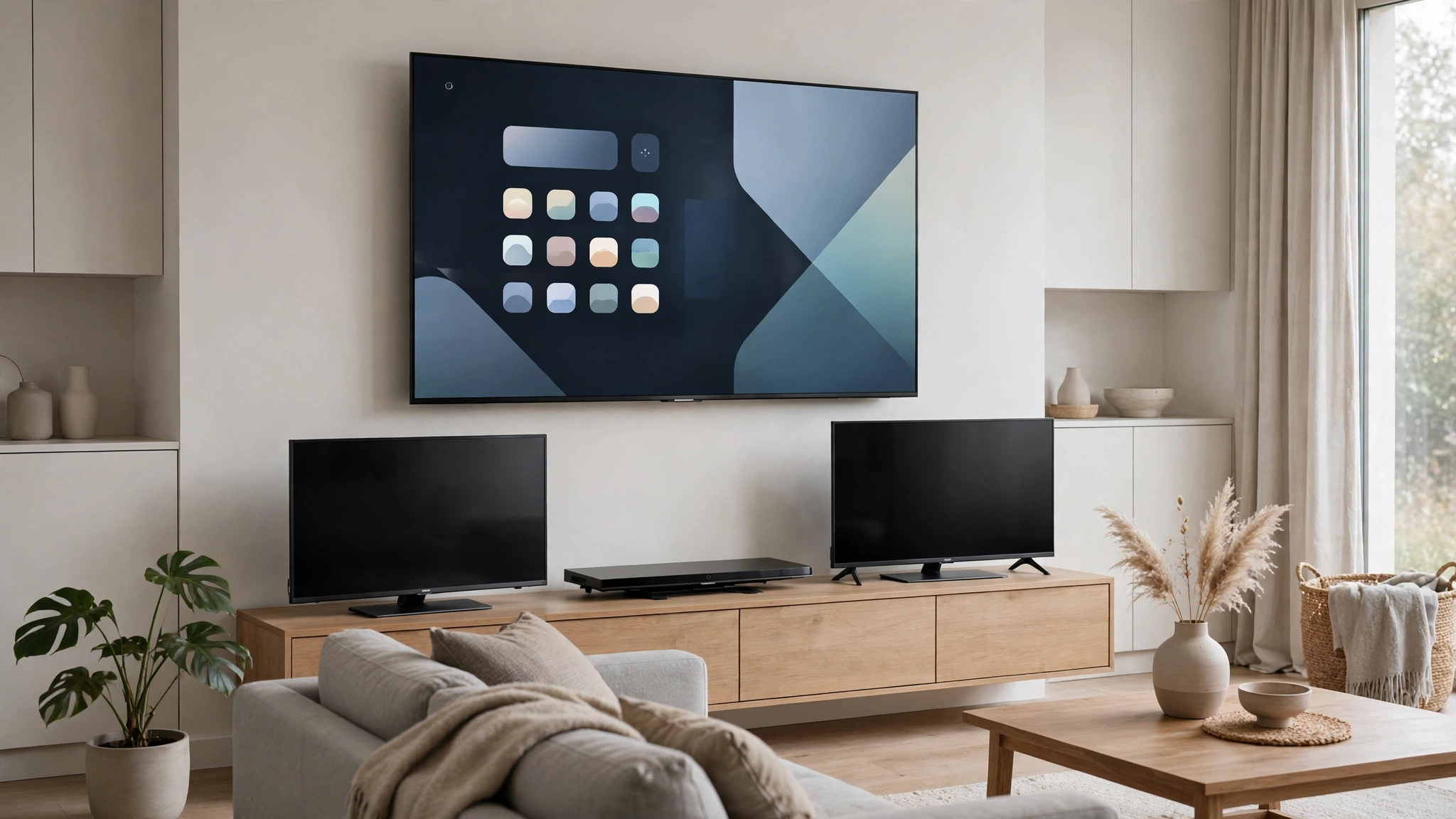
Local Smart TVs vs Samsung and LG: 7 Honest Truths That Could Save You Money
Introduction
Local smart TVs have quietly taken over Pakistani living rooms. Walk into any electronics market and you’ll see EcoStar, Orient, Haier, TCL, and Changhong Ruba stacked far higher than Samsung or LG. The reason is simple. A locally assembled 55-inch 4K smart TV often costs less than a smaller Samsung, and for many families that difference is a month’s grocery budget.
But is cheaper actually better value? The honest answer depends on what you watch, how long you plan to keep the TV, and how much you care about things you can’t see in a showroom, like software updates, data collection, and after-sales support.
This article compares local and locally assembled brands with Samsung and LG on the things that matter after the box is opened: picture quality, smart software, durability, warranty, and privacy. It also looks at real cases that most TV reviews ignore. The biggest brands in the world, including Samsung and LG, are currently facing a lawsuit in Texas over alleged viewing-data collection. The FBI has warned about malware preinstalled on cheap, uncertified Android TV devices. And Pakistan has a long history of smuggled TV sets undercutting legal sellers.
None of this means you should avoid any particular brand. It means you should choose with your eyes open. By the end, you’ll know which type of TV suits your budget and needs, and which warning signs to watch for before you pay.
What Counts as a Local Smart TV in Pakistan?
The term local smart TVs covers more than one type of brand, and it helps to separate them:
- Pakistani brands: EcoStar, Orient, PEL, and similar companies that design, source, and assemble TVs for the local market.
- International brands assembled locally: TCL, Haier, Hisense, and Changhong Ruba, which are foreign-owned but assemble TVs inside Pakistan.
- Partnership brands: For example, Orient Electronics partnered with SKYWORTH China to launch SKYWORTH Pakistan, with local manufacturing, sales, and after-sales support handled locally.
- Fully imported brands: Samsung, LG, and Sony, which are generally imported as finished products.
Local assembly has been the norm for years. Back in 2018, a Hisense executive said the Pakistani TV market was 1.4 million units per year, with local assembly accounting for 1.2 million units and the rest imported.
Who Actually Leads Pakistan’s TV Market?
Many people assume Samsung and LG dominate. The data says otherwise. A March 2026 sector report by credit rating agency PACRA lists TCL, Haier, EcoStar, and Pak Elektron as the named players in its LED TV market share chart, with TCL holding by far the largest share at roughly 44 to 45 percent across 2023 and 2024. Samsung and LG don’t appear as separate entries in that TV chart at all. You can review the figures in PACRA’s household appliances sector report.
This matters because it tells you something about support. A brand with a large market share usually has more service centers, more spare parts, and more technicians who know its products. In Pakistan, that advantage often belongs to locally assembled brands rather than imported ones.

Truth 1: Local Smart TVs Win Clearly on Price
Price is the biggest reason people choose local smart TVs. Locally assembled brands avoid some of the duties and shipping costs that fully imported TVs carry, and they compete aggressively with each other.
What this looks like in practice:
- A local 32-inch smart TV typically costs a fraction of an equivalent Samsung.
- At 55 and 65 inches, the gap widens, and local 4K models are often priced like smaller imported sets.
- Local brands also run frequent sales, installment plans, and bank offers.
Prices change frequently with the dollar rate, so always compare current listings across two or three retailers before buying.
The catch: a lower price usually means compromises somewhere, often in brightness, processing power, or long-term software support. The rest of this article explains where those compromises show up.
Truth 2: Samsung and LG Usually Win on Picture Quality
Picture quality depends on the panel, the processor, and the software that tunes the image. This is where Samsung and LG generally pull ahead, especially at the mid and high end.
Where Samsung and LG Are Stronger
- Brightness and HDR: Higher peak brightness makes HDR content look noticeably better.
- Motion handling: Better processors reduce blur in sports and fast action scenes.
- Upscaling: Low-resolution content, like cable TV and older YouTube videos, often looks cleaner.
- Premium panels: LG’s OLED TVs and Samsung’s higher-end QLED and Neo QLED models offer contrast that budget models can’t match.
Where Local Smart TVs Hold Up
- Basic HD and Full HD viewing: For news, dramas, and cable TV, the difference is smaller than ads suggest.
- Mid-range QLED and Mini LED from TCL and Hisense: These can compete well with entry-level Samsung and LG models.
- Value for size: If screen size matters more than perfect contrast, local brands give you more inches for your money.
Honest verdict: if you watch mostly cable, dramas, and YouTube, a good local 4K TV is enough for most families. If you’re a movie or sports enthusiast who notices image quality, Samsung or LG mid-range models (or TCL and Hisense higher-end lines) are worth the extra money.
Truth 3: Smart TV Software Matters More Than You Think
The “smart” part of a smart TV is its operating system. This is one of the most overlooked differences between local smart TVs and big brands.
Samsung and LG Software
Samsung uses Tizen and LG uses webOS. Both are polished, fast on most models, and get updates for several years. App support for Netflix, YouTube, and Prime Video is strong.
Local Brand Software
Most local brands use Google TV or Android TV. That can be good or bad, depending on one crucial detail: certification.
- Certified Google TV or Android TV: Official Google Play Store, Play Protect security, and regular app updates. Many models from TCL, Haier, Orient, and Hisense fall into this category.
- Uncertified Android (AOSP): Some very cheap TVs and boxes run open-source Android without Google certification. They may lack the Play Store, rely on unofficial app stores, and receive few or no security updates.
How to Check
- Look for “Google TV” or “Android TV” branding on the box and the startup screen.
- Confirm the Google Play Store opens and works.
- Check in Google Play that Play Protect is enabled.
- Avoid any TV that requires you to install apps from unknown websites to get basic streaming.
Truth 4: Cheap Uncertified TVs and Boxes Carry Real Malware Risk
This is where the most serious illegal activity in the TV world has happened, and it’s directly relevant to budget buyers.
The BadBox Malware Case
In June 2025, the FBI issued a warning about a malware operation called BADBOX 2.0. It said smart TVs, streaming boxes, projectors, tablets, and other Internet of Things devices could be at risk of being turned into residential proxies used for malicious activity. Security researchers reported that the malware was found on lower-price, off-brand, uncertified tablets, connected TV boxes, and digital projectors manufactured in mainland China and shipped globally.
The origin of the problem is especially worrying. BADBOX 2.0 evolved from the original BADBOX malware, which was first identified in 2023 after it was found pre-installed in cheap, no-name Android TV boxes like the T95. Importantly, BleepingComputer noted that the infected devices were Android Open Source Project devices, not Android TV OS devices or Play Protect certified Android devices.
Warning Signs the FBI Highlighted
According to the FBI’s indicators, red flags include suspicious app marketplaces, requests to disable Google Play Protect settings, and generic TV streaming devices advertised as unlocked or capable of accessing free content. Consumers were also urged to avoid TV boxes that advertise access to free unlocked content and to be wary of unbranded or obscure manufacturers.
What This Means in Pakistan
Many Pakistani households pair a basic LED TV with a cheap Android box loaded with “free channels.” These boxes are exactly the type of device the FBI warned about. Established local brands with certified Google TV are a much safer choice than no-name boxes.
Truth 5: Samsung and LG Are Not Automatically Safer on Privacy
It’s easy to assume that big international brands are more trustworthy. On privacy, recent legal action suggests otherwise.
The Texas Smart TV Lawsuits
In December 2025, Texas Attorney General Ken Paxton filed suit against Samsung, Sony, LG, TCL, and Hisense, claiming they had been unlawfully collecting personal data through Automated Content Recognition (ACR) technology. ACR is software that identifies what’s on your screen. Texas argued that these practices violate the Texas Deceptive Trade Practices Act by misleading consumers about how their data is collected and used.
The complaint against LG went further, alleging that the company’s software deceptively guides consumers to activate ACR and buries any explanation of what that means in dense legal jargon that few will read or understand. The state also obtained temporary restraining orders against Hisense and Samsung, halting certain ACR-related data collection practices in Texas.
These are allegations in ongoing cases, and none of the companies has admitted to any wrongdoing. You can read the official statement in the Texas Attorney General’s press release on the smart TV lawsuits.
An Earlier Case
This isn’t the first time. Reporting on the Texas suits noted that in 2015, it was revealed that Vizio smart TVs used ACR to track customer viewing habits and the information was sold to advertisers.
The Takeaway
Both premium and budget brands collect viewing data. The difference is that you can usually turn much of it off, as long as you know where to look.
How to Reduce Smart TV Tracking
- Open your TV’s Settings and go to Privacy, Terms and Policies, or similar.
- Look for options like Viewing Information Services, Live Plus, Smart TV Experience, or ACR, and turn them off.
- Disable personalized ads and interest-based recommendations.
- Turn off the microphone or voice assistant if you don’t use it.
- Review the settings again after major software updates, since some may reset.
Truth 6: Local Brands Often Win on After-Sales Service
For many Pakistani buyers, service matters more than picture quality. A TV that can’t be repaired quickly is worth very little.
Advantages of Local and Locally Assembled Brands
- Wider service networks in smaller cities.
- Easier access to spare parts, since many components are stocked locally.
- Faster turnaround on panel, board, and power supply repairs.
- Warranty handled locally, without dealing with international processes.
Samsung and LG Service
Samsung and LG have official service networks in major cities, and their technicians are well trained. But in smaller towns, service can be slower, and some parts may need to be ordered.
The Grey Import Problem
The biggest service risk comes from imported Samsung and LG TVs bought from unofficial sellers. These may not be covered by the official local warranty. Always confirm that a Samsung or LG TV comes with official local warranty before buying.
Truth 7: Smuggled and Non-Duty-Paid TVs Undercut Honest Sellers
Pakistan has a long history of TVs entering the country through illegal channels. These sets are often sold at prices legal sellers can’t match.
A Long-Standing Problem
As far back as 2008, local assemblers told the FBR that smuggled television sets were available at prices 28% to 41% cheaper than locally produced or assembled LCD and plasma TVs. Earlier still, an industry representative told Dawn that about 150,000 to 200,000 TV sets were being brought into Pakistan through unauthorized channels, posing an economic threat to local assemblers. Smuggling also affected financing. Dawn reported that zero-markup consumer financing schemes did not cover smuggled, under-invoiced, and Chinese TVs, which pushed buyers toward locally assembled sets.
Why You Should Avoid Smuggled TVs
- No valid warranty from the brand.
- Possible voltage or region issues if the set was built for another market.
- No legal protection if the TV fails or was misrepresented.
- Supports illegal trade and hurts businesses that pay taxes and employ local workers.
If a TV is priced far below every authorized retailer, ask for an official invoice and warranty card before paying.
Quick Comparison: Local Smart TVs vs Samsung and LG
| Factor | Local Smart TVs | Samsung and LG |
|---|---|---|
| Price | Much lower, especially at large sizes | Higher |
| Picture quality | Good for everyday viewing | Better brightness, HDR, and motion |
| Smart software | Google TV/Android TV (check certification) | Tizen/webOS, polished and updated |
| Malware risk | Low on certified models, high on uncertified ones | Low |
| Privacy | ACR and ads present on many models | ACR present, now under legal scrutiny |
| After-sales service | Often wider and faster locally | Strong in big cities, slower elsewhere |
| Resale value | Lower | Higher |
| Best for | Budget buyers, large screens, cable and dramas | Movie fans, sports, long-term owners |
How to Choose the Best LED TV in Pakistan for Your Needs
For Budget Buyers and Small Rooms
A certified Google TV from an established local brand is the smart choice. Look at TCL, Haier, Orient, or EcoStar models with official warranty.
For Large Living Rooms
Local 55 and 65-inch 4K models give the most screen for your money. TCL and Hisense QLED or Mini LED lines are worth considering if you want better contrast.
For Movie Lovers and Sports Fans
Samsung and LG mid-range models offer stronger brightness and motion handling. LG OLED is the premium pick for dark-room movie watching.
For Gamers
Look for HDMI 2.1, 120Hz refresh, and low input lag. These are more common on higher-end Samsung, LG, and TCL models than on basic local TVs.
For Elderly Family Members
A simple interface matters. Choose a TV with a clean home screen and a remote with large, clear buttons.
Buyer’s Checklist Before You Pay
- Confirm the operating system is certified Google TV, Android TV, Tizen, or webOS.
- Check panel resolution and refresh rate, not just marketing terms like “4K Smart.”
- Watch real content in the store, including a dark scene and a fast sports clip.
- Ask for official warranty in writing, with the serial number.
- Verify the service center closest to your home.
- Avoid “free channels” boxes and uncertified Android devices.
- Turn off ACR and personalized ads after setup.
- Use a voltage stabilizer or surge protector, since power fluctuations are a common cause of TV board failures.
- Compare prices across authorized retailers to spot suspiciously cheap listings.
- Keep your invoice and warranty card safe for future claims.
Frequently Asked Questions
Are local smart TVs reliable?
Established local and locally assembled brands are generally reliable for everyday use, especially those with certified Google TV and official warranty. Quality varies more among unknown brands.
Is TCL a local brand in Pakistan?
TCL is a Chinese company, but it assembles TVs in Pakistan and leads the local LED TV market by share, according to PACRA data.
Do Samsung and LG TVs last longer?
They often have better build quality and longer software support, but lifespan also depends on power protection, usage, and service access.
Is it safe to use cheap Android TV boxes?
Certified devices from known brands are generally safe. Cheap, uncertified boxes advertised with “free channels” carry real malware risk, according to FBI warnings.
Can I stop my smart TV from tracking what I watch?
Yes, in most cases. Turn off ACR, viewing information, and personalized ads in your TV’s privacy settings.
Conclusion
Local smart TVs are a genuinely good alternative to Samsung and LG for most Pakistani households, especially for budget buyers, large rooms, and everyday viewing of cable, dramas, and YouTube, since locally assembled brands like TCL, Haier, EcoStar, and Orient lead the market, cost far less, and often offer faster local service; Samsung and LG still win on brightness, HDR, motion handling, and long-term software polish, making them worth the extra money for movie lovers, sports fans, and gamers, but real cases show that neither side is perfect, with Texas suing Samsung, LG, Sony, TCL, and Hisense over alleged ACR viewing-data collection, the FBI warning about BADBOX malware preinstalled on cheap uncertified Android devices, and smuggled TVs undercutting honest sellers for years, so the smartest approach is to buy a certified Google TV or a reputable Samsung or LG model from an authorized seller, insist on official warranty, avoid “free channels” boxes, turn off tracking features after setup, and protect your TV with a stabilizer to get the most value from every rupee.