Fiber Internet vs DSL: Which Is Better for Pakistani Households?
Fiber Internet vs DSL in Pakistan compared on speed, price, load shedding and reliability, with real 2026 package rates to help your home choose well.

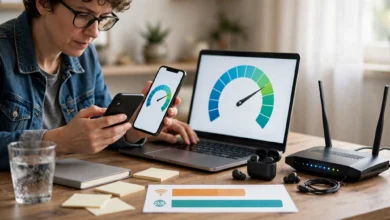
Fiber internet vs DSL is a question a lot of Pakistani families are asking right now, usually right after a Zoom call freezes or the kids complain that their game keeps lagging. For years, PTCL’s copper DSL line was the default home connection in most cities. It was affordable, it came with the landline, and for browsing and WhatsApp it did the job. That has changed. HD streaming, online classes, freelancing on Upwork and Fiverr, and five or six phones sharing the same Wi-Fi have pushed old copper lines past their limits.
At the same time, fiber optic internet in Pakistan has spread quickly. A 2026 market overview from TelecomLead puts the country at roughly 3.64 million fixed broadband subscribers, with about 2.64 million of them already on FTTH. PTCL alone passed 900,000 Flash Fiber users in the second quarter of 2026. Prices have also dropped to a point where a fiber plan can cost about the same as a mid-tier DSL package.
So which one actually makes sense for your home? The honest answer depends on where you live, how many people share the connection, what you do online and how much you want to spend each month. In this guide, we compare the two technologies on speed, latency, reliability during load shedding, cost, availability and future readiness. You will also find real 2026 package prices and a simple checklist to use before you call any ISP.
What Is DSL Internet and How Does It Work in Pakistan?
DSL internet (Digital Subscriber Line) sends data over the same copper telephone wire that carries your landline calls. In Pakistan, this mostly means PTCL’s traditional broadband service, which millions of homes have used since the mid-2000s. A modem in your house talks to equipment at the nearest telephone exchange or street cabinet, and the data travels as electrical signals through copper.
The biggest weakness of DSL is distance. Copper loses signal strength the farther it runs, so a house 300 meters from the exchange will get a much better connection than one two kilometers away. Old wiring, loose joints in the street, moisture and noise from nearby electrical lines all make it worse. That is why two neighbours on the same DSL internet package in Pakistan can get very different speeds.
ADSL vs VDSL: Not All DSL Is the Same
There are two common flavours you will run into:
- ADSL is the older standard. In real homes in Pakistan, it usually delivers single-digit speeds, often under 10 Mbps, even when the package says more.
- VDSL is the upgraded version that uses fiber up to a street cabinet and copper only for the last stretch. It can reach around 50 Mbps when you live close to that cabinet, but it still suffers from the same copper problems over the final few hundred meters.
If your PTCL bill says “broadband” and you have a phone socket filter on the wall, you are almost certainly on one of these two.
What Is Fiber Internet (FTTH)?
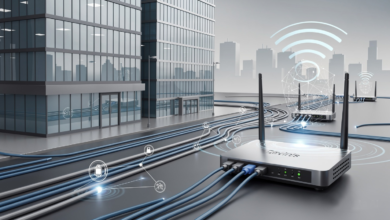
Fiber internet uses thin strands of glass that carry data as pulses of light. When people in Pakistan say “fiber,” they usually mean FTTH (Fiber-to-the-Home), where the fiber cable runs all the way into your house and ends at a small box called an ONT (Optical Network Terminal), which connects to your Wi-Fi router.
Light in glass does not weaken the way electricity does in copper, and it is not affected by electrical interference. This is the main reason fiber is faster and more consistent. Distance from the exchange barely matters, and your speed does not drop because it rained last night.

How GPON Fiber Works in Simple Terms
Most home fiber in Pakistan runs on a system called GPON (Gigabit Passive Optical Network). The word “passive” is important. Between the provider’s central equipment and your house, the network uses unpowered splitters to share one fiber line among many homes. Because those splitters need no electricity, there are fewer points in the street that can fail when the power goes out. Newer networks are also starting to use XGS-PON, which allows much higher speeds on the same type of cable.
The State of Home Broadband in Pakistan in 2026
Pakistan’s home internet market is in the middle of a big shift away from copper. According to TelecomLead’s 2026 review of Pakistani ISPs, more than 200 licensed ISPs operate in the country, but four large providers lead the consumer market. PTCL is also actively moving customers off its shrinking DSL base, which the same report puts at about 920,000 subscribers, onto Flash Fiber.
Speeds are improving, but slowly. The national median fixed broadband download speed is around 24.57 Mbps, which is still far behind the global average. You can track the monthly numbers yourself on the Ookla Speedtest Global Index for Pakistan. The government’s own broadband plan aims to push average fixed speeds much higher over the next few years, and nearly all of that growth is expected to come from fiber.
Major Fiber Internet Providers in Pakistan
| Provider | Main cities | What stands out |
|---|---|---|
| PTCL Flash Fiber | Nationwide, widest coverage | Largest fiber base with 900,000+ users; plans from 30 Mbps to 300 Mbps |
| StormFiber (Cybernet) | Karachi, Lahore, Faisalabad | Triple Play bundles; 20 Mbps plans from about Rs. 2,424 |
| Nayatel | Islamabad, Rawalpindi and nearby cities | Strong reputation for support and reliability |
| Transworld Home | Karachi, Lahore, Islamabad and others | Recorded Pakistan’s fastest median download speed (34.86 Mbps) in Ookla’s H2 2025 report |
Smaller regional ISPs and housing-society networks also offer fiber in many areas, so it is worth asking neighbours what they use before you decide.
Fiber Internet vs DSL: 7 Powerful Differences That Matter at Home
Here is the short version before we go point by point. In almost every area where both are available, fiber wins. The only real arguments for DSL are that it may be the only option on your street, or that your household uses the internet so lightly that the extra speed would go to waste.
| Factor | DSL (ADSL/VDSL) | Fiber (FTTH) |
|---|---|---|
| Typical real-world download | Under 10 Mbps (ADSL), up to about 50 Mbps (VDSL) | 30 Mbps to 1 Gbps, close to the advertised speed |
| Upload speed | Much lower than download | Much higher, often close to download on many plans |
| Latency for gaming and calls | Higher and less stable | Low and steady |
| Effect of distance from exchange | Large | Almost none |
| Effect of rain and moisture | Noticeable on old copper | Very little |
| Monthly cost in 2026 | Lower entry price | Mid-tier plans roughly Rs. 3,500 to 5,500 |
| Availability | Almost everywhere PTCL has landlines | Growing fast, but still address by address |
1. Download Speed: The Gap Is Huge
This is the most obvious difference in the fiber internet vs DSL debate. Modern FTTH connections in Pakistan commonly deliver between 100 Mbps and 1 Gbps, while VDSL tops out around 50 Mbps and older ADSL often gives less than 10 Mbps in real conditions. On top of that, fiber speeds tend to stay close to what you pay for, while DSL speeds depend on your distance from the exchange.
What does that mean day to day? On a 6 Mbps DSL line, one Netflix stream in HD plus a phone downloading a WhatsApp video can be enough to make everything stutter. On a 50 Mbps fiber connection, a family of five can stream, study and scroll at the same time without anyone noticing.
2. Upload Speed: Critical for Freelancers and Students
Most people only look at download speed, but upload speed matters a lot in Pakistani homes now. Sending files to clients, uploading YouTube videos, backing up photos to Google Drive and simply being clear on a video call all depend on upload.
DSL is asymmetric by design, which means upload is a small fraction of download. A 10 Mbps DSL plan may give you 1 Mbps or less going up. Fiber optic internet offers far higher upload speeds, which is why freelancers, content creators and remote workers usually notice the biggest improvement after switching.
3. Latency and Gaming Performance
Latency (or ping) is how long it takes for data to make a round trip. For browsing, a few extra milliseconds do not matter. For online games like PUBG, Valorant or Call of Duty, and for live video calls, they matter a lot.
Fiber usually gives lower and more stable latency because the signal is not being corrected and resent as often as it is on noisy copper. DSL tends to have higher ping and more “spikes,” which feel like sudden lag in a game or a frozen face on a Teams call. If anyone in your home games competitively, this point alone often settles the fiber vs DSL question.
4. Reliability During Load Shedding, Rain and Line Faults
Reliability is where Pakistani conditions really come into play.
- Load shedding: With either technology, your router and modem or ONT need power, so a small UPS at home is essential. The difference is in the street. GPON fiber uses unpowered splitters between the provider and your home, so there are fewer powered points along the way that can drop during long outages.
- Rain and humidity: Old copper joints let in moisture, and many DSL users know the pattern of the internet getting worse after monsoon rain. Glass fiber is not affected by water in the same way.
- Cable theft and damage: Copper has scrap value and is sometimes stolen from street boxes. Fiber has little resale value, though it can still be cut. The most common fiber complaint in Pakistan is backbone cuts from construction work, which can cause outages lasting four to twelve hours.
Overall, a well-installed FTTH connection gives a more consistent experience day after day, even if no network is completely immune to faults.
5. Price and Value for Money
A few years ago, fiber was a premium product. That is no longer true. Here are some current PTCL Flash Fiber package prices listed by ProPakistani, inclusive of tax:
| PTCL Flash Fiber plan | Monthly price (PKR) |
|---|---|
| 30 Mbps | 3,499 |
| 40 Mbps | 4,999 |
| 75 Mbps Azaadi Offer (new customers, 100 Mbps for first 6 months) | 4,999 |
| 50 Mbps | 5,999 |
| 100 Mbps | 9,449 |
| 300 Mbps | 25,999 |
Across the market, entry-level broadband plans usually sit between Rs. 1,800 and 3,500 a month, and mid-tier plans of 30 to 50 Mbps cost roughly Rs. 3,500 to 5,500. Keep in mind that sales tax and other duties can push your final bill up by close to 30 percent above some advertised prices, so always ask for the tax-inclusive figure.
When you compare cost per megabit, fiber internet in Pakistan usually gives much better value. Paying Rs. 3,000 for a DSL line that gives you 6 Mbps works out far worse than paying Rs. 3,499 for 30 Mbps on fiber. Installation fees and router charges vary by provider, and promotions like online sign-up discounts can lower the first few months even further.
6. Availability Across Cities and Neighbourhoods
This is the one area where DSL still wins. PTCL’s copper network reaches almost every place that has a landline, including smaller towns and older parts of big cities. Fiber is spreading quickly through Lahore, Karachi, Islamabad, Rawalpindi, Faisalabad, Multan and many housing societies, but availability is decided street by street.
Two houses on the same block can have different options. Before you assume fiber is not available, check every provider’s coverage tool or helpline with your exact address. If no wired fiber reaches you yet, 5G Fixed Wireless Access is becoming another option in some areas where laying cable is difficult.
7. Future Readiness
Your household’s internet needs will keep growing. 4K streaming, smart TVs, CCTV cameras that upload footage, cloud backups and AI tools all use more bandwidth every year. Copper has basically reached its limit. Fiber, on the other hand, can be upgraded to much higher speeds with new equipment at each end, while the same glass cable stays in the ground.
PTCL itself is moving its customers from DSL to fiber, which tells you where the industry is heading. Choosing fiber today means you will not have to switch again in two years.
Which Is Better for Your Pakistani Household?
Numbers only help so much. What really matters is how your family uses the internet. Here is how the fiber internet vs DSL choice plays out for common types of Pakistani homes.
Small Families and Light Users
If your household is two or three people who mostly use WhatsApp, Facebook, YouTube on phones and the occasional video call with relatives abroad, a stable DSL line can still be enough. That said, an entry-level fiber plan often costs only a little more and removes the daily frustration of buffering. If both are available at your address, the smallest fiber package is usually the smarter long-term pick.
Students, Remote Workers and Freelancers
For anyone earning or studying online, fiber is close to a must. Missed client calls, slow file uploads and dropped online exams cost real money and stress. Look for at least 30 to 50 Mbps on fiber optic internet, keep the router on a UPS and, if your work allows, consider a backup mobile data package for the rare outage.
Gamers and Heavy Streamers
Gamers care about low and steady ping more than headline speed, and fiber delivers that far better than copper. Households that stream on smart TVs in HD or 4K, or that have several streams running at once in the evening, will also feel a clear difference. A 50 to 100 Mbps FTTH package is a comfortable range here.
Joint Families and Large Households
In a joint family setup, it is common to have ten or more devices on the same Wi-Fi: phones, tablets, smart TVs, laptops and CCTV. DSL simply cannot share its limited speed across that many users without slowing to a crawl. Choose a fiber plan of 50 Mbps or more and think about adding a second access point or a mesh Wi-Fi system so the signal reaches every floor.
Renters and People Who Move Often
If you rent, check the installation charges and any minimum contract period before you sign. Some providers will transfer your connection to a new address if fiber is available there, and others charge again for setup. DSL may be easier if your current house already has a working PTCL line and you plan to move soon, but fiber is still worth it if you will stay a year or more.
Homes Where Fiber Is Not Yet Available
If no provider offers fiber at your address, DSL (ideally VDSL) is still a reasonable fixed connection. You can improve it by asking PTCL to check your line quality, replacing old internal phone wiring and using a good-quality splitter. Keep an eye on coverage announcements, because fiber in many areas is expanding month by month, and 5G fixed wireless may become an option in some neighbourhoods.
How to Switch from DSL to Fiber Internet
If you have decided to upgrade, the process is fairly simple. Follow these steps to avoid surprises.
- Check coverage at your exact address. Use each provider’s website or helpline. For PTCL, you can check through the official Flash Fiber website or by calling 1218.
- Compare at least two providers. Ask neighbours in the same street which ISP they use and how often it goes down. Real local feedback is worth more than any advert.
- Ask for the full tax-inclusive price. Confirm the monthly charge, installation fee, router or ONT charges and what happens after any promotional period ends.
- Read the contract terms. Look for lock-in periods, fair usage policies and charges for relocation or early cancellation.
- Plan the installation point. Ask the technician to place the ONT and router near the centre of the house, not in a corner room, so Wi-Fi coverage is better.
- Set up power backup. Put the ONT and router on a UPS or a small DC mini-UPS so your internet keeps working during load shedding.
- Run a speed test and keep a record. Test with a wired laptop once installation is done. If speeds are far below your plan, report it early while the installation team is still responsive.
- Cancel the old DSL line properly. Get written confirmation so you are not billed for both services.
Tips to Get the Most Out of Your Home Internet Connection
Whatever you choose, a few simple habits make a noticeable difference:
- Use a UPS for your router. This is the single most useful upgrade for Pakistani homes, given regular power cuts.
- Use the 5 GHz Wi-Fi band for laptops and TVs near the router, and 2.4 GHz for devices farther away.
- Connect important devices by cable. A gaming console or work PC on an Ethernet cable will always be steadier than Wi-Fi.
- Change the default Wi-Fi password and check connected devices every few months, so neighbours are not quietly using your bandwidth.
- Restart the router once a week if you notice it slowing down over time.
- Upgrade old routers. A router from 2015 can bottleneck a 100 Mbps fiber line, so ask your ISP about a newer model.
Frequently Asked Questions About Fiber Internet vs DSL
Is fiber internet more expensive than DSL in Pakistan?
At the very cheapest end, DSL can still cost a little less. But when you look at speed per rupee, fiber internet in Pakistan is usually better value. A 30 Mbps PTCL Flash Fiber plan costs Rs. 3,499 a month including tax, which is a very different experience from a slow copper line at a similar price.
Does fiber internet work during load shedding?
Yes, as long as your ONT and router have backup power. The fiber network outside your home is largely passive, so it does not depend on power in your street. Without a UPS at home, though, any connection will go down when the electricity does.
Can I keep my PTCL landline number after switching to fiber?
In many cases, yes. PTCL Flash Fiber packages can include voice service, and other providers offer bundles with a phone line. Ask the provider about number retention before you cancel your old service.
What speed do I need for a family of four or five?
For a typical family that streams, studies and video calls, 30 to 50 Mbps on fiber is a comfortable starting point. If you have gamers, several smart TVs or someone working from home full time, 75 to 100 Mbps gives more breathing room.
Is DSL being phased out in Pakistan?
There is no fixed shutdown date that applies everywhere, but the direction is clear. PTCL is actively migrating its DSL customers to Flash Fiber, and almost all new investment in home broadband is going into fiber.
Conclusion
When you put fiber internet vs DSL side by side for a Pakistani home in 2026, fiber comes out ahead on nearly every point that affects daily life: faster and more consistent download speeds, far better upload for freelancers and students, lower ping for gaming and calls, fewer weather-related problems and a network that can keep up with growing demand for years. DSL still has a place where fiber has not arrived or where usage is very light, and it remains the most widely available option, but with PTCL moving its own customers to Flash Fiber and plans starting around Rs. 3,499 for 30 Mbps, the price gap has mostly closed.
Check coverage at your exact address, compare two or three providers, ask for tax-inclusive prices and keep your router on a UPS, and for most households the smart choice is a fiber plan sized to how many people and devices share the connection.