How 5G Internet Will Change Everyday Life in Pakistan
5G internet in Pakistan is live in major cities. Here is how it will change work, study, health and home broadband, and which early scams to avoid.

5G Internet in Pakistan: 9 Exciting Ways It Will Transform Everyday Life and the Risks to Watch in 2026
Introduction
5G internet in Pakistan is no longer a promise in a ministry speech. In March 2026, the country held its first 5G spectrum auction, and within days Jazz and Zong switched on commercial 5G in major cities. Ufone, now combined with Telenor Pakistan, started its own rollout a few months later. If you live in Islamabad, Lahore, Karachi or another big city and own a recent smartphone, you may already have seen the 5G icon appear on your screen.
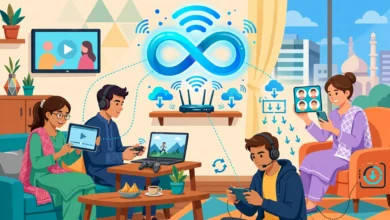
The obvious change is speed, but that is not the most important one. 5G also brings much lower delay and far more capacity, which means video calls that do not freeze in crowded markets, home broadband without digging up streets for fiber, and new services in health, farming, transport and education.
It is worth being realistic, though. Coverage is still limited to parts of major cities, 5G phones are expensive, and every new technology attracts scammers. When India launched 5G, fraudsters immediately started calling people to “upgrade” their SIMs and emptied bank accounts in the process. Pakistan has its own history of SIM fraud, and PTA has fined mobile companies a combined Rs740 million over SIMs issued without people’s consent.
This guide explains where 5G stands in Pakistan today, how it differs from 4G, nine practical ways it can change daily life, the honest limitations, the scams and illegal activity to watch for, and how to prepare sensibly.
Where 5G Internet in Pakistan Stands in 2026
Pakistan came late to 5G compared with many neighbors, but 5G internet in Pakistan has moved quickly since the spectrum auction.
The spectrum auction
In March 2026, the government sold 480 MHz of spectrum for $507 million. Jazz secured 190 MHz, Ufone 180 MHz and Zong 110 MHz, according to Dawn. Jazz was the only operator to win spectrum in all four key bands: 700 MHz, 2,300 MHz, 2,600 MHz and 3,500 MHz. Officials said the auction would roughly double Pakistan’s usable mobile spectrum, which should also improve 4G.
Who has launched where
| Operator | Spectrum won | 5G status |
|---|---|---|
| Jazz | 190 MHz | Launched with about 180 sites, later reported 1,000 live sites in 10 cities, targeting 2,500 by end of 2026 |
| Zong | 110 MHz | Launched in more than 16 cities including Islamabad, Karachi, Lahore, Peshawar and Quetta |
| Ufone (including former Telenor) | 180 MHz | Rollout began in the second quarter of 2026 |
Jazz’s later milestone, reported by TelecomTV, listed Islamabad, Rawalpindi, Lahore, Karachi, Peshawar, Quetta, Multan, Faisalabad, Sialkot and Gujranwala among its 5G cities.
5G home broadband
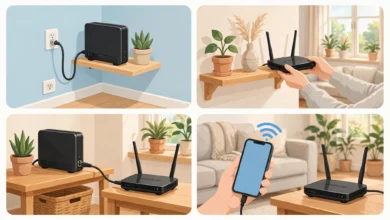
Alongside mobile 5G, 5G fixed wireless access has started offering home internet over the air. Commercial services launched in 2026 have been reported to exceed 1.4 Gbps in good conditions, which gives homes in areas without fiber a potential high-speed option.
What this means right now
In practice, 5G in Pakistan today is a big-city service. You need to be in a covered area, have a 5G-capable phone registered with PTA, and be on a plan that includes 5G access. Smaller towns and rural areas will take longer, though the 700 MHz spectrum Jazz bought is specifically meant to extend coverage to sparsely populated areas.


How 5G Differs From 4G
Most people think of 5G internet in Pakistan as “faster 4G.” Speed is part of it, but the real changes are in delay and capacity.
| Feature | 4G (typical in Pakistan) | 5G (where well deployed) |
|---|---|---|
| Download speed | Often 10 to 50 Mbps | Often several hundred Mbps, higher in ideal conditions |
| Latency (delay) | Around 30 to 60 milliseconds | Can fall to around 10 to 20 milliseconds |
| Capacity in crowds | Struggles in busy markets and events | Handles many more users at once |
| Connected devices | Mainly phones and modems | Phones plus sensors, cameras and machines at scale |
| Home broadband use | Limited, data-capped | Practical fiber alternative through fixed wireless |
Speed
Higher speeds mean large downloads in seconds and smooth 4K video. For most people, though, speed beyond what a video call or streaming needs makes less visible difference.
Latency
Low latency is what makes 5G feel different. Video calls feel natural, online games respond instantly, and remote-controlled systems, from medical equipment to farm machinery, become practical.
Capacity
Crowded places like Anarkali, Saddar or a cricket stadium overload 4G networks. 5G can serve many more users in the same area, so connections hold up when everyone is online at once.
Massive device connections
5G is designed to connect large numbers of sensors and devices. This is the foundation for smart meters, traffic systems and industrial automation.
A note on bands
High-frequency bands like 3,500 MHz carry the most speed but over shorter distances, so they suit dense cities. Lower bands like 700 MHz travel farther and penetrate buildings better, making them important for wider and rural coverage. Pakistan’s operators now hold a mix of both.
9 Ways 5G Internet in Pakistan Will Change Everyday Life
Some of these changes are already visible in covered cities. Others will take years, because the impact of 5G internet in Pakistan depends on investment beyond the network itself.
1. Home broadband without waiting for fiber
Many neighborhoods, especially newer housing societies and smaller towns, still lack fiber. 5G fixed wireless can deliver fast home internet through a small receiver, with no street digging. For families who have waited years for fiber, this could be the first truly fast home connection.
2. Smoother remote work and freelancing
Pakistan has more than 2.3 million freelancers, many of whom suffered badly during the 2024 internet slowdown. Low latency and strong uploads make video calls, screen sharing and large file delivery more reliable. 5G also gives remote workers a fast backup when their fiber line goes down.
3. Better online education
Students can stream lectures in higher quality, download course materials quickly and join live classes without constant freezing. Over time, 5G can support virtual labs, interactive content and remote teaching for schools that lack specialist teachers.
4. Telemedicine and healthcare
High-quality video consultations allow doctors in big hospitals to see patients in smaller towns. Fast connections let clinics send scans and test results instantly. In the longer term, connected ambulances could share patient data with hospitals before arrival.
5. Smarter agriculture
Agriculture employs a large share of Pakistan’s workforce. With 5G and lower-band coverage reaching rural areas, sensors can monitor soil moisture, weather and crop health, helping farmers save water and fertilizer. Drones and connected machinery become more practical with reliable, low-delay links.
6. Faster digital payments and commerce
Mobile wallets like JazzCash and Easypaisa, digital banking and QR payments all work better on fast, stable connections, especially in crowded markets where 4G struggles. Small businesses can run online stores, video product demos and live selling with fewer interruptions.
7. Entertainment, gaming and live sports
Streaming in HD and 4K, cloud gaming and lag-free online multiplayer become realistic on mobile. Watching a live cricket match on your phone in a packed stadium or bazaar should stop being a buffering battle.
8. Safer, smarter cities
Connected traffic signals, CCTV networks, smart street lighting and public transport tracking can all run over 5G. Projects like safe city systems benefit from high-capacity, low-delay connections, although they also raise privacy questions that need clear rules.
9. Industry and manufacturing
Factories, ports and warehouses can use private 5G networks for automation, robotics and real-time quality control. This could help Pakistani exporters improve efficiency and compete internationally, though adoption will depend on investment and skills.
The Realistic Limits of 5G Internet in Pakistan
New technology often gets oversold, and 5G internet in Pakistan is no exception. These are the honest constraints that will shape how quickly 5G improves ordinary lives.
Coverage is still limited
In 2026, 5G is concentrated in parts of major cities. Even Jazz’s target of 2,500 sites by the end of the year covers only a fraction of the country. Most rural users will keep relying on 4G for years, though improved 4G spectrum should help them too.
5G phones are expensive
To use mobile 5G, you need a 5G-capable phone. For many families, that is a major expense. Imported phones must also be registered with PTA, and registration taxes add to the cost. Only about half of rural adults even own an internet-enabled handset today.
Pricing is still settling
Operators paid $507 million for spectrum and are investing heavily in new sites, with Jazz alone announcing a $1 billion investment commitment. They will want to recover that cost, so 5G bundles may not be cheap at first. Watch for fair usage limits and whether 5G access costs extra.
Power and infrastructure
5G sites use more power than 4G sites, and Pakistan’s load shedding and tower theft already strain the network. PTA has told a Senate committee about more than 9,200 theft and vandalism incidents at telecom sites in 11 months. Without reliable power and security, even the best 5G site goes dark.
International bandwidth
5G speeds up the last link between the tower and your phone, but traffic to foreign websites still depends on Pakistan’s submarine cables. When cables like SMW4 or AAE-1 fail, 5G users will feel the slowdown too.
Shutdowns and restrictions
Mobile data has been suspended during protests and elections in the past. 5G does not change that. When networks are switched off for security reasons, 5G users lose access along with everyone else.
Battery life
Early 5G phones and networks can drain batteries faster, especially when the phone keeps switching between 4G and 5G at the edge of coverage. Many phones let you choose 4G when 5G offers little benefit.
Scams, Illegal Activity and Risks Around 5G
The arrival of 5G internet in Pakistan, like every major technology launch, creates confusion, and confusion is exactly what scammers exploit. These real cases show what to expect and how to stay safe.
The fake “5G SIM upgrade” scam
When India launched 5G in October 2022, fraud started the same day. Police in Gurugram reported their first 5G-related fraud case on October 1, 2022, and warned that scammers posing as telecom staff were persuading people to share OTPs or click links to “upgrade” their SIMs. In Faridabad, police arrested ten people from Jharkhand’s Jamtara district and Karnataka in connection with a racket that withdrew money from victims’ bank accounts under the pretext of upgrading SIMs to 5G, according to The Tribune.
The same tactic can easily appear in Pakistan. Remember:
- Most 4G SIMs work on 5G networks. If an operator needs you to replace your SIM, it will tell you through official channels and do it at a franchise.
- No genuine upgrade requires your OTP, banking PIN or a link from an unknown number.
- Check offers only in the official operator app, website or helpline.
SIMs issued without consent
Pakistan has its own long history of SIM fraud, from silicone fingerprint gangs to franchises issuing SIMs without proper checks. PTA has fined the country’s mobile companies a combined Rs740 million after finding that SIMs had been issued on people’s CNICs without their permission, holding operators responsible for failures in monitoring franchises and biometric systems, as ARY News reported. PTA has also warned citizens not to give their fingerprints for “free SIM” offers, since that can lead to extra SIMs being issued in their name. As 5G drives a wave of new SIM and device sales, this risk grows. Check the SIMs registered against your CNIC through PTA’s 668 service and block any you do not recognize.
Smuggled and unregistered 5G phones
Cheaper 5G phones sold without PTA registration can be blocked by the Device Identification, Registration and Blocking System once a grace period ends. Phones with tampered or cloned IMEI numbers are illegal and can also be blocked. Buy from authorized sellers and verify the IMEI before paying.
Theft of tower equipment
New 5G sites carry valuable equipment, batteries and backup power. With thousands of theft and vandalism incidents already reported at telecom sites, protecting new infrastructure will be important to keep coverage reliable.
Misinformation that turns violent
In 2020, false claims linking 5G to COVID-19 spread online in the United Kingdom, and dozens of mobile masts were set on fire while telecom engineers faced harassment. The claims had no scientific basis. Health authorities such as the World Health Organization have said there is no evidence of health risks from mobile network exposure within international safety limits. Spreading such rumors in Pakistan could lead to vandalism and, under PECA, sharing false information that causes harm can carry legal consequences.
Faster networks, faster fraud
Higher speeds help everyone, including criminals. Voice-cloning and video deepfake scams, phishing sites and fake investment apps all work more smoothly on fast networks. Treat unexpected calls, video messages and urgent money requests with extra caution, and verify through a separate channel.
How to Prepare for 5G Internet in Pakistan
You do not need to rush into 5G internet in Pakistan. A little planning helps you benefit from 5G without wasting money or falling for scams.
Check coverage before buying anything
Look at your operator’s official coverage map or ask in your area. If 5G is not available where you live, work and study, a 5G phone will not make a difference yet.
Choose a 5G phone wisely
- Make sure the phone supports the 5G bands used in Pakistan, especially 3,500 MHz and 2,600 MHz, and ideally 700 MHz for wider coverage.
- Buy PTA-registered phones from authorized dealers, and check the IMEI status before paying.
- If your current 4G phone works well and 5G is not available nearby, it may be smarter to wait until prices fall.
Compare 5G plans carefully
- Check whether 5G access is included in your existing bundle or costs extra.
- Look at fair usage limits, since faster speeds mean you can use data much more quickly.
- Compare 5G fixed wireless home plans with fiber and 4G options in your area.
Protect your identity and money
- Never share OTPs or banking PINs for any “5G upgrade.”
- Do not give your fingerprints for free SIM offers.
- Check SIMs registered in your name through PTA’s 668 service.
- Report suspicious calls and messages through PTA’s complaint channels.
Use data wisely
Faster speeds make it easy to burn through data. Set data warnings, keep video quality sensible on mobile, and use Wi-Fi for large downloads when you can.
Think about the bigger picture
For businesses, schools and clinics, 5G opens new options, but the benefits come from how you use it: training staff, securing devices, and planning for outages with backup connections and power.
Conclusion
5G internet in Pakistan has moved from plans to reality in 2026, with a $507 million spectrum auction in March, rapid launches by Jazz and Zong across major cities, and Ufone’s rollout following its merger with Telenor Pakistan. Its biggest benefits come not just from higher speed but from lower latency and much greater capacity, which can bring fast home broadband without fiber, smoother remote work and online classes, better telemedicine, smarter farming, more reliable digital payments, lag-free entertainment, safer cities and more efficient industry. The limits are real: coverage is still mostly urban, 5G phones and bundles are costly, sites need reliable power and protection from theft, international cables and shutdowns still affect everyone, and early pricing is unsettled. Scams will follow the rollout, as India’s fake SIM upgrade fraud and Pakistan’s own history of illegal SIM issuance, including PTA’s Rs740 million fine on mobile companies, make clear. Check coverage before buying, choose a registered phone with the right bands, compare plans carefully, and never share OTPs or fingerprints for an upgrade, and you will be ready to enjoy what 5G internet in Pakistan can genuinely offer.