How to Spot a Fake or Cloned Smartphone Before Buying
Fake smartphone checks for buyers: verify IMEI, packaging, hardware and PTA status so you avoid cloned phones, scams and costly network blocks.
How to Spot a Fake or Cloned Smartphone Before Buying
Introduction
A fake smartphone can look almost perfect in a photo. Same curved edges, same camera bump, same logo on the back. You only find out something is wrong a week later, when the battery dies by lunchtime, the camera produces muddy pictures, or your SIM suddenly shows “no service” because the phone was never legal in the first place.
Counterfeit and cloned smartphones are not a rare problem. Replica iPhones and Samsung lookalikes are sold openly in some markets, while stolen and smuggled phones get new identities through IMEI tampering and are resold as “box pack” or “PTA approved.” Police and telecom regulators have raided shops over this again and again, and every raid recovers phones that ordinary buyers were about to pay for.
The good news is that most fakes fail a few simple checks. You do not need technical skills or special tools. You need ten minutes, the box, the phone, and a little patience before you hand over your money.
This guide walks you through what fake, cloned, and tampered phones actually are, the physical and software checks that expose them, and real cases from past crackdowns that show how these scams work. Whether you are buying new from a marketplace or used from a stranger, you will know how to spot a fake phone before it becomes your problem.
What Counts as a Fake Smartphone or a Cloned Phone?
People use “fake” loosely, but there are several different problems hiding under that word. Knowing which one you are dealing with tells you which checks matter most.
Counterfeit or Replica Phones
A counterfeit smartphone is a cheap device built to imitate a famous model. It copies the outer design, the logo, and sometimes even the box. Inside, it runs a low-end processor, less memory than advertised, and a modified Android build skinned to look like iOS or One UI. These are often sold as “master copy,” “first copy,” or “high copy” phones, and some sellers pass them off as genuine at slightly discounted prices.
Cloned or IMEI-Tampered Phones
A cloned phone is a different kind of fake. The hardware may be completely genuine, but its IMEI number (the phone’s unique 15-digit identity) has been changed or copied from another device. This is done to:
- Make a stolen phone look like a different handset
- Get a smuggled or unregistered phone past network blocking systems
- Hide a device that has been reported or blacklisted
This is the most dangerous category for buyers, because the phone looks and works like the real thing until the network catches the duplicate identity.
Refurbished Phones Sold as New
A refurbished phone is a used device that has been repaired and repackaged. Refurbished phones are legal and can be good value when sold honestly. The problem is when sellers reseal the box and sell them as brand new at full price. Replaced screens, aftermarket batteries, and swapped parts are common in these units.

Quick Comparison
| Type | Hardware | IMEI | Main risk |
|---|---|---|---|
| Counterfeit or replica | Cheap imitation | Often fake or invalid | Poor performance, no warranty, possible safety issues |
| Cloned or IMEI-tampered | Often genuine | Altered or copied | Network block, seizure, legal trouble |
| Refurbished sold as new | Genuine but used or repaired | Usually genuine | Overpaying, shorter lifespan, no official warranty |
Every check in the sections below targets one or more of these three problems.
How to Spot a Fake Smartphone From the Outside
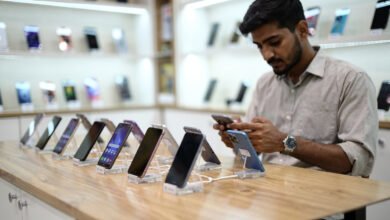
The first round of checks needs nothing but your eyes and hands. A fake smartphone often gives itself away before you even switch it on, especially if you have seen the real model in an official store.
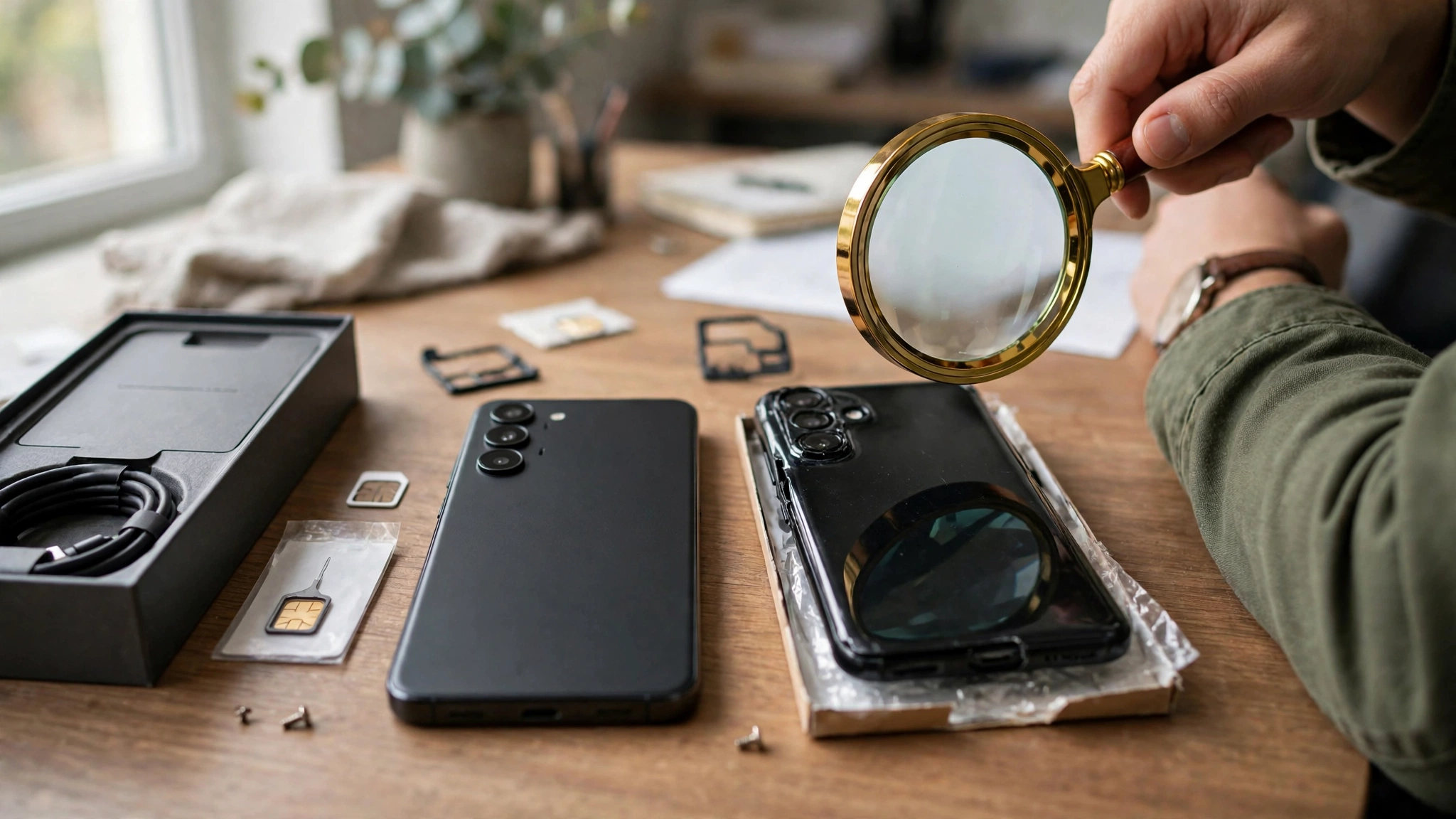
1. Inspect the Box and Packaging
Genuine brands spend real money on packaging. Counterfeiters usually do not.
- Print quality: Look for blurry text, uneven fonts, spelling mistakes, or colors that look slightly off.
- Seals: Official boxes use clean, tight seals. Loose plastic wrap, glue marks, or a cut-and-retaped seal suggest the box has been opened.
- Labels: The sticker on the box should list the model number, storage, color, and IMEI. Note the IMEI. You will match it later.
- Accessories: Compare the cable, charger (if included), and SIM tool with what the brand’s website says comes in the box.
2. Feel the Build Quality
Real flagship phones are dense and solid. A replica often feels lighter, the buttons wobble or click unevenly, and the frame may be painted plastic instead of aluminum or steel. Check the gaps between the screen and frame. On a genuine phone they are tight and even all the way around.
3. Look Closely at the Camera and Ports
Counterfeiters copy the camera layout but not the quality. Fake lenses can look flat, and some “triple camera” fakes have only one working sensor with decorative rings around it. Check that the charging port, speaker grilles, and SIM tray line up cleanly and match official photos.
4. Check the Display
If the model is sold with an OLED screen, the blacks should look truly black in a dark room. Cheap LCD panels in fakes show a grayish glow. Look for thick bezels, a misplaced notch or punch-hole, and poor viewing angles.
5. Compare the Price Honestly
A brand-new flagship priced far below every authorized seller is the biggest warning sign of all. Phones do not get cheap without a reason. Either the seller is avoiding taxes, the phone is stolen, it is refurbished, or it is not the phone it claims to be.
None of these checks is perfect on its own, since good replicas are getting harder to spot by looks alone. That is why the software checks in the next section matter even more.
Software Checks That Expose a Cloned Phone
This is where most fakes fall apart. A cloned phone can pass the physical inspection easily, because the hardware may be genuine. Its identity is the weak point, and you can test that in minutes.
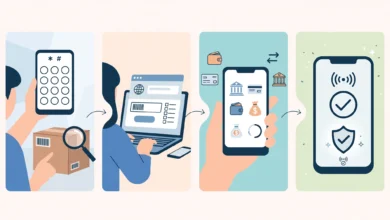
6. Match the IMEI in Three Places
Dial *#06# on the phone. It will show the IMEI (two numbers on dual-SIM phones). Now compare it with:
- The sticker on the box
- The IMEI shown in Settings, usually under About Phone
- The number printed on the SIM tray or back panel, where the model has one
All of them should match exactly. If even one digit is different, walk away. A mismatch is the clearest sign of IMEI tampering or a swapped box.
7. Run an Official IMEI Verification
In Pakistan, send the IMEI by SMS to 8484 or use the PTA DIRBS device verification portal. The reply tells you whether the device is compliant, and it often shows the brand and model the IMEI belongs to. If the result says “Samsung Galaxy A-series” but you are holding something sold as an iPhone, you have found a cloned or fake identity.
Outside Pakistan, most countries have similar blacklist checks run by regulators or carriers. For Apple devices, the Apple Check Coverage page confirms whether a serial number is real and what warranty it has. Samsung and other brands offer similar warranty lookups on their official sites.
8. Check the Real Hardware Inside
Counterfeit phones lie about their specs in the settings menu. A modified “About Phone” screen might say 256GB storage and a flagship chip while the phone actually has 32GB and a budget processor. To check:
- Install a well-known hardware info app from the official app store and compare the reported chipset, RAM, and storage with the model’s official specifications.
- Try filling storage with a large video download. Fake storage figures often break when you go past the real capacity.
- On iPhones, a genuine device runs iOS from Apple, not an Android skin. Real iPhones can sign in to the App Store and iCloud normally, and newer iOS versions show a Parts and Service History section in Settings that flags non-genuine parts.
9. Test the Phone Under Real Use
Insert your SIM and make a call. Connect to Wi-Fi, take photos in low light, record a short video, play audio through the speakers, and charge it for a few minutes. Replicas usually struggle with camera quality, heat up quickly, and charge slowly. Also check that the phone receives official system updates. Fake devices rarely do.
If a seller refuses to let you run any of these checks, treat that refusal as your answer.
Real Cases of Fake and Cloned Phone Rackets
The checks above are not theory. Each one would have caught phones from real criminal operations that were busted in recent years. Looking at these cases shows how fake smartphone and cloning rackets actually work.
The $900,000 Fake iPhone Warranty Scam (USA)
Between January 2016 and February 2018, two engineering students in Oregon received shipments of counterfeit iPhones from an associate in China. They submitted the fakes to Apple as warranty claims, saying the phones would not power on, and received genuine replacements that were then sent abroad for sale. Reports put the fake phones’ value at around $30 each, while every successful swap returned a real iPhone. Apple’s losses were reported at nearly $900,000. Federal agents found more than 300 counterfeit iPhones at one suspect’s home.
In 2019, one of the students, Quan Jiang, was sentenced to 37 months in federal prison for trafficking fake iPhones, according to the US National IPR Center. The lesson for buyers is that counterfeit iPhones can be convincing enough to reach a major brand’s own repair channel. A serial number check on the official coverage page is your best defense.
IMEI Tampering Raids in Pakistan
Pakistan’s telecom regulator has carried out repeated raids against IMEI cloning, often with the FIA or the National Cyber Crime Investigation Agency (NCCIA):
- Sheikhupura, 2020: The PTA and FIA raided an IMEI tampering setup at a mobile shop on Main Sargodha Road. One person was arrested and the equipment seized.
- Gujranwala, June 2025: A raid at a mobile plaza in Model Town recovered 19 cloned or tampered phones, and the shop owner was arrested. One phone carried an IMEI belonging to Disney Mobile, a brand not even sold in Pakistan. An 8484 check would have exposed that mismatch instantly.
- Gujrat, 2025: Three raids seized 45 phones with tampered IMEIs and led to several arrests.
- Faisalabad: Raids on retail and repair shops recovered 17 patched handsets and a laptop running software used to change IMEIs. Five people were arrested.
The PTA has warned that cloned phones give criminals anonymity and are linked to cybercrime, financial fraud, and kidnappings.
Stolen Phones With New Identities
In 2017, Pakistani police arrested a gang of nine people who changed IMEI numbers on stolen phones and resold them in local markets, reportedly charging as little as Rs. 500 per change. Buyers of these phones had no idea they were carrying stolen property.
Fraudulent Registration Using Stolen Passport Data
In 2019, the FIA arrested gangs, including one in Rawalpindi, that used stolen passport details of overseas Pakistanis to register smuggled and blocked phones. The FIA warned shopkeepers and consumers directly. These phones could pass a basic registration check while still being illegally registered.
What These Cases Have in Common
- The phones looked normal to the people buying or handling them.
- The fraud lived in the identity (serial number or IMEI), not the appearance.
- A simple official check would have exposed most of them.
- Unusually low prices and informal sellers were part of every story.
Red Flags When Buying: Avoid a Fake Smartphone Deal
Most people who end up with a fake smartphone ignored at least one warning sign because the price felt too good to pass up. Knowing where fakes usually come from makes those signs easier to notice.
Where Fake and Cloned Phones Are Usually Sold
- Social media marketplaces and groups where sellers have no address, no reviews, and ask for advance payment
- Unverified marketplace sellers with new accounts, very few ratings, or reviews that all sound the same
- Small shops selling “box pack” flagships far below official prices
- Street deals and “urgent sale” meetups where the seller pressures you to decide quickly
- Listings that say “master copy,” “first copy,” or “high copy” in small print, even when the headline says original
Seller Behavior That Should Worry You
- Refusing to let you dial *#06# or check the IMEI before payment
- Insisting on online transfer only, with no cash on delivery or inspection
- No invoice, or an invoice without a shop name, IMEI, or warranty terms
- Claiming “PTA approved” but getting defensive when you offer to verify it
- Saying the phone has “Dubai warranty” or “international warranty” without proof
- Pushing you to buy today because “another customer is coming”
Safer Places to Buy
Buying from the brand’s own store, an authorized dealer, or the brand’s verified store on a major marketplace removes most of the risk. You may pay a bit more, but you get a proper invoice, official warranty, and a clear return process. When buying used, meet in a public place, ideally near a mobile market where you can get a technician’s quick opinion.
What to Do If You Already Bought a Fake or Cloned Phone
If your checks reveal a problem after purchase, act fast:
- Stop using it with your main SIM if the IMEI is cloned, to avoid your number being linked to another device’s history.
- Contact the seller in writing and request a refund. Keep all chats, screenshots, and receipts.
- File a return or dispute on the marketplace within its return window.
- Report it. In Pakistan, you can complain to the PTA about IMEI tampering and to the FIA or NCCIA for fraud. Consumer courts handle cases of misrepresented products.
- Do not resell it to recover your money. Passing on a cloned or counterfeit phone makes you part of the same chain, and selling counterfeit goods is illegal.
That last point matters. Being a victim of a scam is not your fault, but knowingly passing the phone to someone else is a different story.
Conclusion
Spotting a fake smartphone before buying comes down to checking identity, not just appearance. Counterfeit phones copy the look of famous models, cloned phones hide genuine hardware behind altered IMEI numbers, and refurbished units are sometimes resealed and sold as new. A few minutes of checks catches most of them: inspect the box and build, match the IMEI from *#06# with the box and settings, verify it through PTA’s 8484 service or DIRBS and the brand’s official warranty page, confirm the real hardware with a trusted app, and test the phone under normal use. Real cases, from the Oregon students who swapped around 3,000 counterfeit iPhones for genuine ones to the IMEI tampering raids in Sheikhupura, Gujranwala, Gujrat and Faisalabad, show that these scams depend on buyers skipping those steps. Buy from accountable sellers, keep your invoice, walk away from prices that make no sense, and report fraud when you find it, and you will avoid becoming the next person stuck with a fake smartphone.