How Pakistan’s Internet Speed Compares to the Rest of South Asia
Pakistan internet speed trails Nepal, Bangladesh, India and Sri Lanka on fixed broadband. The 2026 data, the causes and what could close the gap.
Pakistan Internet Speed vs South Asia: 5 Shocking Truths Behind the Slow Rankings
Introduction
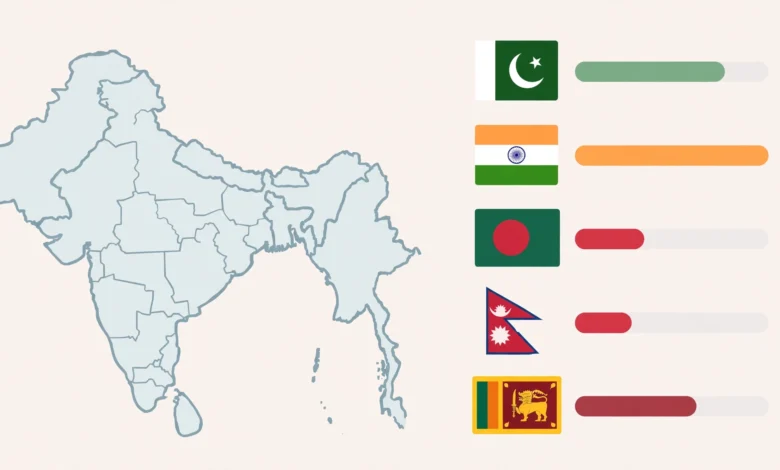
Pakistan internet speed is a topic that comes up in every office, classroom and family WhatsApp group, usually right after a video call freezes. The frustration is backed by data. In Ookla’s Speedtest Global Index for March 2026, Pakistan’s median fixed broadband download speed was about 17.9 Mbps, while Nepal recorded about 84.3 Mbps, Bangladesh about 66 Mbps, India about 60.9 Mbps and Sri Lanka about 38.6 Mbps. On mobile, India’s median was above 126 Mbps, nearly five times Pakistan’s 26.5 Mbps.
That gap did not always exist. Around 2020, Pakistan’s mobile internet was actually faster than India’s in the same index. Since then, its neighbors have invested heavily in fiber and 5G while Pakistan struggled with a shortage of spectrum, repeated internet shutdowns, damaged undersea cables and an expensive environment for building networks. Illegal activity has played a part too, from grey traffic operations and unlicensed internet resellers to the theft of batteries from mobile towers.
This article compares Pakistan honestly with the rest of South Asia using the latest available figures. It looks at how the picture has changed, how speeds differ inside Pakistan, the five main reasons the country lags, and the unlawful practices that hold networks back. It also explains how to read speed rankings fairly, and what changes, from the March 2026 5G spectrum auction to new fiber projects, could finally help Pakistan’s broadband catch up with its neighbors.
Pakistan Internet Speed Compared With South Asia in 2026
The most widely used comparison comes from Ookla’s Speedtest Global Index, which ranks countries by the median speeds recorded in millions of user tests each month. The figures below are median download speeds for March 2026.
| Country | Fixed broadband (Mbps) | Mobile (Mbps) |
|---|---|---|
| Nepal | 84.34 | Not available in this dataset |
| Bangladesh | 66.02 | 42.45 |
| India | 60.85 | 126.73 |
| Sri Lanka | 38.61 | 57.14 |
| Pakistan | 17.90 | 26.46 |
Source: Ookla Speedtest Global Index, March 2026, as compiled in Wikipedia’s country speed list.
What the Rankings Say
In the January 2026 index, reported by Nepali business site ShareSansar on South Asia’s broadband rankings, Nepal ranked 89th worldwide for fixed broadband, Bangladesh 96th, India 98th, Sri Lanka 126th and Pakistan 145th. In other words, Pakistan’s median fixed broadband speed was less than a quarter of Nepal’s and less than half of Sri Lanka’s.
On mobile, the gap is just as striking. India’s median mobile download speed was nearly five times Pakistan’s, and Sri Lanka’s more than double. Bangladesh, often grouped with Pakistan in discussions about slow internet, was well ahead on both measures.
The Global Context
Pakistan is not only behind its neighbors. Reporting on the index by Digital Rights Monitor has noted global averages of roughly 60 Mbps for mobile and about 100 Mbps for fixed broadband, placing Pakistan internet speed far below the world average on both counts.
How the Picture Changed Since 2020
The most uncomfortable part of the comparison is not where Pakistan stands today, but how far its neighbors have moved while it stood relatively still. In September 2020, as reported by The Daily Star, Pakistan’s mobile internet was faster than India’s, Nepal’s and Bangladesh’s.


| Country | Fixed, Sept 2020 (Mbps) | Fixed, March 2026 (Mbps) | Mobile, Sept 2020 (Mbps) | Mobile, March 2026 (Mbps) |
|---|---|---|---|---|
| Nepal | 22.36 | 84.34 | 17.12 | Not available |
| Bangladesh | 29.85 | 66.02 | 10.76 | 42.45 |
| India | 46.47 | 60.85 | 12.07 | 126.73 |
| Sri Lanka | 31.42 | 38.61 | 19.95 | 57.14 |
| Pakistan | 10.10 | 17.90 | 17.13 | 26.46 |
Sources: Ookla figures for September 2020 as reported by The Daily Star; March 2026 figures from the Speedtest Global Index.
Three Key Shifts
- India’s mobile leap. India’s median mobile speed rose roughly tenfold, from about 12 Mbps to more than 126 Mbps, driven largely by its rapid 5G rollout. Pakistan’s rose by around half.
- Nepal and Bangladesh’s fiber growth. Both countries roughly tripled or more their fixed broadband speeds, as fiber to the home spread. Nepal went from the middle of the regional pack to the top of South Asia.
- Pakistan’s slow climb. Pakistan’s fixed broadband speed improved from about 10 Mbps to about 18 Mbps, but it stayed near the bottom of global rankings. In October 2024, it ranked 100th of 111 countries for mobile and 141st of 158 for fixed broadband.
Why the Trend Matters More Than One Month
Monthly rankings move up and down with network events, cable faults and testing patterns. The six-year trend is what matters for investors, freelancers and students. It shows that the gap between Pakistan internet speed and the rest of the region is not a temporary blip but the result of slower long-term investment.
Differences Inside Pakistan
A national median hides large gaps between cities, regions and operators. Ookla’s report on Pakistan for the first half of 2025, as covered by ProPakistani, shows how uneven the experience is.
- Fastest operator: Jazz was rated the best mobile network, with a Speedtest Connectivity Score of 56.52, and was the fastest provider across all ten surveyed cities.
- Fastest city: Faisalabad recorded the highest median mobile download speed among major cities, at 24.45 Mbps.
- Slowest city: Quetta was at the bottom with 19.37 Mbps, with Sialkot and Karachi just ahead.
- Fastest region: Punjab led with a median mobile download speed of 22.1 Mbps.
- Slowest region: Azad Jammu and Kashmir recorded 11.22 Mbps, with the former tribal areas and Khyber Pakhtunkhwa just ahead.
The Urban and Rural Divide
These figures only cover areas where people run speed tests. In large parts of rural Balochistan, Sindh and Khyber Pakhtunkhwa, the issue is not slow internet but limited coverage. In some districts, security-related mobile internet suspensions have lasted months or even years. A national median, therefore, likely flatters the real experience of many Pakistanis.
Why It Matters for the Comparison
When people compare internet speed in South Asia, they often compare capital cities. A freelancer in Islamabad and one in Turbat do not live in the same digital country. Closing the national gap means not only faster networks in Lahore and Karachi but basic, reliable coverage in the regions that currently pull the average down.
5 Reasons Pakistan Internet Speed Lags Behind Its Neighbors
There is no single cause. Several long-running problems reinforce each other.
1. Years of Spectrum Shortage
Mobile speed depends heavily on how much radio spectrum operators have. For years, Pakistan’s operators worked with far less spectrum than peers in the region, which meant crowded 4G networks and no commercial 5G. That changed in March 2026, when the PTA auctioned 480 MHz of spectrum to Jazz, Zong and Ufone for $507 million, the largest spectrum sale in the country’s history. The IT minister said Pakistan was moving from being “spectrum-starved” to meeting regional benchmarks. Until that new spectrum is fully deployed, though, Pakistan is playing catch-up with an India that launched 5G years earlier.
2. Too Little Fiber
Fast fixed broadband and fast mobile networks both depend on fiber, whether running into homes or connecting mobile towers. Nepal and Bangladesh’s fixed broadband gains came largely from fiber to the home. In Pakistan, many towers still rely on microwave links rather than fiber, and officials at the Universal Service Fund have stressed the urgent need to fiberize towers. High “right of way” charges for laying fiber, reportedly around Rs 36,000 per kilometer in some areas, discouraged expansion until the government announced their abolition in 2026.
3. Fragile International Connectivity
Pakistan relies on a limited number of submarine cables landing near Karachi. When faults hit, such as the Red Sea cable cuts in September 2025 or the outages and maintenance in January 2026, speeds drop nationwide, especially in the evening. Countries with more international routes and more locally cached content feel these shocks less.
4. Shutdowns and Restrictions
Pakistan’s 2024 record on deliberate disruptions was the costliest in the world. According to Top10VPN, Pakistan suffered 9,735 hours of internet disruptions in 2024, at an estimated cost of $1.62 billion, much of it from the long block on X. Late 2024 also brought widespread complaints about VPN disruptions and slow apps, which the PTA attributed to technical issues while asking users to register VPNs. Whatever the cause, frequent restrictions hurt both measured speeds and investor confidence.
5. Costs, Taxes and Power
Building networks in Pakistan is expensive. Operators face high taxes, a weak rupee that raises the cost of imported equipment, and unreliable power that forces towers onto batteries and generators. Consumers also pay substantial taxes on internet services, which limits how much they can spend on faster plans. Together, these factors slow both the supply of better networks and the demand for them.
Illegal Activities That Drag Pakistan’s Networks Down
Not all of Pakistan’s connectivity problems are about policy and investment. Unlawful activity has damaged networks, drained revenue and, in some cases, been ruled illegal by the courts themselves.
Grey Traffic Operations
Grey traffic setups route international calls over the internet and into local networks through banks of SIM cards, avoiding legal charges. The PTA and FIA have raided such operations for years. In October 2019, raids in Sargodha found gateway equipment along with about 1,000 SIMs at one location and around 900 at another. In Karachi’s Gulshan-e-Iqbal, officials seized gateway equipment, SIMs, routers and broadband connections. These operations load local towers with constant traffic and divert revenue that could otherwise fund network upgrades.
Unlicensed Internet Providers
Unlicensed operators sell cheap internet by splitting a few connections among many homes. The PTA and FIA have raided such setups in Lahore, near Ghazi Road, and in Gujrat district at Karianwala and Sarai Alamgir, seizing equipment and arresting operators. Their customers get heavily oversold, slow connections that are never measured in PTA quality surveys, and the operators pay no license fees that would support the wider sector.
Theft From Towers and Infrastructure
Mobile towers depend on batteries during load-shedding. When those batteries are stolen, sites go dark during power cuts and nearby towers become overloaded. In Malakand, Levies arrested four suspects for stealing batteries from mobile towers and copper coils from transformers. Cable theft and careless digging also cut fiber routes, forcing traffic onto slower backup paths.
Shutdowns That Courts Called Unlawful
In February 2018, the Islamabad High Court ruled that mobile network shutdowns, including mobile internet suspensions, were illegal except under the emergency provisions of Section 54(3) of the Pakistan Telecommunication (Re-organization) Act, 1996. The government challenged the ruling and suspensions continued. In August 2025, the Balochistan High Court ordered mobile internet in Quetta restored within two hours after a province-wide suspension. Disruptions that bypass legal limits do not just harm users. They also damage Pakistan’s image as a place to invest in networks.
Misleading Marketing
The Competition Commission of Pakistan has also challenged providers over deceptive practices, including “unlimited” packages that carried hidden fair usage caps. In November 2025, the Islamabad High Court confirmed the CCP’s authority to investigate deceptive marketing in telecom. Misleading claims make it harder for customers to judge real performance and weaken the pressure on providers to improve.
How to Read Internet Speed Rankings Fairly
Speed rankings are useful, but they are not perfect. Being honest about their limits makes the comparison more credible, not less.
Crowdsourced Data Reflects Real Users
Ookla’s index is based on tests run by ordinary users. That is a strength, because it reflects real-world experience rather than lab conditions. It is also a limitation, because results depend on users’ devices, Wi-Fi quality and the plans they buy. In a country where many people use older phones, weak home Wi-Fi and cheaper, slower packages, median speeds can look lower even where networks are capable of more.
Different Sources, Different Numbers
Other measurement firms produce different figures. A 2026 study by SpeedGeo, for example, put India’s mobile speed at around 106 Mbps and placed Bangladesh at the top of South Asia for fixed broadband at about 73 Mbps, while Ookla’s data placed Nepal first. The exact order shifts between sources and months, but the broad picture is consistent: Pakistan sits at or near the bottom of the region on fixed broadband and well behind India on mobile.
Median Versus Average
Ookla now reports median speeds, the point where half of tests are faster and half slower. Medians are less distorted by a few very fast connections than averages, which makes them better for comparing everyday experience between countries. When reading older reports, check which measure is used before comparing numbers.
Speed Is Not the Whole Story
Rankings focus on download speed. For video calls, gaming and online work, latency, jitter and reliability often matter more. A country can improve its median speed while still suffering frequent outages or shutdowns, which do not always show up clearly in monthly speed rankings.
What Could Improve Pakistan Internet Speed
There are real reasons for cautious optimism in 2026, alongside changes that still need to happen.
Changes Already Under Way
- 5G and more 4G capacity. After the March 2026 auction, operators received their spectrum licenses at a ceremony on March 19, and some announced 5G launches in parts of the country. Jazz said it planned to deploy and upgrade more than 1,000 5G sites in 2026. The government said 5G would start in Islamabad and the provincial capitals, while the extra spectrum should also relieve congestion on 4G networks.
- Cheaper fiber deployment. The government announced the abolition of right of way charges for fiber deployment, removing a long-standing cost that slowed the spread of fiber.
- Rural fiber and broadband projects. In December 2025, the Universal Service Fund approved nine projects worth Rs 13.05 billion to bring broadband and fiber to about 5.55 million people in rural districts.
- Satellite internet. Starlink, Amazon’s Project Kuiper and others are waiting for final licensing rules, which were reported to be heading to the federal cabinet in August 2026.
Changes Still Needed
- Fewer and narrower shutdowns. Predictable, lawful and targeted restrictions would protect both users and investor confidence.
- Faster fiberization of towers. Fiber backhaul is what turns new spectrum into real speed for users.
- More international routes. Additional submarine cables, landing points and local content caching reduce the impact of cable faults.
- Lower taxes on internet services. Cheaper access would let more households afford faster plans, which also lifts median speeds.
- Stronger enforcement against illegal operators. Cracking down on grey traffic, unlicensed resellers and tower theft protects network quality and revenue.
- Transparent quality reporting. Regular PTA quality surveys and public enforcement keep pressure on providers to deliver what they advertise.
If these steps continue, the next few years could see Pakistan move up from the bottom of the regional table. If they stall, the gap with Nepal, Bangladesh and India is likely to keep growing.
Conclusion
Pakistan internet speed sits at the bottom of South Asia on fixed broadband and well behind most neighbors on mobile: in Ookla’s March 2026 index, Pakistan’s median fixed speed was about 17.9 Mbps against roughly 84 Mbps in Nepal, 66 Mbps in Bangladesh, 61 Mbps in India and 39 Mbps in Sri Lanka, while India’s median mobile speed of about 127 Mbps was nearly five times Pakistan’s 26.5 Mbps. The gap has widened since 2020, when Pakistan’s mobile internet was actually faster than India’s, because neighbors invested in fiber and 5G while Pakistan faced spectrum shortages, thin fiber networks, fragile undersea links, costly shutdowns, high taxes and unreliable power, along with illegal grey traffic operations, unlicensed resellers, tower theft, disruptions that courts questioned and misleading marketing. Rankings have limits, since they reflect user devices and plans and vary by source, but the trend is clear, and the March 2026 5G spectrum auction, the abolition of fiber right of way charges, USF rural projects and pending satellite licensing offer a real chance to catch up if they are paired with fewer shutdowns, faster tower fiberization, more international routes, lower taxes and firm action against illegal operators.