Best Internet Options for Remote Areas of Pakistan
Internet for remote areas of Pakistan compared: 4G, fixed wireless, DSL, fiber and satellite, with costs, limits and legal risks to avoid in 2026.
Internet for Remote Areas of Pakistan: 7 Proven Options for Reliable Connectivity
Introduction
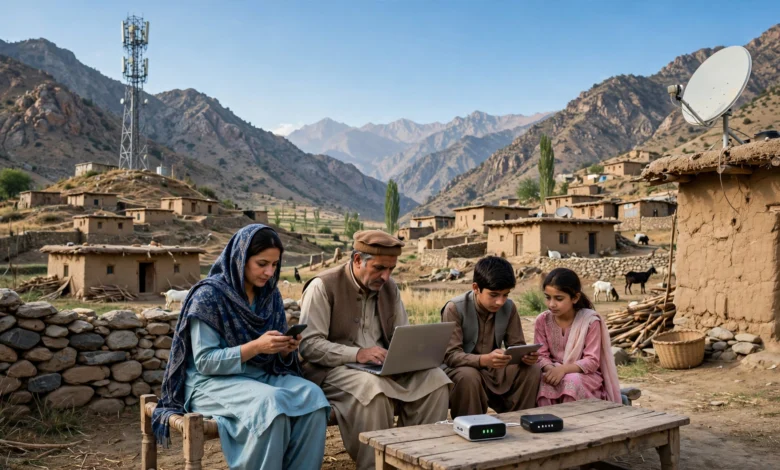
Internet for remote areas of Pakistan is still a daily struggle for millions of people. A student in a village near Khuzdar climbs to the roof to catch one bar of 4G for an online class. A freelancer in the hills of Mansehra loses a client because the signal drops every evening. A shopkeeper in Tharparkar keeps a second SIM from a different network in his pocket, just in case. In big cities, people argue about fiber speeds. In much of rural Pakistan, the question is whether there is a usable connection at all.
Things are slowly improving. The Universal Service Fund says its projects have enabled broadband and voice access for about 39.4 million rural residents, and new schemes approved in December 2025 target 5.55 million more. Satellite internet is also moving closer, with Starlink and other operators waiting on final rules. But progress is uneven, and many households still have to piece together their own solution.
This guide compares the best internet options realistically available in remote and rural Pakistan today, from 4G mobile broadband and fixed wireless to DSL, fiber and satellite. It explains how to check what works in your exact location, how to get more from a weak signal, and what government programs are doing. It also covers the illegal shortcuts that keep appearing in rural markets, such as unlicensed internet resellers and smuggled satellite dishes, and why they often end up costing far more than they save.
Why Internet for Remote Areas of Pakistan Is So Difficult
The challenges are partly geography, partly economics and partly security. Understanding them helps explain why the same package that works perfectly in Lahore may be useless in a village two hours away.
Geography and Distance
Pakistan’s remote areas include deserts in Thar and Cholistan, mountains in Gilgit-Baltistan, Chitral and the Kashmir region, and vast, thinly populated districts in Balochistan. Laying fiber across these distances is expensive, and a single mobile tower may have to serve villages spread over many kilometers. Hills and valleys block signals, so a village can sit within sight of a tower and still get almost nothing.
The Business Case
Operators build where enough paying customers live. In a sparsely populated area, the cost of a tower, fiber backhaul, power and security can be hard to recover. That is exactly why the government created the Universal Service Fund (USF), which pays operators to extend coverage to areas that would not otherwise be profitable.
Power Supply
Rural load-shedding is often longer than in cities. Towers depend on batteries and generators, and when those fail or are stolen, coverage disappears. Battery theft from mobile towers has led to arrests in places like Malakand, and every stolen battery means a site that goes dark during the next outage.
Security-Related Shutdowns
In parts of Balochistan and the former tribal districts, mobile internet has been suspended for long periods on security grounds. Reporting by Global Voices described the Panjgur district as having been without mobile internet for four years. In August 2025, mobile internet was suspended across all 36 districts of Balochistan. For residents in these areas, the best mobile package in the world does not help if data is switched off, which is why fixed and satellite options matter so much there.
How to Check What Works in Your Location
In remote areas, the right choice depends less on advertisements and more on what actually reaches your house. Spend a day testing before spending money.

- Ask neighbors and local shops. The quickest guide is which SIM works best in your village, at what times, and on which side of which hill. Local knowledge often beats official coverage maps.
- Check operator coverage maps, but verify them. Mobile operators publish coverage maps on their websites. Treat them as a rough guide, since a map may show 4G where the signal is only usable outdoors.
- Test with real SIMs. Borrow or buy SIMs from two or three networks. Run a speed test at different times of day, especially in the evening when networks are busiest, and note both speed and latency (ping).
- Test at different heights and positions. Signal on a rooftop or upper floor can be several times stronger than indoors. Try different rooms and windows facing the nearest tower.
- Ask about fixed lines. Contact PTCL and any local licensed ISP to ask whether DSL, fiber or fixed wireless reaches your area or is planned.
- Check the power situation. If outages are long, factor in a UPS or solar setup for your router from the start.
What Speed Do You Really Need?
- Messaging, email and basic browsing: 2 to 5 Mbps is usually enough.
- Online classes and video calls: 5 to 10 Mbps with stable latency, ideally below about 100 to 150 milliseconds.
- Freelancing with large file transfers or streaming in HD: 10 to 25 Mbps or more.
Stability matters more than peak speed. A steady 8 Mbps connection is often more useful than one that swings between 30 Mbps and nothing.
7 Options for Internet for Remote Areas of Pakistan
No single option suits every village. The table gives a quick comparison, and the sections below explain each one. Costs are relative, since prices vary by operator, package and location.
| Option | Typical availability | Relative cost | Main strength | Main weakness |
|---|---|---|---|---|
| 4G on a phone or hotspot | Widest | Low | No installation needed | Weak indoors, shared with phone use |
| 4G home router with outdoor antenna | Wherever any 4G exists | Low to medium | Much stronger, steadier signal | Needs some setup and line of sight |
| Fixed wireless from a licensed ISP | Some towns and nearby villages | Medium | Often unlimited or high caps | Depends on a local provider existing |
| DSL over PTCL copper | Where telephone lines reach | Low to medium | Stable, not affected by tower crowding | Slower over long distances |
| Fiber (FTTH) | Expanding through USF and regional operators | Medium | Fastest and most reliable | Still rare in remote areas |
| GEO satellite (VSAT) via licensed providers | Almost anywhere | High | Works where nothing else does | High latency, expensive equipment |
| LEO satellite (Starlink and others) | Awaiting licensing | Expected high | Low latency, high speeds | Not yet legally available |
1. 4G Mobile Data on a Phone or Hotspot
The simplest form of mobile broadband is a SIM in a phone, shared with a laptop through a hotspot. It needs no installation and is the default for most rural users. The downsides are weak indoor signal, battery drain, and congestion in the evening when the whole village is online. Choosing the network with the best local signal, and buying monthly bundles rather than daily ones, usually gives the best value.
2. 4G Home Router With an Outdoor Antenna
This is often the single best upgrade for rural internet in Pakistan. A 4G home router or outdoor CPE (a weatherproof unit mounted outside) can pick up a signal that a phone indoors cannot. Mounting it on the roof or a pole, pointed toward the nearest tower, can turn one flickering bar into a usable connection. The router then shares that connection over Wi-Fi with the whole household. Buy equipment from reputable sellers and use SIMs from licensed operators only.
3. Fixed Wireless From a Licensed Local ISP
In some towns and the villages around them, local ISPs beam internet from a high point to rooftop receivers using fixed wireless links. Done properly, this can deliver stable speeds with generous data allowances. The key word is licensed. Some local operators work without a PTA license, and they can disappear overnight after a raid, as explained later. Ask to see the provider’s license details before paying.
4. DSL Over PTCL Copper Lines
Where PTCL telephone lines reach, DSL broadband remains a practical option. Speeds fall as distance from the exchange increases, so a home far down the line may get only a few Mbps. It is, however, unaffected by mobile tower congestion, and it often keeps working during mobile data suspensions.
5. Fiber to the Home
Fiber internet is the gold standard and is slowly spreading beyond cities, partly through USF-funded optical fiber projects and regional operators. In Azad Kashmir and Gilgit-Baltistan, the Special Communications Organization (SCO) plays a major role in fixed and mobile services. If fiber reaches your area, it is almost always the best long-term choice.
6. GEO Satellite Internet (VSAT)
Traditional satellite internet, delivered through dishes pointed at satellites in geostationary orbit, is available through licensed providers mainly for businesses, NGOs, and institutions. It works almost anywhere, which makes it valuable for remote sites, but latency is high, often around 600 milliseconds, which makes video calls awkward, and equipment and monthly costs are steep.
7. Low Earth Orbit Satellite (Starlink and Others)
Low earth orbit (LEO) systems like Starlink, Amazon’s Project Kuiper and OneWeb offer much lower latency and higher speeds than traditional satellite. They could transform internet for remote areas of Pakistan, but as the next section explains, they were still awaiting final licensing at last report. Until a provider is officially licensed, importing and using these terminals in Pakistan carries legal risk.
Satellite Internet for Remote Areas of Pakistan: Where Things Stand
Satellite internet in Pakistan has been “coming soon” for several years. Here is a plain summary of the regulatory journey, based on official notices and news reports up to late August 2026. Because things can move quickly, check the latest news before making plans.
The Starlink Timeline
- 2021 to 2022: Starlink set up a local company, Starlink Internet Services Pakistan, and registered with the Securities and Exchange Commission of Pakistan. Its licensing applications then stalled for years.
- March 21, 2025: The Pakistan Space Activities Regulatory Board (PSARB) issued provisional registration to Starlink so it could plan ground infrastructure. The PSARB public notice on Starlink’s provisional registration describes this registration as temporary, pending comprehensive regulations.
- 2025: The PTA said it would only issue a full license after permanent PSARB registration. The PTA has also prepared a single nationwide license category for satellite operators, replacing the need for multiple local and long-distance licenses.
- 2026: Reporting described draft licensing terms including an initial fee of $500,000 and a contribution of 1.5 percent of annual gross revenue to the Universal Service Fund. In August 2026, ProPakistani reported that the satellite communications rules were heading to the federal cabinet. Amazon’s Project Kuiper has separately said it plans to launch in Pakistan by the end of 2026.
Why It Has Taken So Long
Officials have pointed to several concerns: the need to finalize a licensing framework, national security requirements, interference risks between new low-orbit networks and existing satellite systems, and the requirement for operators to build local gateways. Supporters argue that the delays have kept fast, low-latency internet away from the people who need it most. Both sides have a point, and the outcome will shape rural connectivity for years.
What Satellite Will and Will Not Fix
When LEO services do launch legally, they are likely to be expensive by Pakistani standards, at least at first, because of equipment costs, license fees and taxes. They will be most valuable for remote schools, clinics, businesses, freelancers and community centers rather than every household. They also depend on power, so solar or battery backup will be essential in many villages.
Illegal Shortcuts and Risks to Avoid
Where legal options are weak, illegal ones tend to fill the gap. They can look like a smart solution at first, but past cases show how often they end badly for the people who rely on them.
Unlicensed Local Internet Providers
In many towns, small operators sell internet without a PTA license, often by splitting a few connections among many homes. The PTA and FIA have raided such setups repeatedly. In Lahore, raids near Ghazi Road found unauthorized internet distribution setups running without a license, and two people were arrested. In Gujrat district, raids at Karianwala and Sarai Alamgir found operators supplying internet over fiber and point-to-point wireless links without a license, and officials seized their equipment.
For customers, the risks are clear: no quality obligations, no consumer complaint route through the PTA, heavy overselling, and service that can vanish the day the operator is raided. The PTA maintains an official list of licensed operators on its website and advises people to use only licensed providers to avoid sudden disconnection.
Smuggled or Unlicensed Satellite Terminals
With Starlink so much in the news, some people consider buying a terminal abroad and bringing it home. Until a satellite provider is licensed in Pakistan, operating such a terminal would fall outside the country’s telecom licensing framework, and equipment can be seized. Neighboring countries offer a warning. In April 2026, customs officers in Uzbekistan found an undeclared Starlink kit in a car at a border checkpoint and opened a criminal case. In July 2026, officials in Afghanistan’s Khost province seized two Starlink devices found operating at a local internet business and handed three people to the police. Legal systems differ, but the lesson is the same: unapproved satellite equipment is a real legal risk, not a loophole.
Unauthorized Signal Boosters and Repeaters
Cheap mobile signal repeaters sold online can amplify not just your signal but also interference. Poorly made or badly installed units can disrupt a tower’s service for everyone nearby, which is why operators and regulators treat unauthorized repeaters as a problem. A directional antenna connected to your own router, installed properly, is a safer way to improve reception. If in doubt, ask your mobile operator what equipment is approved.
Theft and Vandalism That Hurt Everyone
Stealing batteries, cables or equipment from towers is a crime that directly cuts rural coverage. In Malakand, Levies arrested four suspects for stealing expensive batteries from mobile towers along with copper coils from transformers. Communities that report suspicious activity around towers protect their own connectivity.
Scams Around “Satellite” and “Unlimited” Rural Internet
Be cautious with anyone offering pre-orders, “official” Starlink packages, or unlimited rural internet for an advance payment before a service is legally launched. Pay only licensed providers through traceable channels and keep receipts.
Getting More From Internet for Remote Areas of Pakistan
Even a weak connection can become usable with a few practical changes. These tips work with whichever legal option you choose.
Improve the Signal
- Go high. Mount your 4G router or outdoor unit on the roof, a pole or the highest wall facing the nearest tower. Height often matters more than anything else.
- Use a directional antenna. A properly matched outdoor antenna pointed at the tower can greatly improve a weak 4G link. Use good-quality, short cables, since long cheap cables lose signal.
- Find the right tower. Apps that show signal strength and cell information can help you point the antenna correctly. Small adjustments of a few degrees can make a big difference.
- Lock to 4G if needed. On some routers, forcing 4G only stops the device from dropping to slower 3G or 2G when the signal dips.
Keep It Powered
- A small router UPS keeps the router and antenna unit running through short outages.
- In areas with long load-shedding, a solar panel with a battery can run a router, a few lights and phone chargers for most of the day. Routers draw little power, so a modest system is often enough.
- Protect equipment with a surge protector, since voltage spikes when power returns damage many routers in rural areas.
Use Data Wisely
- Download lessons, videos and documents at off-peak times, early morning or late at night, and use them offline later.
- Turn on low-data modes in WhatsApp, YouTube and video call apps.
- Ask teachers and employers for audio-only options or recorded sessions when video calls struggle.
- Share a strong connection with neighbors only in a personal, non-commercial way. Charging others for access turns you into an unlicensed provider.
Keep a Backup
Where possible, keep two connections from different technologies, for example a 4G router and a DSL line, or SIMs from two networks. If one fails, or mobile data is suspended, the other may still work.
Government Programs Expanding Rural Coverage
The main public effort to improve internet for remote areas of Pakistan is the Universal Service Fund. It is financed by contributions from telecom operators and pays licensed companies, chosen through competitive bidding, to build networks in areas that would otherwise be left out.
The December 2025 USF Projects
In December 2025, the USF board approved nine projects worth Rs 13.05 billion to bring broadband and voice services to about 5.55 million people in 11 districts, as described in the USF announcement of the Rs 13.05 billion projects. They include six broadband projects and three optical fiber projects.
| District | Investment | People covered | Mauzas |
|---|---|---|---|
| Muzaffargarh (Punjab) | Rs 1.50 billion | 498,927 | 138 |
| Umerkot (Sindh) | Rs 914.6 million | 243,695 | 142 |
| Gujranwala and Mandi Bahauddin (Punjab) | Rs 737.3 million | 234,573 | 160 |
| Mansehra (KP) | Rs 1.36 billion | 172,989 | 145 |
| Khuzdar (Balochistan) | Rs 2.94 billion | 75,637 | 144 |
| Kohat (KP) | Rs 359.3 million | 41,404 | 24 |
The three fiber projects will lay about 1,428 km of optical fiber across 178 towns and union councils in Sialkot, Narowal and the Quetta to Ziarat region, reaching a further 4.29 million people. The USF says its projects have so far enabled broadband and voice services for about 39.4 million rural residents.
What This Means for Households
- If your district is covered by a USF project, ask the operator named in the project when service will reach your mauza.
- New towers and fiber backhaul usually improve 4G quality first, so mobile broadband is often the first upgrade rural users notice.
- Fiber to towers also makes fixed wireless and future fiber-to-the-home services more practical in nearby towns.
The high cost per person in places like Khuzdar shows why remote coverage is so expensive and why these programs need steady funding and transparent delivery.
Conclusion
Internet for remote areas of Pakistan is held back by distance, difficult terrain, thin populations, weak power supply and, in some regions, long security-related shutdowns, but households have more legal options than many realize: 4G on a phone, a 4G home router with a roof-mounted outdoor antenna, fixed wireless from a licensed local ISP, PTCL DSL where copper lines reach, fiber where USF and regional projects have arrived, and GEO satellite for remote institutions, with low earth orbit services like Starlink and Project Kuiper still awaiting final licensing as of late August 2026. The smartest approach is to test real signals in your exact location, prioritize stability over headline speed, power your equipment with a UPS or solar setup, keep a backup connection, and use data wisely, while steering clear of unlicensed resellers, smuggled satellite terminals, unauthorized signal boosters and advance-payment scams, all of which have led to raids, seizures or losses at home and in neighboring countries. With USF projects like the Rs 13.05 billion package approved in December 2025 extending fiber and broadband to millions more rural residents, the gap is narrowing, but informed choices today make the biggest difference for families, students and freelancers who cannot wait.
Keywords