Honest Review Are Local Phone Cases and Screen Protectors Worth It
Phone cases and screen protectors from local shops reviewed: real protection, 9H claims, counterfeits, legal cases, and what's actually worth buying.
Phone Cases and Screen Protectors From Local Shops: 7 Honest Truths and Costly Mistakes
Introduction
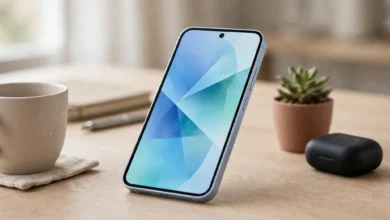
Phone cases and screen protectors are the first things most people buy after a new phone, and usually the last things they think about. You walk into a mobile accessories shop, point at a case that looks right, ask for “the best glass,” and the shopkeeper fits it on the spot. The whole thing takes five minutes and costs a small fraction of what the phone did. So are these local accessories actually worth it, or are you better off paying more for a known brand?
The honest answer is more encouraging than brand marketing suggests. A well-fitted, inexpensive case and a decent tempered glass screen protector prevent most everyday damage. The phone doesn’t know what you paid. What matters is material, fit, and whether the product is what the label says.
That last point is where things go wrong. Local shelves often carry counterfeit branded accessories: cases with fake OtterBox or Spigen logos sold at near-genuine prices, and glass boxes printed with claims that mean less than they seem. Counterfeit phone cases have led to federal criminal convictions in the United States, multimillion-dollar court judgments, and police raids in Europe and South Asia.
This review explains what you’re really buying, which claims to ignore, what the legal cases teach, and how to pick local phone cases and protectors that genuinely protect your phone without overpaying for a logo.
What Local Phone Cases and Screen Protectors Really Are
Three kinds of products on the same shelf
It helps to separate what’s sold in a typical accessories shop into three groups:
- Genuine branded products from companies like Spigen, OtterBox, Samsung, or Apple, imported through official or grey-market channels.
- Unbranded or locally branded products, usually made in the same factory regions as the big brands and sold honestly as generic or under a shop’s own label.
- Counterfeits, which copy a famous brand’s name, logo, or packaging and are sold as if they were genuine.
The first two are legitimate choices. The third is illegal in most countries and is the main thing to avoid. Generic phone cases aren’t the problem. Fake ones are.
Common types of phone cases
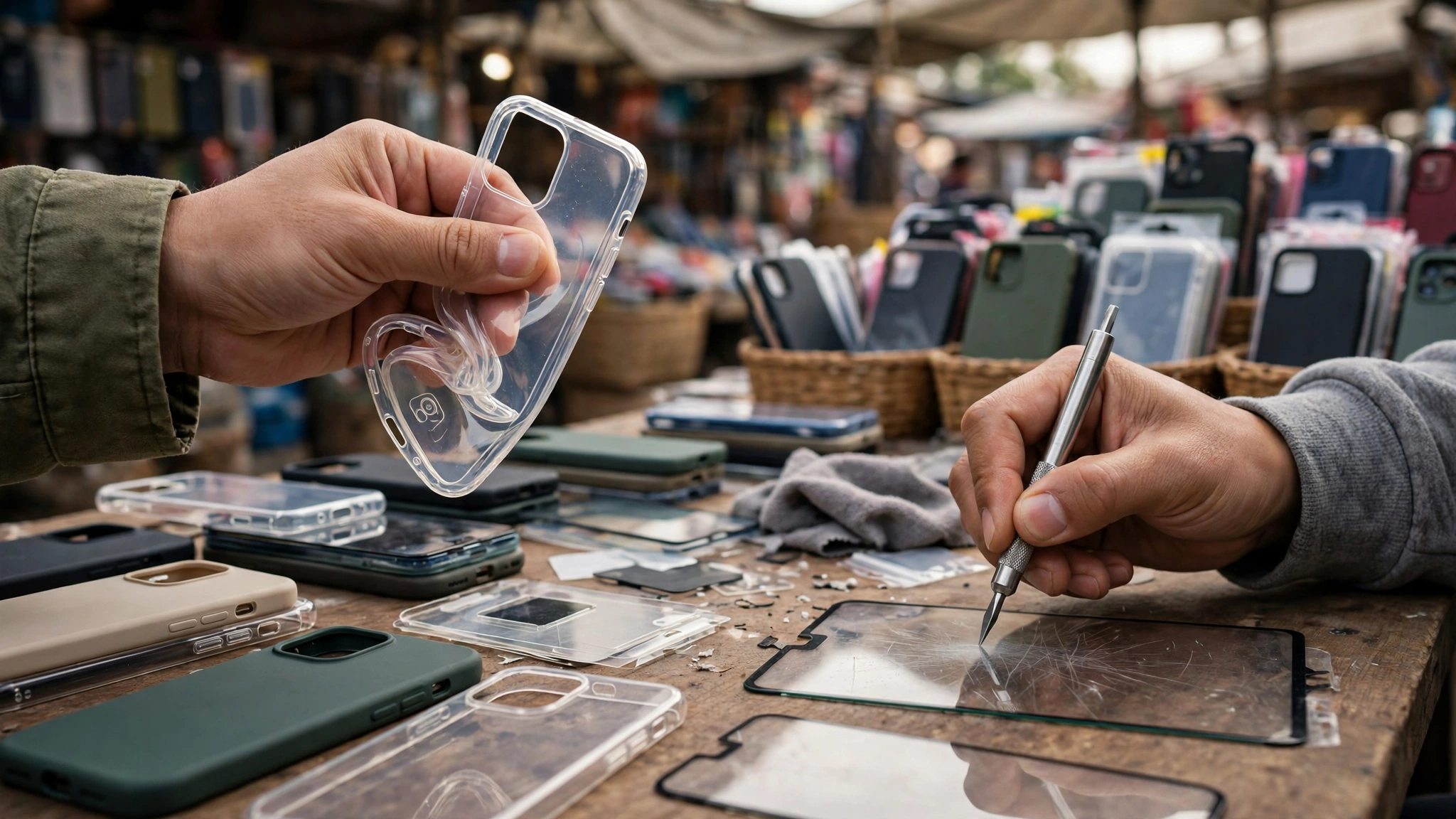
- TPU cases: soft, flexible, clear or coloured plastic. Cheap, shock-absorbing, and the most common local option. Clear TPU tends to yellow over months.
- Hard polycarbonate (PC) cases: rigid shells, often combined with a TPU bumper. Good scratch protection but less shock absorption on their own.
- Silicone cases: soft and grippy, but they collect lint and can stretch over time.
- Rugged cases: multi-layer designs with thick corners. The best drop protection, at the cost of bulk.
- Wallet and flip cases: cover the screen as well as the back, though cheap hinges and magnets may wear out quickly.
Common types of screen protectors
- Tempered glass: the standard choice. It takes scratches and small impacts instead of your screen. Comes in 2.5D (flat with rounded edges), full-coverage, and edge-to-edge versions.
- Full-glue vs edge-glue: full-glue glass sticks across the whole surface and usually looks clearer. Edge-glue only sticks at the borders and can leave a visible “rainbow” or bubbles in the centre.
- Privacy glass: darkens the screen from the side. Useful in public, but it reduces brightness for you too.
- Hydrogel or TPU film: thin, flexible, and good for curved screens, but offers less impact protection than glass.
- UV-glue glass: uses liquid adhesive cured with a UV lamp, common for curved phones. Careless application can let glue seep into speakers or buttons.
7 Honest Truths About Phone Cases and Screen Protectors
1. A cheap, well-fitted case handles most everyday drops
Most phone damage comes from waist-height drops onto hard floors and pavements, usually landing on a corner. A snug TPU case with slightly thicker corners and a raised lip around the screen and camera absorbs much of that impact. Expensive phone cases add design, better materials, and more drop height, but for everyday use the gap between a good generic case and a premium one is smaller than prices suggest.
2. “Military grade” is a marketing phrase
Many boxes say “military grade drop protection” or “MIL-STD-810G.” That standard is a US military set of test methods, not a certification issued by any military body. Manufacturers choose which tests to run, how many times, and from what height, and then test their own products. Some do it carefully. Others print the phrase without meaningful testing. Treat it as a hint, not a guarantee.
3. “9H hardness” doesn’t mean what most people think
Nearly every tempered glass screen protector claims “9H.” This refers to the pencil hardness test, where pencils of increasing hardness are scraped across a surface. 9H is the hardest pencil. It is not the Mohs mineral scale, where diamond is 10. In practice, most phone glass, including the protector, can still be scratched by sand and grit, which contain quartz. A 9H label tells you very little about which glass is better, because almost all of them carry it.

4. Fit matters more than brand
A case that’s slightly loose lets the phone shift on impact. Cutouts that are too large expose corners. A screen protector that’s a millimetre too small leaves edges open to chipping, while one too large lifts at the curves. Ask to test-fit before you pay, and check that buttons click cleanly through the case.
5. Some protectors can break your phone’s security
In October 2019, Samsung confirmed that some third-party silicone screen protectors could let anyone unlock certain Galaxy S10 and Note 10 phones with any fingerprint. The cheap protectors created a pattern the ultrasonic sensor misread. Samsung issued a software fix and advised users to stick to approved protectors. If your phone has an in-display fingerprint sensor, re-register your fingerprint after fitting a new protector and test it with a different finger.
6. Materials aren’t always what they claim
Cheap clear cases can yellow within months, and some generic cases have a strong chemical smell when new. Most are made of ordinary TPU or PC and are fine, but there’s little oversight of exactly what goes into unbranded plastics. A case that smells strongly or feels oily is worth returning.
7. Fake brands are the worst value of all
Generic cheap phone cases sold honestly are often good value. A counterfeit sold as genuine OtterBox or Spigen is the opposite: you pay a near-premium price for a product built to look right, not to protect. Rugged counterfeits are a particular risk because buyers choose them specifically for drop protection, and the inner shock-absorbing layers are the easiest part for counterfeiters to skimp on.
Real Cases: Counterfeit Phone Cases and Accessories
Counterfeit accessories can seem like a victimless shortcut. Courts and customs agencies around the world see it differently.
A Massachusetts phone shop and 10,000 fake cases
In 2013, two men set up Max Wireless Group, a phone accessory business near Boston. According to the US Attorney’s Office, they imported cases from China, many of them counterfeit, sold some in their own store, and supplied most to other retailers. Customs officers seized 12 shipments containing more than 10,000 counterfeit cases bearing marks such as OtterBox, LifeProof, Speck, and Kate Spade. A search of the store found more than 2,500 more. The genuine versions would have retailed for over $350,000. Both men pleaded guilty and were sentenced in federal court, as set out in the US Justice Department’s announcement on the counterfeit cell phone case sentencing.
The detail that matters for buyers: the business sold mostly to other retailers, who then sold the fakes to ordinary customers. Shopkeepers may not always know what they’re selling.
A $2 million judgment over 146,025 fake cases
In 2013, a US federal court ordered New York-based S & P Trading to pay OtterBox $2 million and issued a permanent injunction, after finding the company had bought and sold at least 146,025 counterfeit OtterBox cases in violation of trademark law. That same year, OtterBox said it had worked with US Customs to confiscate more than 118,000 counterfeit items in 2012 alone.
Fake cases hidden under tape
US Customs and Border Protection officers in Cincinnati once seized 7,500 counterfeit phone cases and 2,040 counterfeit phone fronts from three shipments. The products were labelled as Apple and Samsung, with black tape placed over the brand names to try to slip past inspection. In a separate operation at Charleston seaport, CBP seized an estimated $1.1 million in counterfeit phone accessories, including cases, chargers, cables, and headphones, as described in CBP’s report on the Charleston seizure.
Raids in Europe and South Asia
- In July 2024, Irish police seized more than 6,000 counterfeit OtterBox cases from a chain of tech stores in Dublin, with an estimated retail value of over €183,000.
- In March 2025, police in Goa, India, working with Apple’s investigators, raided three shops in Mapusa market and seized fake iPhone accessories, including back covers, chargers, cables, and batteries, valued at about Rs 1 crore. Three people were detained.
- In Pakistan, the Customs Directorate of Intellectual Property Rights Enforcement (South) in Karachi has seized large quantities of counterfeit mobile batteries bearing brands such as Samsung, Xiaomi, Huawei, and Motorola. Trade reporting on the seizure noted that buyers are often charged original-brand prices for these fakes.
Why this matters even for a simple case
A fake case won’t catch fire, but it sits in the same supply chains as fake chargers and batteries, which can. Shops that knowingly sell counterfeit cases are often the same ones selling counterfeit power accessories. When a seller is honest about a generic case, that’s a good sign about everything else on the counter.
How to Buy Local Phone Cases and Screen Protectors Without Regret
Checking a phone case in the shop
- Test the fit. Put your phone in and press each corner. It shouldn’t shift or flex away from the frame.
- Check the lips. The edge should rise slightly above the screen and above the camera bump, so neither touches a table when laid flat.
- Press every button through the case. Mushy or stuck buttons get worse with time.
- Look at the corners. Thicker or air-cushioned corners make a real difference in drops.
- Smell and feel it. A strong chemical smell or oily surface is a reason to choose another.
- Ask plainly if it’s genuine. If a shop sells a “branded” case far below the brand’s normal price, assume it’s fake. Ask for an honestly generic one instead and pay a generic price.
Checking a screen protector
- Confirm it’s made for your exact phone model, not a “compatible” size.
- Ask whether it’s full-glue or edge-glue. Full-glue is usually clearer and works better with in-display fingerprint sensors.
- Watch the installation. The screen should be cleaned with alcohol wipes and dust stickers, and the glass aligned before it touches the screen.
- Check for bubbles, dust specks, and edges that lift. A good shop will redo a bad application.
- Re-register your fingerprint afterwards and test it with a finger you haven’t enrolled.
- If your phone has a camera bump, ask whether a camera lens protector suits your case, since some cause glare in night photos.
Red flags at the counter
- “Original” branded boxes stacked in bulk with no seals or batch codes.
- Logos with slightly wrong fonts, spelling, or colours.
- Prices for “genuine” premium brands that are a fraction of what the brand charges.
- Claims like “unbreakable glass” or “lifetime protection” with no warranty card.
- A shop unwilling to let you test-fit before paying.
When paying more is worth it
A premium or genuine branded product makes sense if you often drop your phone from height, work outdoors or on construction sites, or own an expensive phone where one repair costs more than years of cases. It also makes sense if you want a real manufacturer warranty, which some brands honour on cases and protectors. For everyone else, a well-chosen generic case plus good glass is usually enough.
The Ethical Side of Cheap Phone Cases
Local shops deserve fair credit
Neighbourhood accessory shops provide something online stores can’t: instant fitting, advice, and a place to go back to when glass lifts or a case cracks. Many shopkeepers work on thin margins and sell honest generic products. Buying from them supports local livelihoods, and there’s nothing second-rate about a fairly priced generic case.
Counterfeits harm more than brands
It’s tempting to think counterfeits only hurt large companies. In reality, they undercut honest local sellers who price generic products fairly, they often come from factories with no labour or safety oversight, and they mislead buyers who believe they’re getting tested protection. Knowingly buying fakes keeps that trade profitable.
Plastic waste adds up
Phone cases are cheap enough to treat as fashion, and many people swap them every few months. Most end up in landfill. Choosing one durable case and keeping it, or picking cases made from recycled or biodegradable materials where available, reduces that waste.
What sellers owe buyers
- Honest labelling: generic as generic, genuine as genuine.
- No made-up claims like “unbreakable” or “military certified” without testing.
- A fair re-fit or replacement if a protector is applied badly.
- Clear refusal to stock counterfeit branded goods.
What buyers can do
- Pay a fair price for honest generic products instead of chasing fake logos.
- Report counterfeit sellers to the brand or to consumer protection authorities.
- Keep your case longer and recycle or donate old phone accessories where possible.
Conclusion
Phone cases and screen protectors from local shops are usually worth it, as long as you buy honest generic products rather than counterfeit brands and judge them on fit and material instead of box claims. A snug TPU or hybrid case with raised edges and solid corners, paired with a properly fitted full-glue tempered glass protector, prevents most everyday damage for a small cost, while labels like “9H” and “military grade” tell you far less than they seem. The real risk is counterfeits: cases like the Massachusetts phone shop convictions, the $2 million OtterBox judgment, customs seizures of taped-over fakes, and raids from Dublin to Goa and Karachi show how widely fake accessories circulate and how often ordinary buyers end up paying genuine prices for them. Test-fit before paying, re-check your fingerprint sensor after fitting glass, ask directly whether a branded product is genuine, and support shops that sell honestly, and your phone will stay protected without paying for a logo.