Comparing Mobile Wallets for Bill Payments in Pakistan
Mobile wallets for bill payments in Pakistan compared: JazzCash, Easypaisa, SadaPay, NayaPay and UPaisa, plus fraud cases and safety tips.
Mobile Wallets for Bill Payments in Pakistan: 5 Best Options and Costly Scams to Avoid
Introduction
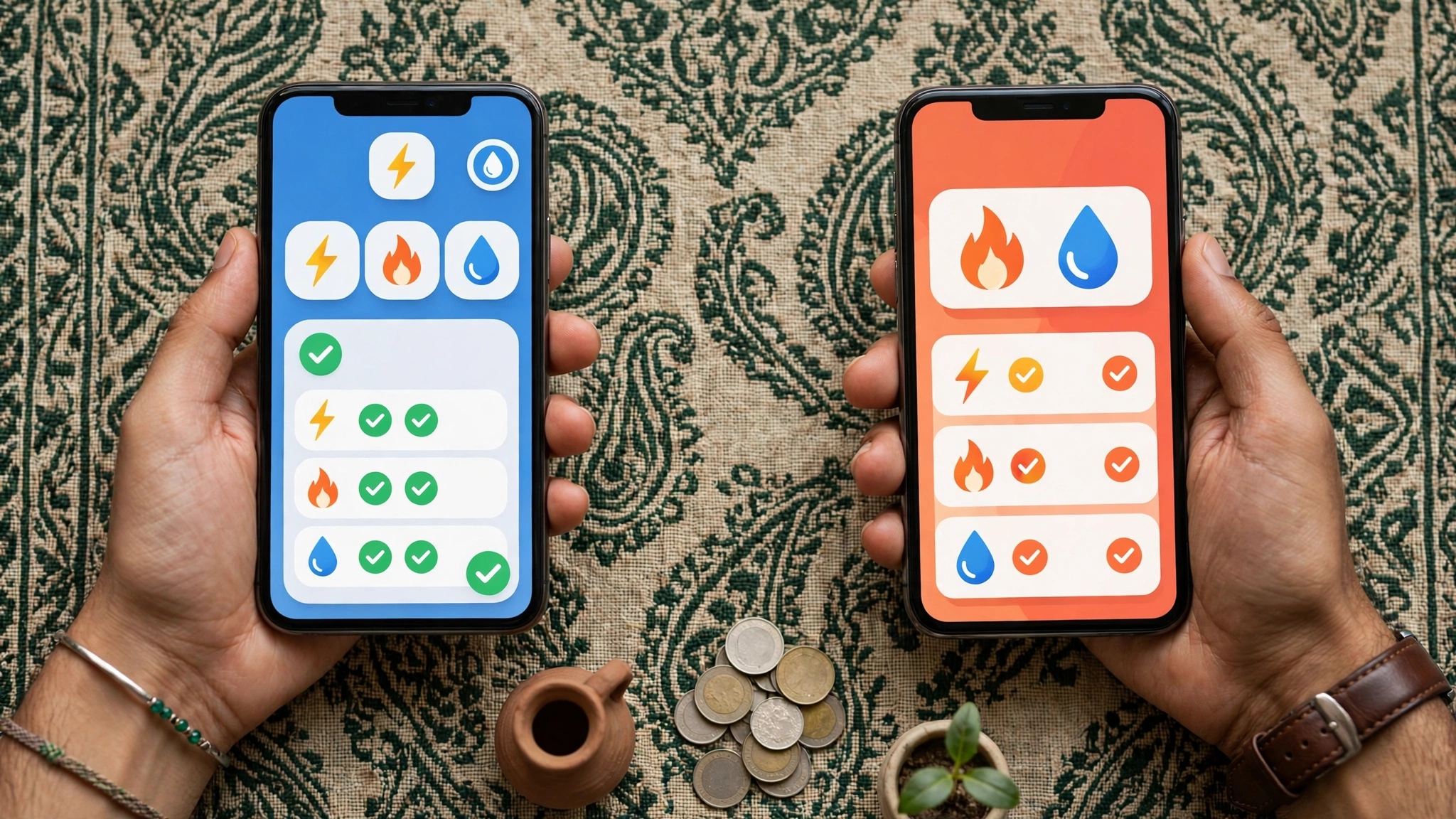
Mobile wallets have quietly changed one of the most annoying chores in Pakistan: paying bills. Not long ago, an electricity bill meant a bank queue on the last date, a stamped receipt, and a lost afternoon. Now anyone with a smartphone can clear electricity, gas, water, internet, and mobile bills in under a minute from JazzCash, Easypaisa, SadaPay, NayaPay, or UPaisa.
The apps are not identical, though. Some cover more billers. Some have a large agent network for people who still deal in cash. Some charge for things others give away, and some push loans and add-ons you never asked for. Picking the best mobile wallet in Pakistan for bills depends on what you pay, where you live, and how comfortable you are with apps.
There is also a less cheerful side. The wallet boom has attracted fraud on a large scale. The FIA has seized thousands of silicone thumb impressions used to activate SIMs and open wallet accounts in other people’s names, and the State Bank of Pakistan has fined a wallet-operating bank for compliance failures. Fake helpline calls asking for OTPs reach people every day.
This article compares the main mobile wallets in Pakistan on what matters for bill payments, walks through real cases of wrongdoing, and ends with a practical safety checklist. No sponsored rankings, just what you should know before your next due date.
How Mobile Wallets Handle Bill Payments in Pakistan
Before comparing apps, it helps to know what happens when you tap “Pay Bill.” The process is similar across all mobile wallets, and knowing it makes problems much easier to sort out.
The basic flow
- Open the app and go to the Bills or Utilities section.
- Choose the company: an electricity distributor such as LESCO, MEPCO, IESCO, or K-Electric, a gas company such as SNGPL or SSGC, PTCL or an internet provider, or a government or education fee.
- Enter the consumer number or reference number printed on your bill.
- The app fetches the amount and due date from the biller. Check that the name and amount match your paper bill.
- Confirm with your MPIN or fingerprint, and save the transaction ID or receipt.
What happens behind the screen
Most billers are connected to wallets and banks through shared payment networks, the best known being 1LINK and its 1Bill service. Your payment is recorded instantly in the wallet, but it can take a while to show on the utility company’s own website. That gap is normal. Keep the receipt until your next bill shows the payment, because the transaction ID is what support teams ask for if something goes missing.
Who regulates mobile wallets
Every legitimate wallet in Pakistan works under the State Bank of Pakistan (SBP), but not all under the same licence:
- Branchless banking wallets are run by microfinance banks. JazzCash is operated by Mobilink Microfinance Bank, Easypaisa by Telenor Microfinance Bank (now operating as Easypaisa Bank), and UPaisa by U Microfinance Bank. These come with large networks of shop-based agents.
- Electronic Money Institutions (EMIs) such as SadaPay and NayaPay are app-first. They issue debit cards and run everything through the app, with no cash agents on street corners.
All wallets use account levels based on how fully you have verified your identity, and each level has its own transaction and balance limits. If a bill payment fails for no clear reason, a limit is often the cause, so check your account level in the app.
Comparing the 5 Best Mobile Wallets for Bill Payments
Here is how the five main mobile wallets for bill payments stack up on the things that matter day to day. Fees and biller lists change often, so treat the app’s own schedule of charges as the final word.
| Wallet | Operated by | Cash agents | Biller coverage | Best for |
|---|---|---|---|---|
| JazzCash | Mobilink Microfinance Bank | Very large network | Very wide: utilities, telecom, government, education | Nationwide reach, cash users |
| Easypaisa | Easypaisa Bank (formerly Telenor Microfinance Bank) | Very large network | Very wide, strong on utilities | Everyday bills, rural users |
| SadaPay | SadaPay (EMI) | None | Main utilities and telecom | App-first users who want low fees |
| NayaPay | NayaPay (EMI) | None | Main utilities and telecom, bill splitting | Students, freelancers, shared bills |
| UPaisa | U Microfinance Bank | Smaller network | Main utilities and telecom | Ufone users |
JazzCash
JazzCash is the largest of the mobile wallets in Pakistan by user base and agent network. For bills, it covers almost every electricity and gas company, PTCL and internet providers, mobile postpaid plans, many school and university fees, and a range of government payments. If you sometimes need to load cash at a shop before paying, the agent network is a real advantage.
The downsides are the ones regular users mention most: a crowded app, frequent promotional banners, and loan offers that are easy to tap into by accident. Some transactions carry charges, so check the schedule of charges before moving larger amounts.
Easypaisa
Easypaisa launched in 2009 and was Pakistan’s first mobile wallet. It has since become a licensed digital bank. Its utility bill section is mature and well organised, it supports reminders for recurring bills, and its agent network reaches deep into areas where bank branches are thin.
Like JazzCash, it promotes micro-loans heavily, and the app has a lot going on. In the JazzCash vs Easypaisa debate, the honest answer for bill payments is that both work well. Most people choose based on which one has more agents nearby or which one their family already uses.
SadaPay
SadaPay is an app-first wallet with a Mastercard debit card and a clean, simple interface. Bill payments for the main utilities and telecom companies are built in, and the company’s whole pitch is low or zero fees on everyday transactions. Transfers to banks run through Raast, the SBP’s instant payment system.
The trade-off is that there are no cash agents. You load money from a bank account or another wallet. Support is mostly in-app chat, which some users find slow when something goes wrong.
NayaPay
NayaPay offers a Visa debit card, bill payments, and handy features for shared costs, such as splitting a bill or requesting money from friends. It is popular with students, freelancers, and people sharing a flat who split electricity and internet bills each month. Like SadaPay, it has no physical agent network.
UPaisa
UPaisa, run by U Microfinance Bank, is the smallest of the five. It handles the main utility and mobile bills and makes most sense for Ufone users who want everything in one place. Its biller list and features are narrower than the big two.
What about bank apps?
Most bank apps (HBL, Meezan, UBL, Bank Alfalah’s Alfa, JS Bank’s Zindigi, and others) also pay bills through the same networks. If you already keep money in a bank, paying from the bank app avoids moving funds into mobile wallets first. Wallets win on convenience for people without bank accounts and for those who rely on cash agents.
Real Fraud Cases Involving Mobile Wallets in Pakistan
The apps themselves are generally secure. Most fraud around mobile wallets happens at the edges: fake identities used to open accounts, weak checks at the point of sign-up, and people tricked into handing over codes. These cases show how it works.
Silicone thumbs and fake wallet accounts
Wallet accounts and SIMs in Pakistan are tied to biometric verification, which sounds airtight. Criminal gangs found a way around it by copying fingerprints onto silicone.
- In 2021, the FIA’s cybercrime wing in Faisalabad broke up a gang that allegedly obtained thumb impressions from NADRA forms with the help of an insider. According to Dawn’s report on the Faisalabad SIM fraud raids, officers recovered seven SIM activation devices, about 1,500 activated SIMs, and around 2,500 thumb impressions. The SIMs were then used for impersonation and financial scams.
- In April 2022, the FIA announced it had broken up a network in Dera Ismail Khan that made silicone thumbs used for illegal SIM activations to create fake mobile wallet accounts.
- In February 2024, an FIA crackdown in Rawalpindi on illegal SIM activation and microfinance banking fraud seized 770 silicone thumbprints and about 11,000 digital thumbprints, along with biometric verification devices.
- Across 2021 alone, the FIA said it recovered more than 60,000 fraudulently activated SIMs and about 6,700 silicone thumb impressions nationwide.
Why this matters to you: a wallet account opened in your name can be used to receive stolen money, which makes you look like the culprit. You can check which SIMs are registered on your CNIC by sending your CNIC number by SMS to 668, PTA’s verification service, and you can review linked accounts with your wallet provider.
Poverty programme payments stolen through fake fingerprints
Several gangs have targeted the people least able to afford it. Police and FIA reports from 2020 and 2021 describe fraudsters who collected thumb impressions from poor citizens, often women, on the pretext of registering them for the Ehsaas Programme or BISP. The prints were turned into silicone copies and used to activate SIMs, open mobile accounts, and draw cash meant for the beneficiaries. It is one of the clearest examples of why you should never give your thumb impression to anyone outside an official counter.
When the wallet operator itself is penalised
Regulators have also acted against the institutions behind wallets. The SBP’s published enforcement actions show that it fined Mobilink Microfinance Bank, the operator of JazzCash, Rs 20.47 million in the January to March 2023 quarter and Rs 14.64 million in the October to December 2023 quarter. The violations involved anti-money laundering rules, customer due diligence (KYC), and general banking operations, and the SBP directed the bank to hold an internal inquiry into violations related to branchless banking. You can read the details in the State Bank of Pakistan’s enforcement actions report for October to December 2023.
These were regulatory penalties, not findings that customer money was stolen. But they matter, because weak KYC checks are exactly the gap that silicone thumb gangs and money launderers exploit. Penalties like these are part of how the system tightens over time.
The everyday scam: “Share your code”
The most common fraud does not involve any technology at all. A caller claims to be from JazzCash, Easypaisa, BISP, or a bank. They say you have won a prize, your account will be blocked, or a payment is waiting. Then they ask for the OTP or MPIN sent to your phone. Once you share it, the account is emptied in minutes. FIA officials have repeatedly warned citizens not to share codes with anyone, and every wallet provider says its staff will never ask for them.
A Safety Checklist for Paying Bills With Mobile Wallets
You don’t need to be a tech expert to use mobile wallets safely. Most protection comes from a few habits.
Before you pay
- Download the app only from Google Play or the Apple App Store, and check that the developer name matches the official company.
- Set a strong MPIN that isn’t your birth year or 1234, and turn on fingerprint or face login.
- Check the biller name and amount the app fetches against your paper bill before confirming.
- Pay a few days before the due date. If a payment takes time to reflect, you still have room to sort it out without a late fee.
Habits that block most scams
- Never share your OTP, MPIN, or card CVV with anyone, for any reason. No real wallet employee will ask.
- Ignore SMS or WhatsApp messages about prizes, BISP payments, or account blocks. Call the official helpline printed in the app instead.
- Never give your thumb impression, CNIC copy, or SIM to someone offering to “register” you for a scheme.
- Check SIMs registered on your CNIC through PTA’s 668 service every few months.
- Turn off loan offers or read every screen carefully before tapping. Accidental loans carry real interest.
If something goes wrong
- Call your wallet’s official helpline right away and ask them to block the account or the transaction.
- Note the transaction ID, time, and amount, and take screenshots.
- File a complaint with the National Cyber Crime Investigation Agency (NCCIA), which took over the FIA’s cybercrime work in 2025.
- If the wallet provider doesn’t resolve your complaint, escalate it through the SBP’s complaint portal, SBP Sunwai.
Speed matters most. The sooner a fraudulent transfer is reported, the better the chance of freezing the receiving account.
The Ethical Side of Mobile Wallets
Why they are worth defending
For millions of Pakistanis without a bank account, mobile wallets are the first formal financial service they have ever used. They save time, cut travel to bank branches, and give a digital record of every payment. Women in particular, who may face barriers visiting banks, have gained more control over household payments through wallets. That is real progress and worth protecting.
What providers owe users
- Clear, visible fees, shown before the user confirms, not buried in a schedule of charges.
- Loan offers that are opt-in and clearly labelled, never one tap away from a bill payment button.
- Strict identity checks at sign-up, even when that slows down growth.
- Fast, reachable support when fraud happens, with real people and not just automated replies.
What users owe too
- Don’t lend your wallet account, SIM, or CNIC to someone else to receive or move money. This is how “money mule” accounts are built, and the account holder can face legal trouble.
- If an agent charges you an extra fee beyond the app’s schedule of charges, ask for a receipt and report it to the provider.
- Help older relatives set up their accounts yourself, rather than leaving them to a stranger at a shop.
Used carefully, wallets are one of the most useful financial tools Pakistan has. The goal isn’t to fear them. It’s to use them with the same caution you’d use with cash.
Conclusion
Mobile wallets have made bill payments in Pakistan faster and easier than ever, and for most people the choice comes down to habits rather than big differences in quality: JazzCash and Easypaisa lead on biller coverage and cash agents, SadaPay and NayaPay suit app-first users who want low fees and clean design, and UPaisa works well for Ufone customers. The bigger risks sit outside the apps, in silicone thumb gangs that open accounts in other people’s names, scams that steal poverty programme payments, compliance gaps that the State Bank has penalised, and callers who talk people into sharing their OTP. Pick the wallet that fits how you pay, verify every bill before confirming, keep your receipts, guard your codes, CNIC, and thumb impression, and report problems quickly, and your wallet will save you far more trouble than it causes.