Budget Action Cameras Tested for Travel Vlogging
Budget action cameras for travel vlogging judged on stabilization, audio, battery, fake listings and the filming laws that land vloggers in trouble.
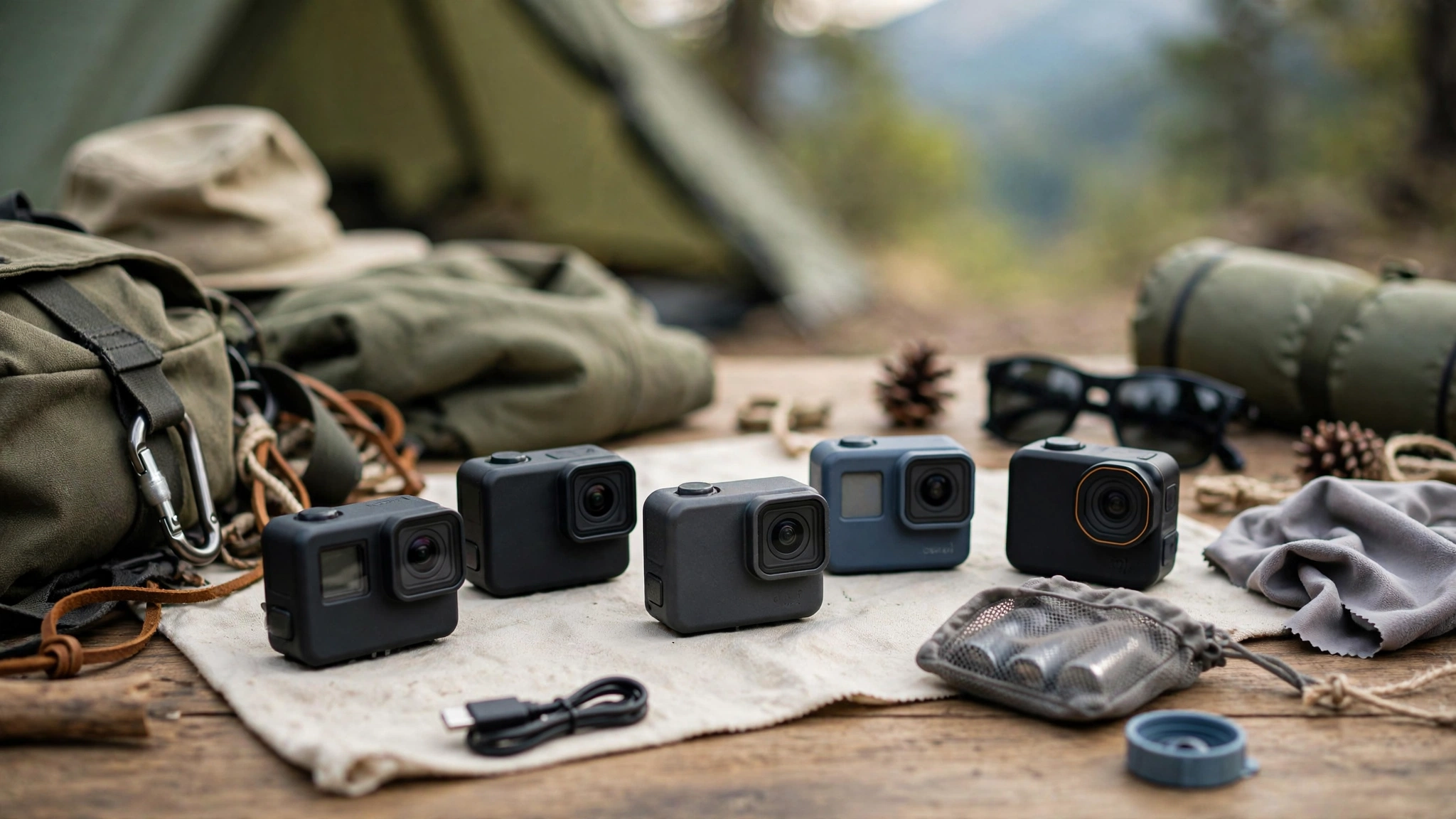
Budget Action Cameras for Travel Vlogging: 7 Honest Lessons and Painful Mistakes to Avoid in 2026
Introduction
Budget action cameras have changed what a travel vlog can look like. A few years ago, smooth footage from a bumpy bus ride through the mountains or a walk through a crowded bazaar meant expensive gear or a lot of editing. Today a camera that fits in a jacket pocket and costs less than a mid-range phone can shoot 4K, keep the picture steady and survive a dunk in a river.
But the spec sheets hide a lot. A camera that looks brilliant in a sunny product video may overheat on a summer afternoon, record wind noise that drowns out your voice, or die halfway through a day of filming. Cheap listings online also include fakes and “refurbished as new” units with no warranty. And the camera itself is only half the story. Plenty of vloggers have been detained, fined or banned from countries, not because of what they filmed with, but because of where and whom they filmed.
This guide looks at budget action cameras the way a travel vlogger actually uses them. We cover the price tiers on the market, the seven lessons that only show up on real trips, the counterfeit and legal traps with real cases, and a practical checklist for buying and packing. We do not invent lab scores or crown one magic camera. The goal is to help you spend once, film well and come home without trouble.
What Budget Action Cameras Look Like in 2026
“Budget” is a wide word. For this guide it means cameras that cost roughly under $300, or the local equivalent once import duties and dealer margins are added. Inside that range, budget action cameras fall into three clear tiers, and the jump in real-world quality between them is bigger than the jump in price.
Tier 1: Ultra-budget (around $50 to $100)
These are the no-name or lesser-known cameras sold in huge numbers online, with Akaso’s entry models among the best known. They usually come in a big kit with a waterproof case, mounts and two batteries.
- Strengths: cheap, light and fine for bright daylight clips you will cut short in editing.
- Weaknesses: small sensors, weak low-light footage, basic electronic stabilization, poor built-in microphones and often no front screen. The “4K” on the box is sometimes a low frame rate or interpolated mode.
Tier 2: Value mid-range (around $120 to $220)
Here you find newer models from Akaso, Xtra and others, plus older flagship models from big brands on clearance. Many add a front-facing screen, better stabilization and app control.
- Strengths: a real step up for self-filming, decent daylight 4K and a usable app.
- Weaknesses: still mixed in low light, and software updates can be limited.
Tier 3: Upper budget (around $220 to $300)
This tier usually includes previous-generation or “essential combo” kits from DJI, Insta360 and GoPro. Several October 2026 roundups listed the DJI Osmo Action 4 among the strongest options under $300, largely because of its 1/1.3-inch sensor, which is big for this class.
- Strengths: clearly better low-light video, strong stabilization, good front screens, reliable apps and established warranty and service networks.
- Weaknesses: batteries and official accessories cost more, and prices vary a lot by country.
Why the brand name matters more than usual
With most electronics, a generic brand can be good value. With budget action cameras for travel, the gap is more practical than prestige: firmware updates, spare battery availability, mount compatibility and repair support decide whether the camera survives a two-week trip or becomes a paperweight when one part fails abroad.


Price note: prices here are approximate US-dollar figures from late 2026 listings. In Pakistan and similar markets, the same camera can cost noticeably more through official dealers because of duties, and much less through grey-market sellers, which brings its own risks covered below.
7 Honest Lessons From Testing Budget Action Cameras on the Road
These lessons come from how budget action cameras behave in the conditions travel vloggers actually face: long days, changing light, wind, heat, crowds and no charging point in sight. They are patterns widely reported by creators and reviewers, not the result of a single lab test.
1. Audio fails before video does
The built-in microphone is the weakest part of almost every budget action camera. Walk along a beach or ride in an open rickshaw and the wind will bury your voice. Waterproof cases make it worse because they seal the mic behind plastic.
- Use a foam or furry windscreen if the camera supports one.
- Pick a model with an external microphone input or adapter, or record voice on your phone with a small wireless mic and sync later.
- For talking-to-camera segments, step out of the wind. Viewers forgive shaky video more easily than bad sound.
2. Stabilization claims assume good light
Electronic stabilization works by cropping and shifting the image. In bright daylight it looks smooth. Indoors, at dusk or in a dim bazaar, the camera needs longer exposures, and stabilization starts to produce blur, jelly-like wobble and noisy footage. Upper-tier budget action cameras with larger sensors handle this far better than ultra-budget ones. If your vlog includes night markets or evening street food, this is where to spend extra.
3. Battery life on the box is not battery life on the trip
Advertised runtime is usually measured at lower resolutions with screens dimmed and Wi-Fi off. Real travel use, with the front screen on, 4K recording and frequent stop-start clips, can cut that sharply. Heat and cold both reduce battery performance.
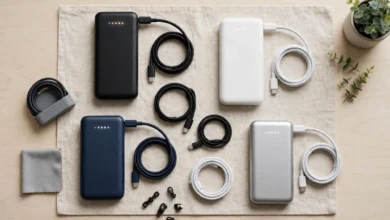
- Carry at least two spare batteries and a small power bank.
- Use a multi-battery charger so you can top up everything overnight from one socket.
- Check airline rules for carrying lithium batteries in hand luggage before you fly.
4. Heat shutdowns are real
Small bodies packed with powerful chips get hot, especially at 4K in summer sun. Many budget action cameras will warn and then shut down after continuous recording in hot conditions. Shorter clips, lower resolution, airflow from movement and keeping the camera out of direct sun between shots all help.
5. A front screen changes everything for solo vloggers
If you film yourself, a front-facing screen is not a luxury. Without one, you will spend half your trip cutting off your own forehead. Most tier 2 and tier 3 models now have one. For ultra-budget models without it, a phone app preview is a workable but slower alternative.
6. Wide angle is not always flattering
The classic action-cam fisheye look suits adventure shots but distorts faces up close and makes landmarks look far away. Good cameras offer linear or narrower field-of-view modes. Test these before your trip so you know which mode suits your talking shots, your scenery and your walking footage.
7. The workflow matters as much as the camera
Travel vloggers often film far more than they expect. Plan for:
- Fast, genuine memory cards with the speed rating the camera requires. Fake cards are common and can corrupt footage.
- A backup routine, such as copying clips to your phone or a small drive every night.
- Editing on the go with the brand’s app, if you post while travelling.
- Mounts that suit your style, such as a short selfie stick, a chest mount or a small tripod.
In practice, a well-planned kit with one of the mid-range budget action cameras often produces better vlogs than an expensive camera used without a plan.
The Legal and Ethical Side of Budget Action Cameras
Cheap, tiny cameras make it easy to film almost anywhere. That ease has a cost. Two kinds of trouble come up again and again: buying fakes, and filming where or whom you should not.
Counterfeit cameras and accessories
Popular action camera brands are heavily copied. In the Philippines, customs agents raiding a Manila building seized about P2 billion worth of counterfeit goods, including fake GoPro cameras alongside phone accessories and headsets. In 2021, Amazon and GoPro jointly sued seven individuals and two companies for selling counterfeit GoPro accessories such as grips and mounts on Amazon’s store.
Fakes are a practical risk, not just a legal one. A counterfeit battery can swell or catch fire in your bag. A fake floating grip may sink with your camera attached. A cloned camera may record far below its claimed resolution and will have no warranty or firmware updates.
How to protect yourself:
- Buy from the brand’s official store or an authorised dealer listed on the brand’s website.
- Register the serial number on the manufacturer’s site straight after purchase.
- Be suspicious of prices far below every other seller, especially for big-brand models.
- Avoid “open box” or “refurbished” units without a written warranty.
Filming in restricted places
The biggest legal risk for travel vloggers is not the camera; it is the location. Military bases, airports, border areas, police stations, government buildings and some religious sites restrict filming in many countries, including Pakistan, where sensitive installations are protected under official secrets law.
Real cases show how quickly a vlog can turn into a criminal case:
- In 2019, two Dutch YouTubers drove onto the restricted Nevada National Security Site near Area 51 while filming. They pleaded guilty and were sentenced to three days in jail and fined about $2,280 each.
- Also in 2019, Australian travel vloggers Jolie King and Mark Firkin were detained in Iran after flying a drone without a licence near a military area.
- In June 2026, Taiwan’s National Immigration Agency barred a Chinese vlogger from entering Taiwan for two years after he posted footage of restricted areas at Taoyuan International Airport, apparently recorded with a concealed camera.
- In early 2024, police in Salamis, Greece, arrested two Polish men found recording inside a military area with a drone, a camera and phones.
In each case, the footage itself became the evidence. A “no photography” sign is not a suggestion, and “I did not know” rarely works when the sign was in plain sight.
Privacy and consent
Action cameras are small enough to film people without them noticing, and chest or head mounts make it even easier. That does not make it right, and in many places it is not legal.
- Get consent before filming people up close, especially women, children and anyone in a private or vulnerable moment.
- Respect local norms. In conservative areas, filming people without permission can cause real offence and even confrontation.
- Never film in private spaces such as changing rooms, washrooms or homes without explicit permission. Covert recording in such places is a crime in most countries, including Pakistan under its cybercrime and criminal laws.
- Blur faces and number plates of bystanders when you publish, unless they have agreed to appear.
- Do not stage pranks or “exposés” that humiliate strangers for views. Several platforms remove such content, and it can lead to defamation or harassment complaints.
Drones and mounted cameras
Many vloggers pair budget action cameras with small drones. Drone rules are stricter than camera rules almost everywhere. Some countries require registration, permits or a licence, ban flights near airports and military sites, or prohibit importing drones without approval. Check the aviation authority’s rules for each country before you pack one.
How to Choose Budget Action Cameras for Travel Vlogging
Use this checklist to narrow down budget action cameras before you buy, then pack the right kit around whichever one you choose.
Match the camera to your vlogging style
| Your style | What to prioritise | Suggested tier |
|---|---|---|
| Occasional holiday clips | Low price, waterproof case | Tier 1 |
| Solo talking-to-camera vlogs | Front screen, mic input, good stabilization | Tier 2 or 3 |
| Night markets, indoor and evening scenes | Larger sensor, better low light | Tier 3 |
| Hiking, cycling and water sports | Waterproofing, mounts, battery life | Tier 2 or 3 |
| Posting daily while travelling | Reliable phone app and fast transfers | Tier 3 |
Pre-purchase checklist
- Check the real video modes. Look for genuine 4K at 30fps or higher and confirm stabilization works in that mode.
- Confirm a front screen if you will film yourself.
- Check audio options: an external mic input, an adapter, or wireless mic support.
- Look up spare battery prices and availability in your country.
- Read recent firmware notes on the brand’s site. Regular updates are a good sign.
- Watch unedited sample footage from real users in low light, not just promotional videos.
- Buy from an authorised seller and keep the invoice and warranty card.
A sensible travel vlogging kit
- The camera and at least two spare batteries
- A multi-battery charger and a power bank
- Two genuine memory cards from a trusted seller
- A short selfie stick that doubles as a mini tripod
- A windscreen or small wireless microphone
- A chest or clip mount for walking shots
- A small microfibre cloth and lens protector
- A way to back up footage each night
Before you start filming in a new country
- Read the country’s rules on photography near government, military and transport sites.
- Check drone rules separately if you carry one.
- Learn a polite phrase for asking permission to film people.
- Respect signs, guards and staff instructions at once, and delete footage if asked by legitimate authorities rather than arguing on camera.
- Keep your camera’s mounting and appearance visible rather than hidden. Concealed filming invites suspicion and, in some places, criminal charges.
Conclusion
Budget action cameras can now produce travel vlogs that would have needed far pricier gear a few years ago, but the box specs only tell part of the story. On real trips, audio, low-light performance, battery life, heat and a front screen decide whether footage is usable, and those are exactly the areas where the cheapest models fall short and upper-budget options from established brands pull ahead. Buying from authorised sellers protects you from the counterfeit cameras, batteries and accessories that customs raids and brand lawsuits keep uncovering, while respecting filming laws and people’s privacy protects you from the arrests, fines and entry bans that have already caught vloggers near military sites and airports. Choose among budget action cameras with your vlogging style in mind, build a simple kit with spare power, good audio and a backup routine, and film with consent and common sense, and your camera will bring home stories rather than trouble.