How to Export Products From Pakistan: A Beginner’s Guide
How to export products from Pakistan: a clear, practical roadmap covering registration, WeBOC, PSW, documents, and finding buyers.
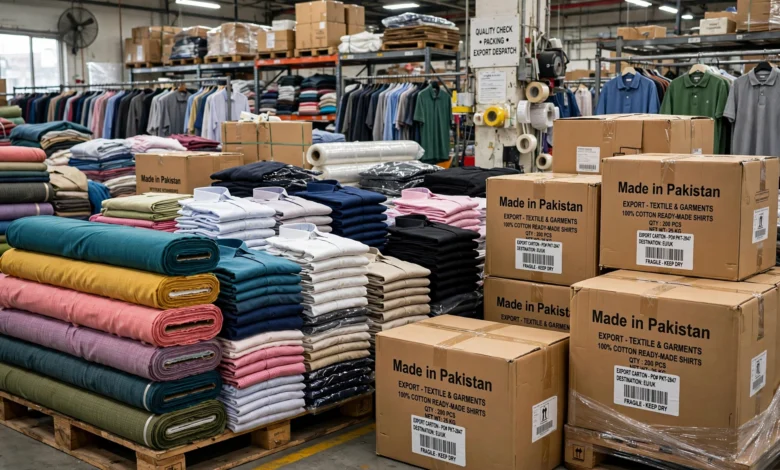
If you’ve ever wondered how to export products from Pakistan, you’re looking at one of the most promising side hustles or business ventures available right now. Pakistan produces textiles, rice, leather goods, surgical instruments, sports gear, and agricultural products that are in steady demand across the Middle East, Europe, and North America. The problem most beginners run into isn’t a lack of good products, it’s not knowing where to start with registration, paperwork, and finding real buyers.
This guide walks you through the entire process of how to export products from Pakistan, from registering your business to shipping your first container. We’ll cover the government portals you’ll need (WeBOC and PSW), the licenses and certificates that make your shipments legal, how to pick a product and market that actually make sense for a new exporter, and where to find buyers who will pay you on time. We’ll also flag the mistakes that trip up almost every first-time exporter, so you can skip them.
You don’t need a huge budget or a background in international trade to get started. What you need is a clear sequence of steps, done in the right order, and a realistic understanding of how long each part takes. By the end of this article, you’ll have a complete picture of what’s required to turn a product you can source or manufacture in Pakistan into an export order that lands, and gets paid for, on the other side of the world.
Why Export From Pakistan Is a Real Opportunity Right Now
Pakistan’s export sector has room to grow, and the government has been actively simplifying procedures to bring in new exporters. A few reasons this matters if you’re starting out:
- Lower production costs compared to many competing countries, especially in textiles, leather, and light manufacturing
- Established product categories with existing global demand: rice, garments, home textiles, surgical and sports equipment, and agricultural goods
- Government support through the Trade Development Authority of Pakistan (TDAP), including subsidies, trade fairs, and market access programs
- Digital customs systems like WeBOC and the Pakistan Single Window that have cut down on paperwork and processing time compared to a decade ago
None of this means exporting is easy. It means the infrastructure exists, and if you follow the right steps, a small or medium business can realistically compete for international orders.
Step 1: Register Your Business Legally
Before you can export products from Pakistan, your business needs a proper legal identity. This is the foundation everything else sits on.
Choose a Business Structure
You can operate as a sole proprietorship, a partnership, or a private limited company registered with the Securities and Exchange Commission of Pakistan (SECP). A sole proprietorship is the fastest and cheapest way to start, and it’s what most first-time exporters choose. A private limited company adds credibility with larger international buyers and makes it easier to open corporate bank accounts, but it comes with more paperwork.
Get Your National Tax Number (NTN)
Every exporter needs an active National Tax Number registered with the Federal Board of Revenue (FBR). You’ll register your business details, CNIC, and bank account information through the FBR’s IRIS portal to get your NTN. This number is required for almost every step that follows, including your Sales Tax Registration Number (STRN) if your product category needs one.
Open a Business Bank Account
You’ll need a current account in your business name to receive international payments. Banks in Pakistan require your NTN, business registration documents, and proof of your business address before opening this account. This account is also where your export proceeds will land once a shipment is paid for.
Step 2: Join a Chamber of Commerce
Membership in a Chamber of Commerce and Industry (such as the Karachi, Lahore, or Faisalabad chambers) is required for several later steps, including your Certificate of Origin. Membership fees are modest and renewal is annual, but skipping this step will block you later when a buyer’s bank asks for a Certificate of Origin on a Letter of Credit.
Step 3: Register With WeBOC (Web-Based One Customs)
WeBOC is Pakistan’s online customs clearance system, and you cannot legally clear a shipment through customs without it. This is one of the most important steps when you’re figuring out how to export products from Pakistan, so it’s worth doing carefully.
To register with WeBOC, you’ll generally need:
- A valid, active NTN and STRN from FBR
- CNIC copies of the business owner or company directors
- Proof of business premises (rent agreement or ownership documents)
- A bank account maintenance certificate
- SECP incorporation documents (if registered as a company)
You submit these through the WeBOC portal, and once verified, you’re issued a user ID and password that lets you file your Goods Declaration (GD) for every shipment. Many new exporters choose to work with a licensed customs clearing agent for their first few shipments, since a small error in the GD can hold up a container at the port.
Step 4: Register on the Pakistan Single Window (PSW)
The Pakistan Single Window is a newer digital platform that connects multiple government departments, customs, regulatory bodies, and trade agencies, into one system. PSW registration now works alongside WeBOC and is mandatory for clearing your Goods Declaration. Without an active PSW ID, your export documentation gets stuck even if your WeBOC account is fully active. Registration is done online and uses the same core documents as your WeBOC application, so it’s efficient to apply for both around the same time.
Step 5: Register With TDAP
The Trade Development Authority of Pakistan (TDAP) is the government body tasked with promoting Pakistani exports abroad. Registering with TDAP isn’t always mandatory depending on your product, but it opens up real advantages:
- Access to export subsidies and freight support schemes for certain product categories
- Invitations to international trade fairs and exhibitions, often at subsidized rates
- Market research and buyer-matching services for specific countries
- A recognized exporter status that some overseas buyers look for
You can check current registration requirements and sector-specific guidance directly on the TDAP website, which also publishes updated step-by-step exporter guides.
Step 6: Choose the Right Product and Market
A lot of beginners try to export whatever is easiest to source, without checking whether there’s real demand for it abroad. Before you commit, ask:
- Does this product already have an established export history from Pakistan? (Textiles, rice, leather, surgical instruments, and sports goods all have strong track records.)
- Can you consistently meet quality and quantity requirements for repeat orders, not just a one-off sample?
- What import regulations, tariffs, or certifications does your target country require for this product category?
- Do you have a genuine cost advantage or quality edge over competitors from India, Bangladesh, or Vietnam?
Starting with one product and one or two target markets is far more manageable than trying to sell everything everywhere at once. Get your first few shipments right, build a track record, and expand from there.
Step 7: Prepare Your Export Documentation
Every shipment needs a specific set of documents, and missing even one can delay your cargo at the port or, worse, at the buyer’s end. The standard documentation set includes:
- Commercial Invoice – details the goods, price, and terms of sale
- Packing List – itemizes exactly what’s in each carton or container
- Bill of Lading or Airway Bill – issued by the shipping line or airline as proof of shipment
- Certificate of Origin – issued by your Chamber of Commerce, confirming the goods were made in Pakistan
- Goods Declaration (GD) – filed through WeBOC for customs clearance
- Letter of Credit or payment terms documentation – if the buyer is paying via LC
- Any product-specific certificates – phytosanitary certificates for agricultural goods, testing certificates for textiles, or health certificates for food items, depending on the destination country’s requirements
Keep digital and physical copies of everything. Buyers’ banks are strict about document accuracy, especially under a Letter of Credit, and a mismatched invoice number or address can delay payment for weeks.
Step 8: Understand Your Payment Options
New exporters lose money more often to payment mistakes than to bad products. The common international payment methods are:
- Letter of Credit (LC) – the safest option for new exporters, since the buyer’s bank guarantees payment once you meet the agreed documentation terms
- Telegraphic Transfer (TT) – often split as an advance payment before shipment and the balance after, common with buyers you’ve worked with before
- Documents Against Payment (DP) or Documents Against Acceptance (DA) – riskier, since the buyer only pays once the shipping documents reach their bank
For your first few export deals, an LC or a partial advance payment through TT is worth insisting on, even if it means losing a buyer who won’t agree to it. Trust is built over time, not on your first transaction.
Step 9: Find Buyers and Build Relationships
Once your registration and documentation are in order, the real work of exporting is finding buyers who will actually place orders and pay reliably. A few proven channels:
- B2B marketplaces such as Alibaba, TradeKey, and Global Sources, where you can list products and respond to buyer inquiries
- TDAP-organized trade fairs, both in Pakistan and abroad, which put you in direct contact with international importers
- Industry-specific trade shows in your target country, if your budget allows travel
- LinkedIn outreach to procurement managers and importers in your product category
- Existing exporter networks in your industry, who sometimes pass on orders they can’t fulfill themselves
Respond quickly to inquiries, send samples when asked, and be upfront about your minimum order quantities and lead times. Overseas buyers are cautious with new suppliers, and clear, consistent communication does more to win repeat business than aggressive pricing.
Step 10: Arrange Shipping and Logistics
Once you have a confirmed order, you’ll need to arrange freight, either by sea (for larger, heavier shipments) or by air (for smaller, time-sensitive orders). Most new exporters work with a freight forwarder who handles booking cargo space, coordinating with the shipping line, and managing the paperwork handoff to your customs clearing agent. Get quotes from at least two or three forwarders, and confirm exactly what’s included, since freight, insurance, and destination charges are often quoted separately.
Common Mistakes First-Time Exporters Should Avoid
- Skipping the Chamber of Commerce membership until a buyer’s bank asks for a Certificate of Origin, then scrambling to get it last minute
- Underpricing to win a first order, without accounting for freight, packaging, and customs costs, leaving no margin
- Ignoring product-specific certification requirements in the destination country, which can result in cargo being rejected on arrival
- Shipping before confirming payment terms in writing, especially with a new buyer
- Not double-checking WeBOC and PSW documentation before filing, since small errors delay clearance and add demurrage costs at the port
Conclusion
Learning how to export products from Pakistan comes down to a manageable sequence: register your business and get your NTN, join a Chamber of Commerce, register on WeBOC and the Pakistan Single Window, consider TDAP registration for the support it offers, choose a product and market you can realistically serve, and get your documentation and payment terms right before you ship.
None of these steps is complicated on its own, and the government’s move toward digital systems has made the process faster than it was even a few years ago. What actually separates successful exporters from those who give up isn’t luck, it’s patience with the paperwork, care in choosing reliable buyers, and a willingness to start small and build a track record before scaling up.