How Pakistani Startups Are Attracting International Investors
Pakistani startups are drawing global capital through revenue discipline, fintech innovation, and regional expansion strategies that investors trust.
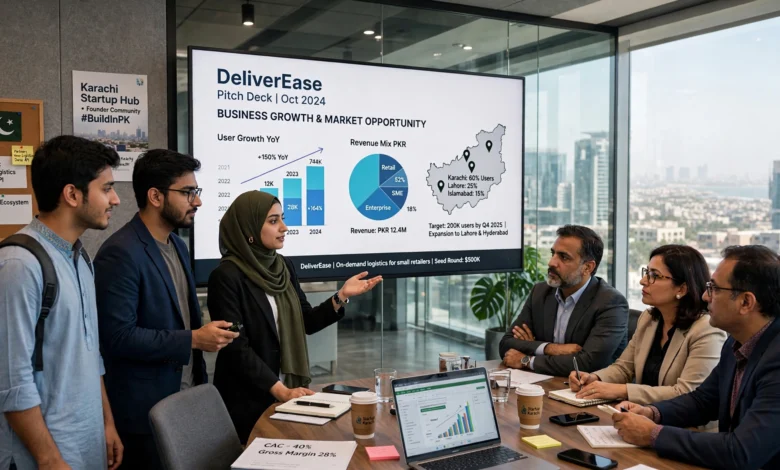
Pakistani startups are no longer a footnote in global venture conversations. Over the past few years, founders in Karachi, Lahore, and Islamabad have shifted from chasing headlines to building companies that actually make money, and that shift is exactly what has caught the attention of international investors. The old playbook of raising a big round on a slick pitch deck and hoping growth would follow has quietly given way to something more grounded: real revenue, tighter unit economics, and a clear plan for expanding beyond Pakistan’s borders.
This matters because the funding environment itself has changed. Early-stage capital is more available locally than it was five years ago, but scaling past that first big milestone still depends heavily on foreign backers. Fintech, logistics, healthtech, and even climate-focused ventures are the sectors where this trend shows up most clearly, with founders learning to speak the language that global VCs actually respond to.
In this article, we’ll break down exactly how Pakistani startups are positioning themselves for international capital, what investors are looking for right now, and which sectors are leading the charge. Whether you’re a founder preparing your next raise or simply curious about Pakistan’s startup trajectory, this guide covers the practical strategies driving real results.
Why International Investors Are Paying Attention to Pakistani Startups
For a long time, Pakistan’s startup scene was seen as promising but risky. A large, young, mobile-first population made the market attractive on paper, but currency volatility, regulatory uncertainty, and a shallow local investor base made many global funds hesitant to commit.
That perception is changing. Pakistani startups are increasingly demonstrating the kind of operational maturity that reassures outside capital. A few structural shifts are behind this:
- Improved macroeconomic stability, which has made currency risk easier for foreign funds to price and manage
- Regulatory reforms, including tax pass-through treatment for venture capital funds introduced under recent finance legislation, bringing Pakistan closer to international norms
- A maturing talent pool, with Pakistan ranking among the top countries globally for outsourcing talent, according to recent industry indexes
- Government-backed co-investment support, such as the Pakistan Startup Fund, which reduces the risk for a lead international investor by sharing the capital commitment
None of this means capital is flowing freely. Global venture funding has become concentrated in a handful of large AI companies, and growth-stage capital for founders outside Silicon Valley remains thin. But within that tighter environment, Pakistani founders who show discipline and traction are finding real doors open.
Building Revenue Before Raising: The New Fundraising Mindset
One of the clearest patterns among successful Pakistani startups is a change in what gets pitched first. Investors used to hear growth projections and market size numbers before anything else. Now, the first slide is often revenue.
Why Revenue Clarity Wins Investor Trust
International investors have seen plenty of markets go through hype cycles, and they know how to spot a deck built on adjectives instead of evidence. Founders who can show:
- Paying customers, even a small number
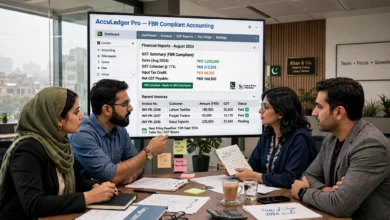
- Clean, auditable financial records
- A defined path to profitability rather than just user growth
…are the ones getting term sheets. This is a deliberate change in approach. Industry commentators covering Pakistan’s startup ecosystem have been blunt about it: the market no longer needs more pitch decks designed to impress a room, it needs companies that collect payments, protect their intellectual property, and survive financing gaps long enough to earn real expansion.


Hybrid Financing Is Becoming the Norm
Alongside this shift, hybrid financing structures are gaining ground. Instead of pursuing a single large equity round, many founders are combining smaller equity injections with revenue-based financing or debt instruments. This approach:
- Reduces dilution for founders in early stages
- Signals financial discipline to prospective investors
- Creates a track record of meeting obligations, which builds credibility for a future larger raise
Fintech company Haball, for example, raised a hybrid pre-Series A round exceeding $50 million, a structure that reflected exactly this trend toward blended capital rather than a pure equity play.
Fintech Leads the Charge for International Capital
If there’s one sector consistently pulling in international investors, it’s fintech. Pakistan’s largely underbanked population, combined with rapid smartphone adoption, has created fertile ground for digital payments, lending, and financial infrastructure companies.
What Makes Fintech Attractive to Global Funds
- Massive addressable market: millions of Pakistanis remain outside formal banking, giving fintech products room to scale quickly
- Regulatory tailwinds: the State Bank of Pakistan has continued to expand digital payments infrastructure, making it easier for fintech products to plug into a formal financial system
- Cross-border relevance: payment and remittance solutions built for Pakistan often translate well to other emerging markets facing similar banking gaps
Recent examples include smaller fintech players securing foreign investment specifically because their models were proven domestically first, then pitched as regionally scalable. This “prove it at home, expand abroad” sequencing has become a template other sectors are now copying.
Logistics, Healthtech, and the Rise of Niche Verticals
While fintech gets the most attention, Pakistani startups in logistics and healthtech are quietly building some of the strongest international investor relationships.
Logistics Startups Expanding Regionally
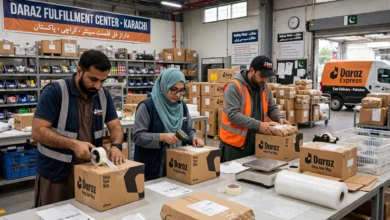
Companies in this space have started looking beyond Pakistan almost immediately after establishing local traction. A notable example is a Pakistani logistics and financial services startup that expanded its operations into Saudi Arabia, a move that signaled to investors that the underlying technology and operational model could work outside a single domestic market. This kind of early regional proof point is exactly what international investors want to see before committing larger checks.
Healthtech’s Quiet Growth
Healthtech has emerged as one of the sectors receiving fresh financing, particularly as digital health infrastructure gaps become more visible. Startups solving for:
- Telemedicine access in underserved areas
- Digital health records and diagnostics
- Affordable insurance-adjacent products
…are attracting interest because the problems they solve aren’t unique to Pakistan. A working healthtech model here can often be repositioned for other South Asian or Gulf markets with relatively minor adjustments.
Emerging Niches Worth Watching
A few smaller but fast-growing categories are also drawing foreign capital:
- Wedding tech and events platforms, benefiting from a large, culturally significant spending category
- Sports tech, tapping into a young, engaged population
- SaaS and cloud computing, particularly tools built for other emerging markets rather than just the domestic economy
Government Support and Policy Changes Behind the Scenes
Pakistani startups don’t operate in a vacuum, and the policy environment has played a real role in making the country more attractive to outside capital.
The Pakistan Startup Fund
Backed by the Ministry of IT and Telecom, the Pakistan Startup Fund offers equity-free co-investment alongside qualifying venture capital rounds. For an international investor, this is meaningful because it means:
- Risk is shared with a credible government-backed entity
- The startup has already passed a baseline vetting process
- There’s an existing relationship with local regulators that can smooth future operations
To qualify, a startup typically needs a signed commitment letter or an advanced term sheet discussion with a credible lead investor, along with evidence of market traction and full tax compliance, including a valid National Tax Number and good standing with the Securities and Exchange Commission of Pakistan.
Tax and Regulatory Reform
Recent finance legislation introduced tax pass-through treatment for venture capital funds, aligning Pakistan more closely with how VC structures are taxed in more established markets. This kind of reform doesn’t generate headlines the way a funding round does, but it’s exactly the sort of detail international legal and finance teams check before greenlighting a deal.
International Ecosystem Partnerships
Pakistan has also been actively building bridges abroad. Initiatives connecting local startups with global investors through international forums, along with expanding technology cooperation agreements with countries like Japan, are creating direct introduction pathways that founders previously had to build entirely on their own.
What International Investors Actually Look for in Pakistani Founders
Talking to venture capital firms active in Pakistan reveals a fairly consistent checklist. If you’re a founder trying to understand how Pakistani startups are successfully closing rounds with foreign backers, this is the real criteria:
- Realistic financial projections rather than best-case fantasy numbers
- Clean corporate governance, including proper share structures and documented cap tables
- A credible plan for regional or international expansion, not just domestic growth
- Evidence of customer retention, not just acquisition
- A founding team with relevant execution experience, whether domestic or international
- Defensible technology or market position, something that can’t be copied by a well-funded competitor in six months
Investors backing Pakistani startups today are explicitly favoring capital-efficient business models over rapid, expensive growth strategies. That’s a meaningful departure from the earlier “growth at all costs” era of global venture investing, and it plays to the strengths of founders who’ve had to be resourceful simply because local capital was historically harder to access.
The Role of Diaspora Networks and Global Connections
One underappreciated factor in how Pakistani startups attract international investors is the Pakistani diaspora working in tech hubs like Silicon Valley, London, and Dubai. These networks provide:
- Warm introductions to venture funds that might otherwise never look at a Pakistani deal
- Mentorship from founders and operators who’ve already navigated Western fundraising processes
- Credibility by association, since diaspora angels or advisors often co-invest alongside larger funds
Founders who actively cultivate these relationships, rather than relying purely on cold outreach or local networking, tend to have a measurably easier time getting in front of decision-makers abroad.
Challenges That Still Slow Down International Investment
It would be misleading to present this as a straightforward success story. Pakistani startups still face real friction when courting foreign capital.
- Currency risk remains a concern for funds calculating returns in dollars against a historically volatile rupee
- Growth-stage capital is thin, meaning even startups that raise a strong seed round can struggle to find a Series A or B lead, often being pushed toward foreign capital simply because local options run out
- Global capital concentration in large AI companies has pulled attention and dollars away from smaller, diverse, early-stage bets worldwide, not just in Pakistan
- Perception lag, where some international investors still associate Pakistan with outdated narratives about political or economic instability, regardless of current conditions on the ground
Founders who succeed despite these headwinds tend to address them directly in their pitch rather than hoping investors won’t ask. Being upfront about currency hedging strategies, corporate structuring choices (some startups incorporate holding entities in jurisdictions like Delaware or Singapore to ease foreign investment), and realistic timelines tends to build more trust than glossing over the risks.
Practical Steps for Founders Seeking International Capital
If you’re building a startup in Pakistan and want to attract serious foreign investment, a few practical moves consistently pay off:
- Get your financial records audit-ready early, even before you think you need to raise
- Build a small, provable customer base before scaling spend, so you have real usage data to show
- Consider a holding company structure in a jurisdiction familiar to international investors, if your business model supports it
- Network deliberately with diaspora investors and advisors, not just local accelerators
- Study investor theses carefully before reaching out, since firms active in Pakistan increasingly publish clear criteria about what they will and won’t fund
- Plan your regional expansion story from day one, even if you’re not executing it yet, because investors want to know the ceiling isn’t limited to one country
Conclusion
Pakistani startups are earning international investment not through louder pitches but through better fundamentals: proven revenue, disciplined financial structures, smart use of hybrid financing, and a clear-eyed plan for expanding beyond Pakistan’s domestic market. Sectors like fintech, logistics, and healthtech are leading this shift, supported by meaningful policy reforms and a startup fund ecosystem designed to share risk with foreign backers.
Real challenges remain, from currency volatility to a global funding environment increasingly concentrated in a few large AI players, but founders who build with discipline, transparency, and a genuine regional growth strategy are finding that international capital is more accessible than the old narratives suggested. For anyone watching where global venture money is headed next, Pakistan’s startup ecosystem is worth a much closer look.