Top AI Video Generators Pakistani Content Creators Should Know About
AI video generators are changing content creation in Pakistan. Here are the 8 best tools for 2026, with pricing tips, legal risks and ethical rules.
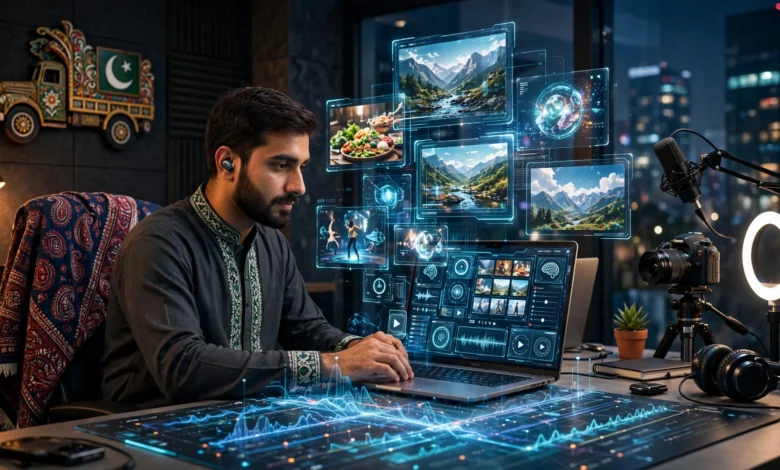
AI Video Generators: 8 Best Tools Every Pakistani Creator Should Know in 2026
AI video generators have changed what a single Pakistani creator can make with a laptop and an internet connection. A cooking channel in Lahore can now add cinematic B-roll of steaming biryani without renting a studio. A history explainer channel in Peshawar can show the Mughal court in motion. A small clothing brand in Faisalabad can test ten ad concepts in an afternoon instead of paying for ten shoots.
The tools have improved fast. Several now produce realistic clips with synchronised sound, better camera control and longer scenes than seemed possible even a year ago. The landscape has also shifted. OpenAI’s Sora, once the most talked-about name, has been shut down, and newer models from Google and Chinese companies now lead the rankings.
But there’s another side to this story that most “best tools” lists ignore. The same software has been used to make deepfakes of Pakistani politicians, sexualised fake videos targeting women, fake celebrity endorsements, and clips that copy famous copyrighted characters. Some of these cases have ended up in court, and platforms like YouTube have tightened rules around AI content and monetization.
This guide covers the eight AI video generators that matter most for Pakistani creators in 2026, what each one is actually good at, the practical realities of paying for and using them from Pakistan, and the legal and ethical lines you need to stay behind if you want to build a channel that lasts.
What Are AI Video Generators and How Do They Work?
AI video generators are tools that create video clips from text descriptions, images or existing footage. You type something like “a slow drone shot over Hunza Valley at sunrise, autumn colours, mist on the river,” and the software produces a short clip matching that description.
Most tools support three main modes:
- Text to video AI: You describe a scene in words and the tool generates it from scratch.
- Image to video: You upload a photo, such as a product shot or artwork, and the tool animates it.
- Video to video: You upload existing footage and the tool restyles or edits it.
A newer category, AI avatars, lets you create a talking presenter who reads your script on camera. This is popular with faceless YouTube channels and educational creators.
Behind the scenes, these tools use large models trained on huge amounts of video. That training data matters, and it’s at the centre of some of the legal disputes covered later in this article.
Why AI Video Generators Matter for Pakistani Content Creators
Pakistani creators face some specific challenges that make these tools especially useful:

- Low budgets: Hiring camera crews, locations and actors is expensive, and many creators work alone.
- Access to footage: Getting B-roll of international locations, historical scenes or abstract concepts is difficult.
- Brand demand: Small businesses selling on Instagram, TikTok and Facebook need a constant stream of short video ads.
- Freelance work: Many Pakistani freelancers now offer AI video services to international clients on Fiverr and Upwork.
Used well, AI video tools for Pakistani creators can level the playing field. Used carelessly, they can get your channel demonetised or land you in legal trouble.
The 8 Best AI Video Generators for Pakistani Creators in 2026
There’s no single winner. As one 2026 comparison put it, the best tool depends on the job, with Runway suited to camera control and editing, Kling to high-motion scenes, and Google’s Veo to realistic marketing concepts. Here’s how the main options compare.
1. Google Veo 3.1: Best All-Round Quality
Google’s Veo is widely considered the top Western option right now. One review described Google Veo 3.1 as the strongest all-around quality model in 2026, and it’s well known for generating clips with synchronised audio.
Why Pakistani creators should care:
- It’s accessible through Google’s own products, and Canva’s AI video feature is powered by Veo 3, which makes it easy for designers already using Canva.
- It handles realistic scenes, product shots and cinematic mood well.
- Limited free quotas are available through Google AI Studio for testing.
Best for: Cinematic B-roll, realistic ad concepts, polished hero shots for documentaries.
Watch out for: Realism is exactly what makes misuse dangerous. Anything that could pass as real footage needs clear disclosure.
2. Kling 3.0: Best Value and High-Motion Scenes
Kling, from Chinese company Kuaishou, has become a favourite among budget-conscious creators. It’s been described as the cheapest premium AI video model in 2026, and one leaderboard review noted that Kling 3.0 Pro leads among models you can actually license on the text-to-video-with-audio rankings.
Why Pakistani creators should care:
- Strong value for money, which matters when paying in dollars from a rupee income.
- Handles fast motion like sports, dancing and action shots better than many rivals.
- Its multi-shot storyboarding has been called the cleanest implementation in the field.
- Kling is among the tools offering the most generous starting allowances on free tiers.
Best for: Social media reels, action shots, volume testing of ad ideas.
3. Runway Gen-4.5: Best for Creative Control
Runway works differently from most AI video generators. Instead of just selling clips by the second, it offers a full creative environment with keyframes, motion brush, video-to-video and camera controls. At its November 2025 launch, Gen-4.5 topped the without-audio leaderboard.
Why Pakistani creators should care:
- If you edit professionally or produce client work, the control tools save time.
- Several reviewers consider Runway the strongest pick for marketers.
- On free plans, Runway’s output is watermark-free within its limits.
Best for: Freelancers producing client deliverables, music videos, short films and branded content.
4. Seedance 2.0: Strong Realism From ByteDance
Seedance, from TikTok’s parent company ByteDance, has quickly become one of the most talked-about models. It’s been listed among the strongest options for a single polished clip, rated highly for realism. Reviewers also recommend it for creators who valued combining audio with multi-shot scenes.
Best for: Realistic short scenes and multi-shot storytelling, especially for creators focused on TikTok-style content.
5. Hailuo (MiniMax): Beginner-Friendly and Generous
Hailuo is less famous than the big names, but it’s on most serious shortlists. Along with Kling, it offers some of the most generous starting allowances for free users, making it a good tool to learn on before spending money.
Best for: Beginners experimenting with prompts, students, and creators testing whether AI video fits their channel.
6. Pika: Quick, Fun and Social-First
Pika has focused on short, playful clips and effects that suit social media. It appears on nearly every major 2026 comparison and is a practical choice for creators who want fast results rather than cinematic perfection.
Best for: Instagram reels, meme-style content, quick visual effects and trend-based videos.
7. Luma Dream Machine: Smooth Motion and Image Animation
Luma’s Dream Machine is known for turning still images into smooth, natural-looking motion. It regularly appears in head-to-head comparisons with Kling and Runway.
Best for: Animating product photos, artwork, travel photos and thumbnails into short moving clips.
8. AI Avatar Tools (HeyGen, Synthesia and Similar)
Avatar tools work differently from the generators above. Instead of creating scenes, they generate a talking presenter who reads your script, often with lip-synced translations into other languages.
Why Pakistani creators should care:
- Useful for educational content, corporate training videos and explainer channels.
- Can translate a video into multiple languages, helpful for reaching overseas Pakistani audiences.
- Good option for creators who prefer not to show their face.
Important caution: These tools can also clone a real person’s face and voice. Only ever create an avatar of yourself, or of someone who has given clear, written permission.
What About Sora?
Many older articles still list OpenAI’s Sora as a top pick. That advice is outdated. OpenAI announced in March 2026 that the Sora web and app experiences would close on April 26, 2026, with the API following on September 24, 2026. If you see a guide recommending Sora for new projects, it’s out of date.
Model Hubs: One Subscription, Many Tools
If you don’t want to commit to one tool, platforms like Krea, Leonardo, OpenArt, fal and Higgsfield offer pay-as-you-go access to Veo, Kling, Seedance, Pika and others in one place. This can be a smart way for Pakistani creators to test several AI video generators without multiple subscriptions.
Practical Realities of Using AI Video Generators From Pakistan
Lists written for Western creators rarely mention these issues, but they matter here.
Paying in Dollars
Most tools bill in US dollars, which means currency swings directly affect your costs. International card payments can also be a hurdle. Many Pakistani freelancers use services like Payoneer or local digital banks such as SadaPay and NayaPay, which offer virtual cards for online payments. Always check that your card supports international subscriptions before signing up, and watch for foreign transaction charges.
Costs Add Up Quickly
Pricing is usually per second or per credit. Top-tier models typically cost between $0.10 and $0.75 per second of video. That sounds small until you realise you may need several attempts to get one usable clip. Plan a budget and track your credits.
Free Tiers Have Limits
Almost every tool offers free credits, but no production-quality tool gives completely free, unrestricted output at meaningful volume. Free versions may add watermarks, lower resolution or limit commercial use.
Commercial Rights
If you’re making videos for clients or monetised channels, check the licence. Veo 3.1, Kling 3.0 and Runway all allow commercial use on paid plans, but terms differ between providers and change over time. Read the terms before using clips in paid work.
Internet and Upload Speed
Generation happens on the company’s servers, so you don’t need a powerful computer. But downloading high-resolution clips and uploading finished videos can be slow on weaker connections. Working during off-peak hours helps.
The Dark Side: How AI Video Tools Have Been Misused
Any honest guide to AI video generators has to cover how they’ve been abused. These cases show where the legal and ethical lines are.
Deepfakes Targeting Pakistani Women
In 2024, Punjab Information Minister Azma Bukhari discovered a sexualised deepfake video of herself spreading online, with her face placed on another woman’s body. The case went to the Lahore High Court, which directed her to take it to the FIA. In April 2026, the court granted post-arrest bail to two suspects following a complaint with the NCCIA. The matter remains before the courts, and no one has been found guilty.
The case shows how easily face-swapping tools can be turned into weapons, especially against women, and how painful and slow the legal route can be.
Deepfakes During the India-Pakistan Conflict
During the May 2025 conflict, a deepfake of Prime Minister Shehbaz Sharif was edited to show him conceding defeat, when the original clip showed him praising the air force. Deepfakes of Indian leaders apologising to Pakistan also circulated. Creators who made or shared such content helped spread dangerous disinformation during a military crisis.
Fake Celebrity Endorsements
Scammers have used AI video to make celebrities appear to promote products. In one widely reported case, AI-generated ads using Taylor Swift’s likeness fooled some fans with a fake cookware giveaway meant to steal their personal and payment details. Pakistani creators should never use a celebrity’s face or voice to promote anything without permission.
Copyright Lawsuits Over Famous Characters
Hollywood has started fighting back against AI tools that reproduce copyrighted characters. In June 2025, Disney and Universal sued Midjourney, alleging its AI let users create near-exact copies of characters such as Homer Simpson, the Minions and Elsa from Frozen. The studios described it as a “bottomless pit of plagiarism.” Disney’s chief legal officer put it simply: piracy is piracy, even when an AI company does it.
For creators, the lesson is clear. Just because a tool can generate Spider-Man or a Disney princess doesn’t mean you can legally post or monetise it.
Election Deepfakes
In the United States, a political consultant used AI voice cloning to send fake Joe Biden robocalls urging voters to skip a primary. The FCC finalised a $6 million fine against him. While that involved audio, the same principle applies to video: impersonating real people to deceive the public carries real consequences.
YouTube Monetization Rules for AI Video Content
For Pakistani creators, YouTube monetization is often the main goal. Here’s what the rules say.
AI Content Can Still Be Monetized
YouTube has confirmed that AI-generated content remains eligible for monetization if it’s original, authentic, and follows disclosure rules for synthetic or altered material. Using AI video generators isn’t the problem. How you use them is.
Mass-Produced “AI Slop” Won’t Earn
In July 2025, YouTube renamed its “repetitious content” policy to “inauthentic content,” covering videos that are mass-produced, overly repetitive or spammy. Channels that pump out near-identical AI videos with template scripts and swapped titles risk losing monetization. What works is content with a clear human voice, original research and real editorial choices.
You Must Disclose Realistic AI Content
YouTube requires you to use the “altered or synthetic content” setting when AI could make viewers believe something real happened, such as a real person saying something they never said, altered footage of a real event, or a realistic fake scene presented as real. You don’t need to disclose clearly unrealistic content like cartoons, or AI used for scripts, editing and thumbnail ideas.
If you skip the label, YouTube can apply it for you, and consistent non-disclosure risks content removal or suspension from the Partner Program.
Pakistani Law and AI Video: What Creators Should Know
Pakistan’s cybercrime law, the Prevention of Electronic Crimes Act (PECA) 2016, covers offences involving harm to a person’s dignity and privacy online, including manipulated images and videos. Recent cases have been registered under provisions including Sections 20 and 26-A of PECA as amended in 2025, with Section 26-A covering false information. The 2025 amendments have been criticised by journalists and rights groups as potentially too broad, so creators should be especially careful with content involving real public figures, politics, religion or the military.
The safest rule: if a video shows a real, identifiable person doing or saying something they didn’t, and you don’t have their consent, don’t make it and don’t post it.
Ethical Guidelines for Pakistani Creators Using AI Video Generators
Here’s a simple code of conduct that protects your audience, your reputation and your channel:
- Never create deepfakes of real people without consent. This includes politicians, celebrities, classmates, ex-partners and family members.
- Never create sexual content of real people. It’s deeply harmful and can be a crime.
- Label realistic AI content clearly, on YouTube and in captions on other platforms.
- Don’t copy copyrighted characters, logos or film scenes for monetised content.
- Don’t fake news footage of disasters, wars, protests or accidents.
- Add real value. Use AI for visuals, but bring your own research, voice and perspective.
- Check commercial rights before using clips in client work.
- Be honest with clients. If you deliver AI-generated footage, tell them so they can make informed decisions.
- Respect religious and cultural sensitivities. AI depictions of sacred figures or religious scenes can cause serious offence and legal trouble in Pakistan.
How to Get Started: A Simple Plan
- Pick one free tool such as Kling or Hailuo and experiment with prompts for a week.
- Learn prompt basics: describe the subject, setting, lighting, camera movement and mood.
- Mix AI with real footage. Many successful creators use a few strong AI clips alongside their own filming. One review suggests the best use is hero shots mixed with conventional B-roll.
- Upgrade only when needed. Once you know what you need, pay for the tool that fits your niche.
- Build a disclosure habit from day one.
For further reading, this 2026 comparison of the best AI video generators explains the current model landscape including the Sora shutdown, and AIR Media-Tech’s guide to YouTube’s altered or synthetic content disclosure policy is essential reading before you upload. For the legal side, TechCrunch’s report on Disney and Universal’s lawsuit against Midjourney shows how seriously studios are taking AI copyright issues.
Conclusion
AI video generators give Pakistani content creators access to production quality that used to require crews, studios and big budgets, and in 2026 the strongest options include Google Veo 3.1 for all-round realism, Kling 3.0 for value and motion, Runway Gen-4.5 for creative control, Seedance 2.0 for realistic multi-shot scenes, Hailuo and Pika for beginners and social content, Luma for animating images, and avatar tools like HeyGen and Synthesia for presenter-style videos, while Sora is no longer an option after OpenAI shut it down. Creators in Pakistan also need to plan for dollar pricing, international payment hurdles, free-tier limits and commercial licensing terms. Most importantly, these tools have already been misused for deepfakes of Pakistani politicians, sexualised fakes targeting women, fake celebrity endorsements and copyright infringement, and YouTube now demonetises mass-produced AI content and requires disclosure of realistic synthetic video, so the creators who will succeed long term are the ones who use AI to support original, honest work rather than to deceive.