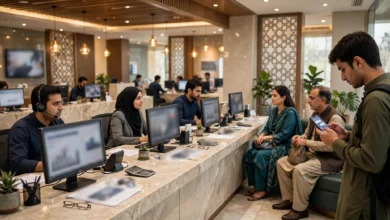
How AI Is Changing Jobs in Pakistan: What You Need to Know
AI impact on jobs in Pakistan explained: which roles are shrinking, which are growing, the scams to avoid, and skills that keep you employed in 2026

AI Impact on Jobs in Pakistan: 7 Proven Shifts, Real Risks and Opportunities in 2026
Introduction
The AI impact on jobs in Pakistan is no longer a debate for conferences in Islamabad hotels. It is showing up in real offices and real pay cheques. A content writer in Lahore who used to get ten orders a week now gets three. A customer support team in Karachi has been cut in half after the company added a chatbot. At the same time, a data analyst in Faisalabad who learned automation tools is billing foreign clients in dollars from home.
Both stories are true, and that is what makes this topic confusing. In August 2026, the World Bank named Pakistan among the countries most exposed to AI-driven job losses, especially for educated young graduates. In the same year, Pakistani freelancers earned a record $1.76 billion, many of them using AI to deliver more work, faster.
There is also a darker side that most articles ignore. As regular jobs get harder to find, young Pakistanis are being pulled into fake call centres, online fraud networks and overseas “IT jobs” that turn out to be scam compounds. Hundreds have been arrested at home, and thousands have gone missing abroad.
This guide looks at the AI impact on jobs in Pakistan honestly: which jobs are shrinking, which are growing, what the law says, and what you can do this year to stay employable without getting trapped in something illegal.
Where Pakistan’s Job Market Stands in 2026
To understand the AI impact on jobs in Pakistan, you first need to see the ground we are standing on. The picture has two sides, and they are pulling in different directions.
The warning: the World Bank’s 2026 report
The World Bank’s World Development Report 2026: The Promise of AI places Pakistan among the most exposed countries in its region. The reason is simple. We already have high youth unemployment and weak private-sector hiring, and AI is now able to do many of the knowledge tasks that graduates relied on to get their first job . Think report writing, data entry, basic analysis, and research support.
The report also points out the scale gap. Five US tech companies are expected to spend around $775 billion on AI in 2026, which is far larger than Pakistan’s entire economy of about $408 billion. Pakistan will mostly be a user of AI, not a builder of it, and that shapes which jobs we get.
The opportunity: record IT and freelance exports
The other side is more hopeful. Pakistan’s IT exports reached a record $4.6 billion in FY2025-26, up 21% from the year before, according to State Bank data reported byFreelancer earnings hit a record $1.76 billion, a 78% jump, with non-IT freelancers growing the fastest.


Industry voices say many freelancers are turning into small agencies by using AI to take on bigger international contracts. In other words, AI is already helping some Pakistanis earn more, not less.
What this means in plain words
- Entry-level office and desk jobs are under the most pressure.
- People who combine a skill with AI tools are gaining ground.
- The gap between those two groups is growing every month.
- Where you land depends heavily on what you do in the next year or two.
7 Proven Shifts: The Real AI Impact on Jobs in Pakistan
Here is how AI replacing jobs actually looks on the ground. It is rarely a whole profession disappearing overnight. It is usually tasks inside a job being automated, which slowly changes how many people a company needs.
1. Entry-level desk work is shrinking first
Data entry, basic transcription, simple translation, and first-draft report writing are the easiest tasks for AI to take over. These were exactly the jobs many fresh graduates used to get their foot in the door. A company that once hired five data entry operators may now hire one person to check what an AI system produces.
What to do: if your current job is mostly repeating the same task, start learning the checking and quality control side of it. The person who verifies AI output is harder to replace than the person who types.
2. Customer support and call centres are changing
Pakistan’s legitimate BPO and contact centre sector employs many young graduates. AI chatbots and voice agents now handle simple queries like balance checks, order tracking and password resets. Human agents are increasingly kept for complaints, sales, and anything that needs judgement or empathy.
This does not mean call centre work ends. It means the bar goes up. Agents who can handle difficult customers, speak clearly, and use AI tools alongside them will stay in demand.
3. Low-end freelancing is getting crowded
Pakistani freelancers are feeling this directly. Clients who used to pay for simple blog posts, logo drafts, or basic product descriptions can now generate a rough version themselves. Prices for these gigs have dropped.
At the same time, freelancers who sell a result rather than a task are doing well. A client does not want “five articles”. They want more traffic, more leads, or a working app. Freelancers who use AI to deliver those outcomes faster are winning bigger contracts.
4. Software houses need fewer juniors, and better ones
AI coding assistants now write a lot of boilerplate code. That changes the role of junior developers in Lahore, Karachi and Islamabad software houses. Companies still hire juniors, but they expect them to review, test and fix AI-written code, not just produce it.
The upside is that a skilled junior can now build much more than before. The risk is for graduates who only memorised syntax and never learned how systems actually work.
5. New AI jobs in Pakistan are opening up
The other side of the AI impact on jobs in Pakistan is new work that did not exist five years ago. AI jobs in Pakistan now include machine learning engineers, data scientists, AI automation specialists, data annotators, and AI product roles. According to one Pakistani career guide, local entry-level AI salaries start around PKR 50,000 to 80,000 a month, and senior roles go above PKR 200,000, while remote work for foreign clients often pays far more (Connected Pakistan).
Not every new role needs a computer science degree. Businesses also need people who understand a field, like accounting, law, marketing or healthcare, and can apply AI tools inside it.
6. Banks, telecoms and hospitals are adopting AI quietly
Banks use AI for fraud detection and customer onboarding. Telecom companies use it for network planning and support. Private hospitals are testing AI for scheduling and diagnostic support. These changes usually reduce back-office roles while creating demand for staff who can supervise, audit and explain AI decisions.
7. Skills are starting to matter more than degrees
Many Pakistani employers are now asking “what can you actually do?” before “where did you study?” A portfolio of real projects, a GitHub profile, or proof of client work often beats a high CGPA with no practical skills. AI has made it easier to show skills quickly, and harder to hide a lack of them.
At a glance: jobs under pressure vs jobs growing
| Under pressure | Growing |
|---|---|
| Data entry and typing | AI automation and workflow design |
| Basic content writing | Content strategy and editing |
| Simple translation and transcription | Data annotation and quality checking |
| Scripted call centre queries | Complex customer handling and sales |
| Routine back-office processing | AI audit, compliance and supervision |
| Junior coding from scratch | Code review, testing and system design |
The Dark Side: Fake Jobs, Illegal Call Centres and Cyber Fraud
When good jobs are hard to find, bad jobs get easier to sell. This is the part of the future of jobs in Pakistan that rarely makes it into career guides. AI tools make scams cheaper to run: fake profiles, polished scripts, cloned voices and convincing websites can now be produced in minutes. Criminal networks need staff to run them, and they often recruit young, jobless Pakistanis with offers that look like ordinary IT or call centre work.
Case 1: 212 people held in Islamabad call centre raids
In September 2026, the National Cyber Crime Investigation Agency (NCCIA) raided three call centres in Islamabad’s E-11 and G-10 sectors and took 212 Pakistani and Chinese men and women into custody. Officials said the network ran Google-related scams, loan and dating schemes, and fake trading offers, and seized more than 300 mobile phones and nearly 400 computers (Dawn).
Many of those people probably thought they had simply found a job with a decent salary. That is exactly the problem.
Case 2: Employees, not just owners, face charges
In Rawalpindi, the NCCIA busted a call centre allegedly running investment and e-commerce scams and arrested 28 people, all Pakistani employees, including four women. The FIR was registered under Section 14 of PECA 2016 along with several Pakistan Penal Code sections covering cheating and forgery
The lesson is hard but important. Saying “I was only an agent” or “I just read the script” does not protect you. If the business is fraud, the staff can be charged.
Case 3: Scripts and spoofing in Karachi
In September 2026, the NCCIA raided a call centre in Karachi and arrested 27 people, including three owners. Officials said agents used prepared scripts and spoofing diallers to pressure foreign victims into sending money, and the centre held sensitive personal and banking data of foreign nationals (24 News HD). Scripts like these are exactly the kind of content AI can now produce and polish at scale.
Case 4: “High-paying IT jobs” abroad that became traps
The risk is not only at home. In July 2026, authorities said trafficking networks were luring Pakistanis to Thailand, Myanmar and Cambodia with promises of well-paid jobs, then forcing many into cyber scam centres. According to official figures cited in the report, 3,313 Pakistanis who travelled to Cambodia on visit visas over three years did not return. In February 2025, 50 Pakistanis were among 215 foreigners freed in a single raid on a scam centre in Poipet, Cambodia.
Red flags in any “AI job” or “IT job” offer
- The salary is far above normal for the role, with no real interview or skills test.
- You are told to travel abroad on a visit visa rather than a proper work visa.
- The “job” involves calling foreigners while pretending to be a bank, tech company, or government official.
- You are asked to use fake names, fake profiles, or someone else’s identity.
- The office has no clear company registration or the business name changes often.
- You are asked to collect card details, OTPs, or passwords from anyone.
If you see these signs, walk away. You can report suspected fraud to the NCCIA and check overseas job offers with the Bureau of Emigration and Overseas Employment before travelling.
How to Prepare for the AI Impact on Jobs in Pakistan
You cannot stop the change, but you can decide which side of it you land on. Here is practical advice for three groups.
For workers already in a job
- Map your tasks. Write down what you do in a normal week. Mark the tasks that are repetitive. Those are the ones AI will take first.
- Learn the tools your industry uses. An accountant should learn AI features in Excel. A marketer should learn AI content and analytics tools. A teacher should learn how to build lessons and quizzes with AI.
- Move toward judgement. Volunteer for work that involves decisions, client relationships, and checking quality. These are harder to automate.
- Build proof. Keep a simple record of problems you solved and results you delivered. It will matter when you look for your next role.
For students and fresh graduates
- Build a portfolio before you graduate: real projects, internships, or freelance work.
- Learn at least one practical AI skill, such as data analysis, automation, or AI-assisted design, alongside your main subject.
- Improve your English writing and speaking. AI can polish text, but interviews and client calls still depend on you.
- Use government and university programmes where possible. Many offer free or low-cost digital skills training.
- Be suspicious of any job that pays too well for too little. As the cases above show, some of those jobs end in a police raid.
For employers and business owners
- Use AI to support staff, not only to cut them. Retrained employees who already know your business are valuable.
- Be open with your team about which tasks are being automated and what new roles are available.
- Keep humans responsible for decisions that affect customers, loans, hiring and health.
- Protect customer data. Uploading personal information into public AI tools can create legal and reputational risk.
Skills with the strongest demand
| Skill | Why it matters | Where it pays |
|---|---|---|
| Data analysis | Turns AI output into decisions | Banks, telecoms, startups |
| AI automation and workflows | Saves companies time and money | Freelancing, SMEs |
| Software testing and code review | Checks AI-written code | Software houses |
| Cybersecurity | Scams and attacks are rising | Banks, government, IT firms |
| Communication and client handling | AI cannot build trust for you | Every sector |
| Content strategy and editing | Raw AI text still needs a human | Agencies, freelancing |
For a wider view of how jobs are changing worldwide, the World Economic Forum’s Future of Jobs Report is a useful, free reference.
FAQs About the AI Impact on Jobs in Pakistan
Will AI take most jobs in Pakistan?
Not most, but many tasks will change. The World Bank says educated young graduates face the biggest risk because AI can do many entry-level knowledge tasks. Manual trades, fieldwork, and jobs built on relationships and judgement are less exposed for now.
Which AI jobs in Pakistan pay the best?
Machine learning engineers, data scientists, and AI automation specialists earn the most, especially when working remotely for foreign clients. Local senior roles can pass PKR 200,000 a month.
Is working at a call centre illegal?
No. Many call centres in Pakistan are legitimate businesses. The problem is fraud call centres that pretend to be banks, tech support or investment firms. If your job involves deceiving people or collecting their card details, it is illegal, and staff can be charged under PECA.
How can I check if an overseas job offer is real?
Ask for a proper work visa and written contract, verify the employer, and check with the Bureau of Emigration and Overseas Employment and licensed overseas employment promoters before paying anyone or travelling.
Conclusion
The AI impact on jobs in Pakistan is real, uneven, and already here: the World Bank warns that educated young graduates face the greatest risk as AI takes over entry-level knowledge work, while record IT exports of $4.6 billion and freelance earnings of $1.76 billion in FY2025-26 show that Pakistanis who pair real skills with AI tools can earn more than ever, yet the same pressure is pushing some young job seekers toward illegal call centres, fraud networks and overseas trafficking traps that have ended in mass arrests and missing workers, so the smartest path is to map which of your tasks AI can do, learn the tools and judgement skills that sit on top of them, build proof of your work, and refuse any “job” that asks you to deceive people, because a career built on honest skills will outlast every wave of automation while a shortcut built on fraud can end in a PECA case.