How to Detect AI-Generated Fake News and Images
AI-generated fake news and deepfakes spread fast on WhatsApp and social media. Here are 10 proven ways to spot fake images, videos and false claims.
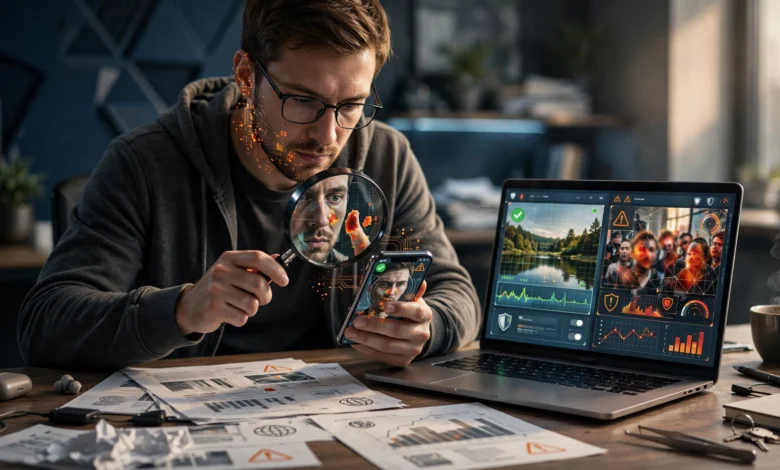
AI-Generated Fake News: 10 Proven Ways to Spot Fake Images and Deepfakes
AI-generated fake news used to be easy to laugh off. The faces looked plastic, the hands had seven fingers, and the voices sounded like robots. That era is over. Today, anyone with a phone and a free app can create a photo of an event that never happened, a video of a politician saying something they never said, or a news-style article that looks exactly like it came from a real outlet.
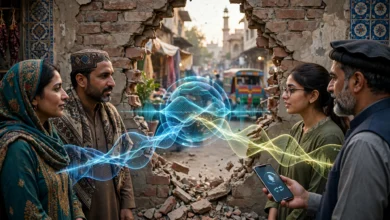
Pakistan has already felt the impact. During the May 2025 India-Pakistan conflict, fabricated videos, AI images and recycled war footage spread across X, WhatsApp, Facebook and YouTube, feeding fear and confusion on both sides of the border. A deepfake of Pakistan’s Prime Minister appearing to concede defeat went viral, even though the original clip showed him praising the air force. Closer to home, a Punjab minister spent months in court over a sexualised deepfake video designed to destroy her reputation.
The damage isn’t only political. Fake images move stock markets, fake voices trick voters, and fake videos ruin ordinary people’s lives, especially women’s.
This guide explains how to detect AI-generated images, videos and false stories in practical terms. It uses real cases, some of which ended in fines, arrests and court proceedings, and it’s honest about what detection tools can and can’t do. The goal is simple: help you stop, check, and avoid becoming the next person who forwards a lie.
What Is AI-Generated Fake News?
AI-generated fake news is false or misleading content created or heavily altered using artificial intelligence and presented as if it were real. It usually takes one of four forms.
AI-Generated Images
Tools like image generators can create photorealistic pictures from a simple text prompt. A destroyed building, a crowd at a protest that never happened, or a celebrity in a place they’ve never been can be produced in seconds.
Deepfake Videos
A deepfake swaps one person’s face onto another’s body or makes a real person’s lips move to fake words. These are the most dangerous because people tend to trust video more than text.
Voice Clones
Voice cloning software can copy someone’s voice from a short recording and make it say anything. Fake audio clips of leaders, officials or family members are now common.
AI-Written Articles and Fake Websites
AI can produce convincing news-style articles in seconds, complete with fake quotes and fake statistics. Combined with a website designed to look like a real news outlet, these can fool even careful readers.


Why AI-Generated Fake News Is So Dangerous in Pakistan
Every country faces this problem, but a few things make Pakistan especially exposed.
Internet Use Has Grown Faster Than Media Literacy
Cheap 4G has brought millions of Pakistanis online in a short time. According to DataReportal figures cited by AFP, around 110 million Pakistanis were online in early 2024, 24 million more than at the start of 2023. The same report noted that in Pakistan, where media literacy is poor, deepfakes are being weaponised to smear women in public life.
WhatsApp Groups Spread Content Without Context
In Pakistan, family and neighbourhood WhatsApp groups are often the main source of news. Content gets forwarded without a source, a date or any context, which is exactly the environment where misinformation thrives.
Tense Moments Create Perfect Conditions
Wars, elections, protests and disasters are when people are most emotional and least likely to check. The May 2025 conflict proved this. BOOM, an Indian fact-checking outlet, found that 69 of the 101 fact-checks it published that month were related to the conflict, including 13 AI-related fact-checks.
Real Cases: What Past Incidents Teach Us About AI-Generated Fake News
Looking at documented cases helps separate real risks from hype. Several of these led to legal action.
The Deepfake Case That Reached the Lahore High Court
In 2024, Punjab Information Minister Azma Bukhari found a sexualised deepfake video of herself circulating online, with her face superimposed on the body of an Indian actor. She described being shattered and depressed for days, then chose to pursue the case at the Lahore High Court.
The court directed her to take the matter to the FIA and submit her evidence. In a later hearing, a government law officer told the court that action had been taken against two individuals and that investigators found over 500 SIM cards had been used in one suspect’s phone. The case has continued through the courts. In April 2026, the Lahore High Court granted post-arrest bail to two suspects in the case, following a complaint filed with the NCCIA. Guilt has not been established, and the matter remains before the courts.
Whatever the outcome, the case shows two things clearly. Deepfakes are used to target women in Pakistan because sexual smears carry enormous social damage, and fighting them through the legal system is slow and exhausting.
Deepfakes During the India-Pakistan Conflict
The May 2025 conflict has been described as the first large-scale South Asian confrontation where AI-generated content played a central role in shaping public perception. One of the most striking examples was a deepfake of Prime Minister Shehbaz Sharif edited to look like he was conceding defeat and complaining about a lack of support from China and the UAE. The real video showed him praising the Pakistan Air Force.
The disinformation ran in both directions. Similar deepfakes of Indian Prime Minister Narendra Modi, Home Minister Amit Shah and External Affairs Minister S Jaishankar apologising to Pakistan also circulated. Another viral AI image claimed to show Rawalpindi Stadium reduced to rubble, and it gathered millions of views.
The lesson: during a crisis, assume that some of the most shocking content you see is fake, no matter which side it favours.
The Fake Biden Robocall That Cost $6 Million
In the United States, a political consultant named Steve Kramer used AI voice cloning and caller ID spoofing to send a fake Joe Biden call to New Hampshire voters, urging them to stay away from the polls. The recording reportedly took about 20 minutes to make and cost just $1.
The consequences were serious. The FCC finalised a $6 million fine against him, and he was indicted on 13 felony counts of voter suppression and 13 counts of impersonating a candidate. (A jury later acquitted him of the state criminal charges, but the case pushed US regulators to act.) The FCC had already ruled that using AI-generated voices in robocalls is illegal.
AI “Slop” Pretending to Be Public Opinion
Not all fakes are dramatic. Pakistani fact-checker Soch Fact Check investigated a video claiming to show Americans praising Pakistan after the 2025 conflict. It concluded the video was AI-generated and didn’t show real Americans or their views, and found the creator had uploaded similar AI content before. This kind of fake is harmless-looking, but it trains audiences to believe fabricated “evidence” when it flatters them.
10 Proven Ways to Detect AI-Generated Fake News and Images
No single trick catches every fake. The most reliable approach combines several checks. Here are ten that work.
1. Notice Your Emotional Reaction First
AI-generated fake news is usually designed to make you angry, scared or proud. If a post makes you feel a strong urge to share it immediately, that’s your cue to slow down. Ask yourself: who benefits if I believe this?
2. Check the Source, Not Just the Content
Before trusting anything, ask:
- Who posted this first?
- Is it from a verified official account or a known news outlet?
- Does the account have a history, or was it created recently?
- Is the same story being reported by more than one credible outlet?
If a “breaking” claim about a major event appears only on one anonymous page or in a WhatsApp forward, treat it as unconfirmed.
3. Run a Reverse Image Search
Reverse image search is one of the most useful habits you can build. Upload the image or a screenshot to Google Lens, Bing Visual Search, TinEye or Yandex Images. This can show you:
- Where the image first appeared
- Whether it’s an old photo from a different event
- Whether a fact-checker has already debunked it
This matters because many fakes aren’t AI at all. During the 2025 conflict, a key tactic was reusing footage from Israel, Palestine, Iran and Sudan and falsely presenting it as India-Pakistan footage.
4. Zoom In on the Details
AI images have become much better, but they still often slip on small details. Look closely at:
- Hands and fingers: extra, missing or merged fingers
- Text: signs, banners, number plates and shop names that are blurry or gibberish
- Faces in the background: distorted or melting faces in crowds
- Jewellery and glasses: earrings that don’t match, glasses that blend into skin
- Lighting and shadows: shadows falling in different directions
- Too-perfect skin: a glossy, airbrushed look with no pores or texture
- Physics: smoke, water or debris that behaves oddly
A word of caution: these signs are fading as tools improve. A clean image isn’t proof that it’s real. Use this step together with the others.
5. Watch Videos Frame by Frame
For deepfake detection in video, slow it down or pause it. Watch for:
- Lips that don’t quite match the words
- Unnatural blinking or a fixed stare
- Blurring or flickering around the edges of the face, hairline or neck
- Skin tone on the face that doesn’t match the neck or hands
- Teeth that look like a single white block
- Head movements that look stiff compared with the body
Then find the original. In the Shehbaz Sharif case, the fake fell apart the moment people compared it with the real speech.
6. Listen Carefully to Audio
Cloned voices can sound very real, but watch for:
- Flat emotion in a situation that should be emotional
- Odd pauses or rhythm, or breathing in the wrong places
- A voice that’s too clean, with no background noise at all
- Words or phrases the real person wouldn’t normally use
For phone calls and voice notes asking for money or urgent action, the best check isn’t listening. It’s calling the person back on a number you already have.
7. Check Metadata and Content Credentials
Some images carry hidden information about how they were made. Tools like online EXIF viewers can show camera details and dates, though social media platforms often strip this data.
Newer systems go further. Content credentials based on the C2PA standard can record whether an image was captured by a camera or edited with AI, and some AI companies add invisible watermarks to their outputs, such as Google’s SynthID. These aren’t yet universal, and they can be removed, but when present, they’re useful evidence.
8. Use Professional Fact-Checkers
You don’t have to do all the work alone. Several credible fact-checking organisations cover Pakistan and the region, including:
- Soch Fact Check (Pakistan)
- Geo Fact Check (Pakistan)
- AFP Fact Check
- BOOM (India)
- Reuters Fact Check and BBC Verify
Searching their sites for a viral claim often gives you an answer within seconds.
9. Search the Claim in Plain Words
Type the core claim into a search engine with words like “fake,” “fact check” or “debunked.” For example: “Rawalpindi stadium destroyed fact check.” If a real major event happened, multiple mainstream outlets will be covering it. If only anonymous accounts are sharing it, that’s a warning sign.
10. Check the Date and Context
Old content recycled as new is one of the most common forms of disinformation. Check:
- When the image or video was first posted
- Whether the weather, season or clothing matches the claimed date
- Whether landmarks, signs or languages match the claimed location
A flood video from 2022 shared as “today” can cause just as much panic as an AI fake.
AI Detection Tools: Helpful but Not Magic
Many websites now offer AI detection tools that claim to tell you whether an image, video or text is AI-generated. They can be useful, but they have real limits.
They Give Probabilities, Not Verdicts
Soch Fact Check’s investigation into the fake “American sentiment” video shows this clearly. Only seven of 22 predictive models rated the video as likely fake, while the other 15 rated it below that threshold. Human analysts then identified several indicators of AI manipulation. In other words, the machines disagreed, and experienced humans made the final call.
They Can Be Fooled
Compressing, cropping, adding filters or screen-recording a fake can confuse detectors. New AI models also appear faster than detectors can be trained on them.
They Can Wrongly Flag Real Content
Real photos, especially heavily edited or low-quality ones, sometimes get labelled as AI. This matters because false accusations of fakery can be used to dismiss genuine evidence, a problem researchers call the “liar’s dividend.”
The best approach is to treat detection tools as one piece of evidence alongside source checks, reverse searches and fact-checkers.
What Pakistani Law Says About Deepfakes and Fake News
Pakistan’s main cybercrime law, the Prevention of Electronic Crimes Act (PECA) 2016, covers offences such as harming a person’s dignity or privacy online, including through manipulated images or videos. The law was amended in 2025, and recent cases have been registered under provisions including Sections 20 and 26-A of PECA as amended in 2025. Section 26-A deals with spreading false information.
It’s worth knowing that the 2025 amendments were controversial. Journalists and digital rights groups raised concerns that broad “fake news” provisions could be used against legitimate criticism and reporting, while supporters argued stronger rules were needed to tackle disinformation. Both concerns are real: deepfake victims need protection, and the public needs space for honest journalism.
Complaints about deepfakes, harassment and online defamation can be filed with the National Cyber Crime Investigation Agency (NCCIA).
The Ethical Side: Everyone Has a Role
Detecting fakes is only half the job. Stopping their spread matters just as much.
Don’t Create Harmful Fakes
Making a deepfake of a real person without consent, especially sexual content, fake statements or fake evidence, can destroy lives and may be a crime. “It was just a joke” doesn’t undo the harm once it’s forwarded.
Don’t Forward What You Haven’t Checked
Every share gives a fake more reach. If you’re not sure, don’t send it. If you’ve already shared something false, correct it in the same group.
Label Satire and AI Art Clearly
AI can be used for legitimate creativity, satire and education. The ethical line is transparency. If you post AI-generated content, say so clearly.
Protect Women and Vulnerable People
In Pakistan, sexualised deepfakes are used to silence women in politics, journalism and everyday life. Refusing to share, reporting the content, and supporting the victim instead of questioning her are all meaningful actions.
What to Do If You’re Targeted by a Deepfake
- Don’t panic, but act quickly. Time matters with viral content.
- Collect evidence. Take screenshots, save links, note usernames, dates and where the content appeared.
- Report to the platforms. Facebook, Instagram, X, TikTok and YouTube all have reporting options for manipulated media and non-consensual intimate content.
- File a complaint with the NCCIA and include all your evidence.
- Get support. Organisations such as the Digital Rights Foundation in Pakistan run helplines for people facing online harassment.
- Consider a public clarification if the fake is widely circulated, ideally alongside proof of the original content.
For further reading, the International Federation of Journalists has a detailed blog on AI deepfakes and disinformation during the 2025 India-Pakistan conflict, and ABC News explains how the online deepfake war spread across both countries. For a local verification example, see Soch Fact Check’s analysis of an AI-generated video faking American opinion about Pakistan, and CyberScoop’s report on the $6 million FCC fine over the fake Biden robocall.
Conclusion
AI-generated fake news has moved from obvious, clumsy fakes to realistic images, deepfake videos and cloned voices that can fool almost anyone, and Pakistan has already seen the consequences, from the sexualised deepfake of Punjab’s information minister that ended up before the Lahore High Court, to deepfakes of leaders on both sides during the May 2025 India-Pakistan conflict, while abroad a fake Biden robocall made for about a dollar led to a $6 million fine. You can’t rely on any single sign or tool to catch every fake, but you can protect yourself by pausing when content triggers strong emotions, checking the source, running a reverse image search, examining details in images and videos, listening carefully to audio, looking for content credentials, using trusted fact-checkers, searching the claim, and confirming the date and context. Detection tools help but only give probabilities, Pakistani law under PECA offers remedies that are still being tested, and in the end the most powerful defence is a simple habit: check before you believe, and never forward what you haven’t verified.