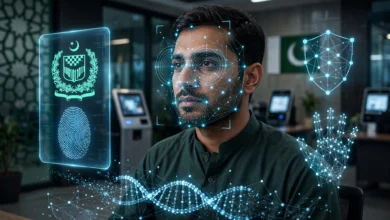
How AI Is Powering Pakistan’s Growing Call Center Industry
AI in call centers is driving Pakistan's record BPO exports. Here are 7 real uses, the illegal networks behind scam centers, and the ethical risks.

AI in Call Centers: 7 Powerful Ways It’s Driving Pakistan’s Record BPO Growth
AI in call centers has quietly become one of the biggest reasons Pakistan’s outsourcing sector is growing faster than almost any other part of the economy. Walk into a modern call center in Lahore, Karachi or Islamabad today and you’ll still see rows of agents with headsets. What you won’t see is the software working alongside them: tools that suggest answers in real time, transcribe every call, flag unhappy customers, and handle simple queries before a human ever picks up.
The numbers are hard to ignore. According to State Bank of Pakistan data, the call center industry earned a record $392 million in exports in the financial year ending June 2026, up 19% from the year before. Industry experts credit much of that growth to AI.
But there’s a second story that rarely makes it into the success headlines. The same infrastructure of phones, dialers, data and trained callers has also been used by criminal networks to run scam operations from Pakistani cities. Authorities have raided dozens of illegal call centers, arrested hundreds of people including foreign nationals, and found spoofing software and stolen banking data. Some of these operations have already used AI-generated images to deceive victims.
This article looks at both sides honestly. It explains how AI is actually being used in Pakistan’s legitimate call center industry, what it means for jobs, what past illegal operations reveal about the risks, and what ethical standards the industry needs to protect its reputation.
Pakistan’s Call Center Industry at a Glance
Before looking at the technology, it helps to understand how big this industry has become.
Record Export Earnings
The sector has grown steadily for years. Business Recorder reported that call center export earnings reached $322 million in the first eleven months of FY2025-26, compared with $269 million a year earlier. The full-year figure then climbed to $392 million, the highest on record.
Mostly Serving Foreign Clients
This is primarily an export industry. The Call Centre Association of Pakistan says nearly 90% of Pakistani call centers and BPO companies mainly serve overseas clients, with the rest supporting multinationals and utility companies at home. Beyond the largest markets, clients come from Canada, the UK, Australia, the Middle East and Europe.
Over a Thousand Registered Companies
More than 1,000 call centers are registered with the Pakistan Software Export Board (PSEB), and around 500 more medium and large operations run independently. Hundreds of smaller support teams also work inside software houses, marketing agencies, e-commerce firms and startups.
A Major Employer
Employment estimates vary widely. One industry report says the sector employs more than one million people, while other sources put the figure at over 500,000. Either way, it’s one of the country’s most important employers of young, English-speaking graduates.


Why AI in Call Centers Is Taking Off in Pakistan
Several pressures are pushing Pakistani companies toward AI in call centers:
- Global clients expect it. International buyers increasingly want technology-enabled outsourcing partners that offer automation, data analytics and AI-assisted engagement.
- Competition from India and the Philippines. Pakistan competes on cost, but cost alone isn’t enough anymore. AI lets smaller Pakistani firms offer services that match larger rivals.
- Talent shortages. Experts say investment in AI is helping address the shortage of skilled human resources while raising productivity.
- 24/7 demand. Clients in different time zones want round-the-clock support, which is hard and expensive to staff entirely with humans.
In short, AI has become part of what Pakistani call centers sell, not just a tool they use internally.
7 Ways AI in Call Centers Is Powering Pakistan’s BPO Growth
Here are the seven most important applications of AI in call centers in Pakistan today.
1. Real-Time Agent Assist
This is one of the most common and least controversial uses. While an agent talks to a customer, AI software listens to the conversation and:
- Suggests answers from the client’s knowledge base
- Pulls up the customer’s account history automatically
- Reminds agents of compliance statements they must read out
- Flags when a customer sounds frustrated or mentions cancelling
For a Pakistani agent handling a US telecom or UK utility account, this means less time searching for information and fewer mistakes. It also helps newer agents perform closer to experienced ones, which matters in an industry with high staff turnover.
2. Conversational AI and Voice Agents
Conversational AI handles simple, repetitive requests without a human: checking order status, resetting passwords, confirming appointments, or answering FAQs. These can run as chatbots on websites and WhatsApp, or as AI voice agents that answer phone calls.
Industry reporting confirms AI tools are helping companies automate routine tasks, improve response times and provide round-the-clock multilingual support. For domestic services, the ability to switch between Urdu and English mid-sentence is especially useful, and some vendors now market this specifically for Pakistani businesses.
A word of caution: vendors often claim very high automation rates. One local marketing firm claims AI can automate up to 80% of inbound calls, but that figure comes from a company selling the service. Real results depend heavily on the type of calls, and complex complaints still need humans.
3. Speech Analytics and Quality Assurance
Traditionally, quality teams in Pakistani call centers could only review a small sample of calls. Speech analytics changes that by transcribing and analysing every call automatically. It can:
- Score calls for politeness, script compliance and resolution
- Detect keywords linked to complaints, legal risks or sales opportunities
- Measure customer sentiment across thousands of conversations
- Identify training needs for specific agents
For clients, this provides proof of quality. For managers, it replaces guesswork with data. For agents, it can be helpful or stressful, depending on how it’s used, which we’ll return to in the ethics section.
4. Language Support and Translation
Pakistani agents are known for strong English, but international campaigns increasingly need Arabic, French, German and other languages. AI translation and transcription tools help agents handle written support in multiple languages and give clients multilingual coverage without hiring for every language.
Some companies also use voice tools that adjust how an agent’s accent sounds to the caller. This is a sensitive area. Critics of similar practices in India have long argued that call center staff are pressured to imitate Western speech and adopt Anglo names. Pakistani companies should think carefully about whether such tools respect their workers, and be honest with clients and customers about using them.
5. Smarter Dialers and Workforce Management
For outbound sales and collections campaigns, AI-powered dialers predict when agents will be free, skip unanswered numbers, and pick the best times to call. Some Pakistani BPOs now highlight AI-assisted dialers and omnichannel support across chat, email and voice as part of their offer.
Workforce management tools also forecast call volumes so managers can schedule the right number of agents for each shift. For night-shift operations serving US clients, better forecasting means fewer overworked agents during peak hours and less idle time during quiet periods.
6. Fraud Detection and Customer Verification
Call centers that handle banking, insurance and telecom accounts are prime targets for fraudsters. AI tools help by:
- Detecting unusual account activity during a call
- Using voice biometrics to verify customers
- Flagging callers who match known fraud patterns
- Spotting signs of synthetic or cloned voices
This matters more as voice cloning scams grow. A call center that can’t tell a real customer from an AI-generated voice is a weak point for its clients.
7. Customer Insights for Clients
Every call contains information about what customers want, what frustrates them, and why they leave. AI tools can analyse customer behaviour across thousands of calls and turn it into reports clients can act on. This shifts Pakistani call centers from pure labour providers to insight providers, which is higher-value work and helps justify better pricing.
Will AI in Call Centers Replace Pakistani Jobs?
This is the question every agent is asking, and the honest answer is: some jobs will change, some will disappear, and some new ones will appear.
Routine Work Is Most at Risk
Simple, repetitive calls, like balance checks or basic troubleshooting, are the easiest to automate. Entry-level roles built entirely on that kind of work are the most vulnerable.
Skilled Roles Are Growing
At the same time, demand is rising for agents who can handle complex, emotional or high-value conversations, plus roles in AI supervision, quality analysis, data annotation, and prompt and workflow design. One industry leader summed it up this way: the future belongs to AI-assisted professionals, not AI replacing professionals.
Pakistan’s Advantage Depends on Training
Countries with large, trainable workforces stand to gain the most from this shift. That only works if companies and the government invest in reskilling. Industry leaders are calling for reliable internet, uninterrupted power, AI skills training, simpler taxes and easier international payments to keep the sector growing.
The Dark Side: Illegal Call Centers in Pakistan
Any honest discussion of Pakistan’s call center industry has to address the illegal operations that have damaged its reputation. These aren’t legitimate BPOs. They’re criminal networks that use the same tools, phones, dialers, scripts and trained callers, to defraud people in Pakistan and abroad.
The Scale of Enforcement
Between January 2024 and June 2025, cybercrime authorities targeted 63 call centers and software houses in Karachi, Rawalpindi, Islamabad, Faisalabad, Multan and Lahore. These raids led to 450 arrests, including 195 Pakistanis and 255 foreign nationals, with 53 FIRs registered and alleged fraud exceeding PKR 72 million.
The Faisalabad Raid
One of the largest cases came in July 2025. The NCCIA arrested 149 people, including 78 Pakistanis and 48 Chinese nationals, at a site in Faisalabad allegedly used for Ponzi schemes and investment scams. Victims were reportedly added to huge Telegram groups and given small tasks like subscribing to YouTube and TikTok channels, and one Pakistani victim said he lost over 3.1 million rupees. Authorities seized hundreds of computers, cryptocurrency equipment, foreign SIM cards and servers.
AI-Generated Images Used in Scams
A week later, the NCCIA raided an illegal call center in Islamabad that allegedly used fake online earning platforms, AI-generated images and social media to trick victims into sharing personal data, with losses laundered through crypto wallets. This is an early sign of how AI tools can be misused inside call center scams.
Spoofing and Foreign Bank Fraud
In April 2026, the NCCIA dismantled an illegal call center on Sharea Faisal in Karachi. Investigators said they found spoofing software along with banking data of foreign nationals, and that the suspects allegedly impersonated foreign bank representatives to carry out unauthorised transfers. This kind of caller ID spoofing fraud directly threatens the trust foreign clients place in Pakistani call centers.
Large-Scale Operations Continue
The raids haven’t stopped. In August 2026, the NCCIA arrested 276 foreigners at an alleged illegal online business facility in Islamabad’s I-10/3 sector, following an earlier raid in which 406 foreigners were arrested. Officials said the operations were allegedly involved in impersonation and cheating for money through electronic means, among other offences. In September 2026, the agency also targeted groups allegedly posing as bank officials and illegal call centers using VoIP to call victims in Pakistan and abroad.
Corruption Inside Enforcement
The problem has also reached the people meant to stop it. In November 2025, reports emerged that 13 NCCIA officers allegedly took about Rs 15 million every month from 15 illegal call centers, mostly run by foreigners in Rawalpindi and Islamabad. The scandal exposed serious weaknesses and a lack of accountability in the country’s cybercrime agencies.
Why This Matters for the Legitimate Industry
Every scam call traced back to Pakistan makes foreign clients more cautious about outsourcing here. As AI in call centers becomes more powerful, with voice cloning, synthetic voices and automated dialers, the potential for abuse grows too. The legitimate industry has a strong interest in supporting enforcement and separating itself clearly from criminal operations.
Ethical Challenges of AI in Call Centers
Even in fully legal operations, AI raises real ethical questions that Pakistani companies need to address.
Customer Transparency
Customers deserve to know when they’re talking to an AI system. Presenting an AI voice agent as a human, or using voice tools to disguise who is speaking, can mislead callers and may breach laws in client countries.
Data Privacy
Call centers handle names, addresses, account numbers, medical details and payment information. AI systems that record, transcribe and analyse every call create large stores of sensitive data. Strong security, limited access and clear retention rules are essential, especially since leaked data is exactly what illegal call centers use for fraud.
Worker Surveillance
Speech analytics can help agents improve, but it can also turn into constant monitoring that scores every word and pause. Pakistani call center jobs already involve night shifts and high pressure. Using AI to punish rather than coach can damage mental health and increase turnover.
Accent and Identity
As mentioned earlier, tools that alter an agent’s accent or require fake names raise questions about dignity and honesty. Companies should make these choices openly, with input from workers.
Fair Transition for Workers
If AI reduces the need for certain roles, companies have a responsibility to retrain staff where possible rather than simply cutting jobs.
How Pakistani Call Centers Can Use AI Responsibly
Here’s a practical checklist for companies adopting AI in call centers:
- Register with PSEB and operate transparently. All call centers in Pakistan are expected to register with the Pakistan Software Export Board.
- Disclose AI use to customers and clients, especially for voice agents.
- Protect customer data with encryption, access controls and regular audits.
- Use AI to coach, not punish. Share analytics with agents and focus on improvement.
- Keep humans in charge of complaints, vulnerable customers and complex issues.
- Invest in reskilling so agents can move into higher-value roles.
- Vet clients and campaigns. Refuse work that involves deceptive sales, spoofing or unverified data lists.
- Report suspicious activity to the NCCIA, and support industry efforts to separate legitimate businesses from scam operations.
What Job Seekers Should Know
If you’re looking for call center work in Pakistan, AI skills will increasingly set you apart. Learn how to work with CRM systems and AI assist tools, improve your written communication for chat support, and consider building skills in quality analysis or data annotation.
Just as important: be careful who you work for. Some illegal call centers recruit young people with attractive salaries and night-shift “international campaigns.” Warning signs include no PSEB registration, pressure to hide your identity on calls, scripts that impersonate banks or government agencies, and instructions to collect card or account details. Working for such an operation can lead to arrest, even for junior staff, as many NCCIA raids have shown.
For further reading, Business Recorder’s report on how AI adoption is driving Pakistan’s call center exports gives a clear industry view, and Outsource Accelerator covers Pakistan’s record $392 million call center exports. On the enforcement side, Nukta’s report on Pakistan’s crackdown on illegal call centers and The News coverage of the Karachi spoofing call center targeting foreign bank customers show the scale of the problem.
Conclusion
AI in call centers is now central to Pakistan’s outsourcing success, helping the industry reach a record $392 million in exports in FY2025-26 through real-time agent assist, conversational AI and voice agents, speech analytics, language support, smarter dialers and workforce planning, fraud detection, and customer insights that let Pakistani firms compete with larger rivals abroad. At the same time, the sector’s reputation is threatened by illegal call centers that authorities have repeatedly raided, from the Faisalabad operation that led to 149 arrests, to an Islamabad scam that used AI-generated images, to a Karachi center allegedly using spoofing software and foreign banking data, with corruption inside enforcement adding to the problem. The path forward is clear: legitimate companies should adopt AI with transparency toward customers, strong data protection, fair treatment and reskilling of workers, and firm support for enforcement against scam operations, because Pakistan’s future in global outsourcing depends on being known for trustworthy AI-assisted service, not fraud.
Keywords: