AI in Education: How Pakistani Schools Are Adopting Smart Learning Tools
AI in Education is reshaping classrooms with smart tools, virtual campuses, and personalized learning for students nationwide.
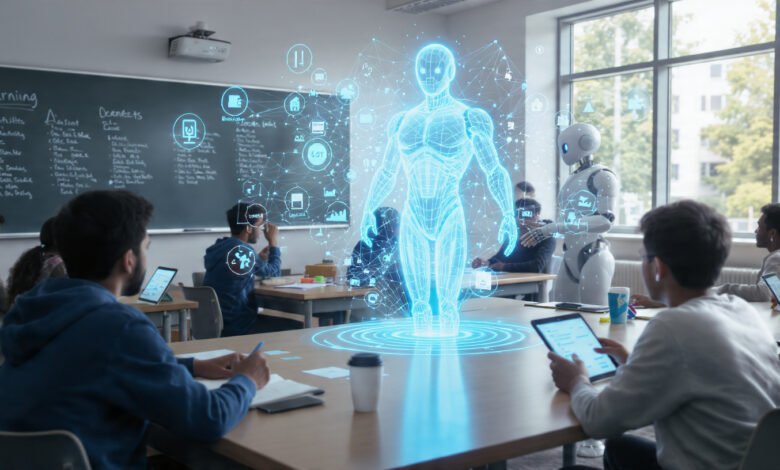
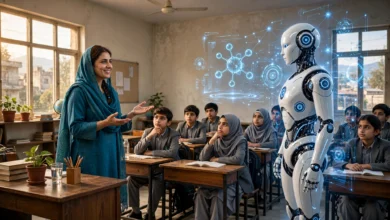
AI in Pakistani schools is no longer a distant idea or a talking point at education conferences. It’s happening right now, in government classrooms in Peshawar, private academies in Lahore, and university labs in Karachi. For years, Pakistan’s education system has struggled with overcrowded classrooms, a shortage of trained teachers, and a wide gap between what students in cities and rural areas can access.
Smart learning tools are starting to close that gap in ways that would have seemed unrealistic even five years ago. Khyber Pakhtunkhwa has rolled out the country’s first public sector virtual school with an AI-powered teacher. Punjab is building AI labs into primary schools. Teachers in low-cost schools are quietly using free AI chatbots to write lesson plans and explain difficult topics with everyday examples.
This article looks at how AI in education is actually playing out across Pakistan right now, what tools schools are adopting, the real benefits and risks involved, and what parents, teachers, and policymakers need to know as this shift continues. Whether you’re an educator trying to keep up or a parent wondering what your child’s classroom will look like next year, here’s a clear picture of where things stand.
What Does AI in Education Actually Mean for Pakistani Schools?
When people talk about AI in Pakistani schools, they’re usually referring to a mix of things rather than one single technology. It includes:
- Intelligent tutoring systems that adjust questions and explanations based on how a student is performing
- AI chatbots like ChatGPT or Claude that teachers use to draft lesson plans, quizzes, and worksheets
- Virtual classrooms and AI teachers that deliver live or recorded lessons to students in areas with a shortage of qualified staff
- Learning management systems (LMS) that track attendance, grades, and student progress automatically
- Smart classroom hardware, such as interactive boards and connected devices replacing chalk and duster setups
None of these tools are meant to fully replace teachers. Most educators and provincial education departments describe them as support systems, built to fill gaps where trained staff are scarce or where class sizes make individual attention nearly impossible. A teacher in a rural school with sixty students in one room simply cannot give each child personalized feedback. AI-based tools are being used to close that gap, not to eliminate the teacher’s role.
Why Pakistani Schools Are Turning to Smart Learning Tools Now
A few things have come together at the same time to push this adoption forward.
1. A Persistent Teacher Shortage in Rural Areas
Provinces like Balochistan, interior Sindh, and parts of Khyber Pakhtunkhwa have long struggled to place qualified subject teachers, especially for science and math. AI-based teaching systems are being piloted specifically to reach students in these areas, offering instruction in subjects like English, Mathematics, Physics, Chemistry, and Biology through a central digital studio rather than relying solely on local staffing.
2. Rising Smartphone and Internet Access
Even in lower-income households, smartphone penetration has grown steadily. Students who don’t have textbooks at home are already showing up to school familiar with tools like ChatGPT, simply from using their phones outside of class. Schools are starting to work with this reality instead of against it.
3. Government-Backed Digital Education Policies
Provincial governments have started treating EdTech adoption as a policy priority rather than an optional upgrade. Khyber Pakhtunkhwa’s Chief Minister approved the creation of an AI Education Authority to formally oversee virtual schools and AI-based teaching programs across the province, a signal that this is being treated as long-term infrastructure rather than a short pilot.


4. Post-Pandemic Shift in Mindset
The years of school closures during COVID-19 permanently changed how parents, teachers, and administrators think about remote and digital learning. What used to be viewed as a stopgap measure is now seen as a legitimate, ongoing part of how education can be delivered.
Real Examples: How AI Is Being Used in Pakistani Classrooms Today
Khyber Pakhtunkhwa’s AI Teacher and Virtual School Program
This is currently the most advanced public-sector rollout of AI-powered education in the country. Forty-six government schools have already shifted to an online model on a pilot basis, with plans to add 175 more schools in the next development phase. A central digital teaching studio delivers live interactive classes and recorded lectures in Urdu, English, and Pashto, so the system isn’t limited to English-medium learners. Students studying through this virtual school model, including out-of-school children and children of overseas Pakistanis, are being granted the status of regular students, which is a meaningful step toward wider access rather than a niche experiment.
Punjab’s AI Labs and Smart School Initiatives
Punjab’s provincial government has been introducing AI labs into primary schools and exploring dedicated AI-focused schools in Lahore. The goal is similar to KP’s approach: give students earlier exposure to digital tools and reduce the gap between well-resourced private schools and public institutions.
Teachers Using AI Chatbots for Lesson Planning
Away from the big provincial announcements, a quieter shift is happening at the classroom level. Teachers in low-cost and government schools are experimenting with free AI tools to build lesson plans, simplify complex topics using materials they already have on hand, and generate practice questions. A teacher without lab equipment might ask an AI tool to explain the chemistry behind soap-making using cooking oil and common household items, turning a limited-resource classroom into a workable science lesson.
International Support for Teacher Training
Organizations outside Pakistan have also stepped in to help teachers use these tools responsibly. UNESCO ran a training programme for teachers, head teachers, and education coordinators from Pakistan’s Federal Directorate of Education, covering practical AI tools for tutoring, lesson planning, and ethical classroom use. Programs like this matter because handing teachers new technology without proper training tends to create more confusion than progress.
Key Benefits of AI-Powered Learning Tools in Pakistani Schools
Personalized Learning at Scale
Personalized learning is probably the single biggest promise of AI in education. Instead of one lesson pace for an entire class, AI systems can analyze how a student is performing and adjust the difficulty or explanation style accordingly. A student who’s struggling with a math concept gets more practice on that specific area, while a student who’s already ahead can move on to harder material instead of waiting.
Bridging the Urban-Rural Education Gap
For decades, a student’s zip code in Pakistan has largely determined the quality of education they receive. Smart learning tools are starting to chip away at that divide by giving rural students access to subject instruction that used to be available only in well-staffed urban schools.
Reducing Administrative Burden on Teachers
Grading, attendance tracking, and lesson planning eat up a significant chunk of a teacher’s week. AI-powered platforms that automate these tasks free teachers up to spend more time actually engaging with students, rather than doing paperwork after hours.
24/7 Access to Learning Support
Some AI teaching systems, including the one being piloted in Khyber Pakhtunkhwa, are designed to be available around the clock in multiple languages. A student who needs to revisit a concept at 9 PM isn’t stuck waiting until the next school day.
Better Data on Student Performance
AI tools generate performance data that used to require manual tracking. Schools can identify which students are falling behind earlier, and in which specific subjects, instead of finding out at the end of a term when there’s less time to act.
Challenges Facing AI Adoption in Pakistani Schools
It would be misleading to present this shift as entirely smooth. There are real obstacles that schools, teachers, and policymakers are still working through.
- Unequal access to devices and internet: Not every student, especially in rural or low-income households, has a reliable smartphone, tablet, or internet connection at home.
- Teacher training gaps: Many teachers, particularly in older age groups, haven’t received formal training on how to use AI tools effectively or how to spot their limitations.
- Cost of implementation: Setting up digital teaching studios, connected classrooms, and provincial AI authorities requires meaningful budget commitments that not every district can match right away.
- Risk of over-reliance on AI-generated answers: Without proper guidance, students can end up copying AI output instead of actually learning the underlying material.
- Data privacy concerns: As schools collect more digital performance data on students, there needs to be clear policy on how that information is stored and used.
- Local language and cultural context: Many popular AI tools are built around English-language content first, which can leave gaps for Urdu, Pashto, Sindhi, and other regional languages unless specifically adapted.
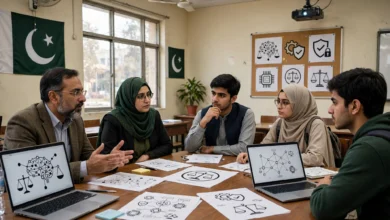
Education researchers studying AI adoption among Pakistani educators have noted that while enthusiasm for these tools is high, especially among younger teachers, there’s still a shortage of formal institutional guidance on how AI should be used responsibly in the classroom. Closing that gap matters just as much as rolling out new technology.
How Schools Can Introduce AI Tools Responsibly
Schools that are getting this right tend to follow a few common practices rather than adopting AI tools all at once without a plan.
- Start with teacher training, not just hardware. Giving teachers time to practice with AI tools using their own lesson content builds confidence before it reaches the classroom.
- Redesign assignments instead of banning AI outright. Asking students to reflect on what they learned from an AI-assisted research task, or to compare an AI explanation with a textbook one, builds critical thinking instead of just restricting access.
- Prioritize subjects with the biggest teacher shortages first. Science and math, where qualified staff are hardest to find in rural areas, tend to see the clearest benefit from AI-supported instruction.
- Keep parents informed. A short handout or a demonstration during parent-teacher meetings goes a long way toward building trust in how these tools are actually being used.
- Build in offline alternatives. Not every classroom has a projector or stable internet, so teachers should have a way to read AI-generated prompts aloud and write key points on the board when the technology isn’t available.
- Monitor outcomes, not just adoption numbers. The number of schools using AI tools matters less than whether student understanding is actually improving as a result.
The Road Ahead for Smart Learning Tools in Pakistan
The direction is fairly clear even if the pace varies by province. Khyber Pakhtunkhwa’s approach of formally establishing an AI Education Authority, as reported by Digital Watch Observatory, suggests other provinces will likely follow with their own regulatory structures rather than leaving adoption to individual schools. Punjab’s investment in AI labs and dedicated tech-focused schools points in the same direction. What’s happening isn’t a single dramatic overhaul but a gradual, uneven rollout, faster in some districts than others, shaped by local budgets, teacher readiness, and infrastructure.
For AI in Pakistani schools to deliver on its promise, the technology itself is really the easier part. The harder work is training teachers well, making sure rural and low-income students aren’t left further behind by uneven device access, and building clear policies around how student data is handled. Done carefully, these tools have a genuine chance to make quality education less dependent on which city or district a child happens to grow up in.
Conclusion
AI in Pakistani schools has moved well past the pilot-project stage in provinces like Khyber Pakhtunkhwa and Punjab, where virtual schools, AI teachers, and smart classroom initiatives are already reaching thousands of students in government institutions. Smart learning tools are helping address long-standing problems like teacher shortages in rural areas, uneven access to quality instruction, and the heavy administrative load teachers carry every day, while also raising real questions around device access, teacher training, and student data privacy that still need thoughtful policy work.
As more provinces build on what Khyber Pakhtunkhwa and Punjab have started, the schools that succeed will likely be the ones that treat AI as a tool supporting teachers and students, not a replacement for either, and that invest as much in training and access as they do in the technology itself.