Top Ways to Improve Sleep Quality in Hot Pakistani Summers
Sleep quality drops in Pakistan's heat. Cool your room, handle loadshedding at night and skip risky kunda wires and pills sold without a prescription.
Sleep Quality in Hot Pakistani Summers: 9 Proven Ways to Sleep Cool and Safe During Heatwaves
Introduction
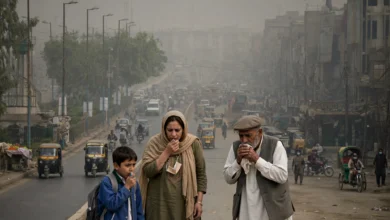
Sleep quality is usually the first thing to go when a Pakistani summer gets serious. By June, cities like Jacobabad, Multan and Lahore regularly cross 45°C, Karachi’s humidity turns the night air into a damp blanket, and loadshedding switches off the fan right when you finally drift off. Most of us have spent at least one night of terrible sleep quality lying awake on a sweaty pillow, counting the minutes until the electricity comes back.
This is not just a comfort problem. Poor sleep quality in extreme heat leaves you foggy, irritable and more vulnerable to heat illness the next day, and for the elderly, young children and outdoor workers it can become dangerous. Pakistan has already seen what happens when heat, humidity and power outages collide, and sleep quality is one of the first casualties.
The good news is that you can improve sleep quality in summer with practical, low-cost changes: how you manage curtains and windows during the day, where you place your fan, what you wear to bed, what you eat for dinner and how you plan for power cuts. This guide covers nine proven methods that work in Pakistani homes, from small flats in Karachi to rooftop charpais in Punjab. It also looks honestly at the shortcuts people take, such as illegal kunda connections, cheap ice from dirty water and sleeping pills bought without a prescription, and explains why those “solutions” can cost far more than a bad night’s sleep.
Why Sleep Quality Drops in Pakistani Summers
To fix your sleep quality, it helps to understand the problem. Your body needs to cool down slightly to fall asleep and stay asleep. When the room is too hot, that natural drop in core temperature is harder to reach, so you toss and turn, wake up more often, and your sleep quality drops. That is why sleep quality falls sharply during a heatwave in Pakistan, even for people who sleep perfectly well in winter.
Dry Heat vs Humid Heat
Pakistan does not have one kind of summer. It has two, and they affect sleep quality differently:
- Dry heat (most of Punjab, interior Sindh, parts of Balochistan and KP): very high daytime temperatures, low humidity and some cooling after midnight. Evaporative tricks like a room cooler or a damp sheet work well here.
- Humid heat (Karachi, coastal Sindh, Makran coast): temperatures are lower, but humidity stops sweat from evaporating. Nights stay warm and sticky, and water-based cooling can make the room feel worse.
Knowing which climate you live in will help you choose the right methods to improve sleep quality instead of wasting money on gadgets that do not suit your city.
Other Summer Sleep Disruptors
Heat is not the only issue. Loadshedding at night, mosquitoes, heavy late dinners, too much chai, and long afternoon naps all chip away at your sleep quality. A good plan for better sleep quality in summer deals with all of them, not just the temperature.
The Real Cost of Poor Sleep Quality During Heatwaves
It is easy to treat one night of poor sleep quality as a minor annoyance. History shows otherwise. In June 2015, a severe heatwave made worse by humidity and power outages killed more than 1,200 people in Karachi. Many victims were elderly people, outdoor labourers and residents of low-income neighbourhoods. In June 2024, Karachi faced another intense heatwave, the strongest since 2015 according to the Chief Meteorologist, and the city’s hospitals once again reported heatstroke deaths.
Researchers and relief workers point out that loadshedding in crowded low-income areas left people without fans at the worst possible time. When your body cannot cool down at night, it starts the next hot day already exhausted and dehydrated. Protecting your sleep quality in summer is therefore part of protecting your health. The World Health Organization’s guidance on heat and health explains how prolonged heat exposure strains the heart, kidneys and nervous system, especially in vulnerable groups.


9 Proven Ways to Improve Sleep Quality in Hot Summers
These sleep quality methods are ordered roughly from free to low-cost. You do not need all nine. Pick the sleep quality habits that fit your home, your climate and your budget.
1. Keep the Heat Out During the Day
Good sleep quality on a hot night starts in the morning. Once the sun is up, your goal is to stop heat from entering the bedroom.
- Close curtains and windows on the sunny side from late morning until evening.
- Use light-coloured or reflective curtains. Thick, pale fabric blocks far more heat than dark, thin cloth.
- Hang a chik or bamboo blind outside the window if possible. Blocking the sun before it hits the glass works better than blocking it inside.
- Paint the roof white or use a reflective roof coating if you live on the top floor. Top-floor rooms in Pakistan can be several degrees hotter than lower floors, which hurts sleep quality.
- Switch off unnecessary lights and appliances in the bedroom, since they all add heat.
2. Open Up and Ventilate at Night
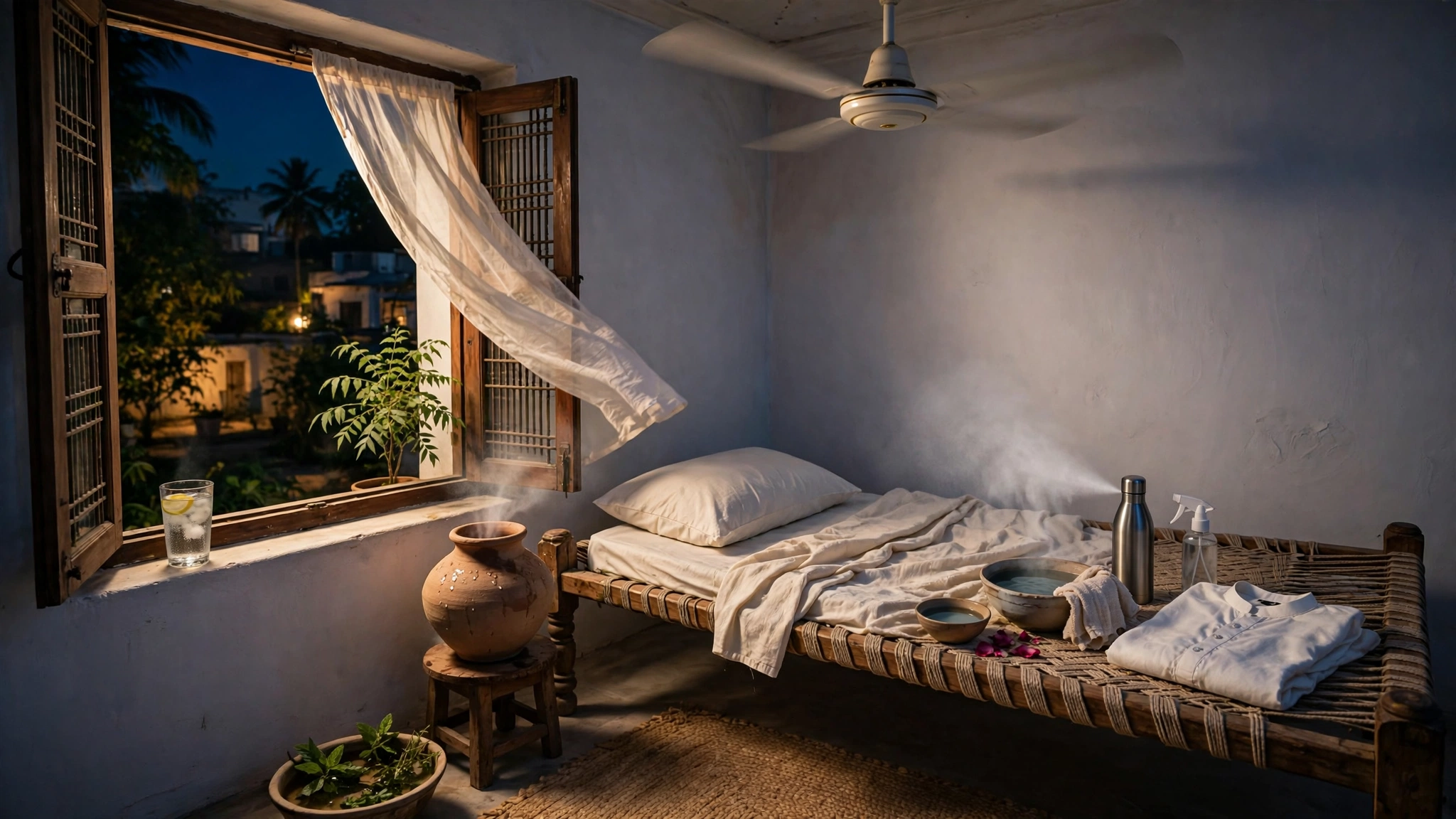
For better sleep quality, once the outside air is cooler than the inside air, usually after sunset in dry areas and late at night in humid ones, open windows on opposite sides of the room or house to create cross-ventilation. An exhaust fan or a pedestal fan placed near a window and facing outward pushes hot air out and pulls cooler air in. Good airflow is one of the cheapest ways to support better sleep quality.
3. Use Your Fan, Cooler or AC Smartly
Cooling equipment helps your sleep quality only when it is used well:
- Ceiling fan: keep it clean and running at a comfortable speed. Dusty blades move less air.
- Pedestal fan: aim it across your body, not straight at your face, to avoid dry eyes and a sore throat.
- Room cooler (desert cooler): excellent in dry heat, but keep a window slightly open so humid air can escape. In Karachi’s humidity it is often less effective.
- Air conditioner: set it around 26°C with the fan running rather than at 16°C. You still get a comfortable room, the compressor works less and your bill drops. Clean the filters every few weeks in summer.
- Inverter models: if you are buying a new AC or fan, inverter and DC models use noticeably less power, which also helps on UPS or solar.
4. Choose Breathable Bedding and Sleepwear
What touches your skin matters as much as the room temperature for sleep quality. For better sleep quality in hot weather:
- Use cotton or lawn bedsheets instead of polyester, which traps heat and sweat.
- Try a chatai (straw mat) or a cotton khes on top of the mattress. Many families still swear by them.
- Sleep on a charpai if you have one. The woven base lets air flow underneath your body.
- Wear loose cotton clothes, or as little as is comfortable.
- Use a thin pillow or a cotton pillowcase over a firm pillow, since thick foam pillows hold heat.
5. Cool Your Body Before Bed
For sleep quality, a lukewarm shower about an hour before bed is better than an ice-cold one. A very cold shower can make your body react by holding on to heat. Other simple tricks:
- Wipe your neck, wrists and feet with a damp cloth.
- Keep a bottle of water in the fridge and hold it against your wrists or the back of your neck.
- In dry climates, a slightly damp cotton sheet over the body can help. Avoid this in humid cities, where it will only make you feel clammy.
6. Eat Light and Hydrate Wisely
Heavy, oily dinners make your body work harder, raise internal heat and lower sleep quality. Biryani at 11 pm followed by a cup of strong chai is a recipe for a restless night. To improve sleep quality through food:
- Eat dinner at least two to three hours before bed.
- Choose lighter meals such as daal, sabzi, yogurt, khichdi or a simple salad.
- Drink water, lassi or lemon water through the day, not all at once before bed, so you are not up every hour for the bathroom.
- Cut caffeine after late afternoon to protect sleep quality. Tea, coffee, cola and energy drinks all delay sleep.
- Use ORS if you have been sweating heavily or working outdoors.
7. Protect Your Sleep Schedule
Summer routines often fall apart, and sleep quality goes with them. People sleep late because it is too hot, wake early because of the sun, and then nap for hours in the afternoon. To keep sleep quality steady:
- Go to bed and wake up at roughly the same time every day.
- Keep afternoon naps (qailoola) short, around 20 to 30 minutes.
- Put phones away at least 30 minutes before sleep. Screen light and scrolling keep the brain alert.
- Keep the bedroom as dark as possible to protect sleep quality. Early summer sunrise can wake you before 5 am.
8. Plan Ahead for Loadshedding
Power cuts are the biggest threat to summer sleep quality in Pakistan. A little planning protects your sleep quality:
- Check your area’s loadshedding schedule and plan cooling around it, for example by pre-cooling the room before the outage.
- Use a UPS or solar setup sized for your fan, not for every appliance in the house. A single efficient fan running all night is better than a heavy load that drains the battery by 2 am.
- Keep UPS batteries outside the bedroom or in a well-ventilated area, since older lead-acid batteries release gases while charging.
- Keep a rechargeable fan charged during the day as a backup.
- Never run a generator indoors or near a bedroom window. Generator exhaust contains carbon monoxide, which can kill silently during sleep.
The Pakistan Meteorological Department issues heatwave alerts in advance, so check it during peak summer and prepare your home before the hottest days arrive.
9. Keep Mosquitoes Away
Mosquitoes thrive in Pakistani summers and the monsoon that follows, and they are a hidden enemy of sleep quality. Constant buzzing and bites destroy sleep quality and spread dengue and malaria. Use a mosquito net, especially when sleeping on the roof or in a courtyard, fix window screens, remove standing water from pots and coolers, and use repellents as directed.
Risky Shortcuts That Hurt More Than They Help
When the heat is unbearable and money is tight, some people turn to shortcuts. These may seem like ways to protect sleep quality, but many are illegal, unsafe or both.
Illegal Kunda Connections and Electricity Theft
Hooking a wire directly to the power line to run a fan or AC without paying might feel like a fix for sleep quality on one hot night. In reality, electricity theft is a crime that hurts everyone. The government has said that theft and related losses cost the power sector hundreds of billions of rupees every year, with Energy Minister Awais Leghari putting theft losses at around Rs265 billion in FY2024-25. A nationwide crackdown has recovered over Rs105 billion and led to the arrest of more than 83,000 people for power theft.
Theft is one reason distribution companies impose longer loadshedding in high-loss areas, which means stolen power directly worsens sleep quality for honest neighbours. Kunda wires are also a serious electrocution and fire risk, especially in crowded neighbourhoods during monsoon rains.
Contaminated Ice and Unsafe Cold Drinks
Many families buy block ice in summer to cool water or drinks before bed. The problem is that some ice factories use unfiltered, contaminated water. In one province-wide operation, the Punjab Food Authority checked 287 ice factories, sealed 31 and served improvement notices on 156 others. Earlier crackdowns in Lahore and other cities sealed ice plants for using dirty water and not having filtration systems. Health officials have warned that contaminated ice can spread diseases like gastroenteritis and cholera. A stomach infection in the middle of a heatwave will ruin far more than one night’s sleep quality, so freeze filtered or boiled water at home instead. You can see examples of these actions in the Punjab Food Authority’s report on sealed ice factories.
Sleeping Pills Without a Prescription
When people cannot sleep in the heat, some walk into a medical store and ask for “neend ki goli.” In Pakistan, many sleeping and anti-anxiety medicines are controlled drugs that legally require a prescription and sale records. Yet regulators keep finding them sold casually over the counter. In September 2025, the Sialkot district administration ordered all medical stores to stop selling sleep medicines without a doctor’s prescription after finding widespread misuse. DRAP’s Quality Control Board has also approved prosecutions against stores selling prescription-only medicines without a prescription.
Self-medicating with sleeping pills in hot weather is particularly risky. Some sedatives affect the body’s ability to regulate temperature and can make you sleep through warning signs of dehydration or heat exhaustion. If heat-related insomnia and poor sleep quality last for weeks, see a doctor rather than a shopkeeper.
Unsafe Wiring and Overloaded Sockets
Running an AC, cooler, fridge and UPS charger from one overloaded extension board is a common summer fire hazard. Use proper wiring, the right breaker size and good-quality sockets. A house fire at night is the worst possible outcome of trying to improve sleep quality by staying cool.
Special Care for Vulnerable Family Members
Some people need extra attention to protect their sleep quality and safety during a heatwave:
- Elderly relatives: they feel thirst less and may not notice overheating. Check on them during the night, keep water by the bed, and give them the coolest room.
- Infants and young children: dress them lightly, avoid heavy blankets and never leave them in a closed, hot room or car.
- People with heart disease, diabetes or kidney problems: heat puts extra strain on their bodies. They should follow their doctor’s advice on fluids and medicines.
- Outdoor workers: labourers, riders and street vendors start each night already heat-stressed. Cooling down and rehydrating fully before bed is essential for their sleep quality.
Warning Signs of Heat Illness at Night
Good sleep quality is not possible if your body is in trouble. Wake someone up and seek medical help if you notice:
- High body temperature with hot, dry skin
- Confusion, slurred speech or unusual drowsiness
- Severe headache, nausea or vomiting
- Fast heartbeat or rapid breathing
- Fainting or seizures
Heatstroke is a medical emergency, far beyond a sleep quality problem. Move the person to a cooler place, loosen clothing, cool the skin with water and fanning, and call for help immediately.
Frequently Asked Questions About Sleep Quality in Summer
What is the best room temperature for good sleep quality?
Most sleep experts recommend a cool room, ideally in the low to mid 20s Celsius. In a Pakistani summer that is often unrealistic without an AC, so aim to get the room as cool as you safely can and support your sleep quality with airflow, light bedding and good timing.
Is it safe to sleep on the roof in summer?
Many families do, and it can help sleep quality in dry areas where nights cool down. Use a mosquito net, make sure the roof has a safe boundary wall, and check the weather for dust storms or rain.
Does a room cooler work in Karachi?
A cooler improves sleep quality best in dry heat. In Karachi’s humid weather a cooler is less effective and can make the room feel sticky, so a fan with good ventilation or an AC set at a moderate temperature usually gives better sleep quality.
Can I take a sleeping pill on very hot nights?
Only if a doctor prescribes it. Pills are not a long-term fix for sleep quality. Buying sleep medicines without a prescription is against the rules, and these drugs can be unsafe in extreme heat.
Conclusion
Protecting your sleep quality in a hot Pakistani summer comes down to a handful of practical habits: keep the heat out during the day and let air flow at night, use fans, coolers and ACs in ways that suit your city’s climate, choose cotton bedding and light dinners, cool your body before bed, keep a steady routine, plan sensibly for loadshedding and keep mosquitoes away, while refusing the dangerous shortcuts of kunda connections, contaminated ice and sleeping pills bought without a prescription, because the 2015 and 2024 heatwaves showed that a cool, safe night is not a luxury but one of the simplest ways to protect your family’s health when the temperature refuses to drop.