How Pakistani YouTubers can Find Viral Video Ideas With Data in 2026
A practical guide for Pakistani YouTubers on finding video ideas with data: outlier videos, niche checks, RPM differences by country, and faceless Urdu and Hindi channels.
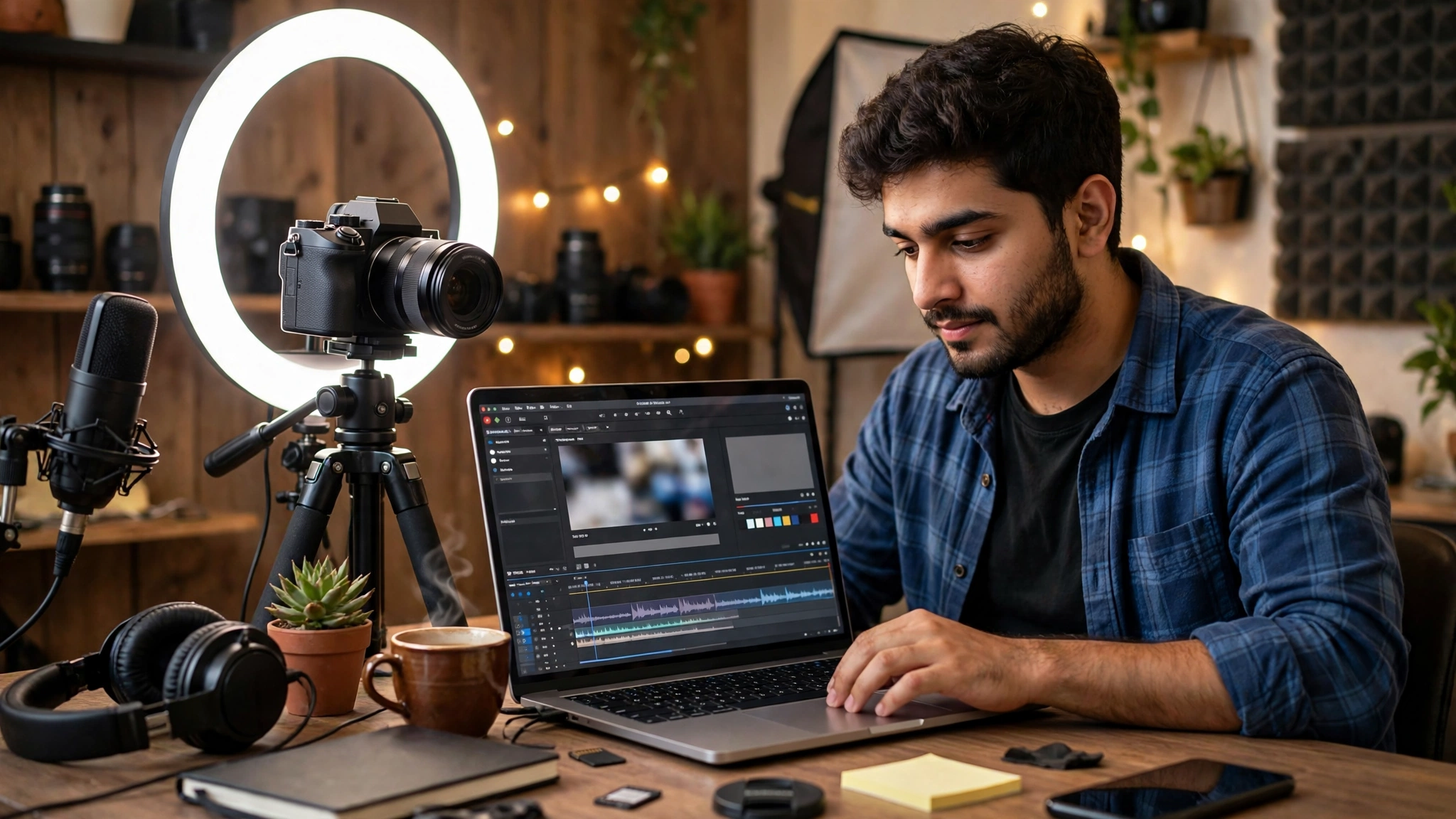
Every week, thousands of new YouTube channels start in Pakistan. Some are vlogs, some are tech reviews, and many are faceless channels in Urdu or Hindi. Most of them make the same mistake at the start: they pick video ideas based on what they feel like making, not on what viewers are already searching for and watching.
The good news is that you do not need a big team or a big budget to fix this. You just need a simple, repeatable way to look at data before you hit record. In this guide, I will share the process that works for Pakistani creators, whether you are making your first video or your five hundredth.
Why Guessing Video Ideas Does Not Work Anymore
YouTube recommends videos based on how viewers react to them. If people click and keep watching, the video gets shown to more people. If they do not, it slowly stops getting views.
This means a good idea is not just “a topic I like.” A good idea is a topic that has already proven it can pull viewers, presented in a way that is better or fresher than what already exists. Data helps you find those topics before you spend hours on scripting, voiceover, and editing.
Step 1: Look For Outlier Videos In Your Niche
An outlier video is a video that got far more views than the channel’s usual videos. For example, if a small channel usually gets a few thousand views per video and one video suddenly gets hundreds of thousands, that video is an outlier.
Outliers are useful because they tell you the topic itself pulled the views, not the channel’s size. A big channel getting big views is normal. A small channel getting big views means the idea was strong.
Here is how to use them:
- Search your niche on YouTube, for example “mobile prices in Pakistan” or “Islamic history in Urdu.”
- Open small and medium channels and sort their videos by “Popular.”
- Compare the top video with the channel’s average views. If it is many times higher, note it down.
- Write down the title, the thumbnail style, and the main promise of the video.
- Ask yourself: can I make a better, newer, or more local version of this?
Doing this by hand works, but it takes time. Research and analytics tools can scan many channels at once and show you videos that performed above their channel’s normal level, so you can spend your time making content instead of scrolling.
Step 2: Check The Niche Before You Commit
A topic can be popular and still be a bad choice for you. Before you commit to a niche, check three simple things:


- Is there steady demand? Look at whether new videos on the topic still get views, not only videos from years ago. A niche where recent uploads keep performing is healthier than one that peaked long ago.
- Is the competition too heavy? If the first page of results is full of huge channels with very high production quality, it will be hard to break in. Look for gaps where smaller channels are still winning.
- Can you make many videos on it? One viral idea is not a channel. Make a list of at least 20 to 30 video ideas in the niche. If you struggle to reach that number, the niche may be too narrow.
A simple trick is to search your main keyword and look at the upload dates and channel sizes of the top results. If you see small channels from the last few months ranking, that is a good sign.
Step 3: Understand RPM Differences By Country
This is the part many Pakistani creators ignore, and it has a big effect on earnings.
RPM means revenue per mille, which is how much a creator earns per 1,000 views after YouTube’s share. RPM is not the same everywhere. Advertisers pay different amounts in different countries, so views from some countries earn much more than views from others. Your niche matters too, because topics like finance, tech, and business usually attract higher paying advertisers than pure entertainment.
What this means for you:
- A Pakistani audience is great for building a loyal community, but views from local audiences usually earn less per view than views from countries with stronger ad markets.
- If your main goal is income, consider topics that also interest viewers abroad, such as English tech tutorials, software guides, or content for the large South Asian diaspora.
- Do not chase high RPM blindly. A topic with high RPM but no demand earns nothing. Balance demand, competition, and RPM together.
If you want to compare countries before choosing your audience, you can use any CPM and RPM by country calculator to get a rough idea of how earnings change from one market to another. Treat any such numbers as estimates, since real RPM depends on your niche, your viewers, and the season.
Step 4: Use The Power Of Faceless Urdu And Hindi Channels
Faceless channels have become very popular in Pakistan and India. These channels use voiceovers, stock footage, animations, screen recordings, or slideshows instead of showing the creator’s face.
Urdu and Hindi together are understood by a huge audience across Pakistan, India, and the diaspora. That gives faceless creators a big potential market. Popular faceless formats include:
- History and storytelling channels
- Islamic knowledge and stories
- Tech explainers and mobile reviews using screen recordings
- Top 10 and fact based videos
- Finance and freelancing guides
The same data steps apply here. Find outlier videos in Urdu and Hindi, check whether recent uploads still perform, and look at what thumbnails and titles are getting clicks. Then make your own original version with better research, clearer voiceover, and a local angle.
One important warning: YouTube does not reward copied or low effort content. Reuploading other people’s clips or using robotic, repetitive videos can get your channel rejected from monetization. Always add real value through your own script, research, and editing.
Step 5: Turn Data Into A Simple Weekly System
Data is only useful if you use it regularly. Here is a simple weekly routine:
- Monday: Spend 30 minutes finding 5 to 10 outlier videos in your niche.
- Tuesday: Pick the 2 or 3 strongest ideas and check recent demand and competition.
- Wednesday to Friday: Script, record, and edit your best idea.
- Weekend: Publish, then check your own analytics. Which video had the best click through rate? Which one kept viewers watching longer?
Over time, your own analytics become your best data source. You will start to see which topics and styles your audience loves, and you can do more of what works.
Common Mistakes to Avoid
A few habits quietly hold back many new channels. The first is copying a viral video exactly. Viewers can tell, and YouTube already has that video. Use a proven idea as a starting point, then add your own angle, local examples, or a better explanation.
The second is chasing every trend. A trend that has nothing to do with your channel may bring one spike of views, but those viewers rarely come back. Pick ideas that fit the audience you want to build.
The third is giving up too early. Data helps you make better guesses, but no method makes every video a hit. Publish consistently, learn from each upload, and give your channel time.
A Pakistani Built Tool For This Research
When I started my own YouTube journey, most research tools were built for Western creators and priced in dollars that felt heavy for Pakistani users. That is one of the reasons we built TubeMind, a YouTube research and analytics tool made in Pakistan. It helps creators find outlier videos, check niches, and compare earning potential by country, so you can plan videos with data instead of guesswork.
Whatever tool you use, the process stays the same: find proven ideas, check the niche, understand where your views and money come from, and keep improving week by week.
Final Thoughts
Going viral is not pure luck. Most videos that take off are built on ideas that already proved they can attract viewers, presented in a fresh and honest way. If you are a Pakistani creator in 2026, you have a big advantage: a huge Urdu and Hindi audience, growing interest in local content, and free data sitting right inside YouTube.
Start small. Find one outlier this week, make your own better version, and learn from the results. Consistency plus data beats guesswork every time.
Author Bio:
Muhammad Ismail (Ismail Blogger) is a Pakistani YouTuber with 377K subscribers who teaches blogging, YouTube growth, and online earning.
He is the founder of TubeMind, a Pakistani built YouTube research and analytics tool for creators.