Popular Online Learning Platforms in Pakistan
Online learning platforms in Pakistan reviewed honestly: free and paid options, costs, fake degree traps and how to check before you enrol in 2026.
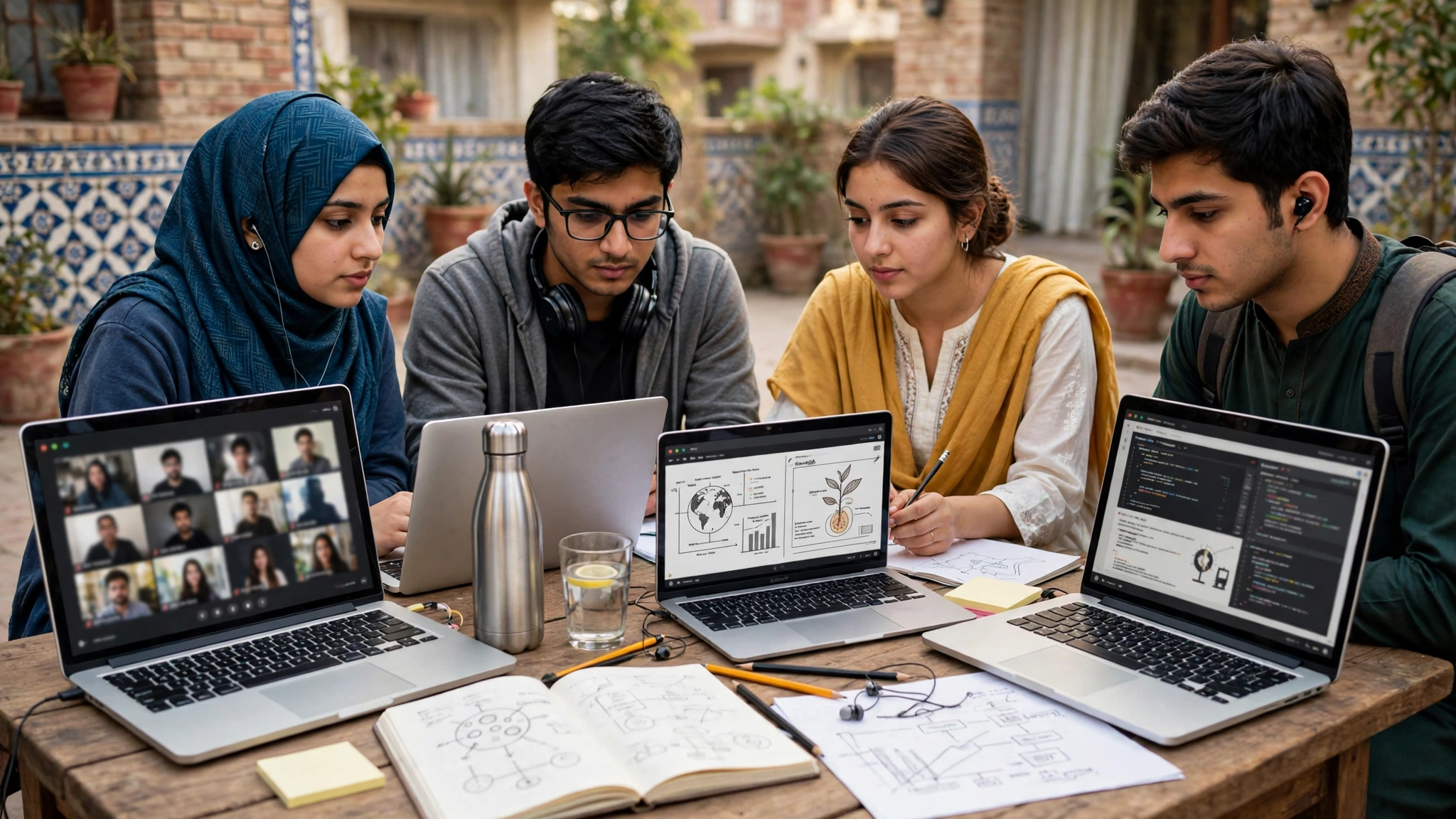
Online Learning Platforms in Pakistan: 9 Trusted Options and the Costly Scams to Avoid in 2026
Introduction
Online learning platforms in Pakistan have moved from a lockdown stopgap to a normal part of how people study and build careers. A matric student in Multan watches chemistry lessons in Urdu on a phone. A graduate in Quetta takes a free freelancing course from a government programme. A working mother in Karachi finishes a university degree through distance learning without leaving her job. The government’s DigiSkills programme alone now fills around 300,000 free seats per batch.
That growth is genuinely good news. Quality teaching that once needed a big-city academy and a big fee is now available to anyone with a smartphone and a data package. But the same boom has created room for people who sell shortcuts instead of learning.
Pakistan knows this story better than most countries. The Axact scandal exposed a global trade in fake online degrees run from Karachi. The Higher Education Commission still publishes lists of illegal campuses and unrecognised programmes every year. Social media is full of “earn in dollars” course sellers whose certificates mean nothing to an employer.
This guide looks at nine online learning platforms that Pakistani learners actually use, from free government courses to global marketplaces. It explains what each one is good for, what its certificates are worth, and how to spot a scam before it costs you money, time or your career.
9 Popular Online Learning Platforms in Pakistan
The platforms below fall into three groups: government and university programmes, local edtech companies, and global platforms that many Pakistanis use. They are listed by group, not ranked, because the right choice depends on whether you need a degree, a school-level lesson or a job skill.
Government and university platforms
1. DigiSkills.pk
DigiSkills.pk is the largest free skills programme in the country. It was conceived by the Ministry of IT and Telecom, is run by the Virtual University of Pakistan and is funded by Ignite. Courses cover freelancing, graphic design, digital marketing, WordPress, creative writing and newer topics like AI with Python. Each batch fills quickly: the site reported more than 300,000 enrolments for Batch 3 of DigiSkills 3.0 in 2026.
Good for: beginners who want practical free online courses in Pakistan with a government-backed e-certificate.
Reality check: a DigiSkills certificate shows you completed training. It is not a degree, and clients on freelancing platforms care about your portfolio more than the certificate. In early 2026, Ignite also commissioned an independent review of the programme’s impact, which is a healthy sign of accountability.


2. Virtual University of Pakistan (VU)
VU is a public university that delivers full degree programmes online, from associate degrees to postgraduate qualifications. Lectures are recorded, exams are held at proctored centres, and degrees are HEC recognised.
Good for: working adults and students outside big cities who need a recognised degree.
Reality check: self-study takes discipline. Many students underestimate the workload because there is no fixed class time.
3. Allama Iqbal Open University (AIOU)
AIOU is one of the oldest distance learning universities in the region, with a large network of regional centres and an online portal for enrolment, assignments and results. It offers everything from matric and intermediate to postgraduate programmes.
Good for: learners who need an affordable, recognised qualification with flexible timing.
Reality check: administrative delays in results and transcripts are a common complaint, so plan ahead for job or admission deadlines.
Local edtech platforms
4. Taleemabad
Taleemabad focuses on school-age children, with animated lessons in Urdu and English aligned to the national curriculum. It also works with low-cost private schools.
Good for: parents of primary and middle school children who want structured, local-language content.
5. Maqsad
Maqsad is a test-preparation app popular with matric and intermediate students and those preparing for entry tests such as MDCAT and ECAT. It uses short video explanations and practice questions.
Good for: students preparing for board exams and university entry tests.
Reality check: free tiers are limited. Compare the paid plan’s cost with a local academy before committing.
6. Sabaq
Sabaq offers free video lessons in Urdu for school subjects, mainly science and mathematics. It is especially useful for students without access to a good tutor.
Good for: self-learners and teachers looking for clear Urdu explanations.
Global platforms used in Pakistan
7. Coursera
Coursera hosts courses and professional certificates from universities and companies such as Google and IBM. Many courses can be audited for free; certificates usually cost money, though financial aid is available on many courses.
Good for: graduates who want an internationally known certificate in data, IT support, project management or business.
8. Udemy
Udemy is a marketplace where independent instructors sell courses on almost anything. Prices drop sharply during frequent sales.
Good for: specific, practical skills like Excel, video editing or a programming framework.
Reality check: quality varies widely because anyone can publish. Check reviews, the last update date and preview lectures before buying.
9. Khan Academy
Khan Academy is a free, non-profit platform with maths and science lessons, including some Urdu content. It is ad-free and well structured.
Good for: school and college students who want to strengthen fundamentals at no cost.
Quick comparison
| Platform | Type | Cost | What you get |
|---|---|---|---|
| DigiSkills.pk | Government skills programme | Free | E-certificate |
| Virtual University | Public online university | Fee-based, low | HEC-recognised degree |
| AIOU | Public distance university | Fee-based, low | HEC-recognised degree |
| Taleemabad | Local K-12 edtech | Free and paid | Curriculum lessons |
| Maqsad | Local test prep | Free and paid | Exam practice |
| Sabaq | Local free lessons | Free | Urdu video lessons |
| Coursera | Global | Free to audit, paid certificates | Professional certificates |
| Udemy | Global marketplace | Paid, frequent sales | Completion certificate |
| Khan Academy | Global non-profit | Free | Lessons and practice |
How to Judge Online Learning Platforms in Pakistan
A polished app or a celebrity endorsement tells you nothing about whether a course will help you. These five factors decide whether online learning platforms in Pakistan are worth your time.
1. Recognition: degree, certificate or neither
This is the most important question and the one most often blurred by marketing.
- A degree in Pakistan must come from an institution recognised by the Higher Education Commission. VU and AIOU qualify. A degree from an unrecognised institution will not be accepted for government jobs, further study or equivalence.
- A professional certificate, such as those from Google on Coursera, is valued by some employers for specific skills but is not a degree.
- A completion certificate, like those from Udemy or most local courses, simply shows you finished. It is useful on a CV only alongside real work samples.
Any platform that sells a “degree” in weeks, without exams or recognised accreditation, is not offering education.
2. Real cost, including data
Free courses are rarely completely free in practice. Video lessons use a lot of mobile data. A one-hour lecture in standard quality can use several hundred megabytes. Before you sign up, check whether the platform allows offline downloads or low-quality streaming. Also check whether “free” means a short trial that converts to a monthly charge.
3. Language and level
The best e-learning Pakistan options match the learner’s language and level. Urdu explanations help many school students grasp concepts faster, while professional content is mostly in English. A course that is too advanced in a second language leads to dropout, not learning.
4. Support and accountability
Check whether you can ask questions, get assignments checked or speak to a real person. Good online learning platforms have discussion boards, tutors or at least a responsive support email. Programmes that publish results, like DigiSkills opening itself to an independent review, are more trustworthy than those that only post success stories.
5. Outcomes you can verify
Testimonials of “Rs 5 lakh a month after one course” are marketing. Look instead for:
- Course outlines you can read before paying
- Instructor names and verifiable professional profiles
- Sample lectures
- Independent reviews from people you can actually find online
- Clear refund policies
The Dark Side: Fake Degrees, Illegal Campuses and Course Scams
Any honest review of online learning platforms in Pakistan has to deal with the country’s history of education fraud. These cases explain why verification is not paranoia but basic self-protection.
The Axact fake degree scandal
In 2015, a New York Times investigation reported that Karachi-based software company Axact ran hundreds of websites for fictional universities, high schools and accreditation bodies, selling diplomas to buyers around the world. The FIA opened an inquiry the same year. In July 2018, an Islamabad sessions court convicted the company’s CEO and other employees and sentenced them to prison terms with fines. The convictions were later challenged in higher courts, the sentence was suspended on appeal, and the legal outcome has remained contested for years.
Whatever the final legal result, the lesson for learners is clear. A slick website, an official-sounding accreditation body and a “life experience degree” are classic signs of a diploma mill. Buyers in the Gulf and elsewhere reportedly lost jobs and faced legal trouble when their fake qualifications were discovered.
Illegal campuses and unrecognised programmes
Fake degrees are not only an online problem. The HEC regularly publishes lists of illegal and unrecognised universities, campuses and degree programmes. In April 2026, it released an updated list of fake universities and illegal campuses, including affiliated colleges offering undergraduate and postgraduate programmes without approval. The HEC has also warned that foreign degree programmes offered in Pakistan without registration under its transnational education policy will not be recognised.
Many of these institutions advertise heavily online, offer “blended” or “online” study, and target students who did not get admission elsewhere. Students have spent years and lakhs of rupees before learning their degree is worthless.
“Earn in dollars” course sellers
A newer pattern is the social media guru who sells expensive freelancing, e-commerce or trading courses with promises of quick income. Common warning signs include:
- Screenshots of earnings that cannot be verified
- Pressure to pay today because “seats are limited”
- Upsells to a second, more expensive “mastermind” or “mentorship” tier
- Content that is copied from free sources such as YouTube or DigiSkills
- Requests to recruit friends for a commission, which can turn a course into a pyramid scheme
When a course is mainly sold through income claims rather than its syllabus, treat it with suspicion.
Pirated courses and fake certificates
Copying a paid Udemy or Coursera course to a Telegram group, or buying a “verified” certificate from a seller, may look harmless. It is not. Pirating courses breaks copyright law and the platforms’ terms, and the files often carry malware. Fake certificates can be checked in seconds by employers through the issuer’s verification link, and being caught can end a job offer or lead to dismissal. Pakistan’s cybercrime and intellectual property laws apply here too.
Fake versions of real programmes
Popular free programmes attract impersonators. Lookalike websites, WhatsApp groups and Facebook pages sometimes charge “registration fees” for courses that are actually free, or collect CNIC and bank details. Always register through the official domain, such as digiskills.pk, and never pay a fee for a programme that is advertised as free.
Checklist for Choosing Online Learning Platforms
Use this list before you pay a single rupee or hand over your CNIC. It works for all online learning platforms, local or global.
For students seeking a degree
- Check the HEC recognised list on the official HEC website, including the specific campus and programme, not just the university name.
- Check the illegal institutions list as well. A familiar university name can still be attached to an unapproved affiliated college.
- Ask how exams are held. Recognised online degrees have proctored exams. No exams usually means no real degree.
- Confirm the degree is attestable by HEC before admission, and get it in writing.
- Be wary of foreign degrees offered locally. Confirm registration under HEC’s foreign collaboration or transnational education policy.
For learners seeking skills
- Start free. DigiSkills, Khan Academy, Sabaq and audited Coursera courses cost nothing. Pay only when you know exactly what extra you are buying.
- Read the syllabus, not the success stories.
- Search the instructor’s name with words like “scam” or “review”.
- Build a portfolio as you learn. Employers and clients will judge your work samples, not your certificate.
- Check refund terms before paying for any course over a few thousand rupees.
For parents of school children
- Choose platforms that match the national or provincial curriculum and your child’s language.
- Set screen-time limits and sit with younger children for the first few sessions.
- Check what data the app collects and avoid apps that demand unnecessary permissions like contacts.
- Use online lessons to support school and home study, not to replace a teacher entirely.
Red flags at a glance
| Red flag | What it usually means |
|---|---|
| Degree in weeks or for “life experience” | Diploma mill |
| Campus not on the HEC list | Degree may not be recognised |
| Fee for a programme advertised as free | Impersonation scam |
| Income guarantees in adverts | Sales funnel, not education |
| Pay-to-recruit commissions | Possible pyramid scheme |
| Certificate sold without study | Fraud, easy for employers to detect |
Conclusion
Online learning platforms in Pakistan now give almost anyone with a phone access to real education, from free DigiSkills courses and Urdu lessons on Sabaq and Khan Academy to recognised degrees from Virtual University and AIOU and professional certificates on Coursera. The value of each depends on what you need: a recognised degree must come from an HEC-approved institution, a skill certificate is only as useful as the portfolio behind it, and school-level apps work best alongside teachers and parents. The country’s history of education fraud, from the Axact fake degree scandal to the HEC’s recurring lists of illegal campuses and today’s “earn in dollars” course sellers, shows why every learner should check recognition, read the syllabus, start with free options and never pay for shortcuts. Choose online learning platforms in Pakistan with that care, and your time online will build skills and qualifications that actually open doors.