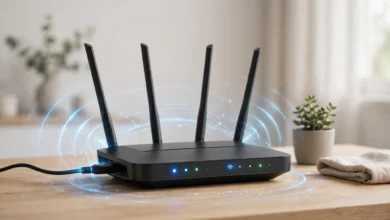
In-Depth Review Local Air Purifiers for Smog Season in Pakistan
Air purifiers for smog season in Pakistan reviewed: local vs imported models, HEPA and CADR checks, fake claims, real legal cases, and buying tips.
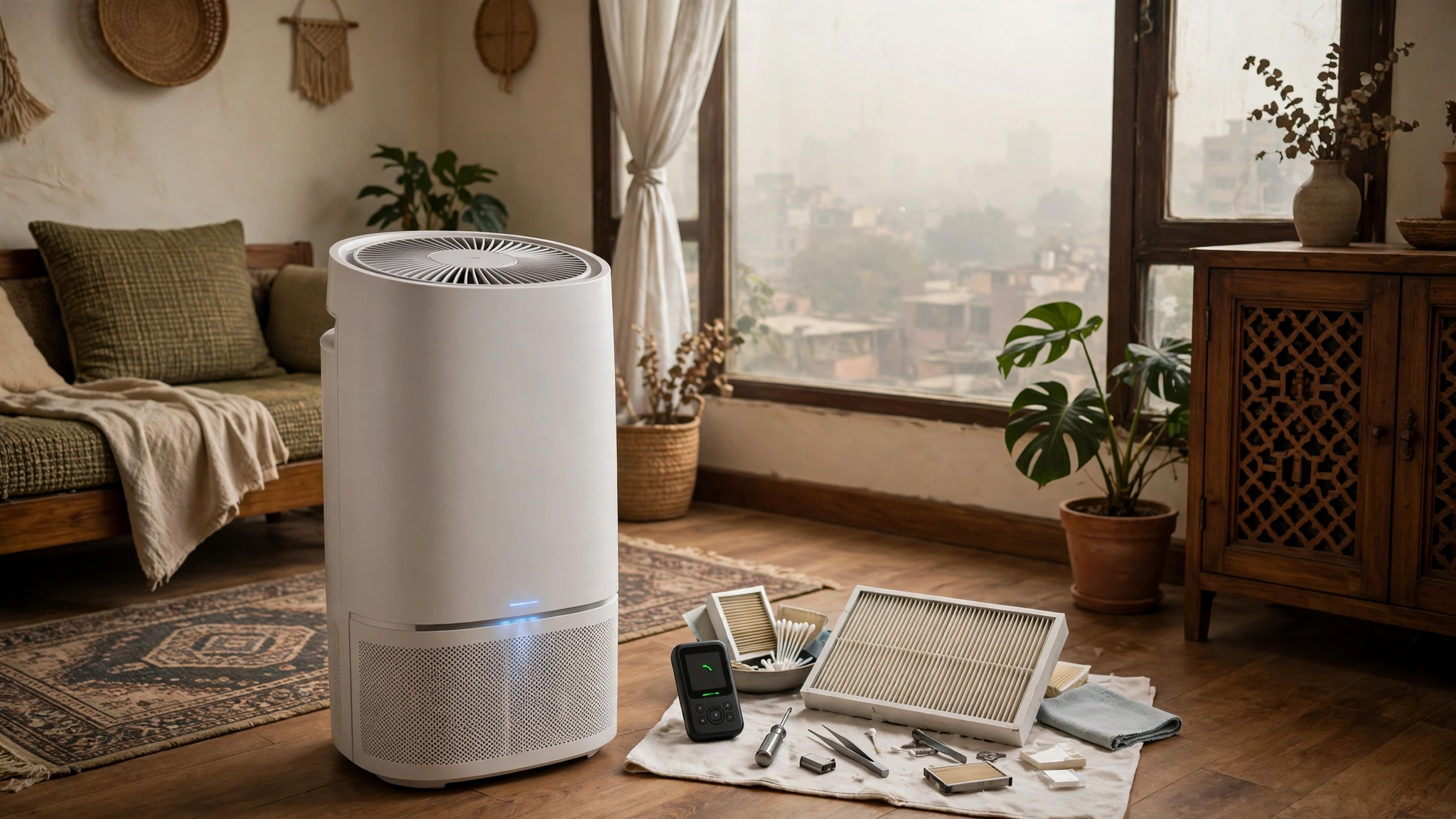
Air Purifiers for Smog Season in Pakistan: 7 Proven Checks to Avoid Fake Local Units
Introduction
Air purifiers have gone from a luxury item to a winter essential for many families in Punjab and beyond. Every November, smog settles over Lahore, Multan, Faisalabad, and other cities, schools close, and hospitals fill with people struggling to breathe. In November 2024, Lahore’s AQI briefly crossed 1,000, a level local officials described as unprecedented. When the air outside is that bad, cleaning the air in at least one room of your home is a reasonable thing to want.
That demand has created a crowded market. Electronics shops now stock everything from international names like Xiaomi, Philips, and Dyson to local brands such as Royal, Super Asia, Dawlance, and Westpoint. Prices run from under Rs 30,000 to well over Rs 100,000. Almost every box promises HEPA filtration, “99.9% removal,” and protection against smog. Some of those promises are true. Some are copied from a brochure with nothing behind them.
This review cuts through that. It explains what a purifier can and can’t do against PM2.5, which specifications actually matter, how local and imported options compare, and what past legal cases reveal about false air-cleaning claims. It also covers the illegal burning that causes so much of the smog in the first place. The goal is simple: help you spend your money on a machine that genuinely cleans the air your family breathes.
Why Smog Season Makes Air Purifiers Worth Considering
What smog actually is
Pakistan’s winter smog is a mix of fog and pollution trapped close to the ground by cold, still air. The pollutants come from vehicle exhaust and low-grade fuel, factory and brick kiln smoke, burning of crop stubble, garbage, and tyres, and construction dust. The most harmful part is PM2.5: particles smaller than 2.5 microns that travel deep into the lungs and can enter the bloodstream.
The World Health Organization’s guideline for PM2.5 is a 24-hour average of 15 micrograms per cubic metre. On bad smog days, Punjab cities regularly record many times that. Dawn reported that one early November 2024 reading in Lahore was 71 times above the WHO limit.
Smog gets indoors
Many people assume closing the windows is enough. It helps, but fine particles leak in through gaps around doors, windows, and vents. Without filtration, indoor PM2.5 in a typical Pakistani home during smog season often follows outdoor levels quite closely, just a little lower. That’s where air purifiers come in.
What a purifier can do
- A good HEPA air purifier that is sized correctly for the room can cut indoor PM2.5 sharply, often by more than half, within an hour or so.
- It works best in a closed room, such as a bedroom at night, which is where people spend the most continuous hours.
- An activated carbon filter can reduce some smoky odours and gases, though only modestly in most budget units.
What a purifier can’t do
- It can’t clean a whole house unless you buy one powerful enough for each room.
- It does nothing once you step outside, and it is no substitute for an N95 or KN95 mask on the road.
- It doesn’t treat asthma or lung disease. Anyone with breathing problems still needs a doctor’s advice during smog season.
The US Environmental Protection Agency’s guide to air cleaners and air filters in the home is a clear, non-commercial explanation of these limits and is worth reading before you buy.
7 Proven Checks Before Buying Air Purifiers in Pakistan
Boxes and shop websites are full of numbers. These seven are the ones that decide whether air purifiers actually clean your room.

1. A real HEPA filter, with a grade
“HEPA” on the box isn’t enough. A true HEPA filter in the US standard captures at least 99.97 percent of particles at 0.3 microns. In the European EN 1822 system, H13 HEPA captures at least 99.95 percent at the hardest-to-catch particle size, and H14 more. Be careful with wording like “HEPA-type,” “HEPA-like,” or “99% HEPA.” These are marketing terms, not grades, and the filters behind them can be much weaker. Ask the seller to show the grade printed on the filter itself.
2. CADR, not “coverage”
CADR (Clean Air Delivery Rate) tells you how much filtered air the machine delivers, usually in cubic metres per hour (m³/h) or cubic feet per minute (CFM). It is the single most useful number on the box. “Coverage: 60 m²” is often calculated generously and doesn’t tell you how fast the room gets cleaned.
A simple rule: multiply the room’s volume (length × width × height in metres) by five. That’s the minimum CADR in m³/h for about five full air changes per hour, which is a sensible target during heavy smog. A 4 × 4 metre bedroom with a 3 metre ceiling is 48 m³, so look for a CADR of at least 240 m³/h.
3. Filter replacement cost and availability
This is where cheap units become expensive. Filters clog fast during smog season, often within three to six months. Before buying, ask the price of a replacement filter and whether the shop actually keeps it in stock. A purifier whose filter is unavailable next winter is just a fan.
4. No ozone generation
Some devices sold as purifiers produce ozone, either on purpose (“ozone generators”) or as a by-product of ionizers and some UV lamps. Ozone is a lung irritant, the same gas that makes smog harmful outdoors. California, for example, caps ozone emissions from indoor air cleaners at 0.050 parts per million. Avoid any unit that advertises ozone, “activated oxygen,” or “O3 purification,” and switch off the ionizer if your unit has one and you aren’t sure about it.
5. A PM2.5 sensor that makes sense
Many units show a live PM2.5 reading. It’s useful, but cheap sensors can be inaccurate. If the display says the air is “excellent” within seconds of switching on in a smoggy room, the sensor is decorative. Compare it occasionally with a separate air quality monitor or with outdoor AQI from the Punjab government’s AQI platform.
6. Noise at the speed you’ll actually use
A purifier is only effective if you leave it on. Many machines quote noise only in sleep mode. Ask for the noise level at medium or high speed, or test it in the shop. If it’s too loud to sleep next to, you’ll turn it down to a speed that barely moves air.
7. Warranty, service, and a real address
Local brands often have an edge here, with service centres in major cities. For imported units, check whether the warranty is from the official distributor or just the shop. Grey-market imports may be cheaper, but filters and repairs can be hard to find.
In-Depth Review: Local and Imported Air Purifiers in Pakistan
A quick word on method. This review isn’t based on lab testing. It compares published specifications, retailer listings, and the seven checks above, and points out where claims need verifying. Prices below are approximate figures from Pakistani retailers in 2025 and 2026 and change often, especially before smog season.
| Brand | Type | Approx. price range (PKR) | Strength | What to verify |
|---|---|---|---|---|
| Royal | Local brand | 32,000 to 85,000 | Affordable, local service | Filter grade and CADR |
| Super Asia | Local brand | 35,000 to 60,000 | Known appliance maker, service network | Filter type on budget models |
| Dawlance | Local brand | 50,000 to 100,000 | Wide service network | CADR for your room size |
| Westpoint, Homage, E-Lite, Okasha | Local brands | 8,500 to 71,000 | Low entry prices | HEPA grade, filter stock, ozone |
| Xiaomi | Imported | 30,000 and up | Strong CADR for the price, app control | Official vs grey-market warranty |
| Philips | Imported | 40,000 to 95,000 | Established filtration track record | Genuine filters and distributor warranty |
| Beurer | Imported | 37,500 to 80,000 | Good build quality | Filter price and availability |
| Dyson | Imported | 120,000 and up | Premium design, fan function | Whether you need to pay for the extras |
Local air purifier brands
Local brands are the most accessible air purifiers in Pakistan. Their biggest advantage is after-sales support: service centres in major cities, warranty claims handled locally, and spare filters that are more likely to be available. Many of these units are manufactured by Chinese factories and sold under Pakistani brand names, which is normal in the appliance trade and not a problem in itself.
The weak point is specifications. Some budget local units list a “composite” or “HEPA activated carbon” filter rather than a graded H13 HEPA, and many don’t publish CADR at all. Others, such as some newer smart models, do state H13 filtration. The rule is simple: if a local brand gives you a filter grade and a CADR figure in writing, you can compare it fairly. If it only gives “coverage” and “99.9%,” treat it as unproven.
Imported air purifiers
Imported brands like Xiaomi and Philips usually publish clearer specifications, including CADR, and their filtration performance is well documented internationally. Xiaomi in particular tends to offer a high CADR for the price, which matters a lot in smog.
The risks are different. Grey-market units may come without a valid local warranty, and genuine replacement filters can be hard to find or expensive. Counterfeit “compatible” filters for popular models are widely sold online, and a cheap filter can quietly undo the purifier’s performance.
Which should you choose?
- Tight budget, small bedroom: a local unit that states H13 HEPA and a CADR of at least 200 m³/h, with filters in stock.
- Mid budget, best performance per rupee: an imported model with official warranty and a published CADR suited to your room.
- Large living room: one high-CADR unit is better than two weak ones. Check the CADR against the room volume, not the advertised “coverage.”
- Premium budget: pay for CADR and quiet operation first, and app features or heating and cooling functions second.
Whatever you choose, the best air purifier for smog is the one you can afford to run every day with a fresh, genuine filter.
Real Cases: False Claims and Illegal Activity Behind Air Pollution and Air Purifiers
Two kinds of wrongdoing matter here: companies that make false promises about cleaning the air, and people who pollute it illegally in the first place.
The ozone “air cleaner” case (United States)
The best-documented legal case about misleading air purifiers involves Alpine Industries, a US company that sold ozone-generating “air cleaners” through a large network of dealers. In 1995, it agreed to a Federal Trade Commission order barring it from making unsupported claims about what its machines could do. It kept making them.
In 1999, a federal jury found that 129 of the company’s promotional materials contained 865 unsubstantiated claims, including health claims. In April 2001, a federal court in Tennessee ordered Alpine and its president to pay a civil penalty of $1.49 million, as described in the FTC’s announcement of the Alpine Industries penalty. The court also barred the company from claiming its products removed indoor pollutants (apart from a few narrow exceptions), relieved any medical condition, or controlled indoor ozone levels through a sensor. An appeals court later upheld the penalty.
The lesson for buyers in Pakistan is direct. A machine can sound scientific, be sold by enthusiastic dealers, and still not do what it promises. Some devices marketed today as “ozone purifiers” or “activated oxygen” machines work on the same principle. During smog season, adding ozone to a bedroom is the opposite of what you need.
Vague health claims and how regulators treat them
The Alpine case set a pattern regulators still follow: claims such as “kills 99.9% of viruses,” “cures allergies,” or “protects against smog” need real test evidence behind them. In Pakistan, the Competition Act 2010 prohibits deceptive marketing, including misleading claims about a product’s character, properties, or quality, and the Competition Commission of Pakistan has acted against misleading advertising in other sectors. If a purifier’s box makes health promises with no test report behind them, you are entitled to ask for one, and to complain if the claim is false.
The illegal burning behind smog (Punjab)
Much of the smog that pushes people to buy purifiers comes from activities that are already illegal. During the November 2024 crisis, Dawn reported that Punjab Police had arrested 1,035 people and registered 1,330 cases in that year’s anti-smog crackdown. In Lahore alone, arrests covered burning construction materials, crop residue, tyres, plastic, and garbage, and illegal burning inside factories. Police also shut industrial units and smoke-emitting oil reclamation plants. The details are in Dawn’s report on Lahore’s record AQI.
The following year, the Punjab Environment Protection Department reported thousands of FIRs, thousands of sealed premises, and hundreds of brick kilns demolished, alongside a fall in Lahore’s November PM2.5 peaks between 2024 and 2025. Whatever one thinks of the methods, it shows that enforcement against illegal pollution makes a measurable difference, more than any purifier can.
Counterfeit and grey-market products
A quieter problem is fake filters and unofficial imports. Copy filters for popular purifier models are widely sold online at a fraction of the genuine price. Some fit perfectly and filter poorly. Because the purifier looks and sounds the same, buyers rarely notice. Buy filters from the official distributor or a retailer that can show where its stock comes from.
A Practical Buying Checklist for Air Purifiers
Take this list to the shop or keep it open while comparing online listings.
- Measure the room and calculate its volume in cubic metres.
- Multiply by five to get your minimum CADR in m³/h.
- Confirm the filter grade (H13 or better) is printed on the filter, not just the box.
- Ask the price of a replacement filter and whether it’s in stock today.
- Check that the unit doesn’t advertise ozone, “activated oxygen,” or O3, and find out whether any ionizer can be switched off.
- Listen to it on medium speed before buying.
- Get a receipt with the model, serial number, and warranty terms, and confirm the warranty comes from the official distributor.
- Note the expected power use. Most units draw 30 to 100 watts, so running one through the night adds only modestly to the electricity bill.
Getting the most from your purifier
- Run it in the room where you sleep, with the door and windows closed.
- Keep it on during smog days, not just when the air smells bad. PM2.5 has no smell.
- Clean the pre-filter every couple of weeks and replace the main filter on schedule, or sooner during heavy smog.
- Place it away from walls and furniture so air can flow freely.
The Ethical Side of Air Purifiers
Clean air shouldn’t depend on income
A good purifier plus a year of filters can cost more than a month’s salary for many households. That makes indoor air quality during smog season partly a question of who can pay. It’s worth saying plainly: purifiers protect the people who own them, while the real fix is reducing illegal burning, dirty fuel, and unchecked industrial smoke for everyone.
What sellers owe buyers
- Honest specifications: filter grade, CADR, and noise, in writing.
- No health promises without test evidence behind them.
- No selling ozone generators as purifiers, especially during smog season.
- Genuine filters at a fair price, and stock kept for the models they sell.
What buyers can do
- Reward brands that publish real numbers, even if they cost a little more.
- Report false claims instead of quietly returning the product.
- Don’t burn waste, leaves, or plastic at home or work, and report illegal burning to the authorities.
- If you can, help vulnerable relatives or neighbours, such as elderly people or children with asthma, get access to at least one clean room.
Conclusion
Air purifiers can make a real difference during Pakistan’s smog season, but only when they are chosen on evidence rather than packaging: a graded H13 HEPA filter, a CADR matched to the room, affordable genuine replacement filters, no ozone, tolerable noise, and a warranty from someone you can actually reach. Local brands offer price and service advantages but often publish thinner specifications, while imported models tend to document performance better but carry grey-market and counterfeit-filter risks. Past cases like the US ozone “air cleaner” penalty show how far marketing can drift from reality, and the thousands of arrests and FIRs over illegal burning in Punjab are a reminder that the deeper solution lies outside our homes. Buy carefully, run your purifier where you sleep, keep the filters fresh, and treat it as one layer of protection alongside masks, medical advice, and pressure for cleaner air for everyone.