Electric Vehicles in Pakistan: Are We Ready for the EV Revolution?
Electric Vehicles in Pakistan are gaining ground fast in 2026. Here's an honest look at the policy, prices, and charging gaps still ahead.
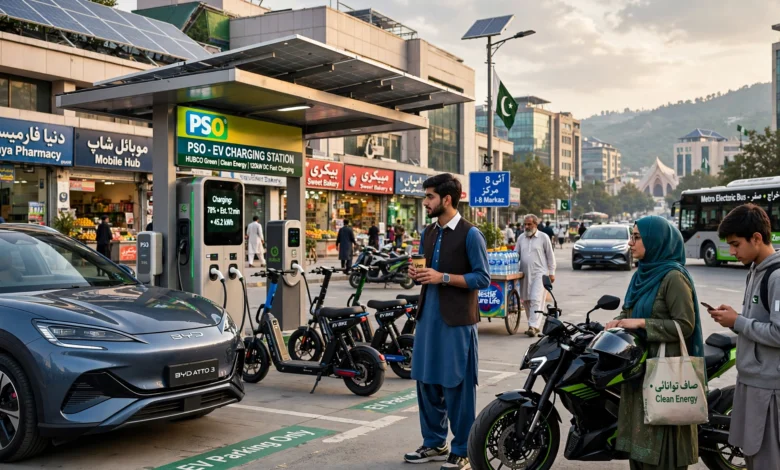
Ask anyone in Karachi or Lahore about fuel prices and you’ll get an earful. That frustration is exactly why Electric Vehicles in Pakistan have gone from a niche curiosity to a genuine talking point at dinner tables and dealership floors. A few years ago, an EV on a Pakistani road was rare enough to turn heads. Now you’ll spot a BYD or an MG rolling through DHA or Bahria Town without anyone batting an eye.
The shift isn’t accidental. Rising petrol prices, a new national EV policy, and a wave of Chinese automakers setting up shop have all pushed electric cars in Pakistan from “someday” to “actually happening.” But real questions remain. Can the power grid handle a fleet of EVs when loadshedding is still a fact of life in many cities? Are charging stations actually available outside the big three metros? And can the average middle-class buyer afford one?
This article breaks down where Pakistan’s EV revolution actually stands today: the policies behind it, the cars on the market, the money involved, and the roadblocks that still need clearing before electric vehicles become the default rather than the exception.
What Are Electric Vehicles and Why Do They Matter for Pakistan?
An electric vehicle runs on a battery-powered motor instead of an internal combustion engine, which means no petrol, no exhaust, and far fewer moving parts to break down. For a country that imports the bulk of its fuel, that distinction matters more than it might elsewhere.
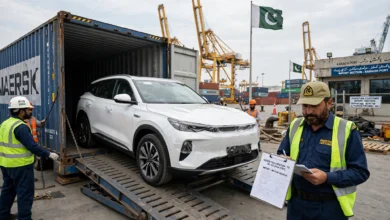
Pakistan spends billions of dollars every year importing petroleum, and that bill puts constant pressure on the rupee and the broader economy. Electric Vehicles in Pakistan offer a way to chip away at that dependence, since the electricity used to charge them can, at least in theory, come from domestic sources like hydropower, solar, or wind rather than imported crude.
There’s also the air quality angle. Lahore and other major cities regularly rank among the most polluted in the world during winter smog season, and vehicle emissions are a meaningful part of that problem. Swapping even a fraction of the country’s combustion-engine fleet for electric alternatives would make a dent, though nobody should pretend it’s a complete fix on its own.
The Current State of Electric Vehicles in Pakistan in 2026
EV Sales and Market Growth
The market has genuinely matured over the past two years. What used to be a handful of imported units sold quietly by private dealers is now a proper price ladder, with options stretching from roughly PKR 10 lakh for small electric two- and three-wheelers up to several crore for premium SUVs and sedans. That range matters because it means EVs are no longer strictly a luxury purchase; there’s something closer to an entry point for regular commuters, even if the cheaper end still comes with tradeoffs.
Government policy has set a target of 30% of new vehicle sales being electric by 2030, which is an aggressive goal given the current base, but it signals where official priorities lie. Whether the country hits that number depends heavily on price, infrastructure, and financing all moving in the right direction together.
Popular EV Brands and Models
A few names now dominate conversations around electric cars in Pakistan:
- BYD – The Chinese giant has become one of the fastest-growing EV brands here, with the Atto 3 as its most recognized model thanks to a reasonable balance of price, range, and a fast-charging ecosystem partnership. BYD has also announced plans for local assembly, which should help bring costs down over time.
- MG – MG’s Binguo and other compact models have found a foothold with buyers who want a lower-cost entry point plus the reassurance of a nationwide service network, which still counts for a lot when something goes wrong.
- Deepal (Changan) – Positioned as a competitive alternative to BYD and MG, with future models expected to target younger, budget-conscious buyers.
- Dongfeng and other emerging brands – Offering compact, city-friendly EVs, though with less established after-sales support so far.
One practical tip that comes up again and again among buyers: check that any EV you’re considering supports the CCS2 charging connector, since that’s becoming the standard across Pakistan’s public charging network, and confirm your nearest service center before signing anything.
Government Policy and Incentives Driving the EV Revolution
National Electric Vehicle Policy 2025–2030
Pakistan’s New Energy Vehicle (NEV) Policy 2025–2030 is the backbone of the current push. It was built by the Ministry of Industries and Production along with the Engineering Development Board, in consultation with think tanks and universities, and it lays out a roadmap covering everything from manufacturing incentives to charging infrastructure targets. The policy leans heavily on encouraging local assembly rather than relying purely on imports, with the logic that manufacturing EVs domestically will eventually bring prices down for ordinary buyers.
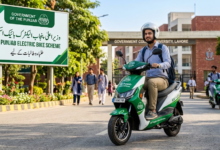
Incentives so far have focused heavily on electric two- and three-wheelers, which make sense given how much of Pakistan’s daily transport runs on motorcycles and rickshaws rather than cars. There’s also a battery policy and recycling framework in the works, addressing a part of the EV lifecycle that often gets ignored until it becomes an environmental headache. According to the International Council on Clean Transportation, the government’s broader ambition is to reduce reliance on imported fuel while spurring domestic manufacturing and keeping pace with regional competitors as the global auto industry shifts toward electrification.
Charging Infrastructure Regulations
In 2024, Pakistan introduced the EV Charging Infrastructure and Battery Swapping Regulations, administered by the National Energy Efficiency and Conservation Authority (NEECA). These rules apply to charging stations operating within the service areas of NEPRA-licensed power distributors and are meant to standardize licensing, safety requirements, and tariff structures so private investors have a predictable environment to build in.
The 2026 update to these regulations went further, setting clearer technical standards and introducing a reduced electricity tariff for charging station operators, which currently sits around Rs. 39.7 per kilowatt-hour, a meaningful drop meant to make running a charging business commercially viable. NEECA has already issued dozens of licenses under this framework, and the government has floated plans for around 3,000 charging stations nationwide by 2030, including roughly 240 targeted for the current fiscal year alone, plus 40 fast chargers planned along the motorway network and the N-5 highway.
Charging Infrastructure: The Biggest Hurdle
Public Charging Stations
This is where the gap between ambition and reality is most obvious. Estimates put the current number of publicly accessible charging stations somewhere between 30 and 50 nationwide, concentrated almost entirely in Karachi, Lahore, and Islamabad/Rawalpindi. Outside those cities, options thin out fast, and long-distance travel in an EV still requires careful planning around where the next charger actually is.
The government’s answer is a mix of public and private investment, including a mandate requiring petrol pumps in Islamabad to install EV chargers, and a plan to repurpose some of the country’s roughly 3,000 defunct CNG stations as charging locations. It’s a sensible use of existing infrastructure, but converting plans on paper into working chargers on the ground takes time, capital, and consistent follow-through.
Home Charging and the Loadshedding Problem
Here’s the uncomfortable part nobody in the marketing brochures likes to mention: Pakistan’s power grid still isn’t fully reliable. Loadshedding remains a real issue in many cities and most rural areas, and an EV owner without backup power or a reliable connection can find themselves stuck without a viable way to charge overnight. Even among current EV owners, there’s a recurring joke that electric cars solve the fuel-price problem but not the loadshedding problem.
For now, most practical EV owners pair their vehicle with either:
- A home solar setup to charge independently of grid outages
- A backup inverter or battery system for overnight charging reliability
- Access to a workplace or public fast charger as a fallback option
Until grid reliability improves nationally, this remains one of the most legitimate concerns holding back wider adoption of Electric Vehicles in Pakistan.
Cost of Owning an Electric Vehicle in Pakistan
Purchase Price
EV prices in Pakistan currently span a wide range. Compact and entry-level EVs start around PKR 10–20 lakh, mid-range SUVs like the BYD Atto 3 sit closer to PKR 8.9–9 million ex-factory, and premium electric SUVs and sedans can run well past PKR 1.5 crore for higher trims or newer imported models. On-road prices typically land higher than ex-factory figures once registration, taxes, and dealer markups are added in, so it’s worth budgeting for that gap rather than being surprised by it later.
Local assembly, which BYD and other manufacturers have started rolling out, is expected to gradually reduce these prices by cutting import duties on components. Several banks and leasing companies have also begun offering EV-specific installment plans, which is opening the door to buyers who wouldn’t otherwise consider paying the full amount upfront.
Running and Maintenance Costs
This is where EVs genuinely pull ahead of petrol vehicles in the current environment:
- Electricity is cheaper per kilometer than petrol, even accounting for regular tariff fluctuations
- Fewer moving parts means less routine maintenance compared to an internal combustion engine
- No oil changes, spark plugs, or exhaust system repairs to budget for
- Battery replacement remains the one significant long-term cost, so buyers should prioritize a car with at least an 8-year battery warranty
- Real-world range tends to run 10–15% lower than the manufacturer’s advertised figures, which is worth factoring into any road-trip planning
Challenges Facing EV Adoption in Pakistan
None of this is a straight, unobstructed path forward. The honest list of hurdles looks like this:
- Limited charging infrastructure outside major cities, which creates genuine range anxiety
- Higher upfront cost compared to equivalent petrol vehicles, even with incentives factored in
- Grid reliability issues, particularly loadshedding in smaller cities and rural areas
- Battery replacement costs, which can be steep and are still not standardized across brands
- Limited service networks for newer or less-established EV brands
- No unified government registry yet tracking exact charging station counts, which makes planning a long trip harder than it should be
- Resale value uncertainty, since the used EV market in Pakistan is still young compared to the used petrol car market
Opportunities and Economic Benefits
On the flip side, the case for pushing forward is strong:
- Reduced fuel import bill, easing pressure on foreign exchange reserves over time
- Lower daily running costs for commuters, especially in cities with long commute distances
- Local manufacturing and job creation, as more brands localize assembly and component production
- Cleaner air in major cities, particularly relevant given Lahore’s recurring smog crisis
- Growing financing options, making EVs more accessible to middle-class buyers rather than just the wealthy
- Alignment with regional trends, keeping Pakistan from falling too far behind neighboring markets that are electrifying faster
Are We Ready for the EV Revolution?
The honest answer is: partly. Pakistan has the policy framework, a growing lineup of brands, and a public that’s clearly interested, especially with fuel prices doing what they do. What’s missing is the supporting infrastructure to make Electric Vehicles in Pakistan a stress-free choice rather than a calculated gamble. Charging stations need to spread well beyond Karachi, Lahore, and Islamabad. The power grid needs to become dependable enough that “charging anxiety” doesn’t just replace “range anxiety.” And prices need to keep coming down as local assembly ramps up.
None of that is impossible, and the direction of travel is clearly positive. But anyone buying an EV in Pakistan today should go in with realistic expectations about where they can charge, what backup plan they need for loadshedding, and what the real-world range will look like compared to the number on the spec sheet.
Conclusion
The EV revolution in Pakistan is no longer a hypothetical, it’s already underway, driven by rising fuel costs, a serious national policy push, and a fast-growing lineup of brands like BYD, MG, and Deepal competing for buyers at every price point. Government incentives, new charging regulations, and expanding financing options have all moved the needle in a short span of time. Even so, the country isn’t fully there yet. Charging infrastructure remains thin outside the major cities, the power grid still struggles with loadshedding, and upfront prices remain out of reach for a large slice of the population. Pakistan is closer to being ready for widespread EV adoption than it was even two years ago, but the next few years of infrastructure investment will determine whether this revolution reaches the whole country or stays parked in a handful of major cities.