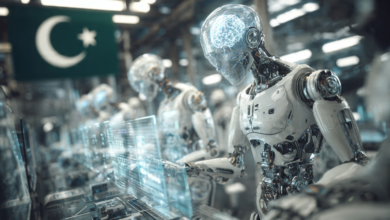
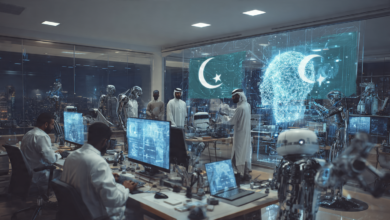
AI Job Threats: Which Careers in Pakistan Are Most at Risk?
AI job threats in Pakistan are rising fast. See which careers face the highest risk and how workers can stay employable in 2026.
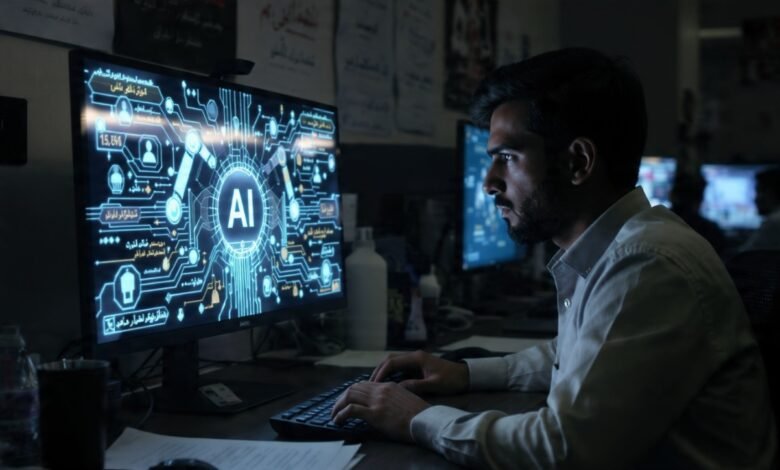
AI job threats in Pakistan are no longer a distant concern discussed only in tech conferences. They are showing up in real hiring decisions, real layoffs, and real anxiety among workers who spent years building careers in fields that once felt secure. From call centers in Lahore to software houses in Karachi, employers are quietly asking a question that used to sound far-fetched: do we really need this many people to do this job?
The honest answer is that some jobs will shrink, some will change shape entirely, and a few will disappear in their current form. This isn’t unique to Pakistan. It’s happening everywhere generative AI tools are cheap enough and good enough to take over repetitive, rules-based work. But Pakistan’s situation carries its own weight. A young workforce, heavy reliance on IT outsourcing and freelancing income, and patchy digital infrastructure all shape how this disruption plays out here.
This article breaks down which careers in Pakistan face the most exposure to AI, why those particular jobs are vulnerable, and what workers can actually do about it. The goal isn’t to spread panic. It’s to give you a clear, realistic picture so you can make decisions with your eyes open, whether that means upgrading your skills, shifting your specialty, or simply understanding what’s coming before it arrives at your office door.
Why AI Job Threats in Pakistan Are Becoming Impossible to Ignore
For years, automation felt like something that happened to factory workers in other countries. That’s changed. Generative AI models can now write code, draft documents, analyze spreadsheets, answer customer queries, and even handle basic legal and financial tasks with a level of speed no human team can match.
A few numbers put this into perspective. Research from Akademos suggests <cite index=”6-1″>around 17% of jobs in Pakistan are at high risk due to automation, with a World Economic Forum estimate that up to 1.2 million jobs could be displaced by 2030</cite>. In manufacturing specifically, <cite index=”6-1″>factory jobs could shrink by 25% to 40% over the next decade as robotics and AI-powered production lines spread, particularly in textiles and automobile manufacturing</cite>.
The pressure isn’t limited to factory floors. Pakistan’s IT sector, long seen as a growth engine, is also feeling it. The traditional outsourcing model, <cite index=”5-1,7-1″>where local companies rent out software engineers to foreign clients by the headcount, is now facing serious pressure as clients start asking why they need ten engineers when AI can handle routine coding work</cite>. That single shift alone threatens thousands of jobs that used to be considered safe, stable, and well-paying by local standards.
There’s also a global gap worth noting. Data cited by Pakistan Today shows that <cite index=”2-1″>while nearly 28% of workers in developed countries were using AI tools by early 2026, only about 15% of workers in developing countries like Pakistan had adopted them, a gap that’s actually widening rather than closing</cite>. That gap matters because it means Pakistani workers who don’t build AI fluency now risk falling even further behind global peers who are already using these tools daily.
Which Careers in Pakistan Are Most at Risk From AI?
Not every job faces the same level of exposure. Roles built around repetitive, predictable, and rules-based tasks are far more vulnerable than roles that require judgment, negotiation, or hands-on physical work. Here’s a breakdown of the careers facing the sharpest AI job threats in Pakistan right now.
1. Call Center and Customer Support Agents
This is probably the clearest and most immediate case of AI replacing jobs in Pakistan’s services economy. Pakistan has built a substantial call center industry over the last two decades, largely serving clients abroad. That industry is now under direct pressure.

AI-powered chatbots and voice assistants have gotten good enough to handle the bulk of routine inquiries without a human ever stepping in. Reports indicate that <cite index=”9-1″>AI chatbot customer service systems can now handle 80 to 90 percent of routine customer inquiries without human intervention, with natural language processing allowing these systems to understand context, emotion, and complex requests</cite>. The roles most exposed include:
- First-line phone support representatives
- Basic troubleshooting and FAQ-based agents
- Order status and account inquiry handlers
- Entry-level technical support staff
Workers in this space aren’t necessarily out of options, but the safe path forward involves moving into complex escalation handling, quality assurance, or roles that require empathy and judgment that AI still struggles to replicate consistently.
2. Entry-Level and Junior Software Developers
This one surprises people because tech jobs were long considered the safest bet in Pakistan. That assumption is being tested. The software industry job threats aren’t about senior engineers losing their positions overnight. They’re about the shrinking need for large teams of junior developers writing boilerplate code.
As one industry analysis puts it, companies are restructuring from a traditional hierarchy of <cite index=”7-1″>one project manager, five developers, two QA staff, and one DevOps engineer down to a leaner structure of one product lead supported by two AI-augmented engineers</cite>. AI tools now write, test, and debug large chunks of routine code, which means fewer entry points for fresh graduates who used to learn the ropes by handling exactly that kind of work.
This shift is squeezing the traditional “body rental” outsourcing model that many Pakistani software houses relied on. The <cite index=”5-1″>value proposition in the industry is shifting from selling manpower by the hour to selling actual expertise and solutions</cite>, which raises the bar for what junior talent needs to offer to get hired.
3. Data Entry and Administrative Clerks
Data entry has always been one of the more repetitive jobs in any office, which makes it a textbook case for automation. Optical character recognition, automated form processing, and AI-driven document management systems can now do in minutes what used to take clerical staff hours.
Roles at high risk here include:
- Manual data entry operators
- Basic bookkeeping and invoice processing staff
- Document filing and records clerks
- Appointment scheduling assistants
According to a Digital Pakistan report, <cite index=”8-1″>AI automation globally is already displacing virtual assistants, basic bookkeepers, subtitlers, and project coordinators, with volume-based repetitive work carrying real risk</cite>. Workers in these roles can protect themselves by moving toward oversight functions, such as auditing AI-generated records for accuracy, rather than performing the raw data entry themselves.
4. Freelance Writers, Basic Content Creators, and Virtual Assistants
Pakistan has one of the largest freelancer populations in the world, and a huge share of that workforce built careers around content writing, transcription, subtitling, and general virtual assistant work. This is exactly the category that generative AI tools threaten most directly, because these tools were literally designed to write text and process language.
The freelance market shift is brutal but honest: <cite index=”8-1″>the era of winning freelance gigs by undercutting everyone else on price is functionally over for most categories of work, since clients can now get cheap and fast output from AI directly</cite>. What clients still can’t get from AI alone is deep domain expertise, strategic judgment, and someone who genuinely understands their specific business context. Freelancers who lean into that gap tend to hold onto income; those who compete purely on speed and price are the ones losing ground.
5. Factory and Manufacturing Line Workers
Pakistan’s textile and manufacturing sectors employ millions of people, many in roles involving repetitive physical tasks on production lines. These jobs are increasingly exposed as automation in Pakistan’s manufacturing sector accelerates.
Smart manufacturing systems, robotic arms, and AI-driven quality control are reducing the need for manual labor on assembly lines. As mentioned earlier, projections suggest factory jobs could decline by 25 to 40 percent over the next decade in sectors like textiles and automobiles, as companies invest in machinery that improves output while cutting labor costs.
6. Junior Accountants and Bookkeepers
Basic accounting and bookkeeping tasks, like reconciling transactions, generating routine financial reports, and processing invoices, are increasingly automated through AI-powered accounting software. These tools can flag anomalies, categorize expenses, and generate reports faster and with fewer errors than a junior staff member working manually.
This doesn’t mean the accounting profession is disappearing. It means the entry-level, transactional side of the job is shrinking, while demand grows for accountants who can interpret financial data strategically, advise clients, and handle complex tax or compliance matters that require professional judgment.
7. Translators and Basic Subtitling Professionals
Machine translation has improved dramatically, and for many everyday use cases, it’s now good enough to replace human translators handling routine documents, subtitles, and simple correspondence. This is a smaller but real category of AI displacement in Pakistan, particularly affecting freelancers who built businesses around bulk translation or subtitling work at competitive rates.
Which Careers Are More Resistant to AI Disruption?
It’s worth balancing the picture, because not every profession is equally exposed. Jobs that involve hands-on physical work, complex human relationships, or high-stakes judgment calls tend to be more resistant, at least for now.
- Skilled trades: electricians, plumbers, and technicians whose work requires physical dexterity in unpredictable environments
- Healthcare providers: doctors, nurses, and specialists, especially in direct patient care and diagnosis
- Senior engineers and architects: professionals who design systems and make judgment calls rather than execute routine tasks
- Sales and relationship-driven roles: jobs that depend on trust, negotiation, and reading people
- AI and data specialists: the people building, training, and maintaining the very systems causing disruption elsewhere
On this last point, opportunity is genuinely growing alongside the risk. <cite index=”6-1″>Demand for data analysts, AI engineers, and machine learning specialists is rising in Pakistan</cite> as businesses look for people who can actually build and manage these systems rather than compete against them.
How Pakistani Workers Can Prepare for AI Job Threats
Understanding the risk is only useful if it leads to action. Here’s a practical framework for workers trying to stay ahead of AI career disruption in Pakistan.
Build AI Literacy, Even in Non-Technical Roles
You don’t need to become a programmer to stay relevant. Learning how to use tools like ChatGPT, Microsoft Copilot, Gemini, and Claude for your specific job function is quickly becoming a baseline expectation rather than a bonus skill. Employers increasingly favor candidates who can direct AI tools productively over those who avoid them entirely.
Move Toward Judgment-Based Work
Wherever possible, shift your focus from executing routine tasks to overseeing, reviewing, or improving on what AI produces. This applies across industries, from accounting to content writing to software development. The person checking AI’s work for accuracy and context holds more job security than the person doing purely mechanical tasks that AI can replicate.
Specialize Instead of Generalizing
Freelancers and professionals who offer deep, specific expertise in a niche tend to be harder to replace than generalists. A writer who understands a specific industry’s regulatory language, or a developer who specializes in a particular integration or security domain, brings something AI tools can’t fully substitute.
Watch the Policy and Infrastructure Gaps
Part of what makes AI unemployment risk in Pakistan harder to manage is structural. As one analysis notes, <cite index=”1-1″>unreliable internet connectivity, rising connectivity costs, and chronic underinvestment in digital infrastructure make it difficult to build anything durable in the AI space, and inconsistent policymaking across changing governments adds further uncertainty</cite>. Workers can’t fix national infrastructure problems alone, but staying aware of these gaps helps set realistic expectations about how fast change will actually roll out in different cities and sectors.
Consider Where New Jobs Are Actually Forming
It’s easy to focus only on what’s being lost, but new categories of work are opening up too, particularly in AI operations, prompt engineering, AI oversight, and hybrid technical-business roles. Software houses that once sold raw headcount are now shifting toward selling packaged AI-augmented solutions, which creates demand for people who understand both the technology and the client’s actual business problem.
The Bigger Picture: Opportunity Alongside the Risk
It would be misleading to present this purely as a story of loss. AI is also opening doors in Pakistan’s healthcare, agriculture, and public sector planning. In healthcare, <cite index=”4-1″>machine learning tools are helping doctors reach more accurate diagnoses, while in agriculture, AI-powered data analysis is helping farmers boost crop yields and manage water resources more efficiently</cite>. These are real, tangible benefits that come from the same technology causing disruption elsewhere.
The honest takeaway is that AI in Pakistan is simultaneously a threat and an opportunity, and which side of that equation a worker ends up on depends heavily on how proactively they adapt. Waiting for the disruption to arrive before reacting is the riskiest strategy of all. For readers who want a deeper look at national policy responses to this shift, the World Economic Forum’s research on the future of jobs offers useful global context, and the International Labour Organization publishes ongoing analysis on how AI is reshaping labor markets in developing economies like Pakistan.
Conclusion
AI job threats in Pakistan are real, measurable, and already reshaping industries from call centers and software houses to factories and freelance marketplaces, with call center agents, junior developers, data entry clerks, freelance writers, factory workers, junior accountants, and translators facing the highest exposure. At the same time, roles built on physical skill, human judgment, and technical AI expertise are proving far more resilient, and entirely new categories of work are emerging alongside the disruption.
The workers and professionals who come out ahead won’t necessarily be the most experienced or the most credentialed; they’ll be the ones who treat AI as a tool to master rather than a threat to ignore, building the literacy and judgment-based skills that keep them valuable no matter how fast the technology moves.