How AI Translation Tools Are Breaking Language Barriers in Pakistan
AI translation tools now support Urdu, Pashto, Sindhi, Balochi and Punjabi. Here are 7 real uses in Pakistan, the risks of errors, and how to stay safe.
AI Translation Tools: 7 Powerful Ways They’re Breaking Language Barriers in Pakistan
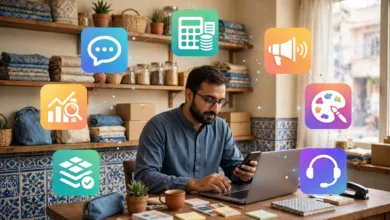
AI translation tools are quietly changing how Pakistanis communicate. A farmer in Dera Ghazi Khan can now understand an English product label by pointing a phone camera at it. A freelancer in Peshawar can reply to a German client in fluent German. A mother in Quetta can read health advice originally written in English, translated into Balochi. A decade ago, most of this simply wasn’t possible.
Pakistan is one of the world’s most linguistically diverse countries. Urdu is the common language, but most Pakistanis speak a regional language first. Punjabi alone is the first language of about 45 per cent of the population, and Pashto, Sindhi, Saraiki, Balochi, Brahui, Hindko and others each have more than a million speakers. For years, technology mostly served English and, later, Urdu speakers. Everyone else was left behind.
That’s starting to change. Google added Sindhi and Pashto to its translation service in 2016, and in 2024 it added Balochi and Punjabi in the Shahmukhi script as part of its biggest expansion ever. Pakistani startups are also building voice AI for local languages.
But translation technology has a darker side too. Mistranslations have led to wrongful arrests and rejected asylum claims abroad, and criminal scam networks use AI translation to target victims in languages they don’t speak. This article looks honestly at both sides: what these tools can do for Pakistan, where they fail, and how to use them responsibly.
What Are AI Translation Tools and How Do They Work?
AI translation tools use machine learning to convert text or speech from one language to another. Older translation systems relied on rules and dictionaries, producing stiff, word-by-word results. Modern systems learn patterns from huge amounts of translated text, which lets them handle grammar, context and idioms much better.
Today’s tools come in several forms:
- Text translation: Typing or pasting text into apps like Google Translate or Microsoft Translator
- Camera translation: Pointing your phone at a sign, menu or document to translate it instantly
- Voice translation: Speaking in one language and hearing the translation in another
- Chatbot translation: Asking general AI assistants to translate, explain or adapt text
- Built-in translation: Automatic translations inside social media, browsers and messaging apps
Newer systems are built on large language models. Google, for example, said it used its PaLM 2 model to add 110 new languages in its largest expansion ever.
Why Language Barriers Matter So Much in Pakistan
Language isn’t just about communication. In Pakistan, it affects education, income, health and access to justice.
- Education: Many students learn difficult subjects in English or Urdu rather than their mother tongue, which makes learning harder.
- Government services: Forms, notices and websites are usually in English or Urdu, leaving many citizens dependent on others.
- Healthcare: Patients may struggle to explain symptoms or understand prescriptions.
- Jobs and income: English and foreign-language skills often decide who gets international work.
- Overseas workers: Millions of Pakistanis work abroad, often in countries where they don’t speak the local language.
This is why machine translation in Pakistan has so much potential, and why its mistakes can be so costly.


7 Powerful Ways AI Translation Tools Are Breaking Language Barriers in Pakistan
1. Bringing Regional Languages Online
For a long time, Pakistan’s regional languages were almost invisible to technology. That’s changing.
Google Translate added Sindhi and Pashto in 2016. Then, in 2024, Google’s expansion included Balochi and Punjabi (Shahmukhi). Google itself described Shahmukhi Punjabi, the Perso-Arabic script version, as the variety spoken as the most common language in Pakistan.
This matters because Punjabi in Pakistan is written in Shahmukhi, while Indian Punjabi mostly uses Gurmukhi. Before this update, Pakistani Punjabi speakers were largely left out.
Important caveat: Being “supported” doesn’t mean translations are perfect. Quality in regional languages still lags far behind English, Urdu or major European languages, because there’s much less training data available. Languages like Saraiki, Brahui, Hindko and Shina still have little or no support in mainstream tools.
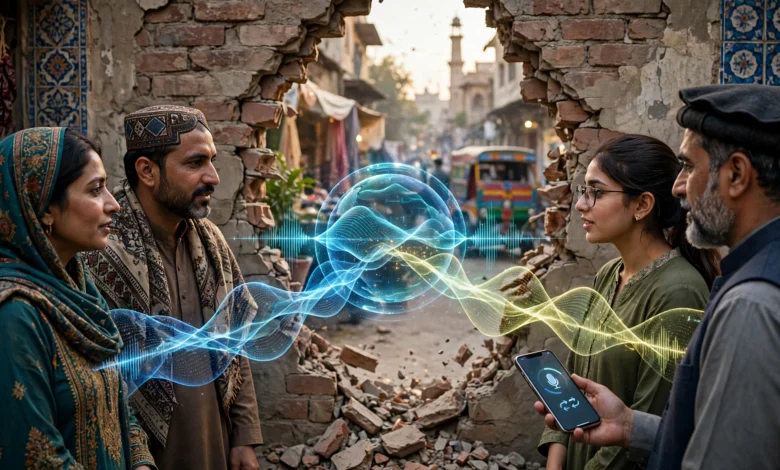
2. Voice Translation for People Who Can’t Read or Type Easily
Many Pakistanis are more comfortable speaking than typing, especially older people and those with limited literacy. Voice-based translation removes the need to read or write at all.
Pakistani startups are building for exactly this. Uplift AI, backed by Y Combinator, develops voice AI models for regional languages like Urdu, Punjabi and Balochi, so people can use technology just by speaking. Its flagship model is designed to speak Urdu with human-like realism.
Practical uses of voice translation include:
- Farmers asking questions about seeds, fertiliser or weather in their own language
- Elderly citizens understanding bank or government messages
- Patients describing symptoms to doctors who speak a different language
- Workers communicating with foreign employers
3. Making Education More Accessible
Much of the world’s best educational content, including textbooks, lectures and research, is in English. Urdu translation AI can help students understand complex topics in a language they’re more comfortable with.
Local efforts are growing. The Qalb project, an Urdu-focused language model, is designed to support startups, education platforms, digital services and voice-based AI agents.
Students and teachers are using translation tools to:
- Translate English articles and textbooks into Urdu for easier understanding
- Create bilingual study notes
- Understand online courses from international universities
- Help parents who don’t speak English follow their children’s schoolwork
The ethical line: Translating material to understand it is great. Translating someone else’s essay or research and submitting it as your own is plagiarism.
4. Powering Freelancing and Export Businesses
Pakistan has a large freelancing workforce and a growing call centre and BPO industry. AI translation tools help both.
Industry experts say AI tools are helping Pakistani call centres automate routine tasks, improve response times and offer round-the-clock multilingual support, making them more competitive internationally. Freelancers use translation to:
- Communicate with clients in German, French, Arabic, Spanish and other languages
- Localise websites, apps and product listings for foreign markets
- Offer translation-assisted content writing services
- Understand project briefs and contracts more clearly
Important warning: Freelancers who sell “professional translation” services using only AI, without human review, risk delivering poor work and damaging their reputation. Clients deserve to know how the work was produced.
5. Helping Overseas Pakistanis and Their Families
Millions of Pakistanis live and work abroad, especially in the Gulf, Europe and North America. AI translation tools help them:
- Understand workplace instructions, safety rules and contracts
- Communicate with landlords, doctors and officials
- Read local news and government notices
- Help family members back home understand documents sent from abroad
For workers in countries like Saudi Arabia, the UAE, Germany or Italy, being able to read a contract or a medical note in Urdu can make a real difference to their safety and rights.
6. Improving Access to Health and Public Services
Hospitals, clinics and government offices in Pakistan serve people who speak dozens of languages. Translation tools can help staff and citizens understand each other, especially in emergencies or when a translator isn’t available.
Examples include:
- Translating medicine instructions into a patient’s language
- Helping lady health workers explain vaccination or maternal health information
- Allowing citizens to understand official notices and forms
- Supporting police and courts in initial communication, with human verification later
Critical caution: For medical diagnoses, legal statements or court proceedings, AI translation should never replace a qualified human interpreter. As the real cases below show, errors in these settings can seriously harm people.
7. Helping Small Businesses Sell More Widely
Small businesses selling on Daraz, Facebook, Instagram or their own websites can use translation tools to write product descriptions in Urdu, English and even foreign languages. A clothing brand in Lahore can reach overseas Pakistanis and foreign buyers without hiring a translator for every listing.
This lowers the cost of doing business across language boundaries and opens up new markets for artisans, home-based sellers and exporters.
The Dark Side: When AI Translation Goes Wrong
Every tool has limits. With translation, mistakes can range from embarrassing to life-changing.
The “Good Morning” Arrest
One of the most widely reported cases happened in 2017. A Palestinian construction worker posted a photo of himself leaning against a bulldozer with an Arabic caption meaning “good morning.” Facebook’s AI translated it as “hurt them” in English and “attack them” in Hebrew. Police arrested and questioned him for hours before realising the mistake. Reports noted that no Arabic-speaking officer had checked the post, and officers relied entirely on the machine translation. Facebook later apologised.
The lesson: authorities, employers and platforms should never take serious action based only on machine translation.
Rejected Asylum Claims
Translation errors have also affected vulnerable migrants. In the United States, AI translation apps used in asylum cases produced mistakes like names translated as months, wrong time frames and mixed-up pronouns, contributing to misunderstandings, denials and longer detention.
Languages spoken in Pakistan and Afghanistan were among the hardest hit. A translation charity reported that machine translations of Pashto and Dari were full of errors and contributed to at least one Afghan refugee’s rejected asylum claim. One of its translators estimated that relying on machine translation would make at least 40% of asylum decisions incorrect.
For Pakistanis applying for visas, immigration or asylum abroad, the message is clear: always use certified human translators for official documents and statements.
Scammers Using Translation to Cross Borders
Criminals also benefit from AI translation tools. OpenAI reported banning accounts linked to a romance and investment scam network apparently operating from a scam compound in Cambodia. The scammers used AI to translate and generate social media comments in Japanese, Chinese and English, letting them target victims in countries whose languages they didn’t speak.
Pakistan has seen similar cross-border fraud. In April 2026, the NCCIA dismantled an illegal call centre in Karachi where investigators said they found spoofing software and banking data of foreign nationals, and that suspects allegedly impersonated foreign bank representatives. As translation and voice tools improve, scam operations like these can more easily target victims in any language.
Misinformation Across Language Borders
Translation also makes it easier to spread false content across languages. During the May 2025 India-Pakistan conflict, fake videos, AI-generated content and fabricated stories spread across both countries on X, WhatsApp, Facebook and YouTube. Content that’s translated automatically, without context, can inflame tensions or twist meaning.
Other Risks and Ethical Concerns
Accuracy in Low-Resource Languages
Low-resource languages are those with limited digital text for AI to learn from. Many of Pakistan’s regional languages fall into this category. Translation quality can vary widely, and dialects, idioms and cultural expressions are often lost or mistranslated.
Privacy When Translating Documents
When you paste a medical report, legal notice, bank statement or CNIC copy into a free online translator, that data may be stored or processed by the company. Avoid translating sensitive personal documents with free tools, or remove names and numbers first.
Religious and Cultural Sensitivity
Religious texts, cultural expressions and politically sensitive content require extreme care. Machine translation can strip meaning, add unintended implications, or produce wording that causes offence. For religious content, rely on qualified scholars and established translations.
Impact on Human Translators
AI is changing the work of professional translators and interpreters. Some routine work is being automated, but demand remains for skilled humans in legal, medical, literary and sensitive contexts. The ethical approach is to use AI as an assistant to human translators, not a cheap replacement in high-stakes work.
Language Loss
There’s also a quieter risk. If technology only works well in English and Urdu, younger generations may abandon regional languages. On the other hand, better support for Balochi, Punjabi, Sindhi and Pashto could help keep these languages alive in the digital age.
How to Use AI Translation Tools Responsibly
Here’s a practical checklist for Pakistani users:
- Use AI for understanding, not official decisions. It’s great for reading articles, signs or messages, but not for legal, medical or immigration documents.
- Get certified human translation for visas, court cases, contracts, medical records and asylum applications.
- Double-check important translations by asking a fluent speaker or trying more than one tool.
- Keep sentences simple when translating. Short, clear sentences produce better results.
- Protect your privacy. Don’t paste CNICs, bank details or medical reports into free tools.
- Be honest with clients if you use AI in translation work.
- Don’t trust translated content blindly on social media, especially during tense political moments.
- Be alert to scams that arrive in perfect but slightly unnatural language from unknown contacts.
- Support local language projects by contributing corrections and using regional language tools when they’re available.
What’s Next for Translation Technology in Pakistan
The next few years will likely bring:
- Better real-time voice translation for calls and meetings
- More support for Saraiki, Brahui, Hindko, Shina and other underserved languages
- Translation built into government apps and public services
- Pakistani-built models trained specifically on local languages and dialects
- Clearer rules about when human translators are legally required
The National AI Policy 2025 aims to build a national AI ecosystem, and local language technology should be a priority within it, since it directly affects which Pakistanis can benefit from AI at all.
For further reading, Google’s announcement of 110 new languages including Balochi and Punjabi (Shahmukhi) explains the technology behind the expansion, and The Express Tribune covers what the update means for Pakistan. On the risks, Respond Crisis Translation’s report on how machine translation endangered Afghan asylum claims and Privacy International’s summary of the Facebook mistranslation arrest are both worth reading.
Conclusion
AI translation tools are opening doors that were closed to millions of Pakistanis for decades, with Google adding Sindhi and Pashto in 2016 and Balochi and Punjabi (Shahmukhi) in 2024, and local startups building voice AI for regional languages, and they’re now helping in seven powerful ways: bringing regional languages online, enabling voice translation for people who can’t easily read or type, making education more accessible, powering freelancing and call centre exports, supporting overseas Pakistanis, improving access to health and public services, and helping small businesses sell to wider markets. But the risks are real, from the Palestinian man arrested after Facebook mistranslated “good morning,” to asylum claims harmed by errors in Pashto and Dari, to scam networks using AI translation to target victims across borders and alleged Pakistani call centres impersonating foreign banks. The right approach is to use these tools to understand and connect, while relying on qualified human translators for legal, medical, immigration and religious matters, protecting personal data, and staying alert to scams, so that technology helps preserve and empower Pakistan’s languages rather than misrepresent them.