How to Get an NTN Number in Pakistan Online
NTN registration in Pakistan made simple. A step-by-step IRIS guide, required documents, filer rules, and real tax identity scams to guard against.
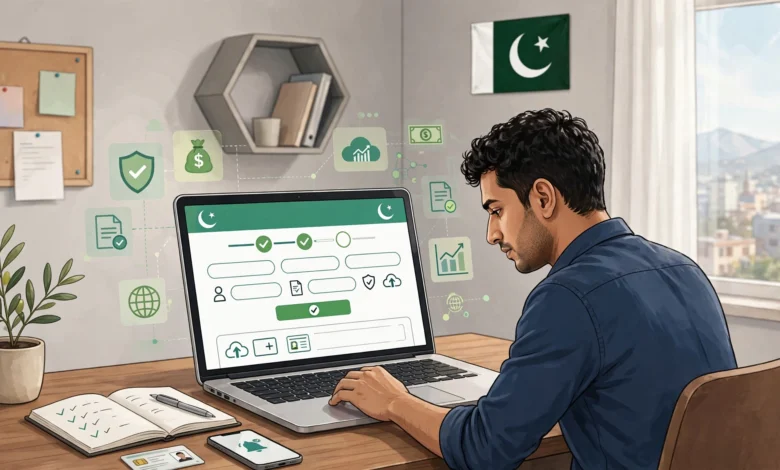
NTN Registration in Pakistan Online: 7 Easy Steps to Get Your NTN Number Without Costly Mistakes
Introduction
NTN registration is one of those tasks most Pakistanis keep putting off until something forces their hand. Maybe a bank wants your tax details before opening an account. Maybe a client abroad needs your tax number before paying you. Maybe you just noticed how much extra tax gets deducted from non-filers on everything from bank withdrawals to car registration. Whatever the reason, the process is now online, free, and for most individuals it takes less than an hour.
This guide shows you exactly how to get your NTN number through the FBR IRIS portal, what documents to keep ready, how the process differs for salaried people, freelancers, business owners and companies, and what to do after you register so you actually benefit from it.
We also cover the side of tax registration that most guides skip. Over the years, the identities of ordinary Pakistanis have been used to open fake bank accounts, register dummy businesses and file bogus tax returns worth billions of rupees. Some of the victims only found out when an FIA or FBR notice showed up at their door. Understanding how that happened is the best way to make sure your CNIC and tax profile are never misused.
By the end, you should be able to register on your own, avoid paying anyone for something that costs nothing, and keep your tax identity safe.
What Is an NTN and Why NTN Registration Matters
NTN stands for National Tax Number. It is your identity in the income tax records of the Federal Board of Revenue (FBR). Registration happens under Section 181 of the Income Tax Ordinance, 2001, and the application is made on Form 181 inside IRIS, FBR’s online tax system.
Here is the part that confuses many people:
- For individuals, including salaried people, freelancers and sole proprietors, your 13-digit CNIC number becomes your NTN once you complete NTN registration on IRIS. No separate number is issued.
- For companies and associations of persons (AOPs) such as partnership firms, FBR issues a separate NTN, usually a seven-digit number with a check digit.
- For non-resident foreigners, registration is done using a passport number.
So if someone tells you they will “generate” a special NTN for you as an individual for a fee, be careful. What they are actually doing is filling out the same free IRIS form you can complete yourself.
Who Needs NTN Registration in Pakistan?
The law requires registration from anyone who has to file an income tax return, but in practice these groups benefit most:
- Salaried individuals whose income is above the taxable threshold, or who want to become filers to reduce deductions.
- Freelancers and remote workers receiving payments from abroad, who need tax status for banks and to benefit from reduced rates on export earnings.
- Shopkeepers, traders and sole proprietors running any kind of business.
- Partnership firms and AOPs.
- Companies and LLPs after SECP incorporation.
- Property buyers and car owners, since non-filers face much higher withholding tax on these transactions.
- Overseas Pakistanis with income, property or bank accounts in Pakistan.
NTN Registration vs Becoming a Filer
This is the most common misunderstanding about NTN registration. Getting an NTN does not make you a filer. You become a filer only after you file your annual income tax return and your name appears on FBR’s Active Taxpayers List (ATL).


The difference is not small. Non-filers pay higher withholding tax on many transactions, including:
- Cash withdrawals and certain banking transactions
- Purchase and registration of vehicles
- Buying and selling property
- Profit on bank deposits and dividends
- Mobile phone usage and some utility bills
Think of NTN registration as opening the door, and filing your return as actually walking in. Many people get the NTN, never file, and wonder why they are still being charged non-filer rates.
Documents Required for NTN Registration Online
Gather these before you start. Having everything ready means you can finish in one sitting.
For individuals (salaried, freelancers, sole proprietors):
- Valid CNIC (not expired)
- A mobile SIM registered in your own name through biometric verification
- A working email address that only you can access
- Your residential address, ideally matching a recent utility bill
- Bank account details, including IBAN
- For salaried people: employer’s name and NTN, if available
- For business owners: business name, address, nature of business and proof of premises such as a rent agreement or utility bill
For AOPs and partnership firms:
- Partnership deed
- Registration certificate from the provincial Registrar of Firms
- CNICs of all partners, with each partner registered on IRIS individually
- Business address proof and a bank account letter in the firm’s name
For companies:
- SECP Certificate of Incorporation
- Memorandum and Articles of Association
- CNICs of directors, each registered on IRIS individually
- Registered office address proof
- Company bank account details, if already opened
Keep clear scans of everything. Blurry uploads and name spellings that do not match your CNIC are the two biggest causes of delays.
How to Get an NTN Number Online: NTN Registration in 7 Steps
The steps below cover individuals, who make up most applicants. The process for AOPs and companies follows in the next section.
Step 1: Open the FBR IRIS Portal
Go to the official FBR IRIS portal in a modern browser such as Chrome or Firefox. Always type the address yourself or use a bookmark. Fake lookalike sites and phishing links shared on WhatsApp are a real problem, and they are designed to steal your CNIC details and passwords.
Step 2: Click “Registration for Unregistered Person”
Below the login box, choose the option for new or unregistered users. This opens the initial e-enrollment form.
Step 3: Enter Your Basic Details
Select your citizen type, such as resident Pakistani. Enter your CNIC without dashes, your name exactly as printed on your CNIC, your mobile network and number, and your email address. Fill in the captcha and submit.
Step 4: Verify Your Mobile and Email
FBR sends verification codes to your mobile and email. Enter them on the screen. Once verified, IRIS sends you a password and you can log in using your CNIC as your username. This mobile check is the reason your SIM must be registered in your own name: it ties your tax profile to your identity.
Step 5: Log In and Open Form 181
Log in to IRIS. Open the drafts section and find Form 181 (Application for Registration). This is the actual NTN registration form.
Step 6: Fill In Form 181 Carefully
Complete each tab:
- Personal details: these come mostly from NADRA, so check that they are correct.
- Contact and address: enter your current residential address.
- Bank accounts: add your account details and IBAN.
- Income source: choose salary, business, property, foreign income or other sources that apply to you.
- Business details: if you run a business, add its name, address, start date and principal activity. If you have more than one business, add each one.
- Attachments: upload the documents requested, such as proof of address or business premises.
Take your time here. A wrong income category or a mismatched name is the most common reason applications come back.
Step 7: Submit and Download Your NTN Certificate
Review everything and submit. For many individuals, registration is confirmed quickly. In some cases FBR reviews the application or asks for extra information first. Once approved, you can view and print your registration certificate from inside IRIS, and anyone can confirm your status through the online verification section on the IRIS homepage.
The whole online process usually takes 20 to 30 minutes of your time, and there is no government fee for NTN registration.
Can I Use the Tax Asaan App Instead?
Yes. FBR’s Tax Asaan mobile app lets individuals register, verify their tax status and file simple returns from a phone. It uses the same backend as IRIS, so the same rules on matching details and a SIM in your own name apply.
NTN Registration for AOPs and Companies
Business entities follow a similar path, with a few extra layers.
Partnership Firms and AOPs
- Register every partner on IRIS as an individual first.
- The principal officer or managing partner logs in and starts a registration for the AOP.
- Enter the firm’s name, address, partnership details and the share of each partner.
- Upload the partnership deed, registration certificate and address proof.
- Submit. Once approved, the firm receives its own NTN.
Private Limited Companies and SMCs
- Complete SECP incorporation and receive your Certificate of Incorporation.
- Register all directors on IRIS individually.
- The principal officer, usually the CEO, starts the company registration on IRIS.
- Enter company details as they appear on SECP records, add directors and shareholders, and upload incorporation documents.
- Submit and download the company’s NTN certificate once approved.
SECP has been working on closer integration with FBR, so some company details may already flow from the incorporation record. Still, check every field yourself.
What to Do After NTN Registration
Your NTN is only useful if you follow through. Here is what comes next.
File Your Income Tax Return
Individuals and AOPs usually file their return by 30 September for the tax year ending in June, while companies with a June year-end usually have until 31 December. FBR sometimes extends these dates, but do not count on it. Individuals must also file a wealth statement listing assets and liabilities.
If your only income is a salary and your employer already deducts tax, filing is usually simple and can be done on IRIS or the Tax Asaan app in under an hour once you have your salary certificate.
Get on the Active Taxpayers List
After you file, your name is added to the ATL, which FBR updates regularly. You can check your status by sending your CNIC to FBR’s SMS service or through the online verification on IRIS. If you miss the deadline, you can usually still join the ATL by filing late and paying the prescribed surcharge.
Keep Your Profile Updated
Update your IRIS profile whenever you change your address, mobile number, bank account or business details. Outdated contact details mean you can miss official notices, and FBR treats a notice sent to your registered address as delivered.
Register for Sales Tax if Needed
NTN registration covers income tax only. If you manufacture or supply taxable goods, you may also need sales tax registration with FBR. If you provide taxable services, you register with your provincial authority, such as the Sindh Revenue Board, Punjab Revenue Authority, KPRA or BRA.
Common NTN Registration Problems and How to Fix Them
| Problem | Likely cause | What to do |
|---|---|---|
| OTP not received | SIM not registered in your name, or network delay | Check SIM ownership by texting your CNIC to 668, re-register the SIM biometrically, then try again |
| “Already registered” message | You or someone else registered with your CNIC earlier | Use “Forgot Password” on IRIS; if you never registered, contact FBR immediately |
| Name mismatch | Spelling differs from your CNIC | Enter your name exactly as printed on the CNIC |
| Application returned | Wrong income category or missing attachment | Read FBR’s comment in IRIS, correct the form and resubmit |
| Locked account | Too many wrong password attempts | Reset the password through the IRIS recovery option |
| Email not working | Typo or account controlled by an agent | Update to an email address only you control |
The “already registered” message deserves special attention. If you have never registered and IRIS says your CNIC already has a profile, someone may have created it using your identity. Contact FBR’s helpline or visit a tax facilitation centre straight away, and change the mobile and email on the profile once you regain access. The next section explains why this matters so much.
Real Cases: When Tax Identities Were Misused
Your CNIC, bank account and tax profile are valuable to criminals because they let money move under a clean, unconnected name. The cases below show how ordinary people were pulled into massive financial crimes without knowing it.
The 2018 Fake Bank Accounts Investigation
In 2018, a Supreme Court-ordered investigation into money laundering through fake bank accounts uncovered something shocking. Abdul Qadir, a falooda seller from Orangi Town in Karachi, received a summons from the FIA and learned that an account in his name had held about Rs2.25 billion. He said he had no idea the account existed, and reports later noted he was illiterate and could not have signed the opening papers. You can read the original report on Geo News about the ice-cream vendor’s account.
Weeks later, a Karachi rickshaw driver named Muhammad Rasheed was summoned after investigators found that around Rs3 billion had passed through an old salary account he had opened years earlier as a company driver. Investigators said they were tracing hundreds of similar accounts opened in the names of labourers and poor people.
The lesson is uncomfortable. Dormant accounts and old documents can be reused by insiders and fraudsters. The person whose name is on the record is the one who gets the first knock on the door.
Sales Tax Profiles Sold to a Fake Invoice Ring
In 2023, FBR’s intelligence wing arrested several people over an alleged fake invoice network linked to about Rs11.6 billion in losses. One suspect was reportedly filing bogus sales tax returns for fictitious firms from home. Another, a facilitation officer at PRAL, the company that runs FBR’s IT systems, was accused of handing user IDs and passwords of inactive sales tax registered units to the gang, according to The Express Tribune’s report on the Rs11.6 billion tax fraud.
This shows that an unused tax profile is not harmless. If you registered a business years ago and stopped using it, your profile can become a tool for someone else unless you secure or deactivate it properly.
Paper Firms in Other People’s Names
FBR investigations have repeatedly found businesses registered in the names of people who could not possibly run them. In the solar import money laundering case uncovered in early 2025, investigators said one shell company had imported solar panels worth about Rs2.5 billion even though its proprietor had declared an annual income of just Rs250,000. In another case reported in 2023, auditors flagged a firm that allegedly existed only on paper and was registered in the name of a benami individual.
In these schemes, someone pays a poor person a small sum for their CNIC, or uses stolen copies, and then builds a tax profile and business on top of it. When the authorities arrive, the real operators are often gone.
Agents Who Promise “Instant Filer” Status
A smaller but common problem is agents who offer to make you a filer overnight by filing a return with invented figures. It may look like a favour, but the return is filed in your name, and you are legally responsible for what it says. False declarations can lead to penalties, audits and in serious cases prosecution. Many of these agents also keep control of your IRIS password and email, which gives them ongoing access to your tax profile.
How to Protect Your NTN and Tax Identity
After NTN registration, use these habits to keep your profile safe:
- Keep your IRIS password, email and mobile number in your own hands. If a consultant helps you, change the password afterwards.
- Check which SIMs are registered on your CNIC by sending your CNIC number to 668, and block any you do not recognise.
- Verify your tax status yourself on IRIS once in a while to make sure no business or sales tax registration has been added without your knowledge.
- Close bank accounts you no longer use instead of leaving them dormant.
- Never hand over CNIC copies casually. Write the purpose and date across any photocopy you give out, for example “For SIM issuance only, 4 Oct 2026.”
- Do not let anyone register a business in your name unless you control it and understand what it does.
- Report suspicious activity to FBR and, for online fraud or identity theft, to the National Cyber Crime Investigation Agency (NCCIA).
Frequently Asked Questions
Is NTN registration free in Pakistan?
Yes. FBR charges nothing for registration on IRIS. Consultants may charge for their time, but you are paying for help, not for the NTN itself.
How long does NTN registration take?
The online form takes about 20 to 30 minutes if your documents are ready. Approval is often quick for individuals but can take a few working days if FBR reviews the application or asks for more information.
What is my NTN if I am salaried?
Your 13-digit CNIC number is your NTN once you are registered on IRIS. You will not get a separate number.
Can overseas Pakistanis complete NTN registration online?
Yes. Overseas Pakistanis can register remotely through IRIS as long as their CNIC or NICOP details and contact information can be verified. Non-resident status changes how some income is taxed, so choose your residency status carefully.
Does having an NTN make me a filer?
No. You become a filer only after filing your income tax return and appearing on the Active Taxpayers List.
Conclusion
NTN registration in Pakistan is free, fully online and simple enough to finish in under an hour: you open the FBR IRIS portal, complete e-enrollment with your CNIC, a SIM in your own name and a personal email, fill in Form 181 with accurate personal, bank and income details, and download your certificate once approved, while AOPs and companies follow the same path after registering their partners or directors individually; the real value comes afterwards, when you file your return, join the Active Taxpayers List and stop paying higher non-filer deductions, and the real risk comes from carelessness, because the fake bank accounts opened in the names of a falooda seller and a rickshaw driver, the sales tax profiles allegedly handed to a fake invoice ring, and the paper firms registered to people earning a few hundred thousand rupees a year all show that an unprotected identity can be turned into a tool for fraud, so register yourself, keep your passwords and contact details in your own hands, and check your tax profile regularly.