Best Smartphones for Content Creators and Vloggers
Honest picks of the best smartphones for content creators and vloggers in 2026, with real camera, audio, and legal advice every serious creator needs.
Best Smartphones for Content Creators and Vloggers
Introduction
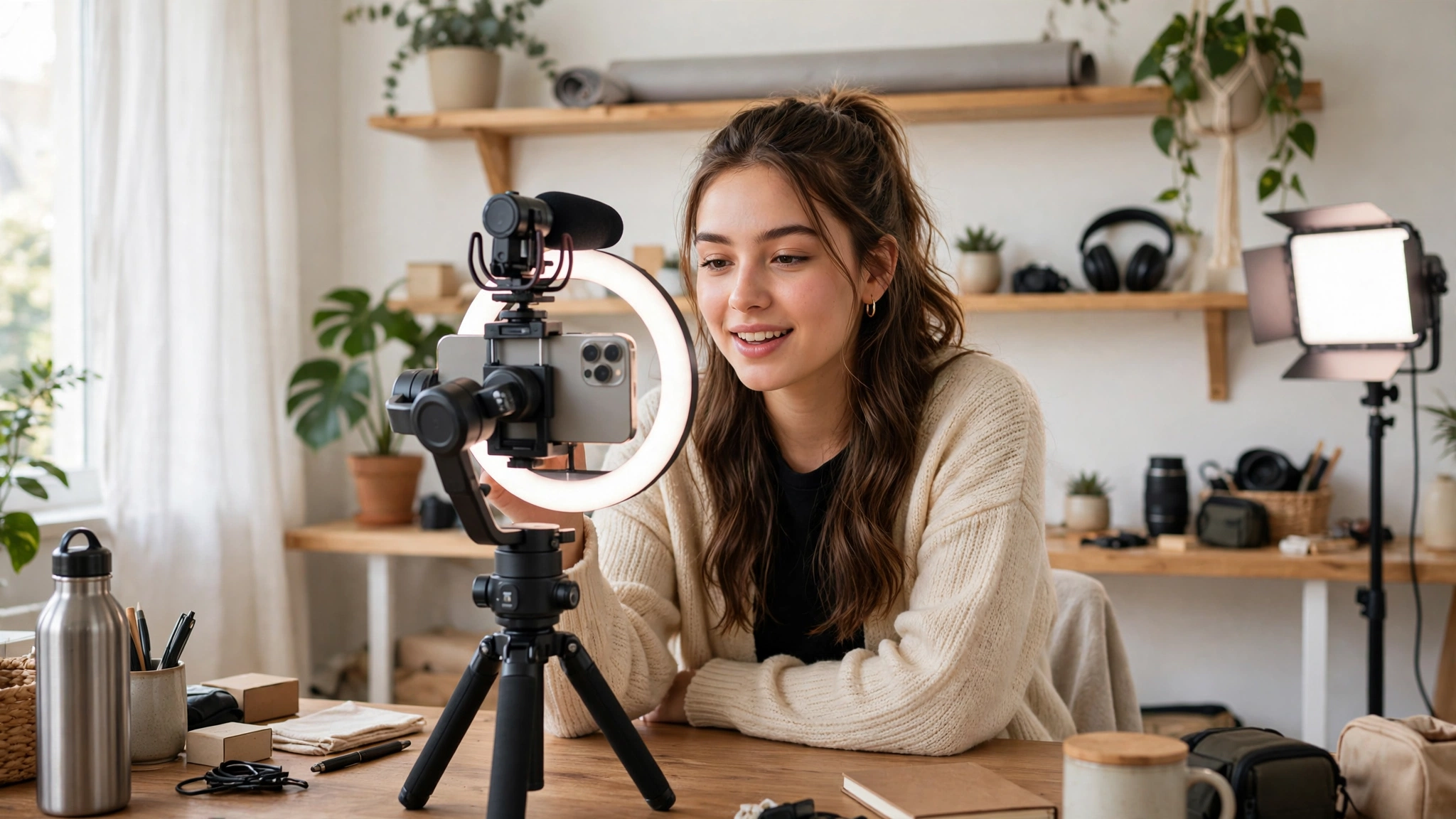
The best smartphones for content creators in 2026 are no longer just good phones with decent cameras. They are small production rigs. A single flagship can now shoot 4K at 120 frames per second, record flat Log footage for color grading, and save files straight to an external SSD. That is real progress. A vlogger with a phone and a cheap clip-on mic can publish work that needed a dedicated camera five years ago.
Spec sheets still don’t tell the whole story, though. Some “pro” features only work in certain modes, some depend on cloud processing, and some budget phones still cap their selfie camera at 30fps. Marketing claims have gone wrong before too, sometimes badly enough to land a phone maker in court.
This guide covers the phones that actually make sense for YouTube vloggers, TikTok and Reels creators, and anyone building a mobile filmmaking setup. You’ll get the features that matter in a vlogging phone, seven picks across different budgets, and buying advice matched to the kind of content you make.
We also cover something most roundups skip: the legal and ethical side. A better camera makes it easier to film anything, including things you shouldn’t. Real creators have been fined, sued, and jailed over content they shot on their phones, so that section is worth reading before you hit record in public.
What Makes the Best Smartphones for Content Creators Stand Out
Megapixel counts sell phones, but they barely matter for video. A 200MP sensor still records 4K video at about 8 megapixels per frame. What separates a good phone for vlogging from a frustrating one is a handful of less flashy features. Here’s what to check before you buy.
4K video recording on every lens
4K video recording at 60fps should be the baseline for any creator phone in 2026. The detail that catches people out is that not every lens supports it. Check that the ultra-wide, the telephoto, and especially the front camera can all shoot 4K at 60fps. If you switch lenses mid-shot and the quality drops, viewers will notice.
Higher frame rates like 4K at 120fps are useful for slow motion b-roll. 8K is mostly a marketing number for social creators. Almost nobody watches 8K, and the files eat storage fast.
Stabilization you can actually control
Walking-and-talking vlogs live or die on stabilization. Look for optical image stabilization (OIS) on the main camera, paired with strong electronic stabilization. Many phones also have an extra “action” or “ultra stable” mode that crops in for smoother footage.
Pay attention to how those modes switch on. Some phones let you toggle them manually. Others decide for you, which can be annoying when you need a specific look.
A front camera worth talking into
If you film yourself, the selfie camera is your main camera. You want 4K at 60fps, autofocus (not fixed focus), and decent dynamic range so a bright window behind you doesn’t turn your face into a silhouette. Budget phones often cut corners here first.
Log video, ProRes, and pro codecs
Log video records a flat, low-contrast image that keeps more highlight and shadow detail for color grading later. Apple calls its version Apple Log, Samsung calls it Samsung Log, and Samsung’s newer APV codec adds a near-lossless option for heavy editing. Apple’s ProRes does a similar job on iPhones.
You don’t need these to post on TikTok. They matter if you grade your footage, mix phone shots with a mirrorless camera, or do client work.
Audio and external microphone support
Bad audio makes people click away faster than soft video. Built-in mics have improved, and tools like wind noise reduction help, but a creator phone should work cleanly with external microphone support through USB-C or wireless receivers. Test that the camera app keeps using your external mic when you switch modes.
Battery life, heat, and storage
Long 4K takes drain batteries and heat up phones. When a phone gets too hot, it may dim the screen, drop frame rates, or stop recording. Flagships with better cooling handle long shoots more reliably.
Storage matters just as much. ProRes and Log files are huge, so 256GB is a sensible minimum for serious content creation. Phones that record straight to an external SSD over USB-C save you a lot of hassle.
Editing apps and ecosystem
Think about where your footage goes after you shoot it. iPhones work smoothly with Final Cut Pro, LumaFusion, and Mac workflows. Android phones pair well with CapCut, Premiere Rush, and Windows editing setups. Pick the ecosystem that fits how you already edit.
7 Best Smartphones for Content Creators and Vloggers in 2026
These picks are based on current models as of late October 2026, official spec pages, and published reviews. Prices are US launch prices where we could confirm them. Local prices vary a lot, so check your market.
1. Apple iPhone 18 Pro and 18 Pro Max: Best overall
Apple announced the iPhone 18 Pro and Pro Max in September 2026, starting at $1,199 and $1,299 with 256GB of storage. The headline change for creators is a 48MP main camera with a real variable aperture built from six blades, which gives you more control over light and depth instead of relying only on software.
The front camera is an 18MP Center Stage sensor, which is good news for anyone who films themselves. Apple also rates the Pro Max for up to 45 hours of video playback, and a larger vapor chamber should help with heat during long 4K takes. Early testing put it at the top of video rankings for stabilization and low light. Full details are on Apple’s iPhone 18 Pro specs page.
- Best for: YouTube creators, short filmmakers, and anyone who mixes phone footage with pro cameras
- Strengths: consistent color, excellent stabilization, Apple’s pro video tools, long battery life
- Weak spots: the most expensive option here, and the base storage fills fast if you shoot ProRes
2. Samsung Galaxy S26 Ultra: Best Android phone for pro video
The Galaxy S26 Ultra is Samsung’s most serious smartphone for YouTube creators so far. It’s the first phone to support the Advanced Professional Video (APV) codec, which records near-lossless HDR at up to 8K 30fps or 4K 120fps. You can choose APV HDR or APV Log, plus a high-quality or storage-friendly compression level.
The smartest upgrade is live LUT previews for Log footage. On older phones, shooting Log meant staring at a washed-out image while recording. Now you can see a finished look on screen and still keep the flat file for grading. It also records straight to an external SSD. Samsung explains the setup in its APV codec announcement.
- Best for: travel vloggers, zoom-heavy content, Android users who color grade
- Strengths: pro codecs, long zoom range, SSD recording, S Pen for quick edits
- Weak spots: APV files need editing software that supports the format, and the phone is large
3. Google Pixel 11 Pro and 11 Pro XL: Best for simple, natural-looking video
The Pixel 11 Pro ($1,099) and Pro XL ($1,299) are the easiest phones here to point and shoot with. Colors look natural, skin tones are accurate, and the front camera records 4K at 30 or 60fps. Audio tools are a real strength: stereo recording, speech enhancement, wind noise reduction, and Audio Magic Eraser for cleaning up background noise after the fact.
There are honest caveats. Google’s new Pro Stable Video mode only works through Video Boost, and you can’t switch it on manually. Reviewers also pointed out there’s no manual pro video mode with Log support. Some early buyers reported Video Boost glitches at launch. Check the Pixel 11 Pro specs for the full list.
- Best for: talking-head creators, lifestyle and beauty vloggers, people who don’t want to fiddle with settings
- Strengths: natural color, great audio cleanup, excellent zoom on the Pro XL
- Weak spots: limited manual control, and some features rely on cloud processing
4. Apple iPhone 17 Pro Max: Best value flagship
Last year’s top iPhone is still one of the best camera phones for video you can buy, and it usually gets cheaper once a new model lands. It shoots 4K at up to 120fps with Dolby Vision, supports ProRes RAW and Apple Log 2, and can sync multiple iPhones for multi-camera shoots.
For most creators, the gap between this and the 18 Pro Max is smaller than the price gap. If you find a good deal from a trusted seller, it’s a smart buy.
- Best for: creators who want pro iPhone video without paying launch prices
- Strengths: nearly all the pro video features of the newer model
- Weak spots: no variable aperture, and shorter software support ahead than the 18 Pro
5. Oppo Find X9 Ultra: Best for zoom and travel (where available)
The new wave of “camera Ultra” phones from Oppo, Vivo, and Honor deserve a mention. Reviewers praise the Find X9 Ultra for its stabilization and flexible multi-lens zoom, which lets you reframe a shot without moving. That’s handy for documentary style travel videos and interviews.
The big catch is availability. These phones aren’t officially sold in every country, including the US, and warranty support can be patchy if you import one.
- Best for: travel creators and photographers in markets where it’s sold
- Strengths: zoom range, sensor quality, handheld stability
- Weak spots: limited availability, fewer third-party accessories and editing app optimizations
6. Apple iPhone 17e: Best budget iPhone for vlogging
At $599 with 256GB of storage, the iPhone 17e is the cheapest way into Apple’s video quality. It has a single 48MP rear camera with a 2x optical-quality crop, and both the rear and front cameras shoot 4K at 60fps. That front camera spec is rare at this price.
You give up the ultra-wide lens and the pro features. For a beginner filming talking-head videos, that’s a fair trade.
- Best for: new creators, students, selfie vloggers on a budget
- Strengths: 4K60 front camera, generous base storage, good stabilization
- Weak spots: no ultra-wide, small 6.1-inch screen
7. Google Pixel 10a: Best budget Android phone for creators
The Pixel 10a starts at $499 and pairs a 48MP main camera with a 13MP ultra-wide, so you get more framing options than the iPhone 17e. Google’s processing keeps colors natural, and the battery is large for the size.
The base model only has 128GB, which is tight for 4K footage. Budget for cloud storage or buy the higher tier.
- Best for: beginner Android creators, short-form content, wide shots on a budget
- Strengths: price, ultra-wide lens, natural color, battery size
- Weak spots: 128GB base storage, less processing power than flagships
One budget phone we’d skip for vlogging is the Galaxy A57. It’s a solid everyday phone, but reviewers found it records 4K at only 30fps, with no 60fps option, which is a real limit for creators.
How to Choose the Best Smartphones for Content Creators by Budget and Style
The right pick depends less on which phone is “best” and more on what you make, where you post it, and how you edit. Here’s a quick side by side, followed by advice for different types of creators.
Quick comparison table
| Phone | US starting price | Standout creator feature | Best for |
|---|---|---|---|
| iPhone 18 Pro Max | $1,299 | Variable aperture main camera, top video stabilization | Pro YouTubers, filmmakers |
| iPhone 18 Pro | $1,199 | Same camera system in a smaller body | Pros who want a compact phone |
| Pixel 11 Pro XL | $1,299 | Audio cleanup tools, 5x periscope zoom | Lifestyle and talking-head creators |
| Galaxy S26 Ultra | Check local pricing | APV codec, live LUT preview, SSD recording | Android users who color grade |
| Pixel 11 Pro | $1,099 | 4K60 front camera, natural color | Point-and-shoot vloggers |
| iPhone 17e | $599 | 4K60 front and rear cameras | Beginners and selfie vloggers |
| Pixel 10a | $499 | Ultra-wide lens at a low price | Budget Android creators |
For YouTube vloggers
Long-form YouTube rewards consistency over flashy specs. You want reliable stabilization, a strong front camera, and a phone that won’t overheat during a 20-minute take. The iPhone 18 Pro Max is the safest choice. The Galaxy S26 Ultra is the best fit if you’re on Android and plan to grade your footage.
For TikTok, Reels, and Shorts creators
Short-form content is mostly vertical, front-facing, and shot in bursts. You don’t need Log or ProRes. Focus on the selfie camera, good skin tones, and fast app performance. The Pixel 11 Pro and iPhone 17e both handle this well, and the Pixel 10a is a sensible starter phone for TikTok and Instagram Reels.
For travel creators
Travel vloggers need zoom range, battery life, and durability. The Galaxy S26 Ultra and Pixel 11 Pro XL offer strong zoom. Camera Ultra phones like the Oppo Find X9 Ultra are excellent if they’re sold in your country. Always carry a power bank, since GPS, screen brightness, and 4K recording drain batteries quickly.
For mobile filmmakers and client work
If you’re delivering paid work, file quality and editing flexibility matter most. Choose a phone with Log video, a pro codec, and external SSD recording. The iPhone 18 Pro, iPhone 17 Pro Max, and Galaxy S26 Ultra are the realistic options here.
Spend money on accessories, not just the phone
A mid-range phone with good gear often beats a flagship used badly. Before stretching your budget, consider:
- A wireless lavalier or clip-on mic. This is the single biggest upgrade for most vlogs.
- A small LED light. Phone sensors still struggle indoors at night.
- A gimbal or a sturdy grip. Built-in stabilization is good, but a grip helps with long walking shots.
- Extra storage. A fast USB-C SSD or a cloud plan saves you from deleting footage mid-trip.
- A tripod with a phone mount. It’s essential for talking-head videos and time-lapses.
Buy smart and avoid scams
Creator phones are expensive, which makes them a target for fraud. Buy from official stores or well-known retailers. Be wary of “too good to be true” prices on social media marketplaces, and check that imported phones will work on your local networks and come with a valid warranty. Refurbished phones from certified programs are a good way to save money safely.
The Legal and Ethical Reality of Filming With Your Phone
The camera in your pocket is now good enough to make you famous. It’s also good enough to get you into serious trouble. Most guides about the best smartphones for content creators stop at specs. The cases below show why the law and basic ethics deserve as much attention as frame rates.
Don’t trust marketing claims blindly: the Samsung water resistance case
Phone makers have been penalized for overselling features creators rely on. In 2022, an Australian federal court ordered Samsung Australia to pay A$14 million after it admitted that ads run between 2016 and 2018 misled buyers about how well several Galaxy phones handled pool and sea water. The phones involved included the Galaxy S7, S8, and Note 8, and more than 3.1 million were sold in Australia. The regulator had reviewed hundreds of complaints from people whose phones stopped working after water exposure. You can read the full ACCC ruling on Samsung’s water resistance claims.
The lesson for creators is simple. Water resistance ratings, “cinema-grade” labels, and AI features are claims, not guarantees. Test any feature you depend on before you take a phone to the beach or onto a paid shoot.
Disclose your sponsorships: the FTC and CSGO Lotto
If a brand gives you a free phone, pays you, or gives you affiliate commission, you have a material connection that your audience needs to know about. The US Federal Trade Commission brought its first-ever case against individual influencers in 2017. Two YouTubers promoted a gambling site called CSGO Lotto without clearly telling viewers they owned the company.
This matters a lot in tech reviews, because phone brands seed review units to creators constantly. Saying “Samsung sent me this phone” at the start of a video is easy and protects your credibility. The FTC’s Disclosures 101 for Social Media Influencers guide explains when and how to disclose, and many other countries follow similar rules.
Stunts for views can end in prison: the Johnny Somali case
In April 2026, the Seoul Western District Court sentenced American streamer Ramsey Khalid Ismael, known online as Johnny Somali, to six months in prison. He was convicted of obstruction of business, violating South Korea’s Minor Offenses Act, and distributing AI-generated sexual deepfake content. His livestreams included disrupting a convenience store, causing disturbances on public transport, and filming himself disrespecting a memorial to wartime sexual slavery victims.
The court said he repeatedly targeted members of the public to earn YouTube revenue. Prosecutors had asked for three years. The court also confiscated two phones used in the crimes and barred him from working with minors and people with disabilities for five years after release. The Korea Herald’s report on the sentencing covers the details.
Faking content can be a federal crime: the Trevor Jacob case
In the US, YouTuber and former Olympic snowboarder Trevor Jacob filmed himself parachuting out of a small plane in 2021, then posted the crash as an accident. Investigators found he had planned it for the video, and he later destroyed the wreckage. He was sentenced in late 2023 to six months in federal prison for obstructing a federal investigation. Staged “accidents” don’t just mislead viewers. They waste emergency resources and can break the law.
Privacy and consent are not optional
Phones with long zoom and great low-light video make it easy to film people who don’t know they’re being recorded. Laws differ by country, but a few principles hold almost everywhere:
- Private spaces need consent. Filming inside homes, bathrooms, changing rooms, or medical settings without permission can be a crime.
- Audio rules can be stricter than video rules. Some places require everyone in a conversation to agree before it’s recorded.
- Deepfakes of real people are increasingly illegal. Several countries now criminalize sexual or deceptive deepfakes, as the Johnny Somali case shows.
- Children deserve extra care. Avoid showing other people’s kids, and think hard before building content around your own.
- Some places ban filming completely. Military sites, airports, government buildings, and some religious sites restrict cameras and drones.
A simple ethics checklist before you post
- Would the people in this video be okay with how they appear?
- Have I disclosed every free product, payment, and affiliate link?
- Is anything staged or edited in a way that would mislead viewers?
- Am I filming somewhere that restricts recording?
- Did I check local laws if I’m vlogging in another country?
A great phone helps you make better videos. Good judgment keeps your channel, and sometimes your freedom, intact.
Conclusion
The best smartphones for content creators in 2026 give you real production tools in your pocket: the iPhone 18 Pro Max leads for overall video quality, the Galaxy S26 Ultra is the strongest Android option for creators who grade their footage, the Pixel 11 Pro series makes clean, natural video easy, and the iPhone 17e and Pixel 10a prove you don’t need flagship money to start a channel. Whatever you choose, judge a vlogging phone by its front camera, stabilization, audio support, heat handling, and storage rather than megapixels, and put some of your budget into a mic and a light. Just as important, remember that better gear raises the stakes: misleading claims, hidden sponsorships, staged stunts, and filming people without consent have already cost brands millions and sent creators to prison, so treat honesty and local laws as part of your setup, not an afterthought.