Fiber Internet vs DSL Which Should You Choose in Pakistan
Fiber internet vs DSL in Pakistan compared on speed, price, reliability and real local risks so you can choose the right home or office connection.
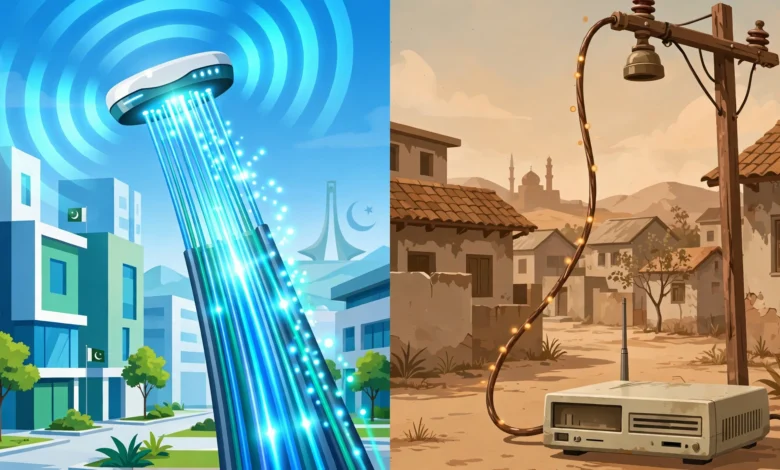
Fiber Internet vs DSL in Pakistan: 7 Proven Facts to Pick the Best Connection in 2026
Introduction
Fiber internet vs DSL is a question almost every Pakistani household runs into once the old connection starts to feel slow. Maybe your Zoom call froze in the middle of a client meeting, or the kids keep complaining that YouTube buffers right when the match gets exciting. Either way, you are probably wondering if it is worth leaving your copper line for a fiber connection, and whether fiber has even reached your street yet.
The honest answer depends on where you live, how you use the internet, and how much you can spend each month. In Pakistan, DSL internet still runs mostly over PTCL’s copper telephone network, while fiber optic internet comes from providers like PTCL Flash Fiber, Nayatel, StormFiber and Transworld Home. Both have real strengths and real weaknesses, and the marketing from either side rarely tells the full story.
This guide compares fiber internet vs DSL in Pakistan on speed, latency, reliability, price and availability. It also covers the parts most comparison articles skip: copper cable theft that knocks DSL lines offline for days, unlicensed internet providers that PTA and FIA have raided in Lahore, Sargodha, Toba Tek Singh and other cities, and what those cases mean for you as a customer. By the end, you will know which connection fits your home, office or small business, and exactly what to check before you sign up.
What Is Fiber Internet and How Does It Work in Pakistan?
Fiber internet sends data as pulses of light through thin strands of glass. Because light travels through glass with very little loss, the signal stays strong over long distances, and the line can carry far more data than a copper wire ever could.
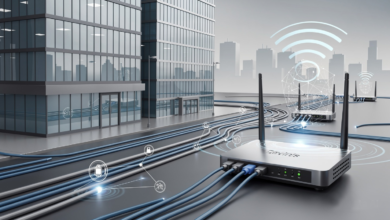
Most home fiber in Pakistan is FTTH (Fiber to the Home), built on a technology called GPON (Gigabit Passive Optical Network). The provider runs fiber from its exchange to a splitter in your area, and then a single fiber drop goes straight into your house. There, a small box called an ONT (Optical Network Terminal) converts the light signal into something your Wi-Fi router can use.
Why fiber behaves differently from older connections
The biggest practical difference is consistency. On a well-built fiber network, the speed you pay for is roughly the speed you get, whether you live 200 meters or 3 kilometers from the exchange. A few other things make fiber stand out:
- Symmetrical or near-symmetrical speeds on many plans, which means uploads are fast too. That matters for video calls, sending large files and backing up to the cloud.
- Low latency, usually in the single digits to low tens of milliseconds to local servers, which helps with gaming and live calls.
- No electrical interference. Glass does not pick up noise from power lines, so rain-soaked junction boxes and nearby transformers are far less of a problem.
- Room to grow. The same fiber line can usually be upgraded from 20 Mbps to 100 Mbps or more without new cabling.
Where fiber is available
Fiber started in a few upscale sectors of Islamabad, Lahore and Karachi, but it has spread steadily. Nayatel was the first provider to bring FTTH to Pakistan back in 2006, and StormFiber, Transworld Home, PTCL Flash Fiber and others have since pushed into many more cities, including mid-sized ones like Sargodha, Faisalabad and Multan. Still, coverage is patchy. One street can have three fiber options while the next block has none, so checking your exact address is the first real step in any fiber internet vs DSL decision.
What Is DSL Internet and How Do PTCL Copper Lines Work?
DSL (Digital Subscriber Line) delivers internet over the same copper telephone wires that have carried landline calls for decades. In Pakistan, this almost always means a PTCL line. A DSL modem at your home talks to equipment at the local exchange, and the data rides on higher frequencies than voice, so you can use the phone and internet at the same time.
Most PTCL broadband customers have been on ADSL2+ or VDSL technology. In ideal conditions, these can reach anywhere from a few Mbps up to roughly 20 to 50 Mbps, but “ideal” is doing a lot of work in that sentence.


The distance problem
Copper loses signal strength as distance grows. If your house is close to the exchange, DSL can feel decent. If you are a few kilometers away, the same package may deliver a fraction of the advertised speed. This is why two neighbors in different lanes of the same colony can have completely different experiences with the same PTCL package.
The age and weather problem
A lot of Pakistan’s copper network was laid many years ago. Joints corrode, junction boxes take in water during the monsoon, and old cables pick up electrical noise. Common complaints from PTCL DSL users include:
- Speed dropping sharply after heavy rain
- The line disconnecting and reconnecting several times a day
- Crackling on the landline that matches internet slowdowns
- Long waits for a lineman visit after a fault is reported
Where DSL still makes sense
DSL is not useless. It reaches far more places than fiber, including older neighborhoods and smaller towns where no fiber provider has arrived. It is also usually cheaper at the entry level. For a light user who checks email, uses WhatsApp and watches some videos, a stable DSL line can be perfectly fine. The fiber internet vs DSL question gets serious when a household adds work calls, online classes, 4K streaming and multiple phones all at once.
Fiber Internet vs DSL: 7 Key Differences That Actually Matter
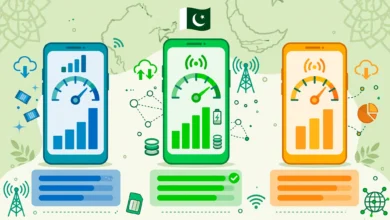
When you put fiber internet vs DSL side by side, fiber wins on almost every technical measure. DSL wins mainly on availability and entry price. Here is the quick view, followed by the details.
| Factor | Fiber internet (FTTH) | DSL internet (copper) |
|---|---|---|
| Typical home speeds | 15 Mbps to 1 Gbps | 4 Mbps to about 50 Mbps |
| Upload speed | Often equal or close to download | Much lower than download |
| Latency | Low and steady | Higher, varies by line quality |
| Effect of distance | Almost none | Speed drops as distance grows |
| Weather sensitivity | Low | High, especially in monsoon |
| Theft risk | Low (glass has no scrap value) | High (copper is resold as scrap) |
| Availability | Major cities and growing | Almost everywhere PTCL has lines |
1. Fiber Internet vs DSL Speed Comparison
This is the headline difference. A fiber plan sold as 50 Mbps usually delivers close to 50 Mbps for most of the day. A DSL plan sold as “up to” 20 Mbps might give you 20 on a good day and 6 on a bad one, depending on your line. For one person browsing, either works. For a family with four phones, two laptops and a smart TV, fiber’s extra headroom is the difference between smooth and frustrating.
2. Upload speed
People forget about upload until they need it. Freelancers sending design files, YouTubers uploading videos and anyone on daily video calls depends on upload. DSL is built to be lopsided, with upload often a small fraction of download. Many fiber plans in Pakistan offer much stronger upload, which makes a visible difference on Zoom, Google Meet and Teams.
3. Latency and gaming
Latency is the delay before data starts moving. Gamers call it ping. Fiber typically offers lower and more stable ping, which is why most serious PUBG, Valorant and FIFA players in Pakistan push for a fiber line. DSL latency is usually acceptable for casual play but tends to spike when the line is noisy.
4. Reliability and uptime
On internet reliability in Pakistan, the real enemies are water, power and people. Fiber does not suffer from electrical noise and is less affected by rain. It can still go down if a construction crew cuts a cable or if your ONT has no power during load shedding, so a small UPS is a smart buy either way. DSL, on the other hand, is exposed to all of those problems plus corrosion and copper theft, which we cover in detail below.
5. Price and value
DSL usually wins on the lowest possible monthly bill. Fiber packages have come down a lot as competition has grown, and in many areas a basic fiber plan now costs close to a mid-tier DSL plan. When you compare fiber internet vs DSL prices, look at cost per actual Mbps, not just the monthly figure. A slightly more expensive fiber plan that delivers its full speed often gives better value than a cheaper DSL plan running at half its rated speed. Always check whether the advertised price includes tax, because taxes on internet bills in Pakistan can add a noticeable amount.
6. Installation and contracts
If you already have a working PTCL landline, DSL setup can be quick. Fiber needs a physical drop to your home, which can mean a site survey, installation charges and a wait of a few days to a few weeks. Some fiber providers waive installation fees during promotions or with longer commitments.
7. Future readiness
Copper is a technology on its way out worldwide. Providers are investing in fiber, not in upgrading old copper. If you plan to stay in your home for several years, the long-term fiber internet vs DSL picture is simple. A fiber line is the connection that will keep getting faster plans, while DSL is unlikely to see major improvement.
Best Fiber and DSL Internet Providers in Pakistan
The best internet provider in Pakistan for you is simply the one with solid coverage and good support on your street. Here is how the main names stack up.
PTCL (DSL and Flash Fiber)
PTCL is the only provider that offers both sides of the fiber internet vs DSL choice. Its copper DSL network reaches more homes than anyone else, and its Flash Fiber GPON service has expanded across major cities. According to TelecomLead’s 2026 overview of Pakistani ISPs, PTCL holds roughly a third of the country’s fiber broadband market. If you are an existing PTCL DSL customer, ask whether Flash Fiber is available at your address, since migration is often simpler than switching companies.
Nayatel
Nayatel pioneered FTTH in Pakistan in 2006 and has a strong reputation in Islamabad, Rawalpindi, Peshawar, Faisalabad and a few other cities. It bundles internet, TV and phone over one fiber line. Customers often praise its stability, though coverage outside its core cities is limited.
StormFiber
Run by Cyber Internet Services, StormFiber has expanded into many large and mid-sized cities, including Karachi, Lahore, Sargodha and others. It markets gigabit-capable GPON connections with bundled TV and voice options.
Transworld Home
Transworld Home is backed by Transworld Associates, which also operates international submarine cable capacity. It is popular in parts of Karachi, Lahore and Islamabad, especially in upscale residential and commercial areas.
Other fiber options
Smaller and regional fiber providers such as Fiberlink, Optix and various city-level operators often offer lower prices. Some are excellent. Before you sign with a smaller company, though, confirm it holds a valid PTA license. The next section explains why that check matters so much.
What about 4G and 5G wireless?
Mobile broadband from Jazz, Zong, Telenor and Ufone, plus newer fixed wireless services, can fill gaps where neither fiber nor reliable DSL exists. These are useful backups, but for a primary home connection with heavy daily use, a wired line is usually more stable and better value.
Fiber Internet vs DSL in Pakistan: The Realities Nobody Advertises
Speed charts only tell part of the story. In Pakistan, a few illegal activities have a direct effect on how reliable your connection is and whether it stays connected at all. These cases are not here to scare anyone. They are here because they change the math in the fiber internet vs DSL decision.
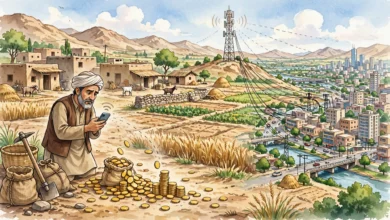
Copper cable theft and why it hits DSL users
Copper has real scrap value, and that makes telephone cable a target. In June 2024, ARY News reported that Karachi police arrested a gang of 10 people for stealing underground PTCL cables, recovering stolen cable worth around Rs 2.5 million along with a tractor used in the thefts. Smaller cases appear regularly too. In Kohat, for example, police arrested two men accused of cutting and stealing electricity wires and PTCL cables at night.
For a DSL customer, each of these thefts means the same thing: one morning the line is simply dead, and it stays dead until PTCL replaces the stolen section. That can take days in some areas. It also explains why some neighborhoods go through repeated outages while others nearby do not.
Fiber is far less attractive to thieves because glass strands have almost no resale value. Fiber cables still get cut, usually by accident during road work or construction, but they are rarely stolen for profit. If your area has a history of cable theft, that alone is a strong argument for fiber.
Unlicensed ISPs and the risk of sudden disconnection
The second issue affects the fiber side more than DSL. Cheap, small-scale fiber and wireless providers have spread quickly, and not all of them are licensed. The Pakistan Telecommunication Authority, working with the FIA, has run repeated raids against these operators. Some documented examples:
- Lahore and Kot Addu, June 2023: PTA and FIA raided illegal ISPs operating without a license, seized internet equipment and arrested three people.
- Lahore Walton Road, August 2023: Officials seized a server, a router and 30 ONTs from an unlicensed provider and sealed the premises.
- Sargodha, October 2023: Two raids, in Rose Valley Society and on Mian Khan Road, led to an arrest and the seizure of switches, routers and antennas.
- Toba Tek Singh, January 2024: Authorities confiscated routers, ONTs and an illegal tower fitted with 12 dish antennas.
- Lahore Ghazi Road: Two local cable and internet setups were raided and two people, including an owner, were arrested.
The pattern in the official PTA press release on these raids is consistent. When an illegal ISP is shut down, its equipment is seized, and every customer connected to it loses service immediately. There is no refund process and no one to call. Note the ONTs seized in several raids: those are the boxes that sit inside customers’ homes.
Why using an illegal provider is a problem for you
Beyond the risk of losing service overnight, an unlicensed ISP operates outside quality, tax and consumer-protection rules. That means:
- No formal complaint channel if speeds are poor or billing is wrong
- No guarantee your traffic and personal data are handled securely
- No obligation to restore service after an outage
- Your money indirectly supports tax evasion, which PTA cites as a main reason for these crackdowns
What these cases teach you about fiber internet vs DSL
The lesson is not “avoid fiber” or “avoid DSL.” It is to pick a licensed provider and understand your local risks. If copper theft is common in your area, DSL may let you down no matter how good the package looks. If a fiber deal seems too cheap and comes from a company you cannot find on PTA’s list, walk away. PTA publishes a list of licensed operators that you can check in a couple of minutes.
Fiber Internet vs DSL: Which Should You Choose?
There is no single right answer for everyone, so here is how the fiber internet vs DSL choice usually plays out for different kinds of users in Pakistan.
Remote workers and freelancers
If your income depends on the internet, choose fiber whenever it is available. Fiverr and Upwork freelancers, software developers and anyone working for foreign clients need stable upload speeds and low latency for calls. A dropped connection during a client meeting costs more than the difference in monthly bills. Keep a 4G device as backup for the rare fiber outage.
Families with several users
A typical Pakistani household today might have five or more phones, a smart TV and a laptop or two, all online in the evening. This is where fiber internet vs DSL stops being theory, because DSL tends to struggle at exactly this peak time. A fiber connection in the 30 to 50 Mbps range usually handles this comfortably.
Online gamers and streamers
Go with fiber. Low and stable ping matters more than raw speed for gaming, and strong upload is essential for streaming on YouTube or Twitch. DSL can work for casual play, but competitive players almost always notice the difference.
Students and light users
If you mainly use WhatsApp, browse social media, attend the occasional online class and watch videos in standard quality, a stable DSL line can be enough. If fiber is available at a similar price, though, it is still the better buy.
Small businesses and offices
Shops, clinics, small offices and call centers handling card payments, cloud software or VoIP calls should lean toward a business fiber plan from a licensed provider. Ask about a service level agreement that spells out how quickly faults will be fixed.
Homes in areas without fiber
If no licensed fiber provider covers your address, DSL is still a reasonable choice, especially if your line quality is good. Ask neighbors about their experience during the last monsoon, and consider pairing DSL with a 4G device as backup. Then register your interest with fiber providers, since many expand to areas where enough people have asked.
Checklist Before You Sign Up for Fiber or DSL
Whichever side of the fiber internet vs DSL debate you land on, run through these steps before paying anything.
- Confirm the provider is PTA licensed. Check the name against PTA’s official operator list. This one step protects you from the sudden shutdowns described above.
- Check coverage at your exact address. Use the provider’s coverage checker or call their helpline with your full address, not just your area name.
- Ask neighbors about real speeds. Ask what they get in the evening and how the connection held up during the last heavy rain.
- Get the full price in writing. That includes tax, installation, router or ONT charges, security deposit and any fee for ending the contract early.
- Ask about the fair usage policy. Some “unlimited” packages slow down after a data limit. Know the limit before you sign.
- Understand fault response times. Ask how long a typical repair takes and whether there is a 24/7 helpline.
- Plan for power cuts. Fiber ONTs and DSL modems both need electricity. A small UPS keeps you online during load shedding.
- Test after installation. Run speed tests at different times of day for the first week, and report problems early while the installer is still easy to reach.
Conclusion
The fiber internet vs DSL debate in Pakistan comes down to availability, usage and trust. Fiber is faster, steadier, better for uploads and gaming, and far less exposed to the copper theft that has repeatedly knocked PTCL DSL lines offline in cities like Karachi and Kohat. DSL still has a place where fiber has not arrived or for light users on a tight budget, as long as the local line is in decent shape. Whichever you choose, the most important rule is to stick with a PTA licensed provider, because the raids in Lahore, Sargodha, Toba Tek Singh and elsewhere show how quickly an illegal connection can disappear along with your money. Check your address, compare the real price including tax, ask your neighbors, and choose the connection that will still serve your home or business well a few years from now.