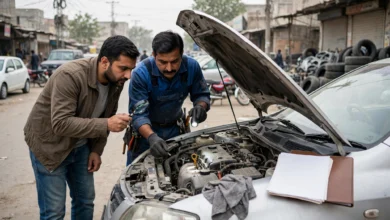
Why CNG Kits Are Making a Comeback in Pakistan
CNG kits in Pakistan are back as petrol stays costly. See real fuel savings, legal fitting rules, cylinder safety, and the illegal practices to avoid.
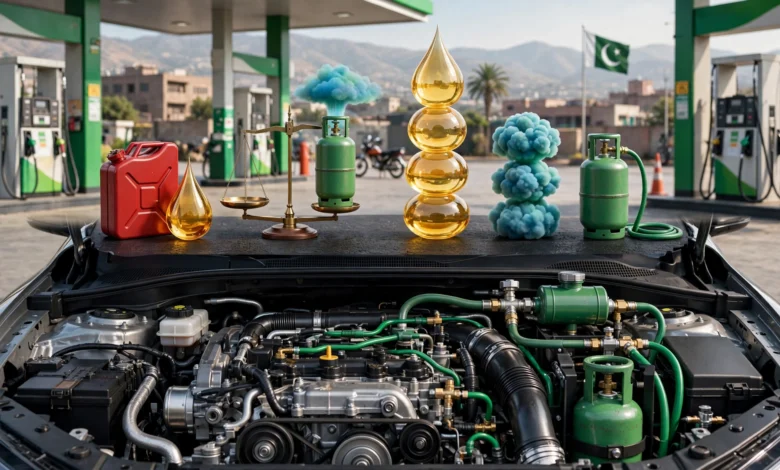
CNG Kits in Pakistan: 7 Surprising Reasons Behind the Powerful Comeback
Introduction
CNG kits in Pakistan were written off just a few years ago. Gas shortages, long winter closures and rising RLNG prices had pushed many drivers back to petrol, and plenty of workshops that once fitted cylinders all day were struggling for business. Then 2026 happened. A sharp global oil shock pushed petrol to the highest price in the country’s history, and suddenly people started asking the old question again: is it time to go back to gas?
For taxi drivers, rickshaw owners, ride-hailing captains and daily commuters who cover long distances, even a modest saving per kilometre adds up to thousands of rupees a month. That is why CNG stations in many cities are busier again, and conversion workshops are seeing renewed interest.
But CNG is not the bargain it was in 2011, and it was never risk-free. Over the years, Pakistan has seen substandard cylinders, unregistered fitters, expired tanks, gas theft by stations and tragic vehicle fires that cost lives, including children’s lives in school vans. Any honest discussion of the comeback has to include those lessons.
This guide explains why CNG conversion is attracting drivers again, what it really costs and saves today, the illegal and dangerous practices to avoid, and how to install a kit safely and legally. By the end, you will know whether CNG makes sense for your car and how to make the switch without putting your family at risk.
The Rise and Fall of CNG Kits in Pakistan
To understand the comeback, it helps to remember how big CNG once was and why it faded.
The Boom Years
In the 2000s and early 2010s, Pakistan built one of the largest CNG vehicle markets in the world. Cheap domestic gas made CNG cars far cheaper to run than petrol vehicles, and thousands of filling stations opened across Punjab, Sindh and Khyber Pakhtunkhwa. Taxis, rickshaws, wagons and private cars all converted, and long queues at gas stations became a familiar sight.
The Decline
Several problems brought the boom to an end:
- Falling domestic gas reserves meant households and industry were prioritised over vehicles.
- Winter closures shut CNG stations for weeks or months in Punjab and Khyber Pakhtunkhwa.
- A switch to imported RLNG raised prices, since stations increasingly relied on expensive imported gas.
- Deregulation of CNG prices from late 2016 meant rates varied by station and often moved closer to petrol.
- Safety concerns grew after a series of cylinder blasts and vehicle fires.
By the early 2020s, many drivers had removed their kits altogether, and new cars rolled out of factories without any gas option.
7 Reasons CNG Kits in Pakistan Are Making a Comeback
The renewed interest is real, but it is driven by specific pressures rather than a return to the cheap-gas era.


1. The 2026 Petrol Price Shock
A surge in global crude prices in early 2026 forced Pakistan, which must pass on international costs under its IMF programme, to raise fuel prices sharply. Petrol jumped by a record amount in a single revision in March 2026 and, according to PakWheels’ fuel price tracker, reached an all-time high of Rs 458.40 per litre on 3 April 2026. Prices have eased since, but remain far above what most drivers budgeted for.
2. CNG Has Become Relatively Cheaper Again
Through mid-2026, CNG has generally been quoted at around Rs 300 to 310 per kilogram, while petrol has stayed well above Rs 300 per litre for most of the year. With a kilogram of CNG giving similar or slightly better mileage than a litre of petrol in many small cars, the CNG vs petrol gap has reopened for high-mileage drivers.
3. Ride-Hailing and Commercial Drivers Need Lower Costs
Ride-hailing captains, taxi and rickshaw drivers, and delivery operators cover hundreds of kilometres a week. Fare increases rarely keep pace with fuel prices, so even small per-kilometre savings make a big difference to their income.
4. Dual-Fuel Flexibility
Modern dual-fuel setups let drivers switch between petrol and CNG with a button. If a station is closed or gas pressure is low, the car simply runs on petrol. This reduces the anxiety that used to come with relying on CNG alone.
5. Better Kit Technology
Sequential injection kits with electronic control units are now more common than the old mixer-type systems. They manage fuel more precisely, reduce power loss and are kinder to the engine when properly installed and tuned.
6. A Large Base of Older Cars
Pakistan has millions of older petrol cars, from Mehrans and Cultus models to older Corollas, that were built before modern fuel-saving technology. For these owners, a CNG kit is a cheaper way to cut running costs than buying a new hybrid.
7. Existing Station Network
Although many stations closed during the decline, thousands are still operating, especially in Sindh and parts of Punjab. Unlike electric vehicle charging, the basic refuelling network already exists.
The Catch: Supply Is Still Uncertain
The comeback has limits. CNG stations in Punjab and Khyber Pakhtunkhwa have faced closures during peak winter months to protect household gas supply, and prices depend heavily on imported RLNG costs and the exchange rate. Some analysts also argue that when petrol prices fall, CNG’s advantage almost disappears. CNG is a cost-saving option, not a guaranteed one.
CNG vs Petrol: Real Costs and Savings in 2026
The price per unit only tells half the story. What matters is the cost per kilometre and how much you drive.
A Worked Example
The numbers below are illustrative. They assume a small car that does 14 km per litre on petrol and 15 km per kilogram on CNG, a petrol price of Rs 380 per litre and a CNG price of Rs 308 per kilogram. Your own mileage and local prices will differ.
| Item | Petrol | CNG |
|---|---|---|
| Fuel price | Rs 380 per litre | Rs 308 per kg |
| Assumed mileage | 14 km per litre | 15 km per kg |
| Cost per km | About Rs 27.1 | About Rs 20.5 |
| Monthly cost at 1,500 km | About Rs 40,700 | About Rs 30,800 |
| Monthly saving | About Rs 9,900 |
At this level of use, a kit costing around Rs 120,000 including installation would pay for itself in roughly a year. A driver covering only 500 km a month would take three times as long, and the saving might not justify the hassle.
Hidden Costs to Factor In
- Kit and cylinder price, which varies by type and brand, so get quotes from certified workshops
- Periodic cylinder inspection and hydrostatic testing
- Extra maintenance, such as more frequent spark plug and air filter changes, and valve wear in some engines
- Lost boot space from the cylinder
- Possible effect on resale value and warranty for newer cars
When the Numbers Don’t Work
If petrol prices fall sharply or CNG rises, the per-kilometre gap can shrink to almost nothing. Before converting, compare current prices at stations near you and calculate your own cost per kilometre.
Illegal and Dangerous Practices Linked to CNG Kits in Pakistan
The darker side of the CNG story is what makes many families nervous, and with good reason. These past patterns show what can go wrong when rules are ignored.
Substandard and Uncertified Cylinders
During the boom years, cheap locally made or imported cylinders without proper certification flooded the market. Some were made from low-grade steel or had faulty valves. Authorities repeatedly cracked down on sellers of uncertified cylinders and workshops that fitted them. A substandard cylinder under high pressure is effectively a bomb in your car.
Expired Cylinders That Were Never Re-Tested
CNG cylinders must be inspected and hydrostatically tested at regular intervals, and certified by authorised bodies such as the Hydrocarbon Development Institute of Pakistan (HDIP). Many vehicle owners skipped testing to save money, and some stations filled cylinders without checking certificates. Several explosions at filling stations and in vehicles over the years were linked to old or damaged cylinders.
Deadly Fires in School Vans and Public Transport
Some of the most painful incidents involved overloaded school vans and public service vehicles fitted with gas cylinders in unsafe positions, sometimes under passenger seats. In 2011, a school van fire near Gujrat killed more than a dozen children and a teacher, a tragedy widely linked to unsafe gas fitting. After such incidents, provincial governments moved to ban or restrict gas cylinders in public service vehicles and school vans, and traffic police have carried out repeated checks.
Using LPG Domestic Cylinders in Cars
Some drivers have fitted household LPG cylinders, meant for kitchens, into their cars because they are cheap and easy to refill. These cylinders are not designed for vehicle use, have no proper valves or mounting, and have caused fires and explosions. It is illegal and extremely dangerous.
Gas Theft and Illegal Station Practices
Gas utilities have raided CNG stations found stealing gas through illegal connections or tampered meters, disconnecting supply and imposing heavy penalties. Some stations have also been caught short-filling customers or over-pressurising cylinders. Use reputable, licensed stations, and report suspicious practices to the Oil and Gas Regulatory Authority (OGRA).
Unlicensed Fitters
Roadside workshops without trained staff or authorisation often fit kits cheaply but poorly, with leaking joints, unsafe wiring and incorrect mounting. Saving a few thousand rupees on installation is never worth the risk.
How to Install CNG Kits in Pakistan Safely and Legally
If you decide to convert, do it properly. A well-installed kit is safe; a badly installed one is not.
Step-by-Step Safe Conversion
- Choose an authorised workshop. Ask for proof that the workshop is licensed and its technicians are trained.
- Buy a certified cylinder. Check for the manufacturer’s stamp, serial number, manufacturing date and certification. Ask for documents.
- Prefer a sequential kit for modern fuel-injected cars. Mixer kits are cheaper but less efficient and harder on engines.
- Insist on correct mounting. The cylinder should be firmly bolted in the boot, never under seats or in the passenger area, with a vent to the outside.
- Check all fittings for leaks with soapy water or a gas detector before you leave the workshop.
- Get the conversion recorded. Keep the installation certificate and cylinder documents, and make sure the change is documented as required by your provincial excise and transport rules.
- Inform your insurer. An undeclared conversion can void your insurance claim after an accident or fire.
Ongoing Safety Habits
- Get the cylinder inspected and hydro-tested on schedule, and keep the certificate in the car.
- Switch off the engine and get all passengers out of the car while refuelling.
- Never smoke near the car or at a filling station.
- If you smell gas, stop, switch off, close the cylinder valve and get the car checked before driving again.
- Avoid filling at stations that do not ask for or check cylinder certification.
Is a CNG Kit Right for You?
CNG makes sense for some drivers and not for others. Be honest about how you use your car.
CNG Is a Good Fit If You:
- Drive more than 1,000 to 1,500 km a month
- Use your car commercially, for ride-hailing, taxi or delivery work
- Own an older petrol car that is out of warranty
- Live in an area with reliable, year-round CNG supply, such as many parts of Sindh
- Can afford proper installation and regular cylinder testing
Stick With Petrol or Consider a Hybrid If You:
- Drive mostly short distances in the city
- Own a new car still under warranty
- Live where CNG stations close for long periods in winter
- Need full boot space for family use
- Carry children regularly and cannot guarantee safe, certified installation
A Word on Families and Children
If your car is used for school runs or carrying children, the safety bar should be higher. Only use a certified cylinder mounted in the boot, never overload the vehicle, and never use a van or car for children’s transport that has a cylinder inside the passenger cabin.
Frequently Asked Questions About CNG Kits in Pakistan
Is CNG cheaper than petrol in Pakistan in 2026?
For most of 2026, yes, on a cost-per-kilometre basis, because petrol prices rose sharply while CNG stayed around Rs 300 to 310 per kilogram. The gap changes with every price revision, so compare current rates before deciding.
Does CNG damage the engine?
A properly installed, well-tuned kit on a suitable engine causes limited extra wear. Poor installation, low-quality kits and running only on gas without maintenance can cause valve and spark plug problems over time.
How often should a CNG cylinder be tested?
Cylinders need periodic inspection and hydrostatic testing at the interval set by regulators. Check the date on your cylinder’s certificate and get it re-tested through an authorised centre before it expires.
Can I fit a CNG kit in a school van or public transport vehicle?
Rules restrict or ban gas cylinders in many public service vehicles and school vans after past fatal fires. Check your province’s current rules with the transport and traffic authorities before fitting anything.
Are CNG stations open all year?
Not everywhere. Stations in Punjab and Khyber Pakhtunkhwa have faced closures during peak winter months when gas is diverted to households. Supply in parts of Sindh has generally been more consistent.
Conclusion
CNG kits in Pakistan are back in demand mainly because the 2026 oil shock pushed petrol to record prices while CNG stayed around Rs 300 to 310 per kilogram, reopening a meaningful cost-per-kilometre gap for high-mileage drivers, ride-hailing captains and owners of older cars, helped along by better sequential kits, dual-fuel flexibility and an existing station network. The comeback has clear limits, though, since winter closures, dependence on imported RLNG and shifting fuel prices can erase the savings, and the history of uncertified cylinders, expired tanks, household LPG cylinders in cars, gas theft by stations, unlicensed fitters and deadly school van fires shows what happens when safety is ignored. If you drive enough to benefit, choose an authorised workshop, a certified cylinder mounted in the boot, regular hydrostatic testing, a declared conversion and licensed stations, and CNG can save you real money without putting your family or anyone else at risk.