Self-Driving Cars: How Far Is Pakistan From Autonomous Vehicles?
Self-driving cars in Pakistan face real hurdles, from weak infrastructure to unclear laws. Here's an honest look at how close the country really is.
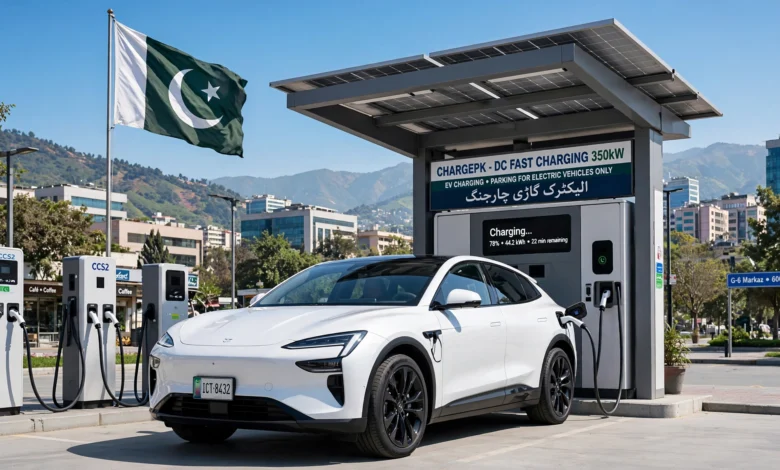
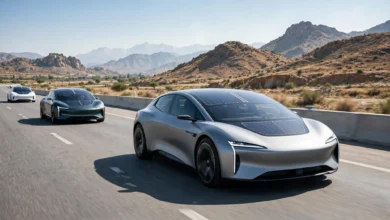
Self-driving cars in Pakistan are still more of a talking point than a reality on the roads. While cities like San Francisco, Phoenix, and Shenzhen already have robotaxis picking up passengers, Pakistan is nowhere close to that stage. That gap isn’t just about technology. It’s about roads, laws, money, and a driving culture that doesn’t exactly follow the rulebook.
This article looks at where autonomous vehicles in Pakistan actually stand right now, what’s holding the country back, and what would realistically need to change before self-driving cars become a normal sight on Pakistani streets. We’ll also look at what’s happening globally so you can see how big the gap really is, and where Pakistan’s auto and tech sectors are quietly making moves that could matter down the road.
If you’ve been wondering whether you’ll be riding in a driverless car in Lahore or Karachi anytime soon, the short answer is: not for a while. But the longer answer is more interesting, and it says a lot about where Pakistan’s transportation future is headed. Let’s break it down piece by piece, starting with the basics of what self-driving technology actually involves.
Where Does Pakistan Stand on Self-Driving Cars Today?
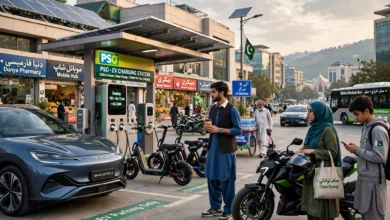
Right now, there are no commercially available self-driving cars in Pakistan, and there’s no dedicated legal framework that even addresses them. Pakistan’s auto industry is still largely focused on assembling conventional petrol and hybrid vehicles, with electric vehicles (EVs) only just starting to gain traction.
A few points worth noting about where things stand:
- No local manufacturer or assembler currently produces vehicles with advanced driver-assistance systems (ADAS) as standard.
- Imported vehicles with features like adaptive cruise control or lane-keeping assist do exist in the country, but they’re limited to high-end models owned by a small segment of buyers.
- There’s no government body currently tasked with regulating autonomous vehicle testing or deployment.
- Public transport modernization, not autonomous vehicles, is the current government priority in most urban mobility plans.
In other words, Pakistan is still at the starting line for autonomous vehicle technology, while other countries are already several laps ahead.
What Are Self-Driving Cars and How Do They Work?
Before getting into Pakistan’s specific challenges, it helps to understand what we actually mean by “self-driving.” The term gets thrown around loosely, but there’s a real technical framework behind it.
Self-driving cars, also called autonomous vehicles or AVs, use a combination of sensors, cameras, radar, GPS, and artificial intelligence to perceive their surroundings and make driving decisions without constant human input. The core technologies involved include:
- LiDAR and radar systems that map the environment in real time
- Computer vision that identifies pedestrians, other vehicles, and road signs
- AI-based decision-making software that processes sensor data and controls acceleration, braking, and steering
- High-definition mapping that gives the vehicle precise location awareness beyond standard GPS
Levels of Vehicle Autonomy
The Society of Automotive Engineers (SAE) defines six levels of driving automation, ranging from Level 0 (no automation) to Level 5 (full automation with no human driver needed at all). Most vehicles on Pakistani roads today, including imported cars with driver-assist features, sit at Level 1 or Level 2. That means the driver is still fully responsible and needs to keep their hands on the wheel and eyes on the road.

For context, companies like Waymo and Cruise operate Level 4 vehicles in limited US cities, meaning the car can drive itself in specific conditions without a human backup driver. Pakistan hasn’t even reached the point of widespread Level 2 adoption, let alone anything higher.
The Global Race Toward Autonomous Vehicles
It helps to understand how far along other countries are, because it puts Pakistan’s position into perspective.
The United States, China, and several European countries have poured billions into autonomous vehicle research. According to reporting from the International Transport Forum, governments in these regions have already built regulatory sandboxes, testing corridors, and public-private partnerships specifically for AV development. China alone has designated multiple cities as autonomous driving test zones, with companies like Baidu’s Apollo Go running commercial robotaxi services in Wuhan and Beijing.
Meanwhile:
- The US has federal guidelines through the National Highway Traffic Safety Administration for testing autonomous vehicles.
- The UK passed the Automated Vehicles Act to create a legal pathway for self-driving cars on public roads.
- The UAE has trialed autonomous taxis in Dubai as part of its broader smart city push.
- India, a market more comparable to Pakistan in terms of traffic conditions, is still cautious but has research programs at IITs exploring AV applications for controlled environments like campuses and industrial zones.
This global momentum shows just how much groundwork is needed before self-driving technology can realistically function in a country. Pakistan hasn’t started building that groundwork in any serious way yet.
Challenges Facing Self-Driving Cars in Pakistan
This is really where the conversation needs to focus, because the obstacles aren’t small. They’re structural, and they touch nearly every part of how the country’s roads and institutions currently work.
Poor Road Infrastructure and Lane Discipline
Self-driving systems rely heavily on predictable road markings, consistent signage, and disciplined traffic behavior. Pakistani roads, especially outside major cities, often lack:
- Clear and consistently maintained lane markings
- Standardized traffic signals that function reliably
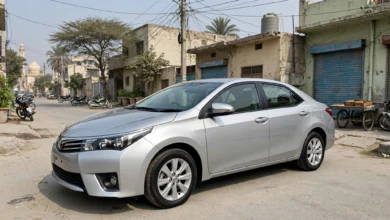
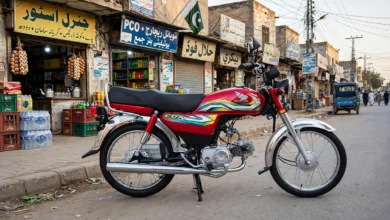
- Enforced lane discipline, with motorcycles, rickshaws, and pedestrians frequently sharing the same lanes as cars
Autonomous vehicle systems are trained to interpret organized traffic patterns. A road environment where vehicles weave unpredictably, where animals sometimes cross busy roads, and where informal traffic customs override official rules, is extremely difficult for AI to navigate safely.
Lack of Regulatory Framework
There’s currently no legislation in Pakistan addressing liability, testing permits, insurance requirements, or safety standards for autonomous vehicles. Questions like who’s responsible in a crash involving a self-driving car, or how such vehicles would even be certified for road use, remain completely unanswered. Building this kind of legal framework typically takes years, even in countries with strong legislative capacity.
High Import Costs and Economic Barriers
Vehicles equipped with advanced autonomous features are expensive, often well beyond what the average Pakistani consumer can afford. Combined with:
- High import duties on vehicles and technology components
- A weaker rupee that inflates the cost of imported tech
- Limited local manufacturing capability for sensors, chips, and AI hardware
the economics simply don’t support mass adoption of autonomous vehicles in Pakistan anytime soon. Even basic EV adoption is still in its early stages, and EVs are a much simpler technological leap than full autonomy.
Data and Mapping Limitations
Self-driving cars depend on extremely detailed, constantly updated maps. Much of Pakistan lacks the high-resolution mapping data that autonomous systems require to function safely. Building this kind of data infrastructure would require significant investment from either the government or private tech companies, and right now, neither has prioritized it.
Signs of Progress: Pakistan’s Tech and Auto Sector
It’s not all a dead end, though. There are a few developments worth watching that suggest Pakistan’s relationship with automotive technology is slowly shifting.
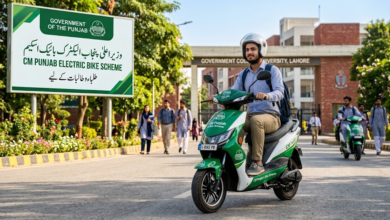
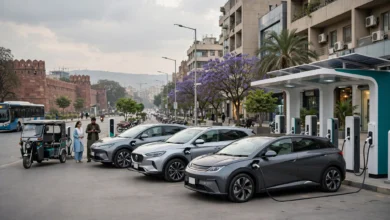
- EV adoption is growing. Companies assembling and importing electric vehicles have started gaining a foothold, and the government has introduced policies with reduced duties on EVs to encourage uptake.
- Local tech talent is active in AI and robotics. Pakistani universities and startups are producing engineers working in machine learning and computer vision, some of whom are contributing to international AV projects remotely.
- Ride-hailing platforms are investing in smarter logistics. While not autonomous driving itself, the data and routing systems used by ride-hailing companies operating in Pakistan build some of the digital infrastructure that could eventually support smarter transportation.
- Government interest in smart cities. Projects around smart traffic management in cities like Lahore and Islamabad, including AI-based traffic signal systems, show at least some institutional appetite for tech-driven mobility solutions, even if full autonomy isn’t the immediate goal.
None of this means self-driving cars are around the corner, but it does mean the building blocks, talent, policy interest, and early tech investment, are starting to appear.
What Would It Take for Pakistan to Adopt Autonomous Vehicles?
For self-driving cars to become viable in Pakistan, several things would need to happen, likely in this rough order:
- Infrastructure upgrades, including consistent lane markings, better-maintained roads, and functioning traffic signal networks in major cities.
- A dedicated regulatory body to create testing permits, safety standards, and liability laws specific to autonomous vehicles.
- Investment in digital mapping and data infrastructure to give AV systems the information they need to operate safely.
- Pilot programs in controlled environments, such as university campuses, industrial parks, or gated communities, before any public road testing is considered.
- Public education and trust-building, since widespread skepticism about vehicle safety and unfamiliarity with the technology would need to be addressed before adoption could scale.
- Partnerships with established AV companies or technology transfer agreements that let Pakistan skip some of the early, expensive research phases other countries went through.
This isn’t a short list, and none of these steps happen quickly. Realistically, most of them would need to move forward together rather than one at a time.
The Road Ahead: A Realistic Timeline
Being honest about timelines matters here, because it’s easy to get caught up in hype cycles. Based on current infrastructure, policy, and economic conditions, fully autonomous vehicles in Pakistan are likely a decade or more away from any meaningful commercial presence, and that’s an optimistic estimate.
What’s more realistic in the near term:
- Basic driver-assistance features (like automatic emergency braking or lane departure warnings) becoming more common in imported and locally assembled vehicles over the next 5 to 7 years.
- Limited pilot testing of semi-autonomous shuttles in controlled, private environments within the next decade.
- Gradual policy development, likely influenced by what neighboring countries and international partners do first, rather than Pakistan leading the charge.
Full Level 4 or Level 5 autonomy on public roads, the kind where a car genuinely drives itself with no human intervention, remains a distant goal rather than a near-term plan.
Conclusion
Self-driving cars in Pakistan are still far from becoming a practical reality, held back by inconsistent road infrastructure, the absence of any regulatory framework, high costs, and limited digital mapping data. That said, growing interest in electric vehicles, a capable pool of local tech talent, and early smart city initiatives show that the groundwork is beginning to form, even if slowly.
For autonomous vehicles to genuinely take hold in Pakistan, the country will need coordinated progress on infrastructure, policy, and public trust, and that’s a process likely to unfold over a decade or more rather than a few short years. For now, self-driving cars remain a technology Pakistan is watching from a distance, not one it’s ready to put on the road.