Government’s New EV Policy What It Means for Pakistani Car Buyers
Pakistan EV policy explained for car buyers in 2026: new taxes, levies, subsidies, hybrid changes and the loopholes that could cost you money.
Pakistan EV Policy 2025-30: 9 Crucial Changes Every Car Buyer Should Know, Good and Bad
Introduction
Pakistan EV policy has changed more in the last eighteen months than in the previous five years. The government launched the NEV Policy 2025-30 with a goal of making 30% of new vehicle sales electric by 2030. Since then, buyers have seen a new levy on petrol cars, an extended 1% sales tax for electric vehicles, a sudden jump in hybrid taxes followed by a partial rollback, and a draft auto policy that could reshape the market again.
For an ordinary car buyer, all of this is confusing. Headlines announce proposals as if they were final, dealers use the uncertainty to push quick decisions, and tax rates reported in June may already be out of date by September. Many people simply want to know one thing: should I buy a petrol car, a hybrid or an EV this year, and how much will it really cost me?
This guide answers that question. It breaks the policy down into nine crucial changes, explains which ones are already in force and which are still proposals, and shows what each means for your wallet. It covers cars, electric bikes and rickshaws.
It also looks honestly at the risks. Pakistan’s past shows that generous incentives attract abuse, from misused import schemes to own money premiums and electricity theft. Knowing those patterns helps you avoid being on the losing side of a well-meant policy.
What the Pakistan EV Policy Actually Says
The policy is not one document but a mix of the NEV Policy 2025-30, budget measures, FBR notifications and a draft Auto Policy 2026-31. The first five changes below shape prices in the showroom.
Change 1: A 30% Electric Target by 2030
The NEV Policy 2025-30, launched in June 2025, aims for 30% of all new vehicle sales to be electric by 2030, rising to 50% by 2040. According to Business Recorder’s report on the policy launch, the government allocated Rs9 billion in subsidies for FY2025-26 for 116,053 electric bikes and 3,171 electric rickshaws, and planned 40 charging stations on motorways.
Status: in force. What it means: the government is committed to making EVs cheaper relative to petrol vehicles, mostly through taxes.
Change 2: A New Levy on Petrol and Diesel Cars
The NEV adoption levy, notified by the FBR in July 2025, adds 1% to 3% to the price of conventional petrol and diesel vehicles depending on engine size. The money is meant to fund the EV transition, including charging infrastructure.
Status: in force. What it means: every new petrol car costs slightly more than it would otherwise. Small cars carry the lowest rate.
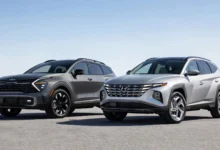
Change 3: The 1% Sales Tax on EVs Continues
Locally manufactured electric vehicles pay just 1% sales tax, compared with 18% on most conventional cars. Despite IMF pressure, the concession survived the 2026-27 budget. Business Recorder reported that on September 12, 2026, the FBR formally extended the 1% regime for specified EVs and the sales tax exemption on EV CKD kits until June 30, 2027.
Status: in force until mid 2027. What it means: locally assembled EVs keep a large tax advantage for at least another year.
Change 4: Hybrids Lost Their Special Treatment, Then Got Partial Relief
This is the change that surprised buyers most. When the earlier auto policy concessions expired in mid 2026, the sales tax on locally made hybrid cars jumped to 25%, and brands such as Kia raised hybrid prices by up to Rs 1.2 million. Then, through an SRO dated September 13, 2026, the government cut the rate on locally manufactured hybrids up to 2,000cc from 25% to 18%, the same as ordinary cars.
Status: 18% in force. What it means: self-charging hybrids like the Corolla Cross Hybrid no longer enjoy a big tax break. Their appeal now rests on fuel savings alone.
Change 5: Plug-In Hybrids May Join the EV Club
The draft Auto Policy 2026-31 proposes a broader definition of New Energy Vehicles that includes battery EVs, plug-in hybrids (PHEVs), range-extended EVs and fuel cell vehicles. Under the proposal, these would pay 1% sales tax and be exempt from FED, capital value tax and withholding tax, while regular hybrids would be treated like conventional cars.
Status: proposed, not final. What it means: plug-in hybrids could become much cheaper if the draft is approved. Do not buy based on the draft until it is officially notified.
What the Pakistan EV Policy Means for Car Buyers
The tax changes above set the scene. Three further changes affect where your car comes from and how much it costs to run.
Change 6: Imported Luxury EVs Pay More
The 2026-27 budget kept the concessional tax for locally made EVs but added tiered federal excise duty on expensive imported electric cars arriving fully built. The message is clear: the government wants EV buyers to choose locally assembled models, not high-end imports.
What it means: premium imported EVs will cost more, while locally assembled models from brands like BYD, which is building a plant in Sindh, get the policy’s full support.
Change 7: Import Schemes Tightened
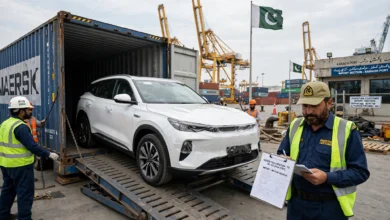
The personal baggage scheme, long used by commercial dealers to bring in used cars on overseas Pakistanis’ passports, was abolished in January 2026. The gift and transfer of residence schemes remain, but vehicles imported through them cannot be sold for one year. A separate commercial route now allows imports of used vehicles up to five years old with full duties.
What it means: cheap “baggage” imports are gone, and used imported EVs or hybrids now come through more controlled channels. Be wary of anyone offering a scheme car for resale soon after arrival.
Change 8: Cheaper Charging, Slowly Growing Network
The government cut the EV charging tariff for public charging stations from about Rs71 to roughly Rs39 per unit and plans 3,000 stations nationwide by 2030. Progress is real but slow, with public chargers still concentrated in Karachi, Lahore and Islamabad.
What it means: charging an EV is far cheaper per kilometre than petrol, especially at home, but long intercity trips still need careful planning.
Petrol vs Hybrid vs EV Under the New Rules
| Vehicle type | Sales tax now | Other policy effects | Who benefits most |
|---|---|---|---|
| Petrol or diesel car | 18% (lower on small cars) | Plus NEV adoption levy of 1% to 3% | Buyers who drive little or travel far from chargers |
| Self-charging hybrid | 18% (up to 2,000cc, local) | Lost earlier concession | High-mileage drivers who want fuel savings without charging |
| Plug-in hybrid | Depends on final Auto Policy 2026-31 | Proposed 1% if classed as NEV | Buyers who can wait for the final policy |
| Locally made EV | 1% until June 2027 | Cheaper charging tariff | City drivers with home charging |
The honest takeaway for car buyers is that the Pakistan EV policy now rewards plugging in rather than simply using less fuel. If you can charge at home, a locally assembled EV has the strongest tax position it has ever had. If you cannot, a petrol or hybrid car is still the practical choice, just a slightly more expensive one.
Pakistan EV Policy for Bike and Rickshaw Buyers
The part of the policy that reaches the most people is not about cars at all. Most Pakistani commuters ride motorcycles, and many families earn their living from rickshaws.
Change 9: Direct Subsidies for Electric Bikes and Rickshaws
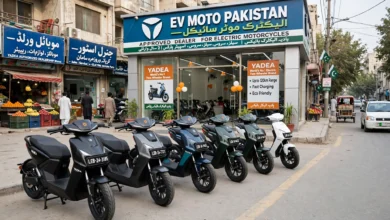
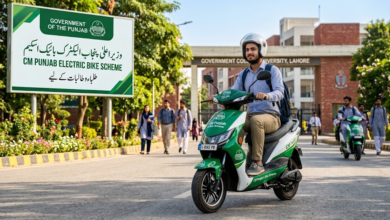
The Rs9 billion allocated for FY2025-26 was set aside to support 116,053 electric bikes and 3,171 electric rickshaws, with 25% of subsidies reserved for women. Before the launch, reports suggested support of around Rs50,000 per electric motorcycle and Rs200,000 per electric rickshaw. Always check the current amount on official government channels, because scheme details are revised from year to year.
This segment is also where local industry is strongest. The government says over 90% of components for electric two and three wheelers are already produced in Pakistan, and dozens of manufacturers have received licences to assemble them.
Why This Matters for Ordinary Families
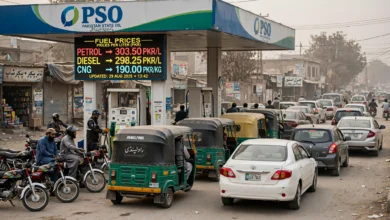
- Daily savings: a rider covering 50 to 80 km a day can save a large share of a monthly fuel bill, with petrol near Rs 390 per litre.
- Low upfront cost: with a subsidy, an electric bike can cost about the same as a new petrol motorcycle.
- Income support: electric rickshaws can cut running costs for drivers who spend heavily on fuel every day.
- Women’s mobility: the reserved quota can help women commute to work and education independently.
How to Apply Safely
Subsidy schemes attract scammers as quickly as they attract applicants. To protect yourself:
- Apply only through official government portals or announcements from federal or provincial departments, never through links shared on WhatsApp or social media ads.
- Never pay an agent who promises guaranteed selection or a faster result. Official schemes do not sell places.
- Buy only from licensed manufacturers listed by the government, with written battery and motor warranties.
- Keep copies of every application, receipt and warranty document.
- Report fake schemes to the FIA’s cybercrime wing or the relevant department.
A subsidy only helps if it reaches the people it was meant for. Transparent lists of beneficiaries and independent audits are essential, which leads to the policy’s biggest weakness.
Where the Pakistan EV Policy Could Fail
A policy is only as strong as its enforcement. The gap between a 1% tax on EVs and an 18% tax on other cars, plus cash subsidies and cheaper electricity, creates exactly the kind of opportunity that has been exploited in Pakistan before. These past cases are warnings, not predictions, but they show where honest buyers can lose out.
Lesson 1: The 2019 Policy Missed Its Targets
Pakistan’s first EV policy in 2019 also promised a 30% electric share, and it fell well short. The new policy document itself admits this. Weak implementation, the pandemic and shifting priorities all played a part. Buyers should treat promised timelines with caution and base decisions on what is available and taxed today.
Lesson 2: Import Concessions Were Turned Into a Business
The personal baggage, gift and transfer of residence schemes were designed to help overseas Pakistanis bring a car home. Commercial dealers used expatriates’ passports to import cars for resale instead. The Prime Minister directed the FBR to stop the misuse in 2024, and the baggage route was finally abolished in January 2026 after IMF pressure.
The EV risk: a 1% tax on EVs and a sales tax exemption on EV kits create a strong incentive to misdeclare vehicles or kits to claim concessions they do not qualify for. That cheats the treasury and undercuts honest local assemblers.
Lesson 3: Tax Gaps Attract Smugglers
When legal prices are far above illegal ones, smuggling follows. In 2024, a joint intelligence report found nearly 10 million litres of Iranian fuel entering Pakistan daily, costing more than Rs227 billion a year, with 533 illegal petrol stations and around 100 officials across law enforcement agencies involved, according to Dawn’s report on fuel smuggling. The same economics could apply to EV parts, batteries and whole vehicles if customs checks are weak.
Lesson 4: Premiums Follow Shortages
Research by the Pakistan Institute of Development Economics estimated that PKR 150 to 170 billion was paid as own money on cars over five years, with investors booking vehicles in bulk and reselling delivery slots for cash. If a popular locally assembled EV faces long waiting times, the same investors could return. Book only with authorized dealers, pay through banking channels and refuse cash premiums.
Lesson 5: Electricity Theft Could Grow With Charging
Power distribution companies lost Rs226 billion between July 2025 and April 2026, with about Rs169 billion attributed to inefficiencies and theft. PESCO alone reported losses of around Rs583 million a day in 2024-25. If EV charging spreads in areas where illegal hooking is common, these losses will grow and honest bill payers will cover them through higher tariffs. Charging from an illegal connection is theft and a serious fire risk.
Lesson 6: Sudden Policy Reversals Hurt Honest Buyers
The hybrid tax story shows another risk. Buyers who planned around an 8.5% hybrid rate faced 25% in mid 2026 and then 18% two months later, with price changes of up to Rs 1.2 million on some models. Stable, predictable rules protect buyers as much as enforcement does.
Using the Pakistan EV Policy to Make a Smart Decision
Policies change, but your need for a reliable, affordable vehicle does not. Here is how to turn the current rules into a practical decision.
Buy an EV Now If You
- Can charge at home or at work every day
- Drive mostly within one city
- Are buying a locally assembled model that qualifies for the 1% sales tax
- Plan to keep the car for many years, which reduces resale risk
- Have rooftop solar, which makes charging almost free during the day
Choose Petrol or a Self-Charging Hybrid If You
- Travel between cities often, where chargers are still limited
- Live in an apartment with no private parking
- Need strong resale value in the short term
- Want the simplest ownership with the widest service network
Consider Waiting If You
- Want a plug-in hybrid, since the final Auto Policy 2026-31 may cut its tax sharply
- Are eyeing a premium imported EV, which now faces higher excise duty
- Expect a locally assembled model from a new plant to arrive soon
Five Rules to Protect Your Money
- Check the current rate, not the headline. Ask the dealer for the tax rate on your exact variant in writing, and confirm it against recent FBR notifications.
- Separate proposals from law. Draft policies change. Make decisions based on notified SROs and official price lists.
- Buy locally assembled where possible. This is where the policy’s tax support, warranty and parts supply are strongest.
- Insist on written battery warranties with clear years, kilometres and transfer terms for any EV or hybrid.
- Never pay premiums or agents. Book with authorized dealers, apply for subsidies only through official channels, and charge only from legal connections.
Conclusion: What the Pakistan EV Policy Really Means for You
The Pakistan EV policy now clearly rewards vehicles that plug in: locally assembled EVs keep a 1% sales tax until at least June 2027, petrol and diesel cars carry a new 1% to 3% NEV adoption levy, self-charging hybrids have lost their special rate and now pay 18%, plug-in hybrids may join the 1% club if the draft Auto Policy 2026-31 is approved, imported luxury EVs face higher excise duty, charging tariffs have been cut, and subsidies are supporting thousands of electric bikes and rickshaws. For a city driver who can charge at home, an EV has never been better value, while intercity travellers and apartment dwellers may still be better served by petrol or hybrid cars for now. The biggest risks come from weak enforcement, as Pakistan’s history of import scheme abuse, fuel smuggling, own money and electricity theft shows, so buyers should rely only on notified rules, buy from authorized dealers, apply for subsidies through official channels and charge only from legal connections to make sure this policy works for them rather than against them.
Keywords: