How Pakistan’s Auto Industry Is Adapting to Global EV Trends
Electric vehicles in Pakistan are gaining ground. See how policy, BYD, e-bikes, charging costs and past import scams shape the auto industry's EV shift.
Electric Vehicles in Pakistan: 7 Bold Shifts Driving a Smarter Auto Industry
ntroduction
Electric vehicles in Pakistan were a curiosity five years ago. Today they are part of national policy, showroom floors and the daily commute of thousands of delivery riders. The global picture explains why. More than 17 million electric cars were sold worldwide in 2024, over one in five new cars, and Chinese brands now ship affordable EVs to almost every emerging market.
Pakistan’s response has been a mix of ambition and caution. The NEV Policy 2025-30 aims for 30 percent of new vehicle sales to be electric by 2030. BYD is preparing its first locally assembled model at a new plant in Sindh, Chinese brands are rushing into local assembly, and electric bikes and rickshaws are quietly becoming the real success story.
But the shift is not happening on a clean slate. Pakistan’s auto sector carries a long history of protected margins, loose import channels and contested customs cases. The Personal Baggage Scheme was scrapped in 2026 after years of commercial misuse, and luxury car imports have faced serious under-invoicing allegations. Those habits will shape how the EV transition in Pakistan plays out.
This article takes an honest look at where the Pakistan auto industry stands, what is working, what is still hype, and what buyers, investors and policymakers should watch closely over the next few years.
Global EV Trends Pakistan Cannot Ignore
To understand the pressure on electric vehicles in Pakistan, start with what is happening abroad. According to the IEA Global EV Outlook 2025, the world’s EV market has moved past the early adopter stage.
- Record sales: Electric car sales passed 17 million in 2024, more than 20 percent of all new cars sold worldwide.
- China leads: Over 11 million of those were sold in China, where EVs made up almost half of all car sales.
- Exports are surging: China produces more than 70 percent of the world’s EVs and exported nearly 1.25 million electric cars in 2024.
- Emerging markets are waking up: EV sales across emerging markets in Asia and Latin America jumped more than 60 percent in 2024, and Brazil more than doubled its sales to about 125,000.
- Prices are falling: The average price of a battery electric car dropped in 2024 as competition grew and battery costs fell.
For Pakistan, the key point is the last one. Cheap Chinese EVs and batteries make the switch possible in a price-sensitive market that, until recently, was dominated by a few Japanese brands selling petrol cars.
Where Electric Vehicles in Pakistan Stand Today
The honest starting point is small. Pakistan saw just over 1,000 electric car sales in 2024. In early 2025, the Power Division estimated there were only 7,000 to 8,000 EV users in the country and only eight public charging stations in operation. Two-wheelers tell a different story: officials told a Senate committee that nearly 160,000 electric motorcycles and more than 12,800 other EVs had already been made in Pakistan.
Shift 1: A National Target With Real Money Behind It
The National Electric Vehicle Policy 2025-30 is the clearest signal yet. Its headline target is that 30 percent of all new vehicles sold by 2030 should be electric. The government projects 2.2 million NEVs on the road by 2030, along with these benefits:
- About 2.07 billion litres of fuel saved every year
- A cut of roughly 4.5 million tonnes in carbon emissions
- Close to $1 billion in foreign exchange savings on oil imports
- Around $405 million a year in lower health costs from cleaner air
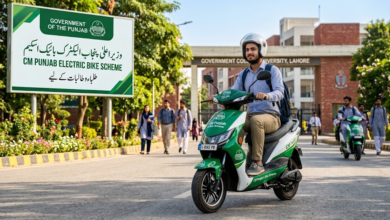
For the 2025-26 fiscal year, Rs9 billion in subsidies were set aside for 116,053 electric bikes and 3,171 electric rickshaws, with 25 percent of bike subsidies reserved for women. The policy also covers battery swapping, vehicle-to-grid schemes and EV charging points in new building codes. More recently, it is being merged with the Automobile Policy 2026-31, with local content targets of 30 percent by 2028 rising to 50 percent by 2031.
Reality check: Local carmakers and independent experts call the 30 percent target ambitious. Some argue the government should focus first on public transport and let the market decide the rest.
Shift 2: Cheaper Charging and New Rules
Charging costs were a major barrier. In January 2025, the federal government announced a cut in the EV charging station tariff from Rs71.10 to Rs39.70 per unit including taxes. NEPRA then lowered the base tariff from Rs45.55 to Rs23.57 per unit, with operators allowed a market-based margin on top. Pakistan also issued its first regulations for EV charging stations and battery swapping points under the National Energy Conservation Authority.
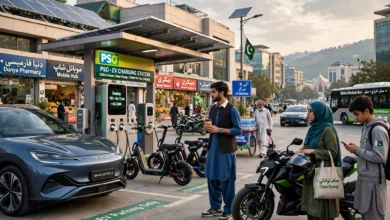
The government has floated the idea of converting around 3,400 closed CNG stations into EV charging stations in Pakistan, and the NEV policy targets 3,000 charging stations by 2030. That is a big jump from single digits.
Reality check: One NEPRA member dissented, arguing that general electricity consumers should not carry the cost of subsidising EV charging. That debate is not over, especially in a country where many households already struggle with power bills.
How Automakers Are Responding to Electric Vehicles in Pakistan
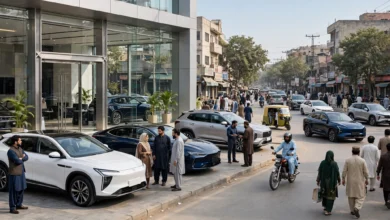
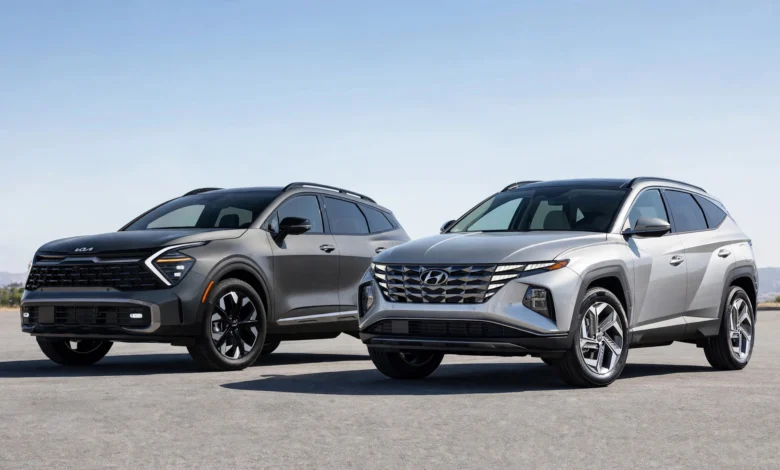
The biggest change in the showroom is who is selling. For decades, the Pakistan car market was dominated by a handful of Japanese assemblers. Chinese brands are now the ones pushing electrification hardest.
Shift 3: Chinese Brands Move From Importing to Assembling
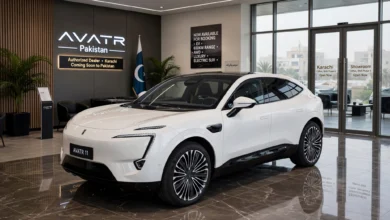
BYD is the clearest example. It launched in Pakistan in August 2024 with the Atto 3, the Seal and the Sealion 6, in partnership with Mega Motor Company, a subsidiary of Hub Power. Imported deliveries began in March 2025, and the company later received a single shipment of more than 2,000 vehicles.
The bigger story is its roughly $150 million assembly plant at Gharo in Sindh. Dawn reported BYD’s local assembly plans in 2025, with an initial capacity of 25,000 units a year on double shifts. The plant starts with imported kits and some local non-electric parts. At the Pakistan Auto Show in Lahore in September 2026, BYD confirmed the Sealion 6 plug-in hybrid as its first locally assembled model, with production planned for the fourth quarter of 2026.
Other players are moving too:
- Sazgar partnered with Great Wall Motors on hybrids and the ORA 03 electric hatchback, and also built Pakistan’s first locally made electric rickshaw.
- Deepal, Changan’s electric brand, is being assembled locally with Master Motors.
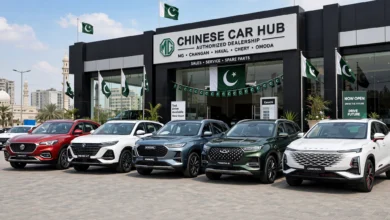
- Haval, Chery, Jetour, Omoda and Jaecoo have either started local assembly or announced plans, adding to the competitive pressure.
- Local startups have tried too. The NUR-E 75 was unveiled in 2022 as Pakistan’s first locally developed electric car prototype, a reminder that ambition and mass production are not the same thing.
Shift 4: Hybrids and Plug-In Hybrids as the Bridge
It is telling that BYD chose a plug-in hybrid, not a pure EV, for its first local model. In a country with patchy charging, frequent load-shedding in some areas and long intercity drives, a car that runs on electricity in the city and petrol on the motorway is easier to sell. Toyota, Honda and others have leaned into hybrid cars in Pakistan for the same reason.
This matters for anyone reading headline targets. A large share of the “new energy” growth over the next few years is likely to come from hybrids and PHEVs, not fully electric cars.
What Japanese Brands Are Doing
The established assemblers have mostly taken a cautious approach, focusing on locally assembled hybrids and protecting their existing petrol volumes. Critics say decades of high tariffs and limited competition made them slow to modernise. Supporters point out that they built most of the country’s vendor base and that a rushed switch could hurt thousands of local parts suppliers. Both points deserve a fair hearing, because the EV transition will create winners and losers among local businesses.
Shift 5: Localization and Jobs
The policy pushes companies to make more parts in Pakistan over time. For two- and three-wheelers, officials say more than 90 percent of components are already produced locally, and the policy targets 90 percent localization in two years. For cars, the bar is lower and the timeline longer, starting with 30 percent local content by 2028. The NEV skills programme aims to create more than 15,000 jobs. Whether those targets are met will decide if Pakistan builds a real EV manufacturing base or simply becomes an assembly point for imported kits.
Reality Check: The Hard Problems Behind the Headlines
Policy documents are optimistic by design. The practical barriers to electric vehicles in Pakistan are real, and some of them come from the auto sector’s own past.
Charging Infrastructure Is Still Thin
Going from fewer than ten public charging stations to 3,000 in a few years is a huge build-out. Most EV owners today charge at home, which works for people with a garage and a stable supply but not for apartment dwellers or neighbourhoods with long outages. Highway charging is improving but still limited, which is why plug-in hybrids are easier to sell.
The Grid and Power Prices
Cheaper charging tariffs help, but they also raise a fair question about who pays. Pakistan has deep power sector debt and expensive electricity for ordinary households. If EV charging is subsidised, the cost lands somewhere. Solar-powered home charging could ease this for some owners, but it is not an option for most families.
Upfront Cost and Financing
Even with lower duties, most electric cars still cost far more than a locally assembled petrol hatchback. Bank financing for cars has been expensive, and many buyers worry about battery replacement costs and resale value. For now, EV cars remain a purchase for the upper middle class, while e-bikes and rickshaws reach ordinary people.
Shift 6: Closing Import Loopholes That Were Long Abused
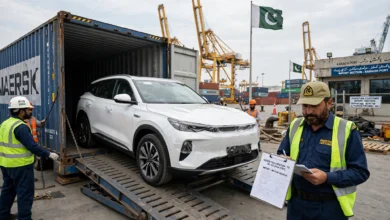
This is where history matters. For years, overseas Pakistanis could import used cars under three schemes: Personal Baggage, Gift and Transfer of Residence. The Ministry of Commerce said the Personal Baggage route in particular was routinely exploited by commercial car traders, turning a facility for genuine expatriates into a business channel. By some estimates, it accounted for about 99 percent of personal used car imports.
In January 2026, the government abolished the Personal Baggage Scheme. Cars brought in under the remaining Gift and Transfer of Residence schemes now carry a one-year ban on sale or transfer, an 850-day wait before the same person can import again, and the same safety and environmental standards as commercial imports. Profit by Pakistan Today explained the new rules in detail.
For EVs, this matters because cheap used electric cars from abroad could otherwise flood in through the same loopholes, without warranties, local service support or battery health checks.
Under-Invoicing Allegations in Vehicle Imports
Two high-profile cases show how contested vehicle import valuation can be. Both involve allegations, not final convictions, so they need to be read carefully.
- The luxury vehicle audit (2025): A Post Clearance Audit report covering December 2024 to March 2025 flagged 1,335 imported luxury vehicles, mostly cleared through the new Faceless Customs Assessment system. Media reports cited a declared value of Rs670 million against an assessed value of over Rs7.25 billion, and an example of a 2023 Land Cruiser apparently cleared at Rs17,635. The FBR strongly rejected this, saying the audit observations were preliminary and exaggerated, and that the same Land Cruiser was actually assessed at Rs10.05 million with Rs47.2 million in duties and taxes collected.
- The MG case (2021 onward): MG Motor Pakistan faced allegations of under-invoicing the customs value of imported MG HS SUVs. The FBR first closed the case in 2021 saying it found no evidence, customs later raised the assessed value per unit, and the Public Accounts Committee ordered the investigation reopened in 2022. MG and its backers have consistently denied any wrongdoing.
Whatever the final truth in each case, the lesson for the EV industry in Pakistan is clear. Generous duty concessions on EVs create the same incentive to misdeclare vehicles or abuse concessionary quotas. Transparent valuation, published import data and independent audits will be needed to keep EV incentives honest.
Shift 7: Tougher Standards and Accountability
The policy direction is moving toward stronger checks: safety standards for imported cars, an NEV Centre for testing and certification, and local content rules that reward real manufacturing. If enforced fairly, these changes protect both buyers and honest businesses from those who game the system.
Two and Three Wheelers: The Real Engine of Electric Vehicles in Pakistan
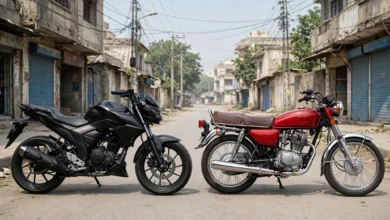
If you want to see where the EV shift is actually happening, look at the road rather than the showroom. Motorcycles and rickshaws move most Pakistanis, and they are electrifying faster than cars.
Why E-Bikes Make Sense Here
- Running costs: A daily rider who covers long distances for deliveries or ride-hailing can save a large share of fuel spending by switching to an electric bike in Pakistan.
- Local parts: With most components already made locally, prices are within reach of working families, especially with subsidies.
- Easy charging: Bikes can charge from a normal home socket, and battery swapping points can serve riders who have no space to charge.
- Targeted subsidies: The policy reserves 25 percent of e-bike subsidies for women, which could open safer, cheaper mobility to many working women and students.
Electric Rickshaws and Loaders
Electric rickshaws could cut costs for drivers and reduce noise and smoke in crowded city centres. The policy set aside support for more than 3,000 electric rickshaws and loaders in the first year. Local assemblers such as Sazgar have already built electric three-wheelers.
What Could Go Wrong
- Substandard batteries: Cheap, uncertified batteries can overheat or fail early. Buyers should insist on certified products with clear warranties.
- Subsidy misuse: Any subsidy invites fake applications, resale of subsidised bikes or inflated prices. Transparent digital verification and published beneficiary data will matter.
- Battery disposal: Old lithium batteries must be recycled properly. Without a collection system, they could end up in informal scrapyards, harming workers and the environment.
Ethical Questions in Pakistan’s EV Transition
A fair EV transition is about more than technology. A few questions deserve open discussion:
- Who pays for incentives? Levies on petrol cars and electricity cross-subsidies spread the cost. It should be clear who benefits and who carries the burden.
- Who benefits first? If incentives mostly help wealthy buyers of imported electric SUVs, the policy loses public trust. Prioritising bikes, rickshaws and public transport spreads the benefit more fairly.
- What happens to workers? Mechanics, parts makers and fuel station staff need retraining paths, not sudden job losses.
- Where do batteries come from and go? Responsible sourcing of minerals and safe recycling are part of a clean transition, not optional extras.
- Is data honest? Publishing real sales, subsidy and import data helps everyone judge progress and spot abuse early.
What Buyers Should Know Before Going Electric
If you are thinking of buying an EV or plug-in hybrid in Pakistan, keep these points in mind:
- Check your daily driving. If most trips are in the city, a pure EV can work. For frequent intercity travel, a PHEV may be more practical for now.
- Plan home charging. Ask an electrician to check your wiring and load before installing a charger. Consider backup options if your area faces long outages.
- Buy from an authorised dealer. Ask about the battery warranty, the nearest service centre and the availability of trained technicians.
- Avoid grey imports. A used EV brought in through loopholes may have no warranty, no software support and an unknown battery condition.
- Think about resale. The used EV market is young, and resale values are still uncertain.
- Verify every subsidy offer. Use only official government channels and authorised dealers, and be wary of agents promising guaranteed subsidies for a fee.
Conclusion
Electric vehicles in Pakistan have moved from talk to action, but the shift is uneven and still early. Globally, EVs passed one in five new car sales in 2024, and cheap Chinese technology has put electrification within reach of emerging markets. Pakistan has answered with the NEV Policy 2025-30 and its 30 percent target, lower charging tariffs, new charging regulations, subsidies for e-bikes and rickshaws, and a wave of Chinese brands led by BYD, whose Sindh plant is set to start with the Sealion 6 plug-in hybrid. At the same time, charging is thin, grid costs are contested, cars remain expensive, and the sector’s history of misused import schemes and disputed under-invoicing cases shows why incentives need strong, transparent oversight. The realistic picture is that two- and three-wheelers will lead, hybrids will bridge the gap for cars, and the EV transition in Pakistan will succeed only if policy stays consistent, data stays public, and the benefits reach ordinary commuters rather than just a few importers.