How Smartwatches Help Track Health Metrics Accurately
An honest look at how smartwatches track heart rate, sleep, SpO2 and steps, how accurate they really are, and cases of fake health claims and recalls.
How Smartwatches Help Track Health Metrics Accurately: 7 Proven Facts and Honest Limits
Introduction
How smartwatches help track health metrics accurately is a question worth asking before you trust the numbers on your wrist. A few years ago, a fitness band counted steps and not much else. Today, even mid-range smartwatches claim to measure heart rate, blood oxygen, sleep stages, stress, calories, skin temperature and, on some models, heart rhythm through an ECG. It feels like carrying a small clinic everywhere you go.
The reality is more mixed. Some readings are impressively close to medical equipment. Others are rough estimates dressed up with confident graphs and decimal points. Knowing which is which makes the difference between a genuinely useful health tracker and a gadget that either worries you for no reason or reassures you when it should not.
This guide breaks down how the sensors work, how accurate each major metric really is, and how to get better readings from the watch you already own. It also covers the less glamorous side of the industry: cheap clone watches claiming to measure blood sugar, a burn hazard that led to a major recall and a government penalty, a patent fight that pulled a health feature off Apple Watches, and a ransomware attack that knocked a fitness platform offline.
The goal is simple. By the end, you should know what your smartwatch can tell you, what it cannot, and when a reading means it is time to see a doctor.
How Smartwatch Health Sensors Actually Work
A smartwatch does not measure your health directly. It measures a few physical signals and then uses algorithms to estimate health metrics from them. Understanding this one point explains most accuracy problems.
The Main Sensors Inside a Smartwatch
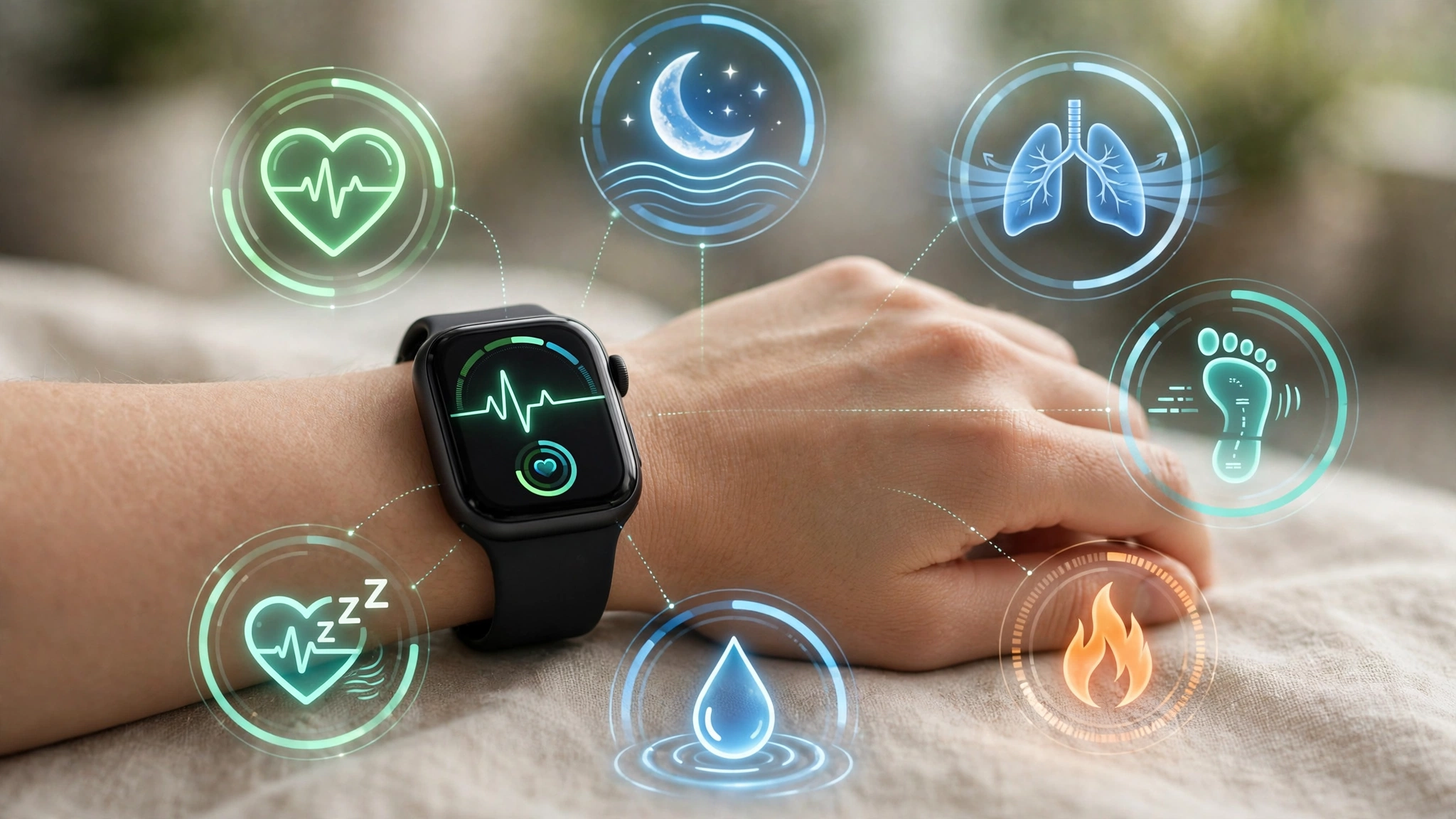
- Optical heart rate sensor (PPG). Green LEDs shine light into your skin, and a sensor measures how much light is reflected as blood pulses through your vessels. This is the basis for heart rate monitoring, heart rate variability and many sleep and stress estimates.
- Red and infrared LEDs. Used for blood oxygen (SpO2) readings by comparing how oxygen-rich and oxygen-poor blood absorb different light.
- Electrical sensors for ECG. On some watches, you touch the crown or bezel with a finger from the other hand, creating a single-lead electrocardiogram.
- Accelerometer and gyroscope. These detect movement and orientation, and power step counting, workout detection, fall detection and sleep tracking.
- GPS. Measures distance, pace and route outdoors.
- Temperature sensors. Track changes in skin temperature overnight, mostly as a trend rather than a true body temperature.
- Barometric altimeter. Counts floors climbed and elevation changes.
Why Algorithms Matter as Much as Sensors
Two watches with similar hardware can give different results because their software interprets the signals differently. Brands like Apple, Samsung, Garmin and Google’s Fitbit spend heavily on validation studies. Cheap unbranded watches often use the same basic sensor chips with far less testing behind the numbers they show.
7 Proven Facts on How Smartwatches Help Track Health Metrics Accurately
Here is a metric-by-metric look at what research and real-world use show about smartwatch accuracy. The short version: movement and heart rate are fairly reliable, calories are not, and a few advertised features should not be trusted at all.
1. Heart Rate: Reliable at Rest, Weaker During Hard Exercise
Optical heart rate tracking is one of the most accurate smartwatch features when you are resting, walking or sleeping. A well-known 2017 Stanford University study of seven wrist devices found that most measured heart rate within roughly 5% of a medical-grade reference in lab conditions. Accuracy drops during intense intervals, weightlifting and sports with lots of wrist movement, because motion disturbs the light signal. Chest straps remain more accurate for serious training.
2. Step Counts and Distance: Good Enough for Daily Goals
Step counting is generally accurate within a modest margin for normal walking. Errors grow when you push a pram or shopping trolley, ride in a bumpy rickshaw or wave your arms while talking. GPS distance is usually good outdoors but weaker among tall buildings and under heavy tree cover.


3. ECG and Irregular Rhythm Alerts: The Strongest Medical Feature
Some watches from Apple, Samsung, Google and Withings offer ECG apps cleared by regulators in certain countries to help detect signs of atrial fibrillation, an irregular heart rhythm that raises stroke risk. These features have caught real, previously undiagnosed problems. They cannot detect heart attacks, and a normal ECG reading does not rule out heart disease. Availability depends on your country and region settings.
4. Blood Oxygen (SpO2): Useful as a Trend, Not a Diagnosis
Wrist SpO2 readings can show broad trends, such as dips during sleep that may hint at breathing problems. However, wrist readings are less reliable than a fingertip pulse oximeter, and research on optical oxygen sensors has found they can be less accurate on darker skin tones. Most brands label SpO2 as a wellness feature, not a medical one.
5. Sleep Tracking: Good at Total Sleep, Rough on Sleep Stages
Watches estimate sleep from movement and heart rate. They are reasonably good at telling when you fell asleep and woke up, and at total sleep time. Splitting sleep into light, deep and REM stages is far less precise than a sleep lab test, so treat stage numbers as rough estimates and focus on long-term patterns.
6. Calories Burned: The Least Accurate Number on Your Wrist
The same Stanford study found that energy expenditure errors ranged from about 27% for the most accurate device to 93% for the least accurate. In practice, this means a watch can easily overestimate the calories you burned, which tempts people to eat back more than they actually used. Use calorie burn estimates only to compare your own days, not as precise numbers.
7. Blood Pressure and Blood Sugar: Handle With Care
Some watches offer blood pressure estimates that need regular calibration with a traditional cuff, and they are not a replacement for a proper home or clinic monitor. Blood sugar is a different story entirely. The US Food and Drug Administration has said it has not authorised, cleared or approved any smartwatch or smart ring that measures blood glucose on its own without piercing the skin. Watches that display readings from an approved continuous glucose monitor worn separately are a different, legitimate category.
Smartwatch Accuracy at a Glance
| Metric | Typical accuracy | How to use it |
|---|---|---|
| Heart rate at rest | High | Daily tracking and trends |
| Heart rate in hard exercise | Moderate | Use a chest strap for precision |
| Steps and distance | Good | Daily activity goals |
| ECG for AFib signs | High for its narrow purpose | Share results with a doctor |
| SpO2 | Moderate, varies by skin tone and fit | Trends only |
| Sleep duration | Good | Track routine and consistency |
| Sleep stages | Low to moderate | Long-term patterns only |
| Calories burned | Low | Compare your own days only |
| Blood pressure | Varies, needs calibration | Confirm with a cuff |
| Non-invasive blood glucose | Not authorised by the FDA | Do not use for diabetes decisions |
How to Get More Accurate Readings From Your Smartwatch
A lot of bad data comes from how the watch is worn and set up, not from the hardware. These simple fixes improve fitness tracker accuracy noticeably.
- Wear it snug, not tight. The sensor should stay in contact with your skin without leaving deep marks. A loose watch lets light leak in.
- Move it up during workouts. Wear it about two finger-widths above your wrist bone during exercise so it moves less.
- Keep the sensor clean. Sweat, sunscreen and dust on the back of the watch interfere with readings. Wipe it regularly.
- Enter accurate personal details. Your age, height, weight and sex feed into calorie, VO2 max and heart rate zone calculations. Update your weight as it changes.
- Choose the right workout mode. Starting a “walk” or “strength” session tells the watch how to interpret your movement.
- Stay still for spot checks. Sit quietly with your arm resting on a table when taking SpO2, ECG or blood pressure readings.
- Keep software updated. Brands regularly improve their algorithms through firmware updates.
- Look at trends, not single readings. One strange number means little. A consistent change over weeks is what matters.
Tattoos on the wrist, very cold hands and some medical conditions that affect circulation can also reduce accuracy. If readings often look odd, try the other wrist.
The Reality Check: Fake Features, Hidden Hazards and Legal Battles
Wearable technology has a clean, futuristic image, but the industry has a messy record. These real cases explain why healthy scepticism protects you.
Illegal “Blood Sugar” Smartwatches
In February 2024, the US FDA warned consumers not to buy or use smartwatches and smart rings that claim to measure blood glucose without piercing the skin. According to AP’s report on the FDA’s blood sugar smartwatch warning, the agency said no such device had been authorised, and that wrong readings could lead people with diabetes to take the wrong medication dose, with risks including confusion, coma or death. The FDA noted these watches are made by dozens of companies under many brand names, sold cheaply online, and said it was working to stop their illegal marketing.
The lesson: if a cheap watch claims to measure blood sugar, blood pressure, cholesterol and “body composition” all at once, it is selling hope, not data. People with diabetes should use only approved glucometers or CGMs.
Fitbit’s Overheating Watch and a $12.25 Million Penalty
Fitbit, now owned by Google, recalled about 1.7 million Ionic smartwatches in March 2022 after reports that the battery could overheat. The recall listed at least 115 overheating reports in the US and 78 burn injuries, including two third-degree burns. In January 2025, Fitbit agreed to pay a $12.25 million civil penalty to the US Consumer Product Safety Commission, which charged that the company knowingly failed to report the hazard immediately, as the law requires. Fox News coverage of the Fitbit Ionic penalty notes that complaints had been arriving since 2018.
The lesson: if your watch gets unusually hot, take it off and contact the manufacturer. Check recall notices for older models.
Apple Watch, Masimo and the Blood Oxygen Ban
Medical device maker Masimo accused Apple of using its patented pulse oximetry technology. The US International Trade Commission ruled that Apple had infringed Masimo’s patents, and an import ban took effect in late 2023. Apple responded by disabling the blood oxygen feature on new Series 9 and Ultra 2 watches sold in the US from January 2024, before later restoring a redesigned version. Whatever the final outcome of the long legal fight, it shows that health features can disappear, change or vary between countries for legal reasons.
The Garmin Ransomware Attack
In July 2020, Garmin suffered a ransomware attack that took Garmin Connect and other services offline for several days. Users could not sync workouts or health data, and the attack was widely attributed to a criminal group. It was a reminder that your health history lives on company servers that criminals actively target.
Location Leaks From Fitness Platforms
In 2018, journalists showed that the Polar Flow fitness platform could be used to reveal the identities and home addresses of military and intelligence personnel based on their logged workouts. Polar paused its activity map feature in response. The same year, Strava’s global heatmap exposed the outlines of military bases. No laws were broken by users, but the cases show how location data from a watch can put people at real risk.
Protecting Your Health Data and Privacy
Your smartwatch knows when you sleep, where you walk, how fast your heart beats and, for some users, details about menstrual cycles or heart rhythm. That is sensitive health data, and it deserves the same care as banking information.
Simple Privacy Steps for Smartwatch Owners
- Use a strong, unique password for your watch account and turn on two-step verification.
- Review app permissions. Disconnect third-party apps you no longer use from your health account.
- Hide your home location. Set activity maps to private and use privacy zones that blur your start and end points.
- Read the privacy settings for data sharing with partners, research programs and advertisers, and switch off what you do not want.
- Be careful with unbranded companion apps. Cheap clone watches often rely on little-known apps that request access to contacts, SMS and location for no clear reason.
- Wipe and unpair your watch before selling or giving it away.
Can Your Data Be Shared Without You Knowing?
Policies vary widely between brands and countries. Large brands publish detailed privacy policies and usually let you download or delete your data. Many low-cost brands are vague about where data is stored and who sees it. If a company cannot clearly explain what it does with your heart rate and location, treat that as a warning sign.
Choosing a Smartwatch for Accurate Health Tracking
If health tracking is your main reason for buying, the brand’s validation work matters more than the number of features on the box.
What to Look For
- Published validation or regulatory clearance. Features like ECG that are cleared by the FDA or carry a CE medical marking have passed stricter testing than general wellness features.
- A reputable brand with a long software support record. Apple, Samsung, Garmin, Google Fitbit, Huawei, Xiaomi and Amazfit regularly update their algorithms.
- A good sensor fit. A watch that sits flat against your wrist gives cleaner readings than a bulky one that rocks.
- Clear privacy policies and the option to export or delete your data.
- Battery life that suits you. A watch that dies every night cannot track your sleep.
Avoid Clone and Counterfeit Smartwatches
Copies of popular models are widely sold online and in local markets at a fraction of the original price. They often look identical but use cheap sensors, unreliable apps and batteries with no safety testing. Selling counterfeit branded goods is illegal in most countries, and these products leave buyers with no warranty and no recourse.
Warning signs include:
- A price far below the official retail price
- Health claims that even premium brands do not make, such as blood sugar or cholesterol
- Spelling mistakes on the box or in the app
- A companion app that is not the official brand app
- No official warranty card or authorised dealer receipt
Buy from authorised retailers or official brand stores, and keep your receipt.
When to Trust Your Watch and When to See a Doctor
A smartwatch is a screening and awareness tool, not a diagnostic device. Used well, it nudges you toward healthier habits and occasionally flags something worth checking. Used badly, it causes needless anxiety or false reassurance.
Readings Worth Taking Seriously
Contact a doctor if your watch repeatedly shows:
- Irregular rhythm or AFib alerts
- A resting heart rate that stays unusually high or low for you over several days, especially with symptoms
- Blood oxygen consistently lower than usual, particularly with breathlessness
- High or low heart rate alerts when you are resting
Bring screenshots or exported data to your appointment. Doctors increasingly find this information useful.
Symptoms Always Beat the Screen
Never let a normal reading talk you out of getting help. Chest pain, severe breathlessness, fainting, sudden weakness or confusion need urgent medical attention, whatever your watch says. Smartwatches cannot detect heart attacks or strokes.
Avoiding Health Anxiety
Some people check their watch dozens of times a day and panic over every small change. If tracking makes you more anxious than healthy, turn off non-essential alerts, check your data once a week, or take a break from wearing the watch.
Conclusion
Understanding how smartwatches help track health metrics accurately comes down to knowing which numbers to trust: resting heart rate, steps, sleep duration and regulator-cleared ECG features are genuinely reliable, SpO2 and sleep stages are useful mainly as trends, calorie burn is a rough guess, and no smartwatch is authorised to measure blood sugar on its own. Wearing the watch correctly, keeping personal details and software up to date, and focusing on long-term patterns will make your data far more useful. The industry’s track record, from the FDA’s warning on illegal glucose-measuring watches and Fitbit’s $12.25 million penalty over burn injuries to the Apple and Masimo blood oxygen ban, the Garmin ransomware attack and fitness map location leaks, shows why you should buy from reputable brands, avoid clones, protect your data and always treat symptoms as more important than any reading on your wrist.