How E-Government Services Are Making Life Easier in Pakistan
E-government services in Pakistan now cover ID cards, land records, taxes and complaints. Here's what works, which scams to watch for, and what still fails.

E-Government Services in Pakistan: 8 Powerful Ways They Make Life Easier and the Risks to Avoid
Introduction
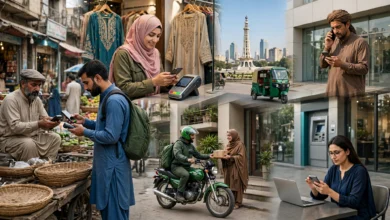
E-government services are changing how Pakistanis deal with the state. Not long ago, renewing an ID card meant losing a full workday in a NADRA queue. Transferring a piece of land often meant paying a patwari “speed money.” Filing a complaint against a government office felt pointless. Today, a growing share of that work happens on a phone. Citizens apply for identity documents from home, track complaints online, order domicile certificates to their doorstep, and pay traffic fines with a reference number.
This shift matters most for people who never had connections or time to spare: daily wage workers, women who can’t easily travel alone, the elderly, and overseas Pakistanis. When e-government services work well, they cut waiting time, reduce middlemen, and leave a digital trail that makes petty corruption harder to hide.
That’s only half the story, though. Every new digital channel has also drawn criminals. Identity records have been stolen and sold abroad. Agents have skimmed money from welfare payments meant for poor women. Scammers have cloned official websites to collect fake fines. Even well-designed e-government services can be undermined by officials who resist losing their old powers.
This article looks at the eight areas where e-government services in Pakistan are making daily life easier, the illegal activities that have exploited them, and the practical steps citizens can take to use them safely.
What Are E-Government Services?
E-government services are public services delivered through digital channels such as websites, mobile apps, SMS, helplines and online payment systems, so people don’t have to visit an office in person. The wider idea is often called e-governance: using technology to make government faster, cheaper, more transparent and easier to hold accountable.
In Pakistan, e-government services usually fall into four groups:
- Identity and registration: ID cards, family certificates, passports, visas.
- Complaints and accountability: grievance portals where citizens can report problems with departments.
- Property, tax and payments: land records, tax returns, e-stamping, fines and fees.
- Social protection: welfare payments delivered through biometric verification.
Some of these are federal, run by bodies like NADRA and the FBR. Others are provincial, especially in Punjab, where the Punjab Information Technology Board (PITB) has built many online public services.
Why Pakistan Needed E-Government Services
Before looking at what works, it helps to remember what came before. Pakistan’s paper-based system wasn’t just slow. In many places it was built around middlemen.
The Patwari Problem
Land records are the clearest example. Dawn has described the patwari as a lower-level revenue official known for manipulating land records for money and influence. In Punjab alone, it took 8,000 patwaris to keep land records. A single official often controlled the only copy of who owned what, which gave him enormous power over families, inheritance cases and land sales.


Queues, Agents and Lost Days
The same pattern showed up elsewhere: agents outside passport offices, “facilitators” at tax offices, and touts who promised to speed up a certificate for a fee. For a labourer, a day spent in a queue is a day’s wage lost. E-government services were meant to cut out that hidden tax on ordinary people.
8 Powerful Ways E-Government Services Are Making Life Easier in Pakistan
1. NADRA’s Pak ID App: Identity Services From Home
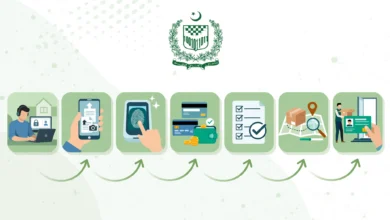
The NADRA Pak ID app is probably the most widely used of Pakistan’s e-government services. A NADRA official said the app had received more than 1.2 million applications in three months, with over 10 million downloads. It has also driven a 45 per cent increase in digital applications.
What you can do through the app:
- Apply for or renew ID cards, NICOP, B-Form and Family Registration Certificates.
- Update non-printable information on your NIC or NICOP record remotely.
- Book appointments at NADRA offices.
- Track your application with the tracking ID and PIN from your receipt.
One change is especially significant. NADRA says the digital record and digital identity available through the Pak ID app now have the same legal status as the relevant physical identity document. NADRA has also said citizens only need to visit a NADRA office once in their lifetime to obtain their first identity card.
For overseas Pakistanis, this is one of the most useful e-government services available. It cuts out embassy queues for routine renewals. You can get the official NADRA Pak ID app from the App Store or Google Play. Download it only from the official stores, never from links shared on WhatsApp.
2. Pakistan Citizen Portal: A Direct Line for Complaints
The Pakistan Citizen Portal lets citizens file complaints against federal and provincial departments from their phones. The numbers are large. According to official figures, the portal has received 6,052,791 complaints, of which 5,974,343 have been resolved.
The portal has given ordinary people a way to escalate problems that used to go nowhere, such as unpaid pensions, faulty electricity bills or unresponsive offices. Provinces are investing in it too. Khyber Pakhtunkhwa’s chief minister has announced plans to integrate all e-governance applications under the Pakistan Citizen Portal.
The headline resolution rate deserves some scepticism, which comes up again below. Still, as a channel, it remains one of the most important e-government services for accountability.
3. Maryam Ki Dastak: Government Services at Your Door
Punjab’s Maryam Ki Dastak programme takes e-government services a step further by delivering documents to people’s homes. More than 76 government services are currently available across Punjab, including domicile certificates, birth certificates, copies of FIRs and property records. Citizens can call 1202 or use the Dastak Doorstep Delivery App.
Demand has been strong. The platform has received over 3.3 million service requests since its launch in June 2024. PITB says the programme especially helps women, the elderly, the sick and working people by eliminating the need to visit offices or stand in long queues.
4. Digital Land Records: Weakening the Patwari Grip
Digital land records may be the most life-changing of Pakistan’s e-government services, because land disputes are among the most common and bitter legal battles in the country. Punjab’s Land Record Management Information System computerised the province’s entire record of 55 million acres. One farmer told Arab News that the system was hassle-free and that he would not have to bribe the patwari to transfer land to his children.
Officials say biometric verification has ended fake registration and transfer of land ownership, and has helped secure land rights for women and small farmers. Punjab has since gone further. Under a new law, land transfers will be fully digitised through an e-registration system, with patwaris limited to handling only inheritance-related transfers.
5. FBR Online Tax Filing: Simpler Returns, More Filers
Filing taxes used to mean hiring a consultant just to understand the forms. FBR online tax filing through the IRIS portal and mobile tools has simplified the process, and more people are filing. The FBR received a record 5.9 million tax returns for tax year 2025, compared with 5 million the year before, an increase of 17.6 per cent.
The prime minister credited simplified return filing procedures, Urdu-language forms for salaried individuals, and automated clearance systems. You can read the details in the FBR’s official statement on record return filings.
6. E-Challans and Online Payments: Fewer Roadside Bribes
Camera-based e-challan systems in Punjab and other cities send traffic fines by SMS. Citizens then pay online with a reference number. That removes the roadside negotiation that used to happen between drivers and traffic wardens. The Punjab Safe Cities Authority says payments must be made via e-Pay Punjab after generating a PSID.
This is a good example of how e-government services can quietly reduce petty corruption. When a fine is recorded by camera and paid into a government account, there is less room for cash changing hands on the roadside.
7. Digital Welfare Payments Through BISP
The Benazir Income Support Programme sends cash to millions of low-income women. Beneficiaries confirm their identity with biometric verification before collecting payments. When it works, this digital model gets money directly to women without a local politician or landlord standing in between. BISP has also introduced a Social Protection Wallet to reduce dependence on agents. As the next section shows, though, these e-government services have also been heavily abused.
8. Online Visas and Digital Passport Verification
Pakistan has also moved border and travel services online. The Foreign Office says applying for a visa is now simpler through the Pak ID Mobile App for Visa Prior to Arrival, for eligible nationals of 120 countries. For citizens, passport applicants at passport offices in Pakistan or at Pakistani missions abroad can now verify their identity through the digital ID in the Pak ID app.
These e-government services make travel paperwork simpler, especially for the millions of Pakistanis working in the Gulf.
The Dark Side: Illegal Activities That Exploited E-Government Services
An honest look at e-government services in Pakistan has to cover how criminals and corrupt insiders have abused them. These cases explain why many citizens still don’t fully trust digital systems.
NADRA Data Theft: When the Core Database Was Breached
Every digital service depends on NADRA’s identity database. That made it a prime target. A joint investigation team confirmed that the personal information of 2.7 million Pakistanis was stolen from NADRA’s database. According to investigators, the stolen data was transmitted to Dubai and sold in Argentina and Romania.
The investigators did not blame outside hackers alone. They found that senior officials’ negligence permitted the data theft. Stolen identity data feeds directly into other scams, including fake SIM registrations and impersonation fraud. Weak security at the centre puts every other e-government service at risk.
BISP Agents Skimming Money From Poor Women
Digital welfare payments were supposed to remove middlemen. Instead, a new kind of middleman showed up: the payment agent with a biometric device. In 2026, beneficiaries told Dawn that agents were deducting Rs1,500 to Rs2,000 from their payments.
The methods have become more sophisticated:
- In Layyah district, police arrested a gang that changed device locations digitally to avoid detection. One victim, Nazeeran Mai, said a suspect deducted Rs3,000 from her payment this way.
- In Faisalabad, the FIA seized five biometric tabs, 200 unregistered SIMs, 150 BISP forms and 630 computerised national identity cards from a gang draining BISP accounts. Employees of a cellular company and a private bank were also allegedly involved.
- In July 2026, the FIA raided a BISP office in Kot Addu and arrested six retailers for illegally extorting money from beneficiary women.
These cases show that e-government services remove some types of corruption while creating new ones. Strong monitoring has to come with every digital rollout.
Fake E-Challan Messages and Cloned Government Websites
As e-challan systems became familiar, scammers started copying them. The Punjab Safe Cities Authority found that suspects had cloned its website to make their messages look legitimate. Citizens received texts warning of unsettled violations, severe penalties and licence suspension, designed to create panic.
The scam has been persistent enough that the official sender number itself has been spoofed. In March 2026, PSCA said authentic e-challan notifications come only from the official Government of Punjab number, 9915, and that messages from other numbers, including 8070, should be ignored. PSCA also says official e-challan messages don’t include any links or instructions for online payments. Numbers can change again, so always check PSCA’s official website or social media pages for current guidance.
Fake Agents Using the Names of Official Programmes
Popular e-government services also attract impersonators. Officials have warned that fake websites, social media pages and agents are operating under the name of the “Maryam ki Dastak” app and collecting money from citizens. The same tactic is used with NADRA, BISP and FBR names. Fraudsters set up a Facebook page with an official-looking logo, offer “fast-track” help, and disappear with the fee.
Officials Resisting the Change
Not every threat comes from outside. People who benefited from the old system have pushed back. In 2020, Dawn reported that the Punjab government had begun to reintroduce the patwari system instead of completing land record digitisation. Even in 2026, a citizen told The News that nearly Rs50,000 was extracted from him in the name of land measurement, site maps and girdawari. An expert in the same report said incomplete digitisation of land records remains one of the main drivers of corruption.
Complaints Closed but Not Solved
Even the Pakistan Citizen Portal has credibility problems. ProPakistani noted that the 98.7 percent resolution rate largely reflects closure of registered cases rather than actual citizen satisfaction. Of the portal’s feedback entries, 1,837,005 remained unresolved. This isn’t new. As far back as 2019, the portal had closed hundreds of complaints without resolving them, and the prime minister ordered them reopened.
Marking a complaint as “resolved” without fixing anything damages trust in e-government services as much as a data breach does.
How to Use E-Government Services Safely
You can get the benefits of e-government services while protecting yourself from the scams above. Follow these rules:
- Download apps only from official stores. Get the Pak ID, Dastak and ePay Punjab apps from Google Play or the Apple App Store, never from APK files or WhatsApp links.
- Check web addresses. Official government sites in Pakistan typically end in .gov.pk or .gop.pk. A slight misspelling is a red flag.
- Never pay a fine through a link in an SMS. Generate a PSID yourself through the official app or website and pay through your bank or wallet.
- Never share your CNIC copy, OTP or biometric with strangers. No genuine government department will ask for an OTP over the phone.
- Count your BISP money before leaving the counter. If an agent deducts anything, report it to the BISP helpline or the FIA.
- Avoid “facilitators” who charge extra. Official fees for online public services are published. Anyone charging more is breaking the rules.
- Report cybercrime promptly. File complaints with the National Cyber Crime Investigation Agency (NCCIA) and keep screenshots of messages and transactions.
- Keep your own records. Save tracking IDs, receipts and screenshots of every application you submit.
What Still Needs Fixing
E-government services in Pakistan have come a long way, but several gaps remain.
A Strong Data Protection Law
Citizens are handing more personal data to more apps every year. Pakistan still needs an enforceable data protection framework, with an independent regulator, mandatory breach notification, and personal accountability for officials who mishandle records.
Honest Performance Data
Departments should publish citizen satisfaction rates and repeat-complaint rates alongside resolution rates. That would show whether e-government services are actually solving problems or just closing tickets.
Reaching People Who Are Offline
Rural women, the elderly and people without smartphones still depend on intermediaries. Assisted service centres, helplines like 1202, and plain-language Urdu and regional-language interfaces are essential if e-government services are going to reach everyone and not just the urban middle class.
Finishing the Job on Land Records
Half-digitised systems are the worst of both worlds. The Express Tribune reported that areas such as Rajanpur, Dera Ghazi Khan, Mianwali and Bhakkar have forced citizens to make repeated visits to Land Record Centers and revenue offices. Until urban and remote areas are fully covered, corruption will keep finding the gaps.
Tighter Control of Payment Agents
BISP and banks need real-time monitoring of agent devices, random audits, mystery beneficiaries, and quick removal of agents caught skimming. Expanding direct-to-wallet payments would also reduce how much power each agent holds.
Conclusion
E-government services are making daily life in Pakistan easier in real, measurable ways. Through the Pak ID app, millions apply for identity documents from home. The Pakistan Citizen Portal has handled more than six million complaints. Maryam Ki Dastak delivers dozens of documents to people’s doors in Punjab. Digital land records have weakened the old patwari stranglehold, FBR online filing helped push tax returns to a record 5.9 million, and e-challans and online visas have cut out much of the roadside and counter-side corruption. The same systems have also been exploited: 2.7 million citizens’ NADRA records were stolen and sold abroad, BISP agents skimmed money from poor women, scammers cloned official websites to collect fake fines, and some officials have resisted reforms that threaten their old powers. The future of e-government services in Pakistan depends on closing those gaps with strong data protection, honest performance reporting, tighter oversight of payment agents and full coverage for offline citizens, so the convenience that digital systems promise reaches every Pakistani safely.