Top Digital Payment Trends Shaping Pakistan’s Economy
Digital payment trends in Pakistan for 2026: Raast, digital banks, QR payments, record remittances and crypto rules, plus the fraud draining billions.
Digital Payment Trends in Pakistan 2026: 9 Powerful Shifts and the Dangerous Fraud Risks Behind Them
Introduction
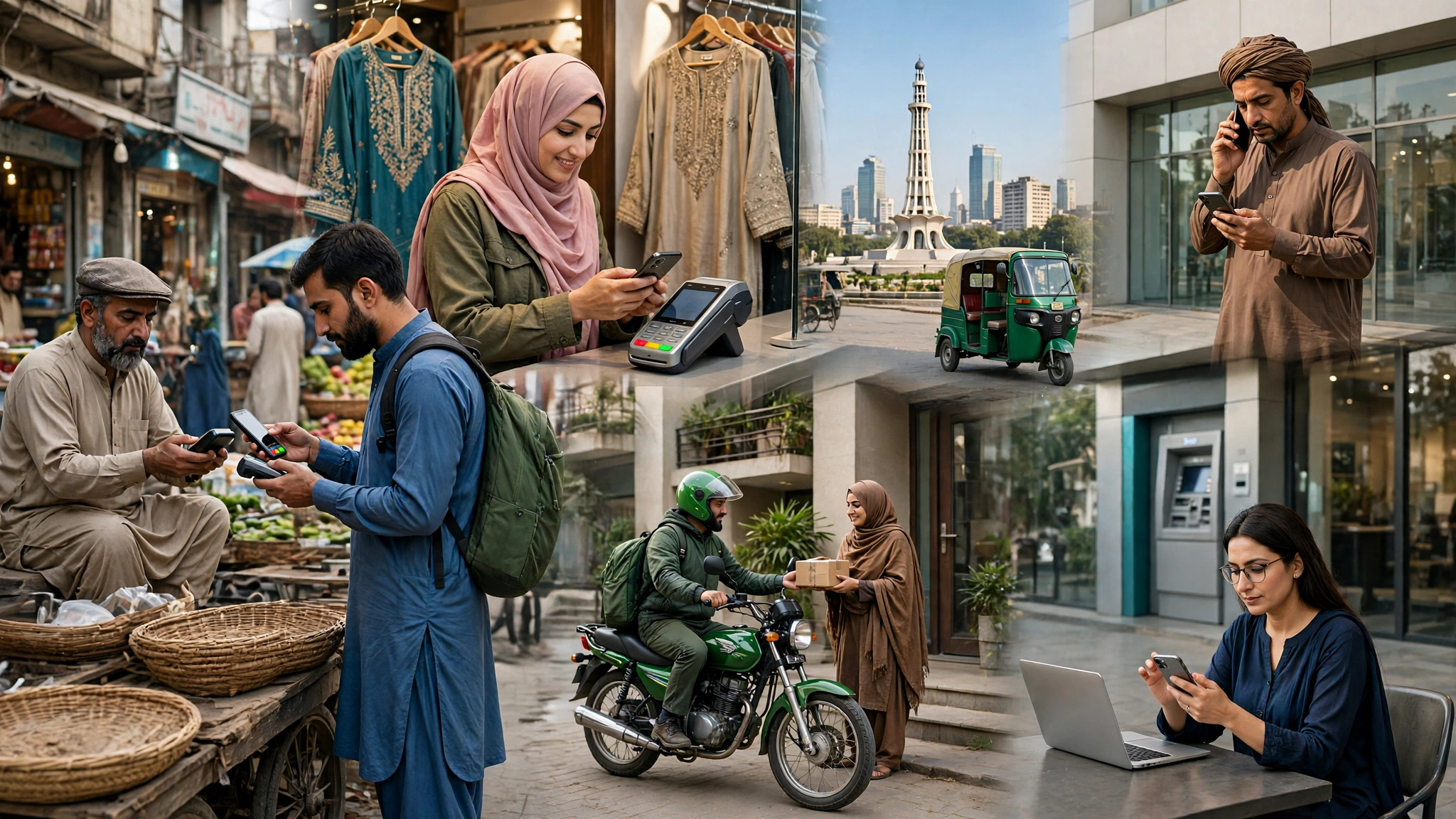
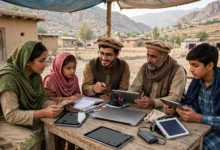
Digital payment trends in Pakistan have moved faster in the last five years than in the twenty before them. Not long ago, sending money to family in another city meant a bank queue, a money order or a hundi dealer. Paying a shopkeeper meant cash, and many people kept their savings under the mattress. Today, a vegetable seller in Rawalpindi can show a QR code, a student in Quetta can send money to a friend in seconds for free, and an overseas worker in Riyadh can send money home through an app at any hour.
The numbers back this up. Pakistan’s instant payment system now handles hundreds of millions of transactions every quarter. Digital channels process the vast majority of formal retail payments. Overseas Pakistanis sent a record amount home through official channels. The country has licensed its first digital banks and passed its first law to regulate crypto.
There is a darker side too. Digital fraud now costs Pakistanis billions of dollars a year. Fraudsters impersonate wallet agents to steal OTPs, use “mule accounts” to move stolen money, and, in at least one case, allegedly worked with bank insiders and duplicate SIMs to drain customers’ accounts. Online gambling networks and digital hundi operators have exploited the same payment rails that honest users rely on.
This article covers the nine most important digital payment trends shaping Pakistan’s economy in 2026, what each means for ordinary people and businesses, and the real illegal activity that threatens to slow the shift away from cash.
Why Digital Payment Trends Matter for Pakistan’s Economy
Digital payment trends aren’t just about convenience. They affect the whole economy in a few concrete ways.
Bringing Money Into the Formal System
When payments move from cash to bank accounts and wallets, they leave a record. That helps people build credit histories, makes it easier for small businesses to get loans, and gradually widens the tax base.
Cutting the Cost of Cash
Printing, transporting, guarding and counting cash costs banks, businesses and the government money. Digital payments lower those costs and reduce the risk of robbery.
Supporting the External Account
Remittances sent through formal channels bring in foreign exchange that Pakistan badly needs. Every dollar that comes through a bank instead of hundi strengthens the country’s reserves.
9 Powerful Digital Payment Trends Shaping Pakistan’s Economy
1. Raast: Free Instant Payments Become Normal
The single biggest of the digital payment trends in Pakistan is Raast, the State Bank’s instant payment system. In January to March 2026, Raast processed 742.1 million transactions worth Rs23.3 trillion. Growth has been steady: volume rose from 543.9 million in the first quarter of FY2025-26 to 645.7 million in the second and 742 million in the third.

Cost is a big part of the appeal. Unlike the old inter-bank transfer model, Raast person-to-person and person-to-merchant payments must stay free for consumers. People can use a Raast ID linked to their mobile number instead of a long account number, which makes sending money simple. You can check the figures in the State Bank of Pakistan’s quarterly payment systems press release.
2. Cash Is Losing Its Grip on Formal Retail
Digital payment channels handled 3.4 billion transactions in January to March 2026, which is 92 percent of total retail payments by volume. A year earlier, the share was 88 percent.
Reality check: That 92 percent figure only covers transactions through formal banking and payment systems. The SBP review leaves out cash transactions outside the banking system. Wages for daily labourers, rents in small towns and much of rural trade still run on cash. The trend is real, but Pakistan is not yet cashless.
3. Mobile Apps Have Become the Main Banking Channel
Phones, not branches, now drive digital payments in Pakistan. In the first quarter of FY26, mobile app transactions hit 2 billion and made up more than 80 percent of all digital payments. For many young people, especially, the banking app or mobile wallet is the bank.
The scale is significant. Pakistan’s payment infrastructure supports 226 million bank accounts and 46 million Raast IDs.
4. The Arrival of Digital Banks
Pakistan now has banks that exist only on your phone. In 2022, the SBP introduced a framework for fully digital banks, with two licence types: Digital Retail Bank and Digital Full Bank. In January 2025, it awarded the first Digital Retail Bank licence to Easypaisa Bank, formerly Telenor Microfinance Bank. Mashreq Bank Pakistan received a pilot licence soon after, and in February 2026 the SBP licensed Raqami to operate as an Islamic digital retail bank.
They’re still small but growing quickly. Digital banks’ total assets rose to Rs6.90 billion by the end of December 2025, up 109.2 percent from Rs3.30 billion in September 2025. Hugo Bank and Buraq Bank are expected to follow.
5. QR Codes and Merchant Payments Are Taking Off
The next frontier among digital payment trends is paying shops directly. Raast person-to-merchant transactions rose to 55.9 million in January to March 2026, up from 36.3 million the previous quarter. More than 2.6 million merchants had registered for Raast P2M by the end of March 2026.
Industry leaders say the challenge has changed. Mashreq Pakistan’s CEO said the digital payments ecosystem is entering a phase where the focus has to shift from access to adoption. In other words, the tools exist. Now shopkeepers and customers have to trust them enough to use them every day.
6. Record Remittances Through Formal Channels
Overseas Pakistanis are sending more money home through official channels than ever. Workers’ remittances reached a record $41.6 billion in FY2025-26, up 8.6 percent from $38.3 billion the year before. Saudi Arabia was the largest source at $9.783 billion, followed by the UAE at $8.807 billion and the UK at $6.326 billion.
These inflows matter for the whole economy. Remittances helped offset a trade deficit that widened to $39.5 billion, allowing Pakistan to keep a current account surplus. Faster, cheaper digital transfer options and the crackdown on hundi have both helped move money into formal channels.
Reality check: Part of the shift was supported by government incentives. As remittances hit their record, the SBP began withdrawing two remittance-related incentive schemes. It’s worth watching whether formal flows stay strong without them.
7. Government and Business Payments Go Digital
The state itself is now a major user of digital payments. In one quarter, government and corporates processed more than 9 million transactions worth Rs2.6 trillion through the Raast Bulk Service. Salaries, pensions and welfare payments are increasingly sent digitally.
Provincial systems are part of this trend too. Punjab’s ePay system has collected more than PKR 413 billion through 51 million-plus transactions since it launched, covering taxes, fees and traffic fines.
8. Crypto Gets a Legal Framework
For years, crypto sat in a legal grey area in Pakistan. That changed in 2026. Parliament passed the Virtual Assets Act 2026, giving statutory status to the Pakistan Virtual Assets Regulatory Authority (PVARA), which had first been created through a presidential ordinance in July 2025. The SBP later announced the change, saying the Act legalises and encourages the use of virtual assets.
PVARA now licenses and supervises crypto exchanges and digital asset platforms operating in or from Pakistan. It has launched a regulatory sandbox for firms to test products under supervision. It also told existing operators to apply for a no-objection certificate by September 5. You can read the bill on the National Assembly’s website.
Reality check: Regulation doesn’t make crypto safe. Prices are volatile, and fraud using crypto as a laundering channel is well documented in Pakistan. In February 2026, for example, the FIA in Faisalabad arrested suspects involved in hawala, hundi and illegal cryptocurrency transactions.
9. Agents Still Bridge the Gap
Digital doesn’t mean branchless for everyone. Many people still need a human to cash out or deposit money. In January to March 2026, 20,232 bank branches and 819,397 banking agents provided over-the-counter services. That “phygital” mix, digital rails plus physical agents, is how most rural Pakistanis interact with digital payment trends. It’s also where some of the worst abuse happens, as the next section shows.
The Dark Side: Fraud and Illegal Activity Riding on Digital Payments
Every new payment channel creates new openings for criminals. These cases show what’s at stake.
The Scale of Digital Fraud
The numbers are alarming. According to the Global State of Scams Report 2025, digital fraud costs Pakistan’s economy an estimated $9.3 billion a year. An industry expert warned that when customers lose money or fear digital channels, they go back to cash, which undermines trust. Complaints are rising too. The Banking Mohtasib received 4,615 scam complaints in 2025, despite new preventive measures.
OTP Theft and Fake Wallet Agents
The most common scam is simple. A caller claims to be from JazzCash or Easypaisa, invents a crisis and asks for your OTP or PIN to “fix” it. Once they have the OTP, they empty your balance. Other gangs pose as trusted contacts asking for money, then launder it through mobile wallets like JazzCash and Easypaisa.
Mule Accounts
Stolen money rarely stays where it lands. Fraudsters use accounts opened with misused identities, SIMs registered to other people, or third-party “mule accounts.” Once the money reaches a mule account, it can be moved on or withdrawn very quickly, so by the time the victim reports the fraud, the funds have often passed through several accounts. That’s why recovery is so hard. People who “rent out” their accounts or SIMs for a small fee are often part of this chain without realising the legal risk they’re taking on.
SIM Swap Fraud With Insider Help
One of the most serious cases came to light in 2026. Stolen banking data and fraudulent duplicate SIMs were allegedly used to bypass security and move more than Rs10 crore out of six UBL customer accounts. The bank’s own fraud inquiry identified three bank employees in connection with suspicious access to customer accounts. The case is now in court.
Online Gambling and Digital Hundi
Payment networks have also been used to move illegal money at scale. During an FIA crackdown on online gambling, JazzCash reportedly closed more than 100 aggregator accounts. According to TechJuice, the FIA found clear indicators of digital hundi and hawala operations and complex financial layering meant to hide the money trail.
Traditional Hundi and Hawala Networks
The old informal money transfer system hasn’t gone away. In one year, the FIA arrested 494 people involved in illegal currency exchange, hawala and hundi, and recovered Rs1.49 billion. In March 2026, it seized foreign currency worth about Rs2.89 billion in a single Karachi raid. Hundi is a direct competitor to formal remittances, so every crackdown supports the formal digital payment trends above.
Welfare Payment Skimming
Digital welfare payments have also been abused at the agent level. In March 2026, the FIA’s Multan Zone stepped up its crackdown on people making illegal deductions from Benazir Income Support Programme payments, alongside hawala-hundi operators.
What Regulators Are Doing About Payment Fraud
The SBP has steadily tightened the rules. In 2023, it directed banks and microfinance banks to strengthen digital fraud controls against tactics like spoofed helpline numbers, SIM swap attacks and identity theft. Earlier rules require banks to report fraudsters’ SIMs and devices to the PTA for blocking as soon as they’re identified.
Analysts say enforcement has hardened over time. Over the past three years, the SBP has moved from advisory circulars to binding, deadline-driven compliance on fraud prevention, biometric authentication and anti-money laundering. Experts are calling for the next step, a national rapid fraud response system that connects banks, microfinance banks and wallet operators so stolen money can be frozen before it disappears.
The Virtual Assets Act also gives PVARA powers to tackle money laundering, militant financing and other illicit activity in the crypto sector.
How to Stay Safe While Using Digital Payments
You can benefit from digital payment trends without becoming a victim. Follow these rules:
- Never share your OTP, PIN or password with anyone, including people who say they’re from your bank, wallet or the SBP.
- Hang up and call back on the official helpline printed on your card or in the app if someone calls about a “problem” with your account.
- Never rent out your bank account, wallet or SIM. You could be held responsible for money moved through it.
- Check before you pay. Confirm the Raast ID or account title before sending money, especially to new contacts.
- Be suspicious of urgency. Messages about prizes, government aid, account suspension or emergency payments should always be checked independently.
- Watch for sudden loss of mobile signal. It can be a sign of a SIM swap. Contact your mobile operator and bank immediately.
- Use only licensed platforms for crypto, and check PVARA’s guidance before investing.
- Send remittances only through banks and licensed money transfer operators, never through hundi agents.
- Report fraud fast to your bank, the Banking Mohtasib and the National Cyber Crime Investigation Agency.
What the Next Phase Needs
To make these digital payment trends last, Pakistan needs to focus on a few things:
- Trust: Faster fraud response and clear rules on who compensates victims. As Dawn has noted, making electronic fraud a crime doesn’t settle the question of civil liability or compensation.
- Merchant adoption: Lower costs and simple tools for small shops so QR payments become the default.
- Rural reach: Better agent oversight and digital literacy for first-time users.
- Insider controls: Stronger audits at banks and telecom companies, given the cases involving staff access to customer data.
- Measuring cash honestly: Better estimates of the informal economy so headline percentages don’t hide how much still runs on cash.
Conclusion
The digital payment trends reshaping Pakistan’s economy are real and fast-moving. Raast processed 742 million free instant transactions in one quarter, digital channels now handle 92 percent of formal retail payments, mobile apps dominate how people bank, licensed digital banks have arrived, more than 2.6 million merchants accept Raast payments, overseas Pakistanis sent a record $41.6 billion through formal channels, government payments are moving onto digital rails, and the Virtual Assets Act 2026 has given crypto a legal framework for the first time. The same rails also carry serious crime. Digital fraud is estimated to cost $9.3 billion a year, OTP scams and mule accounts are widespread, a SIM swap case allegedly involving bank staff drained more than Rs10 crore from six accounts, online gambling networks used digital hundi, traditional hawala dealers still move billions, and agents skim welfare payments. Pakistan’s move away from cash will only last if regulators, banks and users treat security as seriously as convenience: freezing stolen funds quickly, policing insiders, protecting first-time users, and never sharing an OTP.