How Pakistan Is Working Toward a Cashless Economy
Cashless economy in Pakistan: the 8 steps the government is taking, the progress so far, why cash keeps rising, and the frauds that keep money off the books.
Cashless Economy in Pakistan: 8 Bold Steps, Real Progress and the Hard Truth About Cash in 2026
Introduction
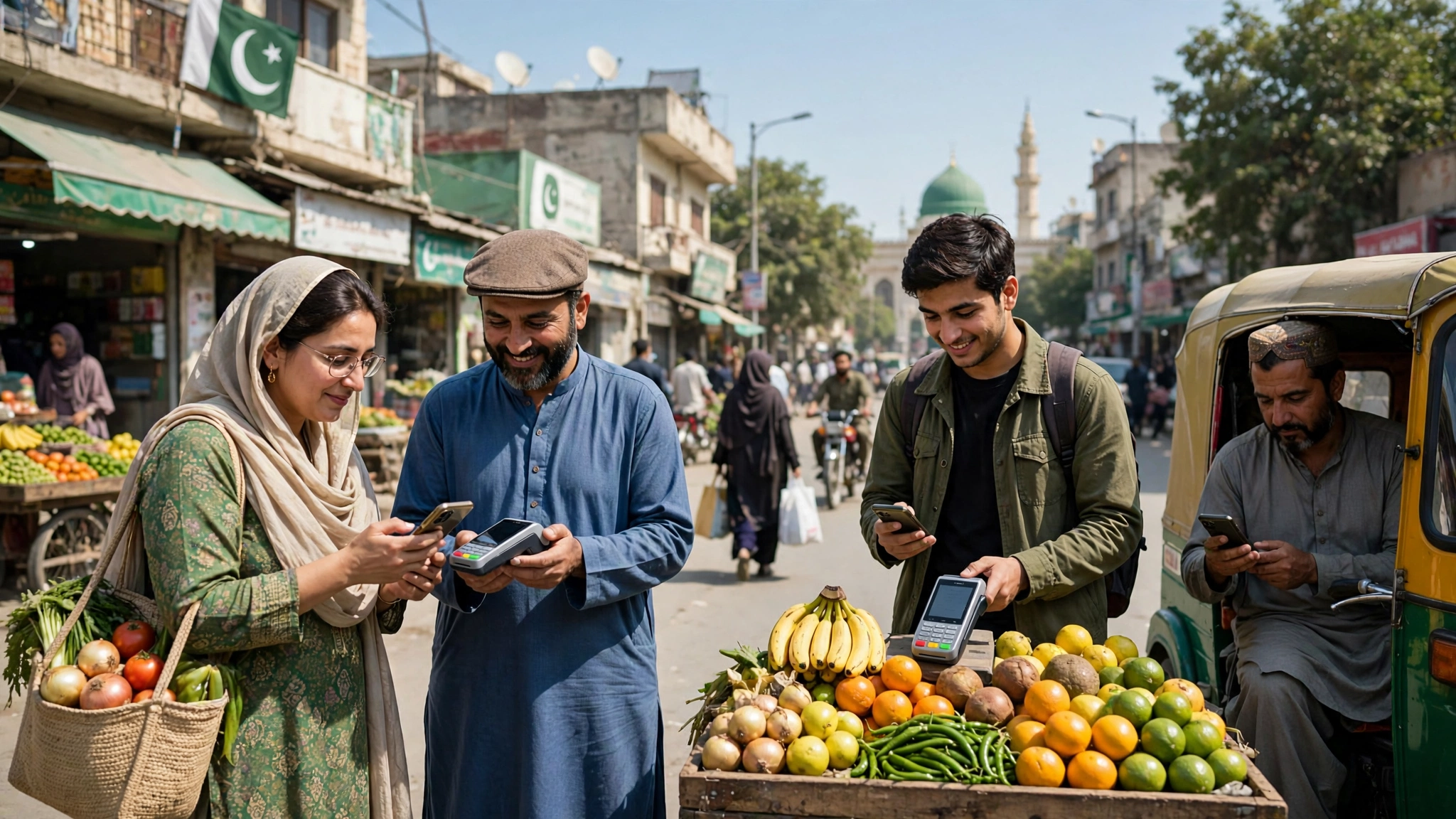
A cashless economy has become one of the Pakistani government’s most repeated goals. The Prime Minister chairs regular meetings on it. Retail outlets have been told to offer at least one digital payment option. Millions of shopkeepers now display Raast QR codes, and more than 100 million people use mobile banking apps. On paper, Pakistan looks like it is racing away from cash.
Then you look at the actual banknotes. Pakistan closed the 2025-26 fiscal year with more currency in circulation than ever before. Cash withdrawals keep rising. Property deals, wholesale markets and much of rural trade still run on notes. Money increasingly goes into the system digitally, only to be pulled back out as cash.
That isn’t a contradiction so much as a sign of how hard the shift is. Building payment rails is the easy part. Persuading a wholesaler, a landlord or a small trader to give up cash means tackling tax fears, fraud worries, weak trust in banks and a large informal economy. Some of the resistance is about more than habit. Retailers have tampered with tax systems to hide sales, hundi networks move billions outside the banks, and fraudsters use mule accounts and phantom software.
This article looks at Pakistan’s push toward a cashless economy: the eight main steps the government is taking, the progress they’ve produced, why cash still refuses to go away, and the illegal activities that keep money off the books.
What Does a Cashless Economy Actually Mean?
A cashless economy doesn’t mean that physical cash disappears completely. Even the most digital countries still print banknotes. In practice, it means:
- Most everyday payments, salaries, bills and business transactions happen digitally.
- Cash is used for small amounts and emergencies, not for large or regular transactions.
- Money stays inside the formal financial system, where it can be saved, lent and taxed.
For Pakistan, the goal is better described as a “less-cash” economy. Bringing more money into banks would widen the tax base, lower the cost of handling cash, cut corruption, and help households build savings and credit histories.
The Hard Truth: Cash Is Still Growing
Before looking at the government’s plan, it’s important to understand the size of the challenge facing a cashless economy in Pakistan.
Record Currency in Circulation
Currency in circulation ended FY2026 at about Rs11.94 trillion, an all-time high and 94 percent higher than the Rs6.14 trillion of FY2020. In March 2026, currency in circulation was up 28.4 percent year on year at Rs12.07 trillion.
The Inflation Factor
There is a more encouraging way to read this. Adjusted for inflation, using FY2020 prices, currency in circulation actually fell from Rs6.14 trillion to about Rs5.37 trillion by FY2026, a real decline of 12.5 percent. As a share of broad money, cash has also come down since FY2020. Still, analysts note that the cash-to-M2 ratio stays close to 28 percent, which reflects deep informality and reliance on cash.

Money In Digitally, Out in Cash
The most telling numbers are about withdrawals. In FY2025 alone, ATM and branch cash-outs totalled 1.055 billion withdrawals worth Rs26.92 trillion, which works out to more than 20 million cash withdrawals every week. The ratio of deposits to withdrawals fell from 15.7 deposits per 100 withdrawals in FY2020 to just 8.9 by FY2025.
One analysis summed up the problem: digitising deposits means little if the withdrawal habit doesn’t change. Without that, you’ve simply built a faster on-ramp to the same cash economy.
Big Notes Carry the Weight
Large notes dominate the value of cash. The Rs1,000 and Rs5,000 notes are estimated to make up about 77 percent of the value of currency in circulation, even though they’re only about a quarter of the notes in use. Big notes make it easy to store and move large sums outside the banking system.
8 Bold Steps Pakistan Is Taking Toward a Cashless Economy
1. A High-Level Cashless Pakistan Committee
In June 2025, Prime Minister Shehbaz Sharif formed a high-level committee to drive the cashless economy agenda. Three sub-committees work under it: Digital Payments Innovation and Adoption, led by the SBP Governor; Digital Public Infrastructure; and Government Payments.
The Prime Minister has kept up the pressure. In July 2025, he ordered all key digital economy targets doubled, including mobile payments, QR adoption and transaction volumes. In November 2026, all ministries and departments were told to fully implement the cashless economy plan.
2. Raast QR Codes and Mandatory Digital Options for Shops
The most visible step is getting shops to accept digital payments. In January 2026, the Minister of State for Finance said executive orders had made QR codes mandatory in Islamabad and the provinces, requiring every retail outlet to offer at least one digital payment option.
Progress has been significant. Active merchants accepting digital payments grew from 0.5 million to more than 2 million, helped by the government’s Raast QR Code initiative. You can read the official milestones in the government’s press release on the Cashless Pakistan Initiative.
3. Growing Mobile Banking Use
People are using digital channels much more. From July 2025 to June 2026, Pakistan recorded 11.9 billion digital transactions, while mobile banking app users rose from 95 million to 137 million. This growing user base is the foundation of any cashless economy.
4. Digitising Government Payments
The government is the country’s largest payer, so moving its own payments online matters a lot. A parliamentary committee was told that Pakistan planned to digitise all payments by federal, provincial and local governments, as well as state-owned enterprises, by June 2026. Salaries, pensions, vendor payments and welfare transfers going digital means less cash flowing out of the state in the first place.
5. A Push for 100 Percent Digital Remittances
Remittances are a major source of cash in Pakistan. SBP research notes that remittances are a key factor behind currency demand, because they raise household incomes and therefore spending. In July 2026, the Prime Minister directed that remittances from abroad be fully digitised. The goal is for money sent by overseas workers to stay in accounts and wallets, so families aren’t withdrawing it all at once.
6. FBR Point of Sale Integration
The FBR’s POS integration system links large retailers’ tills directly to the tax authority, so every sale is recorded. In January 2025, the FBR went further and required POS-integrated retailers to offer card machines, QR codes or other digital payment options at every sale point.
To encourage customers to check receipts, the FBR runs a scheme where people can report fake invoices for cash rewards. Retailers caught issuing fake invoices face a fine of Rs500,000 and possible closure of their premises until the fine is paid.
7. Expanding Financial Inclusion
A cashless economy isn’t possible if people don’t have accounts. Under the National Financial Inclusion Strategy 2024-28, Pakistan added more than 6.8 million new unique bank accounts in 2025, and women opened 55 percent of them. Financial inclusion rose to 69 percent, and the gender gap narrowed to 29 percent.
The targets are ambitious: 75 percent financial inclusion and a gender gap of 25 percent by 2028. The SBP’s Banking on Equality Policy 2026 sets out how banks are expected to help close that gap.
8. New Digital Banks and Regulated Crypto
New kinds of institutions are also part of the plan. In January 2025, the SBP awarded its first Digital Retail Bank licence to Easypaisa Bank, and others have followed. In 2026, Parliament passed the Virtual Assets Act, giving the Pakistan Virtual Assets Regulatory Authority statutory powers to license and supervise crypto platforms. The aim is to bring activity that used to happen in grey markets under formal oversight.
Why Cash Refuses to Die in Pakistan
The government’s steps are real, so why does cash keep growing? Several reasons stand out.
The Informal Economy and Tax Fears
Many businesses avoid digital payments precisely because they leave a record. A cash sale is easy to hide from the taxman, while a QR payment isn’t. For a large part of the economy, staying in cash is a deliberate choice, not a lack of options.
Big Transactions Still Happen in Cash
Customers scanning QR codes at shops aren’t the real problem. Analysts point out that the biggest transactions still happen in cash, among wholesalers, distributors and property markets. Until those sectors change, the overall cash picture won’t move much.
Fear of Fraud
Trust is fragile. According to the Global State of Scams Report 2025, digital fraud costs Pakistan around $9.3 billion a year. When people lose money or fear digital channels, they go back to cash.
People Who Are Still Offline
You can’t go cashless without internet access. The Kepios Digital 2026 report puts Pakistan’s internet penetration at just 45.6 percent, which leaves about 139 million people offline. For them, cash is the only practical option.
The Gender Gap
Many women still lack accounts. Fewer than 40 million women have at least one account, compared with 63.2 million men. When women can’t receive or spend money digitally, the household stays on cash.
Illegal Activities That Keep Money in the Shadows
Some of the resistance to a cashless economy comes from deliberate fraud. These cases show how money is kept off the books.
Tampering With POS Systems
The FBR’s POS system has been undermined from the start. In 2021, ProPakistani reported that the FBR had found a vendor who installed software at a retail outlet that was forged to under-report sales. In another case, the big retailer Metro Shoes allegedly pushed only selected transaction data to the FBR. Investigators said “phantomware” kept deleting offline sales data from branches to avoid detection.
Retailers have also found simpler tricks. Some discouraged electronic payments and insisted on cash, and when customers began asking for FBR invoices, some started issuing fake FBR receipts. In 2024, the FBR sealed five well-known Islamabad restaurants for issuing fake invoices.
For balance: Not every retailer problem is fraud. The Chainstore Association of Pakistan has complained of businesses being sealed suddenly over unverifiable invoices that often result from system failures rather than negligence. A fair system has to separate cheating from technical glitches.
Fake Sales Tax Invoices
Fake paperwork drains enormous sums. In 2024, the FBR chairman said more than Rs3 trillion in sales tax fraud happened every year, with chief financial officers of large corporations involved. Fake invoice networks thrive in a cash-heavy economy where actual goods and payments are hard to trace.
Hundi and Hawala
Informal money transfer networks are the direct opposite of a cashless economy. In one year, the FIA arrested 494 people involved in illegal currency exchange, hawala and hundi, and recovered Rs1.49 billion. In March 2026, it seized foreign currency worth about Rs2.89 billion in a single Karachi raid. Every rupee sent through hundi is a rupee that never enters the formal system.
Digital Hundi and Online Gambling
Criminals also abuse digital rails. During an FIA crackdown on online gambling, JazzCash reportedly closed more than 100 aggregator accounts, and the FIA noted indicators of digital hundi and hawala operations designed to hide the money trail.
Mule Accounts
Fraudsters move stolen money through accounts opened with misused identities, SIMs registered to other people, or third-party “mule accounts.” Once money reaches a mule account, it can be transferred on or withdrawn very quickly. Each case of this kind pushes victims, and their neighbours, back toward cash.
What Businesses and Citizens Can Do
Building a cashless economy isn’t only the government’s job. Here’s how individuals and businesses can take part safely:
- Shopkeepers: Display a Raast QR code and accept small digital payments. It’s free for customers and reduces the risk of keeping cash in the shop.
- Employers: Pay wages into accounts or wallets instead of cash envelopes.
- Overseas Pakistanis: Send money only through banks and licensed operators, never hundi.
- Families: Help elderly relatives and women in the household open accounts and use them safely.
- Customers: Ask for a proper FBR invoice at large retailers and report fake receipts.
- Everyone: Never share an OTP or PIN, and never rent out your account or SIM.
What Needs to Change Next
For Pakistan to move meaningfully toward a cashless economy, a few things matter most:
- Target the big cash users: Focus on wholesale, distribution and property transactions, not just small shops.
- Reduce the tax penalty for going digital: Small traders need confidence that accepting QR payments won’t bring sudden harassment.
- Fix POS reliability: Honest retailers shouldn’t be punished for system failures.
- Fight fraud faster: A national rapid-response system to freeze stolen money would build trust.
- Close the gender and connectivity gaps: Women and offline households need accounts, affordable smartphones and training.
- Look at large notes: Experts often point to the dominance of Rs5,000 notes as a reason cash is so easy to hoard. Any decision on large denominations would need careful planning to avoid hurting ordinary savers.
Conclusion
Pakistan’s push toward a cashless economy is producing real results. A high-level committee drives the agenda, more than 2 million merchants now accept Raast QR payments, mobile banking users have grown from 95 million to 137 million, 11.9 billion digital transactions were recorded in a single year, government payments are being digitised, remittances are being pushed fully onto digital channels, the FBR has tied POS systems to digital payments, and financial inclusion has risen to 69 percent. The hard truth is that cash is still growing in nominal terms, reaching a record Rs11.94 trillion in FY2026, with more than 20 million withdrawals a week, and the biggest transactions in wholesale and property still happen in banknotes. Illegal activity makes things worse: POS tampering and phantom software that hide sales, fake invoices behind trillions of rupees in sales tax fraud, hundi and hawala networks moving billions outside the banks, digital hundi tied to online gambling, and mule accounts that wear down public trust. A true cashless economy in Pakistan will depend less on new QR codes and more on tackling tax fears, fraud and informality, so that money stays in the system once it enters.