How Digital Literacy Programs Are Reaching Rural Pakistan
Digital literacy programs in rural Pakistan, from DigiSkills to village tech hubs: who they reach, the gender gap, and the fake training scams aimed at learners.
Digital Literacy Programs in Rural Pakistan: 7 Powerful Changes and the Painful Gaps in 2026
Introduction
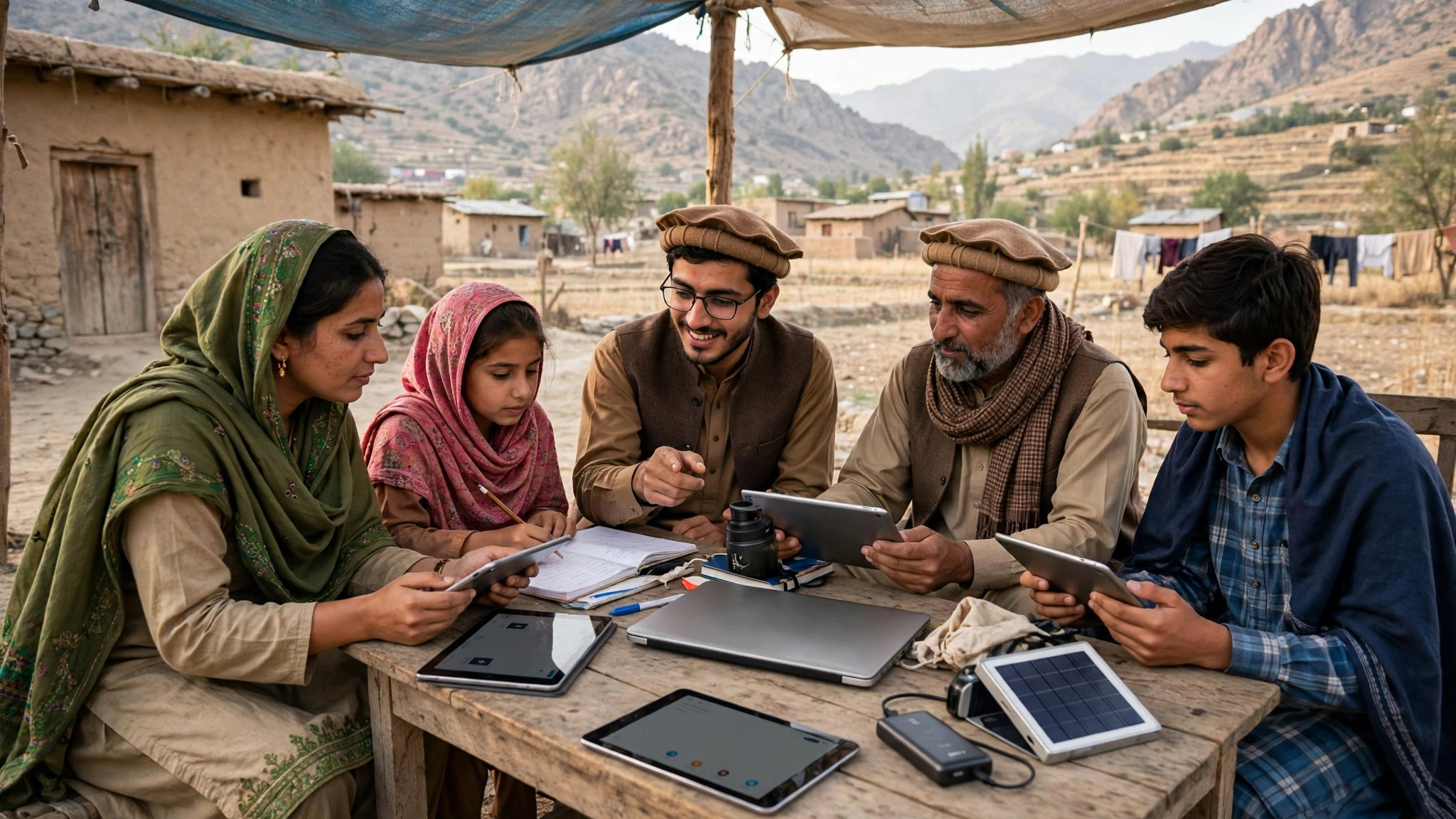
Digital literacy programs are starting to reach parts of Pakistan that the internet barely touched a decade ago. In villages across South Punjab, rural Sindh and Khyber Pakhtunkhwa, young people are taking free online courses in freelancing and graphic design. Women who once had to borrow a male relative’s phone are learning to use mobile banking and spot online scams. Community centres with a few computers and a fibre connection are becoming small doorways into the digital economy.
The numbers are encouraging. Pakistan’s flagship free training platform has delivered millions of trainings. The gap between men and women in mobile internet use has shrunk faster than in almost any other country surveyed. Government funds are paying to extend 4G and fibre to villages that commercial operators ignored.
The reality on the ground is harder. Having a signal doesn’t mean someone knows how to use the internet, and owning a phone doesn’t mean being safe online. Tens of millions of Pakistanis are still offline, and many rural women face family resistance to owning a smartphone. Most worrying of all, fraudsters have learned to exploit the hunger for digital skills. Fake “training institutes” have charged registration fees for courses that never existed. Bogus schemes have promised free laptops. Scammers have targeted women and elderly people to steal their fingerprints and identity data.
This article looks at how digital literacy programs are reaching rural Pakistan, what’s actually working, and the scams that every new learner needs to recognise.
What Is Digital Literacy, and Why Does It Matter in Rural Pakistan?
Digital literacy is more than knowing how to switch on a phone. It covers a set of practical abilities:
- Basic use: Using a smartphone or computer, sending messages, using apps and searching for information.
- Digital services: Using mobile banking, government apps and online forms.
- Earning online: Freelancing, selling products online, digital marketing.
- Online safety: Spotting scams, protecting passwords and OTPs, and keeping personal data private.
In rural Pakistan, these skills can change lives. A farmer can check market prices before selling crops. A young woman can earn from home through freelancing. A family can receive remittances or welfare payments without a middleman taking a cut. Without digital literacy, though, a new internet user is easy prey for fraud. That’s why the best digital literacy programs teach safety alongside skills.
7 Powerful Ways Digital Literacy Programs Are Reaching Rural Pakistan
1. Free Online Skills Training Through DigiSkills.pk
The largest of Pakistan’s digital literacy programs is DigiSkills.pk, run by the Virtual University of Pakistan under the Ministry of IT and Telecom. Since 2018, it has delivered more than 5.51 million trainings across 25 skill areas, aimed at youth, women and first-time earners. In July to March FY2025-26 alone, it delivered more than 5.14 million trainings.
The courses are free, and the current phase includes a Digital Literacy course alongside more advanced options such as data analytics. That makes it a real entry point for beginners. You can register on the official DigiSkills.pk website.
Reality check: Seats are limited and go fast. Batch-03 offered 300,000 seats strictly on a first-come, first-served basis. Because training is online, rural learners with weak connections or shared phones are at a disadvantage. There’s also a question about results. In January 2026, the Ignite National Technology Fund launched an independent third-party assessment of the programme’s overall impact. That’s a healthy step, because training numbers don’t automatically mean people are earning.
2. Bringing the Internet to Villages Through the Universal Service Fund
No digital literacy program works without a connection. The Universal Service Fund (USF) pays telecom companies to extend coverage to areas they wouldn’t serve commercially. So far, about 39.4 million rural residents have been served with broadband, voice and fixed-line services through USF projects.
The work continues. In September 2026, the USF approved a Rs32.90 billion budget for FY2026-27 and moved forward 15 4G projects covering 3.66 million people in 1,893 mauzas across 21 districts. In January 2026, it signed a Rs1.16 billion deal with Jazz to bring high-speed broadband to more than 533,000 rural residents in nine underserved districts of Punjab and Khyber Pakhtunkhwa.
3. Community Digital Hubs: The Jhuggiwala Model
Some of the most promising digital literacy programs are local. In rural Muzaffargarh, the USF and partners piloted the “Jhuggiwala” project. It was equipped with 10 high-spec computers, fibre broadband and local training, and it reduced connectivity costs by 30 percent by using existing USF network points.
Training was the core of it. 209 women and girls were trained free of cost in digital literacy, entrepreneurship, AI tools, online safety and digital marketing. You can read more in the Universal Service Fund’s report on the Jhuggiwala project.
The project also highlighted a key problem. The USF CEO noted that Pakistan has around 63 percent mobile broadband coverage and 68 percent smartphone ownership, yet fewer people actually use mobile internet. That usage gap is exactly what community-based digital literacy programs are designed to close.
4. Closing the Gender Gap for Rural Women
Rural women have long been the least connected group in Pakistan. That’s changing quickly. According to the GSMA Mobile Gender Gap Report 2026, Pakistan’s mobile internet gender gap fell from 25 percent to 8 percent in one year, as women’s mobile internet use rose from 45 percent to 53 percent. Earlier GSMA data showed that this growth was driven mainly by rural women.
The economic case is strong. GSMA estimates that closing the gender gap in mobile internet adoption over eight years could add $55 billion to Pakistan’s GDP. You can see the full data in the GSMA Mobile Gender Gap Report 2026.
Reality check: Big gaps remain. About 47 million women in Pakistan still don’t use mobile internet, and 28 percent of female mobile internet users rely on someone else’s phone. Social norms are a serious barrier too. The head of the Telecom Operators’ Association noted that in many rural communities, smartphone ownership is still seen as a threat for women. Digital literacy programs for women have to work with families and community leaders, not just individual learners.
5. AI Skills Through AI Seekho and AI for HER
Newer digital literacy programs go beyond basics. In April 2026, the government and Google launched AI Seekho 2026 to teach young people AI skills through “vibe coding,” which means building apps by prompting AI tools instead of writing code by hand. The programme offers free access to tools, cloud credits and structured learning, which lowers the financial barriers that often keep lower-income youth out of advanced tech training. More than 7,000 participants took part, forming over 2,600 teams and submitting more than 600 projects.
Women are being included deliberately. Under the AI for HER initiative, more than 500 women and girls were trained, and 10 women-led AI startups were showcased.
Reality check: The in-person hackathons take place in major cities. Rural learners can join the online phase, but without strong connectivity and basic skills first, advanced AI training mostly benefits people who are already connected.
6. Financial Literacy and Safe Digital Payments
Many rural Pakistanis first meet the digital world through money, whether a mobile wallet, a BISP payment or a remittance from a relative abroad. That makes financial literacy a key part of digital literacy. The SBP’s financial inclusion push has made real progress. Pakistan added more than 6.8 million new bank accounts in 2025, and women opened 55 percent of them.
Awareness sessions are part of the effort. JazzCash and the SBP have run awareness sessions on scams. A JazzCash official noted that scam tactics constantly evolve, from phishing calls to fake wallet apps, so awareness is key.
7. Online Safety as a Core Skill
The smartest digital literacy programs now treat online safety as a basic skill, not an extra. The Jhuggiwala project, for example, included online safety in its training for women and girls. That matters because new users are the main target for scammers, as the next section shows.
The Dark Side: Scams Targeting New Digital Learners
The hunger for digital skills and online jobs has created a market for fraud. These real cases show why digital literacy programs must teach people how to spot scams.
Fake Training Institutes
In October 2025, the NCCIA broke up a network in Multan running a fake institution called the Natural Life Skill Training Institute, which promised online jobs and training programs. Eight suspects were arrested, including the alleged ringleader. Victims had been tricked into paying large registration and training fees, believing they’d get legitimate remote jobs after finishing the courses.
Fake Free Laptop and Training Schemes
In July 2026, the National Cyber Emergency Response Team began investigating a suspected fake online campaign called “Cyber Secure Pakistan,” which advertised cybersecurity training on LinkedIn. It promised free laptops, international certifications and internships, while asking applicants to pay Rs5,000 for a so-called “Cyber Hero Card.”
Lesson: Real government training programmes such as DigiSkills are free. Any “free” programme that asks for a registration fee is a warning sign.
Fake Government Job Ads
Scammers also borrow the names of government bodies. In February 2026, the NCCIA uncovered a large fake jobs scam that used social media ads in the name of the National Planning and Development Authority to collect fees from applicants. Thousands of victims lost millions of rupees.
Biometric Theft Targeting Women and Elderly People
Some scams aim at identity rather than money. The PTA has warned that scammers steal fingerprints, thumb impressions and other sensitive data by luring people, especially women and senior citizens, with offers of free SIM cards or fake financial aid. In rural areas, where people may trust anyone offering “government help,” this scam is particularly dangerous.
Fake Overseas Job Offers and Trafficking
The most serious danger comes from fake recruitment. Authorities have warned of organised human trafficking networks and forced online scam centres in countries including Thailand, Cambodia, Myanmar and Laos. Researchers at ICMPD have found that fake job ads on social media are exposing aspiring migrants to fraud, abuse and even trafficking.
Women Facing Double Victimisation
When women are scammed, many don’t report it. Digital rights defenders say women contact helplines about fake job ads that harvest their personal details, but victim blaming keeps many from speaking up. Digital literacy programs for women need to include where to report fraud and assurance that victims won’t be blamed.
The Painful Gaps That Still Remain
Even the best digital literacy programs can’t overcome some structural problems on their own.
Tens of Millions Still Offline
The Kepios Digital 2026 report puts Pakistan’s internet penetration at just 45.6 percent, which leaves about 139 million people offline. Most of them live in rural areas.
Coverage Without Use
Signal towers don’t automatically produce users. As the USF itself has pointed out, coverage and smartphone ownership are higher than actual internet use. Cost, language, confidence and family attitudes all matter.
Online-Only Training Excludes the Hardest to Reach
Programmes delivered entirely online assume learners already have a phone, data and basic skills. The people who need digital literacy most often have none of these.
Measuring Real Outcomes
Counting trainings isn’t the same as measuring change. The independent review of DigiSkills is a good model. Every major programme should publish how many learners actually started earning, opened accounts or avoided scams.
How to Choose a Safe and Genuine Digital Literacy Program
If you or someone in your family wants to join one of the many digital literacy programs on offer, follow these rules:
- Check the official website. Genuine government programmes use official domains, such as digiskills.pk or sites ending in .gov.pk.
- Never pay a registration fee for a “free” government course. DigiSkills and similar programmes are free.
- Be suspicious of free laptops, guaranteed jobs or high salaries. These are common bait.
- Never share your CNIC copy, fingerprints, OTPs or bank details with a training provider you haven’t verified.
- Verify job offers, especially overseas ones, through the Bureau of Emigration and official employer websites.
- Report scams to the NCCIA and warn others in your community.
- Learn online safety first. Before learning to earn online, learn how to stay safe online.
What Needs to Happen Next
To make digital literacy programs truly reach rural Pakistan, a few priorities stand out:
- Combine connectivity with training: Every USF connectivity project should include a local training component, as the Jhuggiwala model does.
- Go offline where needed: Use community centres, schools and union council offices for in-person sessions in local languages.
- Work with families: Involve fathers, husbands and elders so women can learn and own phones without backlash.
- Make safety mandatory: Include scam awareness and data protection in every course.
- Build a public register of genuine programmes: A single official list would help people separate real training from fake institutes.
- Track outcomes: Measure earnings, account use and scam reduction, not just enrolments.
Conclusion
Digital literacy programs are making real progress in rural Pakistan. DigiSkills.pk has delivered more than 5.5 million free trainings. The Universal Service Fund has connected about 39.4 million rural residents and keeps funding new 4G and fibre projects. Community hubs like Jhuggiwala in Muzaffargarh have trained women and girls in digital skills and online safety while cutting costs. The mobile internet gender gap has dropped from 25 percent to 8 percent. AI Seekho and AI for HER are opening advanced skills to young people, and financial literacy efforts are bringing millions of women into the banking system. The painful gaps remain: around 139 million people are still offline, coverage hasn’t turned into use, 47 million women still don’t use mobile internet, and online-only training leaves the hardest-to-reach behind. Fraudsters have also turned the demand for skills into a business, with fake training institutes charging fees, “free laptop” schemes asking for payment, fake government job ads, biometric theft aimed at women and the elderly, and fake overseas job offers linked to trafficking. Rural Pakistan’s digital future depends on programmes that combine connectivity, local in-person training, family involvement and strong scam awareness, so new users can benefit from the internet without becoming its victims.