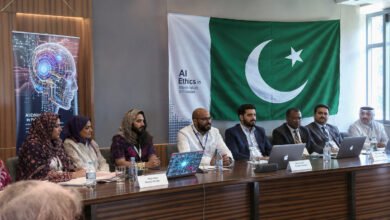
The Rise of AI Content Creation: Should Pakistani Bloggers Worry
AI content creation is changing blogging in Pakistan. An honest look at Google rules, past content scams, and how bloggers can stay relevant and earn

AI Content Creation: 7 Honest Truths Pakistani Bloggers Must Know to Survive and Thrive
AI content creation has changed the blogging world faster than almost anyone expected. Three years ago, writing a 2,000-word article took a Pakistani blogger a full day of research, drafting, and editing. Today, an AI tool can produce something that looks similar in under a minute. For a country where thousands of young people earn through blogs, AdSense, Fiverr gigs, and Upwork contracts, that shift is personal. It touches income, careers, and in many cases, family finances.
So the fear is understandable. If a client can get an article from ChatGPT for free, why pay a writer in Lahore or Faisalabad? If thousands of AI-generated sites flood Google, how does a small Urdu or English blog compete?
The honest answer is more complicated than either “AI will kill blogging” or “AI is just a tool, relax.” Some bloggers have already lost traffic and clients. Others are earning more than before because they learned to use AI well. And a third group got into real trouble by using AI for plagiarism, fake reviews, spam sites, and copyright violations, repeating mistakes that content scammers made long before AI existed.
This article looks at what is really happening with AI content creation, what Google actually says, where past illegal shortcuts led, and what Pakistani bloggers can realistically do to stay relevant. No hype, no panic, just the facts and a practical way forward.
What Is AI Content Creation?
AI content creation means using artificial intelligence tools to produce or help produce written, visual, audio, or video content. For bloggers, it usually involves:
- Writing drafts of blog posts and articles
- Creating outlines, titles, and meta descriptions
- Rewriting or summarizing existing text
- Generating images for featured graphics
- Translating content between English and Urdu
- Producing scripts for YouTube and social media
Popular AI writing tools include ChatGPT, Claude, Gemini, Jasper, and various “article spinner” tools. Image tools like Midjourney and DALL-E have also become common for thumbnails and blog graphics.
Assisted vs Fully Automated Content
There’s an important difference between two ways of using AI:
| Approach | How It Works | Risk Level |
|---|---|---|
| AI-assisted | Human researches, writes or heavily edits, AI helps with speed | Low |
| Fully automated | AI writes everything, published with little or no human review | High |
Most of the problems we’ll discuss come from the second approach, not the first.
Why Pakistani Bloggers Are Worried About AI Content Creation
Blogging and content writing matter economically in Pakistan. Pakistan has consistently ranked among the larger sources of online freelancers globally, and content writing has been one of the easiest entry points. A student with good English and an internet connection could start earning without a degree or office.


Here’s why AI content creation feels threatening:
- Falling rates for basic writing. Clients who once paid for simple product descriptions or generic blog posts now use AI instead.
- More competition in search. Thousands of new AI-generated sites target the same keywords.
- Google updates hitting small sites. Many small publishers, including Pakistani bloggers, reported sharp traffic drops after Google’s 2023 and 2024 updates.
- Client suspicion. Some clients now run every submission through AI detectors and reject work even when a human wrote it.
- AI answers in search results. When Google shows an AI summary at the top, fewer people click through to blogs.
These concerns are real. But they don’t tell the full story.
7 Honest Truths About AI Content Creation for Pakistani Bloggers
Truth 1: Google Does Not Ban AI Content, But It Punishes Low-Quality Content
This is the most misunderstood point. Google has said clearly that it focuses on the quality of content, not how it was produced. In its official guidance on Google Search and AI-generated content, Google explains that it rewards helpful, reliable, people-first content, whether a human or AI helped create it.
However, Google’s spam policies for Google Search include “scaled content abuse,” which targets mass-produced pages created mainly to manipulate rankings. This was strengthened in March 2024, when Google announced it was going after sites that publish large volumes of low-value content, whether made by AI, humans, or both.
What this means for Pakistani bloggers: using AI is fine. Publishing hundreds of thin, unedited AI articles to chase AdSense clicks is not, and sites doing that have been deindexed.
Truth 2: E-E-A-T Is Your Biggest Advantage
Google’s quality guidelines emphasize E-E-A-T: Experience, Expertise, Authoritativeness, and Trustworthiness. The first “E,” experience, is where humans have an edge AI cannot copy.
AI can write “10 tips for visiting Hunza.” It cannot write about the night your jeep broke down near Attabad Lake, the dhaba owner who helped you, or which guesthouse actually had hot water in December. That first-hand detail is what makes content trustworthy and memorable.
Pakistani bloggers who write from real experience, whether about local food, Pakistani freelancing, education, cricket, or small business, have something AI-generated content can’t fake convincingly.
Truth 3: Generic Writing Jobs Are Shrinking
Being honest means admitting this. Low-paid, generic writing work (basic product descriptions, simple SEO filler, rewritten news) is declining. Clients who wanted cheap volume have largely switched to AI.
Writers who only offered that kind of work are feeling the squeeze. This isn’t the end of writing as a career, but it’s the end of easy entry-level work that required no real skill.
Truth 4: Skilled Writers Are Becoming More Valuable
At the same time, demand is growing for writers who can:
- Edit and fact-check AI drafts
- Add original research, interviews, and local insight
- Write in a distinct brand voice
- Handle technical subjects like finance, health, law, and software
- Produce content in Urdu and regional languages well
Many clients have discovered that raw AI output needs a human to make it accurate and readable. Writers who position themselves as editors, strategists, and subject experts often charge more than before.
Truth 5: AI Detectors Are Unreliable
Many Pakistani freelancers have had work rejected because an AI detector flagged it, even when they wrote every word themselves. AI detection tools are known to produce false positives, especially for non-native English writers whose style can appear more formulaic. OpenAI even discontinued its own AI text classifier in 2023 because of low accuracy.
If a client relies only on a detector score, it’s worth politely explaining these limits and offering proof of process, such as Google Docs version history or research notes.
Truth 6: Readers Can Tell the Difference
Even when detectors fail, readers notice. Generic AI writing tends to repeat the same phrases, avoid specific details, and sound polished but empty. Readers who land on these pages leave quickly, which hurts engagement and, over time, rankings.
Human voice, humour, local references, and honest opinions build a loyal audience. That audience is something AI-generated content farms rarely achieve.
Truth 7: The Legal and Ethical Risks Are Real
This is where many bloggers get caught out. AI content creation doesn’t remove responsibility. If you publish plagiarized, false, defamatory, or copyrighted material, it’s your name, your site, and your AdSense account on the line, not the AI tool’s. The next section shows how this played out in the past.
Learning from the Past: Illegal and Unethical Content Practices
Many of today’s AI risks are old problems with a new tool. Looking at past cases helps explain why shortcuts tend to fail.
The Axact Fake Degree and Content Empire
In 2015, an international investigation exposed Axact, a Karachi-based company accused of running hundreds of fake university and accreditation websites. These sites used professionally written content, fake testimonials, and made-up faculty profiles to sell diplomas worldwide. The case led to arrests, court proceedings, and lasting damage to Pakistan’s online reputation.
The lesson is relevant to AI content creation today: persuasive content built on fabrication eventually collapses. AI makes it even easier to create fake reviews, fake experts, and fake credentials, which means scrutiny is increasing too.
Content Scraping and Copy-Paste Blogs
For years, many Pakistani blogs survived by copying articles from other websites, sometimes lightly spinning them with “article rewriter” tools. Many of these sites were hit with DMCA takedown notices, removed from Google’s index, or rejected by AdSense for “copied content.”
Today, some people use AI to rewrite competitors’ articles word by word. That’s still plagiarism in spirit and can still violate copyright if it closely follows the original. Google’s systems for spotting scraped and low-value content have become more sophisticated, not less.
AdSense Invalid Traffic and Click Fraud
Some bloggers have tried to increase earnings through click exchange groups, bot traffic, or asking friends and WhatsApp groups to click ads. Google treats this as invalid activity, and many accounts in Pakistan and elsewhere have been permanently disabled, often with unpaid earnings withheld.
AI-generated spam sites built purely for ad arbitrage face the same outcome. Once an AdSense account is banned, getting a new one is extremely difficult.
Fake Reviews and Paid Testimonials
Writing fake product reviews for Amazon sellers, app developers, and local businesses has been a known gig on freelance platforms. In 2024, the US Federal Trade Commission finalized a rule banning fake reviews, specifically including AI-generated fake reviews, with the possibility of significant fines. Amazon and Google also regularly remove fake reviews and ban accounts linked to them.
Pakistani freelancers who take such gigs risk losing platform accounts and damaging their professional reputation. It’s never worth the small payment.
When Big Publishers Got Caught
It’s not only small bloggers. In 2023, the technology site CNET faced criticism after AI-written finance articles were found to contain factual errors, leading to corrections. That same year, Sports Illustrated drew backlash over reports that it had published product reviews under fake author names with AI-generated headshots. Both cases showed that audiences and journalists react strongly when AI use is hidden or careless.
Fake News and Deepfakes Under Pakistani Law
In Pakistan, spreading false information online can carry legal consequences under the Prevention of Electronic Crimes Act (PECA) 2016, which was amended in 2025 with tougher provisions on false and fake information. AI makes it easy to produce fake news stories, altered images, and deepfake videos. Bloggers who publish such material, even if they claim it was “just AI,” can face legal action, platform bans, and serious reputational harm.
Whatever one thinks of how PECA is applied, the practical reality for bloggers is simple: verify before you publish.
How Pakistani Bloggers Can Use AI Content Creation Ethically
The goal isn’t to avoid AI. It’s to use it in a way that improves your work rather than replacing your judgment.
A Practical, Honest Workflow
- Start with your own angle. Decide what you know, what you’ve experienced, or what original information you can add.
- Use AI for research support. Ask for outlines, possible questions readers might have, or summaries of topics, then verify facts from original sources.
- Write or heavily rewrite in your own voice. Add local examples, opinions, and details.
- Fact-check everything. AI tools can invent statistics, quotes, and sources. Never publish a number you haven’t confirmed.
- Check for plagiarism. Run your final draft through a plagiarism checker to make sure it doesn’t mirror existing content.
- Add original media. Use your own photos, screenshots, or charts where possible.
- Be transparent where it matters. If a client asks whether you used AI, be honest. For sensitive topics, consider a short disclosure.
Things You Should Never Do with AI
- Publish unedited AI articles in bulk
- Copy and “rewrite” competitors’ content with AI
- Create fake author profiles or fake expert quotes
- Write fake reviews or testimonials
- Generate fake news, doctored images, or deepfakes
- Use AI images of real people without consent
- Submit AI work to clients who have explicitly banned it
How to Stay Competitive in Blogging in Pakistan
Blogging in Pakistan is still very possible, but the strategy has changed. Here’s what’s working for bloggers who are growing despite the AI surge.
Build Topical Authority
Instead of writing about everything, focus on one niche you know well: Pakistani freelancing, local travel, tech reviews in Urdu, exam preparation, halal finance, or regional cooking. Depth beats breadth. Google tends to trust sites that consistently cover one subject in detail.
Put Your Face and Name on Your Work
An “About” page with a real name, photo, background, and contact details builds trust. So do author bios on each article. This supports E-E-A-T and separates you from anonymous content farms.
Create Content AI Cannot Easily Copy
Examples include:
- Personal case studies (for example, “How I earned my first $500 on Upwork”)
- Interviews with local experts, shopkeepers, teachers, or farmers
- Original surveys and data
- On-the-ground reviews with real photos
- Opinion pieces with a clear point of view
Diversify Your Income
Relying only on AdSense is risky, especially as AI search answers reduce clicks. Consider:
- Affiliate marketing with honest reviews
- Selling digital products like guides or templates
- Offering services such as editing, SEO, or consulting
- Building an email newsletter
- Repurposing content into YouTube videos or podcasts
Learn AI Skills as a Service
Many Pakistani freelancers now offer services like “AI content editing,” “AI prompt writing for marketing teams,” and “human review of AI content.” Clients need people who understand both AI tools and good writing. That combination is a strong selling point.
So, Should Pakistani Bloggers Worry About AI Content Creation?
Yes and no.
You should worry if:
- Your work is mostly generic and could be produced by anyone
- Your blog depends on thin articles targeting easy keywords
- You rely only on AdSense with no other income
- You’re tempted to use AI for shortcuts like spam, copying, or fake reviews
You don’t need to worry as much if:
- You write from real knowledge or experience
- You’re building a recognizable name and loyal audience
- You use AI to work faster, not to avoid thinking
- You keep learning and adapting your skills
AI content creation is raising the bar. It’s pushing out lazy content and rewarding people who bring something real to the table. For honest, skilled, and adaptable Pakistani bloggers, that can actually be good news.
Conclusion
AI content creation is reshaping blogging in Pakistan, shrinking low-paid generic writing work, flooding search results with mass-produced pages, and making clients more cautious, but it has not made human bloggers irrelevant. Google does not ban AI content, yet it actively penalizes scaled, low-value pages, while first-hand experience, expertise, and trust remain strong advantages that AI can’t easily copy. Past cases like the Axact fake content empire, scraped copy-paste blogs, AdSense click fraud, fake review gigs, and publisher scandals at CNET and Sports Illustrated all show that shortcuts built on deception tend to collapse, and Pakistan’s PECA law adds real legal risk for fake or misleading content. The bloggers who will thrive are those who use AI as an assistant rather than a replacement, fact-check carefully, write in their own voice, build a clear niche, diversify their income, and stay honest with readers and clients, because in an internet full of generated text, genuine human insight is becoming the most valuable content of all.