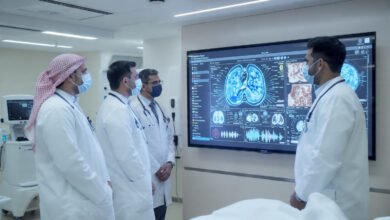
How Pakistani Universities Are Teaching AI and Machine Learning
AI education in Pakistan is expanding fast with HEC's mandatory AI course. How universities teach it, where gaps remain, and past scandals to learn from.
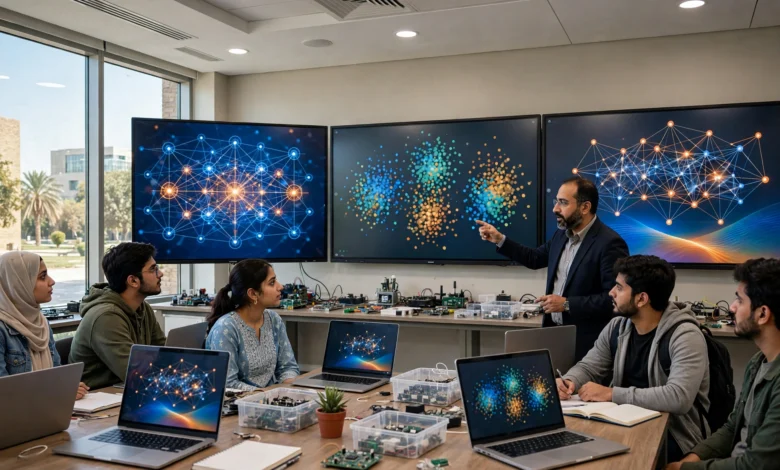
AI Education in Pakistan: 7 Powerful Ways Universities Are Teaching AI and Machine Learning Better
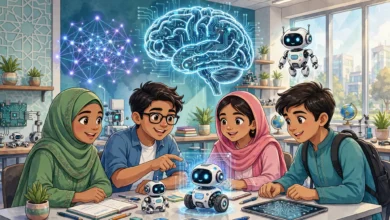
AI education in Pakistan reached a turning point in 2026. For years, artificial intelligence was something only computer science students studied, usually in their final year and often from outdated slides. Now, every student entering a Pakistani university, whether they’re studying business, medicine, law, English literature, or agriculture, will take a course on AI.
That’s a big shift. The Higher Education Commission has made a three-credit-hour AI course mandatory for all undergraduate and postgraduate programs from Fall 2026, across both public and private universities. At the same time, dedicated BS Artificial Intelligence programs have multiplied, and research labs are working on everything from Urdu language tools to crop disease detection.
But a policy on paper is not the same as good teaching in a classroom. Many universities still lack trained AI faculty, modern computers, and industry links. Students are using ChatGPT to finish assignments that were meant to teach them to think. And Pakistan’s higher education sector carries a history of fake degrees, plagiarism scandals, unrecognized campuses, and exam cheating that still affects how employers view local qualifications.
This article looks at how AI education in Pakistan actually works today: what universities are teaching, how programs are structured, where things are improving, and where the gaps are. It also looks at past illegal and unethical practices that universities need to avoid repeating. If you’re a student choosing a program, a parent, a teacher, or a policymaker, this is a clear and honest picture.
The Big Change: HEC’s Mandatory AI Course
The most important development in AI education in Pakistan this year is the HEC’s decision to make AI part of every degree.
What the HEC Decided
In February 2026, HEC issued a notification requiring a three-credit-hour AI course in every undergraduate and postgraduate degree program nationwide. Universities were told to add the course to their curricula without delay.
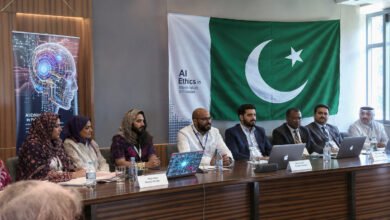
The decision was confirmed at HEC’s 47th meeting in July 2026, where the commission approved the course for all disciplines starting from the Fall 2026 semester. You can read the original report in Dawn’s coverage of HEC’s mandatory AI course.
What the Course Must Cover
The HEC hasn’t forced a single identical syllabus on every university. Instead, it set broad requirements. The course must include basic AI concepts, applications across different fields, and ethical and governance issues. It should also cover fairness and accountability, and universities can adapt content to suit their programs.
Universities can offer the course as an elective, an interdisciplinary subject, or a supporting course within a degree. So a medical student might study AI in diagnosis, while a business student focuses on AI in marketing and finance.


A National Framework for Generative AI
At the same meeting, HEC gave in-principle approval to a national framework for responsible use of generative AI in universities, though the draft was sent back for further input before formal notification. This framework is expected to guide how students and teachers can use tools like ChatGPT, Gemini, and Claude in coursework.
How Pakistani Universities Teach AI and Machine Learning Today
There are really three levels of AI education in Pakistan right now.
Level 1: AI Literacy for All Students
This is the new mandatory course. Its goal isn’t to make everyone an engineer but to help all graduates understand what AI is, how it’s used in their field, and what its risks are. HEC says the aim is to give graduates foundational AI knowledge and practical skills for a technology-driven economy.
A typical AI literacy course might include:
- What AI, machine learning, and generative AI actually are
- How to use AI tools responsibly for research and writing
- AI applications in the student’s own field
- Bias, privacy, misinformation, and deepfakes
- Pakistan’s laws on data and cybercrime
Level 2: Dedicated BS Artificial Intelligence Programs
Many universities now offer a four-year BS artificial intelligence degree, including well-known institutions like NUST, FAST-NUCES, COMSATS, ITU, Air University, and others. These programs are usually built on a computer science foundation, with specialized AI courses added.
Typical subjects include:
- Programming fundamentals and data structures
- Discrete mathematics, linear algebra, probability, and statistics
- Introduction to artificial intelligence
- Machine learning and deep learning
- Natural language processing
- Computer vision
- Knowledge representation and reasoning
- Data mining and big data
- Reinforcement learning
- AI ethics and professional practice
- Final year project
Level 3: Postgraduate Study and Research
MS and PhD programs in AI, data science, and computer science allow deeper specialization. The National Center of Artificial Intelligence (NCAI), launched in 2018 with labs at several universities, helped build research capacity in areas like smart cities, healthcare, agriculture, and Urdu language processing.
7 Ways Pakistani Universities Are Improving AI Education in Pakistan
1. Making AI Knowledge Universal
The mandatory course means AI knowledge is no longer limited to tech students. A future lawyer will understand how AI might be used in legal research. A future doctor will know the basics of AI diagnostic tools. Experts have welcomed the change, saying early exposure can build critical thinking, problem-solving, and ethical awareness.
2. Teaching Ethics Alongside Technology
In the past, ethics was often treated as an afterthought. Now it’s formally part of the requirements. HEC has emphasized transparency, accountability, and confidentiality in AI use. This matters because graduates will build and use AI systems that affect real people in banking, hiring, healthcare, and government.
3. Hands-On Projects Instead of Pure Theory
Better universities have moved away from exam-only teaching. Students now work with real datasets, use Python libraries like TensorFlow and PyTorch, and compete on platforms like Kaggle. Final year projects increasingly solve local problems, such as:
- Urdu speech recognition and text tools
- Crop disease detection from leaf images
- Traffic prediction for Lahore or Karachi
- Medical image analysis for TB or cancer screening
- Fraud detection for mobile wallets
4. Industry Partnerships
Some universities have built links with software houses, banks, and telecom companies for internships, guest lectures, and sponsored projects. National Incubation Centers attached to universities help students turn AI projects into startups.
5. Online and Hybrid Learning
Programs like PIAIC and DigiSkills have complemented university teaching, helping students gain practical skills outside the classroom. Many universities also encourage students to take online courses from international platforms alongside their degrees.
6. Research on Pakistani Problems
University research labs are increasingly focusing on local needs: agriculture, water management, public health, and regional languages. This builds AI solutions suited to Pakistan’s conditions rather than simply copying foreign models.
7. Better Verification and Transparency
HEC has also moved to make degree and document verification fully online, so students no longer need to visit HEC offices. Digital verification makes it harder for fake degrees to slip through, which directly supports the credibility of AI graduates.
The Real Challenges Facing AI Education in Pakistan
Policy announcements are encouraging, but the reality in many classrooms is more difficult.
Shortage of Qualified Faculty
This is the biggest problem. Pakistan doesn’t have enough teachers with strong AI and machine learning expertise, especially outside major cities. Now that every university must teach AI to every student, the shortage will become even sharper. There’s a real risk that some universities will assign the course to teachers with little AI background, turning it into a box-ticking exercise.
Weak Infrastructure
Training modern AI models requires powerful computers with GPUs, reliable electricity, and fast internet. Many public universities, particularly in smaller cities, don’t have adequate computer labs. Load-shedding and slow connections make practical work harder.
Outdated Curricula
AI changes very quickly. A syllabus written three years ago may not cover generative AI or modern tools. Universities need to update course content regularly, which requires faculty time and training.
Math Foundations
Many students enter university with weak mathematics, especially in linear algebra and statistics. Without these foundations, students can use AI tools but struggle to truly understand them.
The Gap Between Degrees and Jobs
Employers often complain that graduates know theory but can’t build working systems. Students, meanwhile, find that entry-level AI jobs in Pakistan are limited and highly competitive. Universities need stronger career guidance and practical training.
Rural and Gender Gaps
Access to quality AI education in Pakistan is uneven. Students in remote areas and many young women face barriers such as distance, cost, and family restrictions. The mandatory course helps with exposure, but equal quality everywhere is still a long way off.
Learning from the Past: Illegal and Unethical Practices in Higher Education
Pakistan’s higher education sector has faced serious scandals. These cases matter for AI education because they show how weak oversight can damage the value of degrees for everyone.
Fake Degrees and Degree Mills
The 2015 Axact case, in which a Karachi-based company was accused of running hundreds of fake online universities that sold diplomas worldwide, badly damaged Pakistan’s reputation in education. Earlier, in 2010, a number of parliamentarians were found to hold fake or unverifiable degrees after a graduation requirement for elected office.
Why this matters for AI education: as AI becomes a hot career field, expect a rise in fake “AI diplomas” and unaccredited programs. Students should always check that a university and program are recognized by HEC.
Illegal and Unrecognized Campuses
HEC has repeatedly warned students against enrolling in unrecognized institutions and illegal sub-campuses operating without approval. Students who studied at such campuses have sometimes found their degrees couldn’t be verified, leaving them unable to get jobs or continue their studies.
Before enrolling in any AI program, check HEC’s list of recognized institutions on the Higher Education Commission’s official website.
Plagiarism in Research
Pakistan has seen several cases where academics, including some in senior positions, faced plagiarism allegations in research papers. HEC’s plagiarism policy allows penalties including demotion, termination, and blacklisting.
In AI research, plagiarism also includes copying code, reusing other people’s datasets without credit, and presenting others’ models as your own. Universities need strict checks, and students need to learn early that honest credit matters.
Exam Cheating and Paper Leaks
In 2023, the MDCAT medical entry test in Khyber Pakhtunkhwa was hit by a cheating scandal involving Bluetooth devices, and authorities cancelled the test and held a retake. Paper leaks have also affected board exams in several provinces over the years.
These cases show how technology can be used to cheat at scale. With AI tools now able to solve problems instantly, exam security has become even more important.
AI-Assisted Cheating Today
The newest integrity problem is students submitting AI-generated assignments as their own. Many Pakistani universities now use plagiarism and AI detection software, but these tools aren’t fully reliable. Some honest students have been wrongly flagged, while some AI-written work goes unnoticed.
The better solution is to redesign assessment:
- Oral exams and project presentations
- In-class written work
- Assignments that require personal reflection or local data
- Clear rules on when AI use is allowed and how to disclose it
This is exactly why HEC’s generative AI framework is important. Students need clear guidance, not guesswork.
Ethics in AI Education: What Students Must Learn
Good AI education in Pakistan isn’t only about building smart systems. It’s about building responsible ones. Key ethical topics that every program should cover include:
Privacy and Data Protection
AI systems rely on data, often personal data. Students should learn why collecting, sharing, or selling personal information without consent is wrong and, in many cases, illegal. Pakistan has faced large data leaks, including the NADRA data breach investigated in 2023, which shows how serious this issue is.
Bias and Fairness
AI can discriminate if trained on biased data. For example, a hiring model trained on past records might unfairly reject women or candidates from certain regions. Students need to test for and reduce such bias.
Misinformation and Deepfakes
Students should understand how AI can create fake images, videos, and news, and why creating or spreading such content can be a crime under Pakistan’s Prevention of Electronic Crimes Act (PECA).
Responsible Use of AI Tools
Students should know when using AI is acceptable, how to credit it, and why relying on it completely weakens their own learning.
How Students Can Get the Most from AI Education in Pakistan
Whether you’re taking the mandatory course or pursuing a full AI degree, these steps will help you learn more than the syllabus alone.
Practical Tips
- Strengthen your math. Revise statistics and linear algebra early.
- Learn Python well. It’s the main language for AI and machine learning.
- Build projects. Aim for three to five real projects on GitHub before graduation.
- Use Kaggle and open datasets. Practise on real problems.
- Take free online courses to fill gaps in your university syllabus.
- Join student societies and hackathons. Networking matters.
- Seek internships early. Even unpaid ones give valuable experience.
- Use AI tools honestly. Use them to learn, not to avoid learning.
Choosing the Right Program
Before enrolling, check:
- HEC recognition of the university and program
- Faculty qualifications and research activity
- Lab facilities and computing resources
- Industry links and internship support
- Graduate outcomes and alumni jobs
- Fees and scholarship options
What Universities and HEC Should Do Next
To make AI education in Pakistan truly effective, several steps are needed:
- Train teachers at scale. Faculty development programs in AI should be a national priority.
- Share resources. Stronger universities could share course materials, cloud computing, and online lectures with smaller ones.
- Update curricula yearly. AI courses should be reviewed frequently.
- Finalize and publish the generative AI framework so students and teachers have clear rules.
- Invest in computing infrastructure, including shared GPU access for public universities.
- Strengthen industry partnerships for internships and applied research.
- Enforce academic integrity with fair, transparent processes.
- Support women and rural students through scholarships, hostels, and online options.
The Future of AI Education in Pakistan
The next few years will decide whether the new policies produce real results. If implemented well, Pakistan could develop a large pool of AI-literate graduates, stronger research in areas like Urdu language technology and agriculture, and more competitive freelancers and startups.
If implemented poorly, the mandatory course could become another box-ticking exercise, taught by unprepared staff and passed through AI-assisted cheating. The difference will come down to investment in teachers, honesty in assessment, and commitment to quality over headlines.
Conclusion
AI education in Pakistan has entered a new phase with HEC’s mandatory three-credit-hour AI course for every undergraduate and postgraduate program from Fall 2026, alongside growing BS Artificial Intelligence degrees, research through the National Center of AI, project-based learning, industry partnerships, and a planned national framework for responsible generative AI use. These changes can help Pakistani graduates understand and use AI in every field, from medicine to law to agriculture. However, serious challenges remain, including a shortage of trained faculty, weak infrastructure, outdated curricula, and unequal access, while past problems like fake degrees, illegal campuses, research plagiarism, exam cheating, and new AI-assisted cheating show that quality and integrity can’t be taken for granted. The path forward depends on training teachers, updating courses regularly, investing in computing resources, enforcing honest assessment, and teaching ethics as seriously as technology, so that Pakistani universities produce graduates who are not only skilled in AI but also trusted to use it responsibly.
Keywords: