How AI Is Helping Diagnose Diseases Faster in Pakistani Hospitals
AI in disease diagnosis is helping Pakistani hospitals detect TB, cancer and eye disease sooner. Real examples, past health scandals and the ethical limits.
AI in Disease Diagnosis: 7 Remarkable Ways Pakistani Hospitals Are Saving Lives Faster
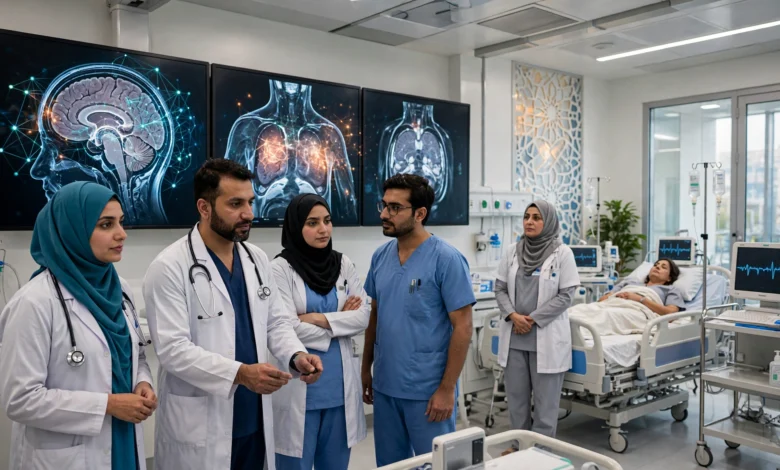
AI in disease diagnosis is no longer something Pakistani patients only read about in foreign news. In mobile screening camps across Karachi and in public hospitals in Peshawar, chest X-rays are now being read by software within seconds, flagging people who may have tuberculosis before a radiologist even looks at the image. In private hospitals, AI tools are helping doctors spot early signs of cancer, heart disease, and diabetic eye damage.
For a country like Pakistan, speed matters enormously. There aren’t enough radiologists, pathologists, or eye specialists to serve over 240 million people, and most of the ones we have work in big cities. Patients in rural Sindh, south Punjab, or Balochistan often travel for hours, wait days for reports, and sometimes never get a proper diagnosis at all. By the time many diseases are caught, they’re already advanced.
AI can’t fix all of that. But it can help overworked doctors see more patients, catch problems earlier, and send the right people for follow-up tests.
At the same time, Pakistan’s health sector has a painful history of fake medicines, unqualified quacks, illegal organ trade, and fake test certificates. These scandals remind us that technology in medicine must be handled carefully, with honest oversight and respect for patients.
This article looks at how AI in disease diagnosis is actually being used in Pakistani hospitals, where it’s working, where it falls short, and the ethical rules that need to come with it.
Note: This article is for general information and is not medical advice. Always consult a qualified doctor about your health.
Why Pakistan Needs AI in Disease Diagnosis
To understand why this technology matters, you have to look at the size of the problem.
A Heavy Disease Burden
Pakistan carries one of the world’s highest tuberculosis burdens and is ranked among the top five high-burden countries globally. It also has high rates of diabetes, hepatitis, heart disease, and cancer. Pakistan is reported to have one of the highest breast cancer rates in Asia, with most cases diagnosed at later stages.
Too Few Specialists
The scarcity of eye specialists, radiologists, and other diagnostic experts is well documented. A single radiologist in a busy public hospital may have hundreds of scans waiting. Delays of days or weeks aren’t unusual.


The Urban-Rural Gap
Most specialists, modern machines, and diagnostic labs are concentrated in cities like Karachi, Lahore, and Islamabad. For millions of rural patients, the nearest proper diagnostic facility may be several hours away.
This is where AI in disease diagnosis has the most potential: not by replacing doctors, but by extending their reach.
How AI in Disease Diagnosis Actually Works
Most diagnostic AI today uses machine learning, especially a type called deep learning. Here’s the simple version:
- Developers train the system on thousands or millions of medical images, such as X-rays, retinal photos, or CT scans, that doctors have already labeled.
- The AI learns patterns that link certain features in the images to certain diseases.
- When a new image comes in, the AI compares it with what it has learned and gives a result, such as a probability score for TB or a flag for a suspicious lump.
- A doctor reviews the result and decides what to do next.
This approach is often called computer-aided detection (CAD). The key word is “aided.” In responsible use, the AI supports the doctor. It doesn’t make the final decision alone.
7 Ways AI in Disease Diagnosis Is Helping Pakistani Hospitals
1. Faster Tuberculosis Screening with Chest X-Ray AI
TB screening is the clearest success story for AI in disease diagnosis in Pakistan so far.
Back in 2016, the Indus Health Network started nationwide early TB screening using mobile X-ray units equipped with CAD4TB software, as part of its Zero TB drive. Chest X-rays taken in the van are analyzed by AI, and only people flagged as likely TB cases are sent for more expensive lab tests like GeneXpert.
The scale has become significant. A 2026 study looked at outcomes for more than 1,023,488 people screened through community mobile X-ray camps in Pakistan.
Public hospitals have used it too. Radiologists at MTI-Lady Reading Hospital in Peshawar studied CAD4TB software installed in a mobile X-ray system at the busy public-sector hospital, in collaboration with Indus Hospital’s Zero TB Project.
Newer tools are even more portable. Some AI systems can be installed on the X-ray console laptop and read chest X-rays offline in under 30 seconds. Organizations like Dopasi have used these with battery-powered portable X-ray machines weighing about 30 kg to reach prisoners, miners, refugees, and transgender people, groups who often miss out on care.
Cost is a major advantage. Research from Pakistan found that CAD screening is substantially cheaper than having a radiologist read every image, which makes large-scale screening more affordable. You can read a detailed review in this peer-reviewed article on computer-aided TB detection in Pakistan.
2. Early Cancer Detection
Cancer is where late diagnosis costs the most lives. Cancer screening with AI is still at an early stage in Pakistan, but it’s growing.
In March 2026, Alibaba’s DAMO Academy signed agreements with Capital Hospital, Khawaja Safdar Medical College, and local cloud provider Sky47 to deploy a multi-cancer screening AI in imaging departments. The company says the system detects major cancers and chronic diseases and has provided more than 20 million screenings across ten countries and regions.
It’s too early to judge results in Pakistan, and vendor claims need independent evaluation. But if validated locally, tools like this could help detect cancers like pancreatic or gastric cancer earlier, when treatment options are better.
3. Diabetic Eye Disease Screening
Pakistan has a very large diabetic population, and diabetes can silently damage the retina, eventually causing blindness. Doctors at Aga Khan University Hospital have pointed to AI-assisted diabetic retinopathy screening as a practical example of how AI can address the shortage of eye specialists in Pakistan.
The process is simple: a trained technician takes a photo of the back of the eye, and AI software checks it for signs of damage. Patients who need treatment are referred to an ophthalmologist. Those with healthy eyes don’t need to travel to a specialist at all.
Local researchers are also working on this. HEC-funded projects have explored fully automated point-of-care screening for diabetic retinopathy, developed with Pakistani partners.
4. Smarter Hospital Decision Support
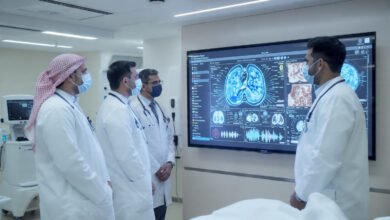
Some private hospitals are going beyond single tests. In January 2025, Aga Khan University Hospital in Karachi was reported to be using AI tools to support earlier and more accurate diagnosis of several complex diseases.
A director at the university explained that the goal is to support doctors, not replace them, with a focus on complex conditions like cancer and heart disease. The hospital also uses predictive analytics to anticipate complications and allow earlier intervention.
This kind of system can flag, for example, a patient whose lab results suggest a rising risk of sepsis, so staff can act before the condition becomes critical.
5. Laboratory Result Interpretation
AI is also helping in the lab. Aga Khan University researchers tested an AI-supported reporting tool for plasma amino acid analysis in children, which helps detect rare inherited metabolic disorders. They found 98.8% agreement between the lab’s own reporting and the AI-assisted reporting across 2,081 samples.
For rare diseases, where very few specialists exist in Pakistan, this kind of support can help labs interpret results with more confidence.
6. Reaching Remote Areas Through Telemedicine
AI works best when combined with telemedicine. A patient in a remote district can have an X-ray or eye photo taken locally, analyzed by AI, and reviewed by a specialist in a city hospital. Platforms like Sehat Kahani and Marham have already made remote consultations common in Pakistan, and adding AI screening can make those consultations faster and better targeted.
Cloud-based systems are part of this plan. The idea behind hosting diagnostic AI on the cloud is that smaller clinics can access the same tools as large hospitals without buying expensive computers.
7. Reducing Workload for Overstretched Doctors
Perhaps the most underrated benefit of AI in disease diagnosis is how it helps sort cases. If AI can confidently identify clearly normal X-rays, radiologists can spend more time on complex or abnormal cases. International research shows that AI support can improve diagnostic accuracy and turnaround time in chest X-ray programs in low- and middle-income countries.
For a doctor facing a queue of 200 patients, even a small time saving per case matters.
Learning from the Past: Illegal Activities in Pakistan’s Health Sector
To use AI responsibly, it helps to remember what has gone wrong in Pakistani healthcare before. These cases explain why patient trust is fragile and why strong oversight is essential.
The PIC Fake Medicine Tragedy (2012)
In 2012, more than 100 heart patients in Lahore died after receiving contaminated medicine from the Punjab Institute of Cardiology’s free pharmacy. Investigations found that a drug had been contaminated with an anti-malarial compound during manufacturing. The tragedy exposed weak drug regulation and quality control, and led to reforms including stronger oversight by the Drug Regulatory Authority of Pakistan.
The lesson for AI: medical tools, whether pills or software, must be tested and approved before being used on patients. A faulty algorithm can harm many people quickly, just like a contaminated batch of medicine.
The Ratodero HIV Outbreak (2019)
In 2019, hundreds of people, most of them children, were diagnosed with HIV in Ratodero, Larkana district. Investigations linked the outbreak largely to reuse of syringes and unsafe medical practices, including by unqualified practitioners. A local doctor was arrested, and health authorities launched a crackdown on quacks.
The lesson for AI: poor practices spread harm silently. AI can help detect unusual disease clusters early, but it can’t replace basic safety standards, qualified staff, and proper regulation.
Quack Clinics
Health regulators like the Punjab Healthcare Commission have sealed thousands of clinics run by unqualified people over the years. These “doctors” often misdiagnose patients, prescribe unnecessary drugs, or delay proper treatment.
There’s a real risk here: someone could buy cheap AI diagnostic apps and use them to pose as a qualified practitioner. AI must remain in the hands of trained professionals within regulated facilities.
Illegal Kidney Trade
Pakistan has repeatedly faced illegal organ trafficking. In 2023, Punjab police broke up a kidney transplant racket in which a man accused of performing illegal transplants had allegedly operated on many patients in private homes, sometimes without donors’ full knowledge. Pakistan’s transplant law prohibits commercial organ trade.
The lesson for AI: medical data and systems can be misused by criminal networks. Access to patient records, including those used by AI tools, must be tightly controlled.
Fake COVID-19 Test Certificates
During the pandemic, the FIA arrested people involved in issuing fake COVID-19 test reports and vaccination certificates, mostly for travelers. Some labs and individuals sold negative reports without any testing.
The lesson for AI: digital health records need strong verification. AI-generated reports must be traceable to a real test, a real patient, and an accountable professional.
Data Leaks and Privacy Failures
In 2023, a government investigation found that personal data of millions of Pakistani citizens had been leaked from NADRA records over several years. While this wasn’t health data specifically, it showed how vulnerable large national databases can be.
Internationally, the UK’s Information Commissioner’s Office ruled in 2017 that London’s Royal Free NHS Trust had broken data protection law by sharing about 1.6 million patient records with Google DeepMind for an app trial without adequately informing patients. That case is now a standard example of how not to handle health data in AI projects.
The Ethical Risks of AI in Disease Diagnosis
Honest discussion means looking at the risks, not only the benefits.
Wrong Results and Overconfidence
No AI system is perfect. It can miss disease (a false negative) or wrongly flag a healthy person (a false positive). A missed TB case can spread infection; a false cancer alarm can cause huge anxiety and unnecessary procedures.
Internationally, some high-profile tools have disappointed. IBM’s Watson for Oncology faced criticism around 2018 after reports that it gave unsafe or incorrect treatment recommendations in some cases. A widely used sepsis prediction model in US hospitals was found in a 2021 study to perform much worse than its developer claimed.
Bias in Training Data
AI trained mainly on patients from Europe, the US, or China may not perform as well on Pakistani patients, whose genetics, disease patterns, and imaging equipment may differ. A well-known 2019 study published in Science found that a US healthcare algorithm underestimated the needs of Black patients because it used past healthcare spending as a stand-in for medical need.
That’s why local validation matters. Some Pakistani research has already looked at how AI performs in specific groups, such as TB patients with and without diabetes.
Patient Data Privacy
Medical images and records are deeply personal. Key questions include:
- Do patients know AI is being used on their scans?
- Where is the data stored, in Pakistan or abroad?
- Is it used to train commercial AI products?
- Who is responsible if the data is leaked?
Pakistan’s personal data protection framework is still being developed, so hospitals and vendors must set high standards themselves until strong laws are in place.
Accountability
If an AI tool misses a disease, who is responsible: the doctor, the hospital, or the software company? The global consensus, including in the World Health Organization’s guidance on ethics and governance of AI for health, is that humans must stay in control of medical decisions and that clear accountability must exist.
Unequal Access
If AI is only available in expensive private hospitals, it could widen the gap between rich and poor patients. The most meaningful use of AI in disease diagnosis is in public hospitals, screening camps, and rural areas, where the specialist shortage hurts most.
What Pakistani Hospitals and Regulators Should Do
For AI in healthcare Pakistan to grow safely, several steps are needed:
- Local validation: Test every AI tool on Pakistani patients before wide use.
- Regulatory approval: DRAP and provincial healthcare commissions should set clear rules for approving diagnostic AI software.
- Human oversight: A qualified doctor should review AI results, especially for serious diagnoses.
- Informed consent: Patients should be told when AI is part of their diagnosis.
- Data protection: Patient data should be anonymized, securely stored, and never sold.
- Training: Doctors, nurses, and technicians need training to understand AI’s strengths and weaknesses.
- Public-sector focus: Government programs should prioritize AI tools that serve underserved and rural communities.
- Independent audits: Performance should be checked regularly, not just at launch.
What Patients Should Know About AI in Disease Diagnosis
If you or a family member are being screened or treated at a hospital using AI tools, it helps to know your rights and a few practical points:
- Ask questions. It’s fine to ask whether AI was used and how the result was checked.
- Follow up. An AI flag usually means you need further tests, not that you definitely have a disease.
- Don’t rely on apps alone. Online “AI symptom checkers” and diagnosis apps are not a substitute for seeing a qualified doctor.
- Protect your data. Be cautious about uploading medical reports to unknown websites or apps.
- Verify the facility. Make sure the clinic or lab is registered with the relevant healthcare commission.
The Future of AI in Disease Diagnosis in Pakistan
Over the next few years, we’re likely to see:
- Wider TB screening with portable AI X-rays reaching more districts
- AI-supported cancer screening in more public and private hospitals
- Diabetic eye screening in primary care centres
- AI tools that understand Urdu for patient communication and record keeping
- Integration with national health programs such as the Sehat Card
- More local research from Pakistani universities and hospitals
The technology is moving quickly. The real test will be whether it reaches ordinary patients in public hospitals and villages, not just elite private facilities, and whether it’s governed with the honesty and care that past health scandals show is necessary.
Conclusion
AI in disease diagnosis is already helping Pakistani hospitals detect diseases faster, most clearly through AI-read chest X-rays that have screened more than a million people for tuberculosis, along with growing use in cancer screening, diabetic eye checks, lab interpretation, predictive hospital systems, and telemedicine that reaches remote areas. These tools help ease the country’s severe shortage of specialists and can save lives by catching diseases earlier and more affordably. But Pakistan’s history of contaminated medicines, the Ratodero HIV outbreak, quack clinics, illegal kidney trade, fake COVID-19 certificates, and large data leaks shows that medical technology without strong oversight can cause serious harm. The right path forward is to validate AI on Pakistani patients, keep qualified doctors in charge, protect patient data, get informed consent, regulate diagnostic software properly, and focus on public hospitals and rural communities, so that AI becomes a trusted tool that makes healthcare fairer and faster for everyone.