Best Cars for Ride-Hailing Drivers in Pakistan (Careem & InDrive)
Ride-hailing drivers in Pakistan need cars that are cheap to run and fix. Compare 7 top picks for InDrive and Yango, real costs, and the legal risks.
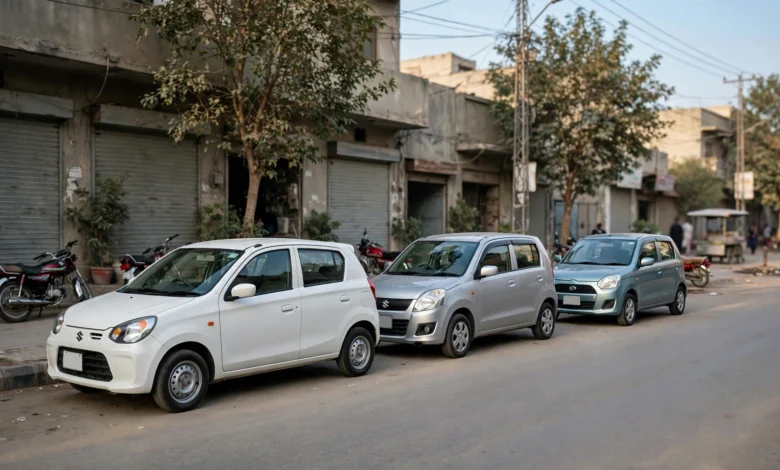
Ride-Hailing Cars in Pakistan: 7 Best Picks for InDrive and Yango Drivers and the Costly Mistakes to Avoid
Introduction
Ride-hailing has become a full-time job for thousands of Pakistanis and a side income for many more. But the platform landscape has changed. Careem, the company that made app-based rides normal in Pakistan, shut its ride-hailing service on 18 July 2025. Today InDrive and Yango carry most trips, and drivers who once called themselves Careem captains now work on these ride-hailing apps instead.
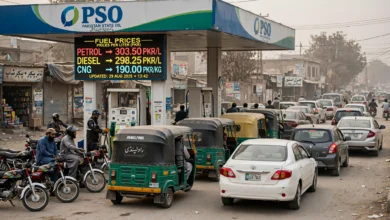
What has not changed is the most important decision a driver makes: which car to use. In ride-hailing, the car is your workplace and your biggest cost. Petrol at around Rs390 a litre, rising maintenance bills and fares that riders constantly bargain down mean the wrong car can wipe out your profit. In 2026, Dawn calculated that a ride-hailing car’s daily fuel bill rose from about Rs3,795 to Rs6,225 after fuel hikes.
The job also carries legal and ethical responsibilities that many guides ignore. Pakistan’s first ride-hailing cars were impounded in 2017 for operating without commercial permits, gangs have used fake driver accounts to rob passengers, and harassment complaints have pushed regulators to demand proof of safety from the platforms.
This guide covers the seven best cars for ride-hailing drivers in Pakistan, the real earnings math behind each choice, the mistakes that cost drivers money, and the rules that protect both you and your passengers.
The Ride-Hailing Market in Pakistan After Careem
The ride-hailing market in Pakistan is now driver-led and price-driven. Careem announced it would suspend its ride-hailing service from 18 July 2025, with its CEO citing a difficult economy, intense competition and global capital priorities. Uber had already pulled back from Pakistan.
One analyst estimate put InDrive at roughly 60 to 65 percent of the market and Yango at about 30 percent by mid-2025, with Careem below 5 percent before it left. InDrive’s model, where passengers offer a fare and drivers accept or counter, gave drivers more say over pricing, and many ride-hailing drivers switched platforms early.
For drivers, this matters in three ways:
- Fares are negotiated hard. On bid-based ride-hailing apps, passengers push prices down, so low running costs decide whether a trip is worth taking.
- Regulation is catching up. Yango reportedly became the first operator to receive a formal Transport Network Company licence from Punjab in early 2026, a sign that licensing and compliance requirements will grow.
- Room to grow remains. Only about 5 percent of Pakistanis use ride-hailing services, according to InDrive’s regional director in September 2026, compared with around 20 percent globally.
What Makes a Good Ride-Hailing Car in Pakistan?
A good ride-hailing car is not the nicest car you can afford. It is the one that earns the most after costs over several years. Look for these qualities:
- Fuel economy. Fuel is the biggest daily cost, so every extra kilometre per litre adds straight to profit.
- Reliability. A car off the road for repairs earns nothing.
- Cheap, available parts. Suzuki and Toyota parts are found in every city, which keeps repair bills and downtime low.
- Comfort and AC. Passengers rate drivers on comfort, and higher-tier categories pay more for air-conditioned, roomier cars.
- Resale value. A ride-hailing car covers huge mileage, so a model that still sells well at high mileage protects your investment.
- Platform eligibility. Ride-hailing apps set minimum standards for model year, condition and category, so check the current requirements before buying.
7 Best Cars for Ride-Hailing Drivers in Pakistan
These seven cars cover every budget and ride-hailing category, from economy rides to comfort trips. New-car prices are official October 2026 ex-factory figures; used prices are rough market estimates.
1. Suzuki Alto: The Cheapest Way Into Ride-Hailing
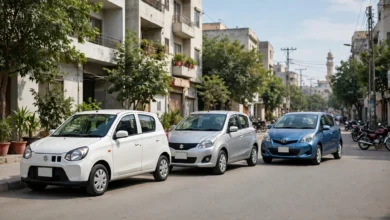
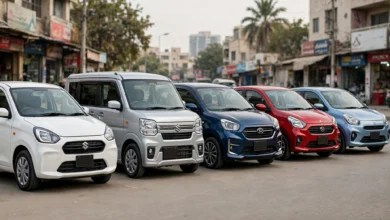
The Suzuki Alto starts at Rs2,994,861 new and is the most fuel-efficient mainstream car in Pakistan. Its 660cc engine keeps daily fuel costs low, parts are everywhere, and any mechanic can fix it. The AGS automatic variants make long hours in city traffic easier.
The downside is space. Four adults with luggage feel cramped, and the car feels light at highway speeds. For short city trips in the economy category, though, few cars earn back their price faster in ride-hailing.
2. Used Suzuki Wagon R: The Classic Workhorse
If you use ride-hailing apps, you already know how common the Wagon R is. Suzuki has stopped making it, but used 2020 and 2021 VXL AGS models sell for around Rs3 million. Its tall body gives passengers more headroom and easier entry than an Alto, and its 1,000cc engine remains economical.
Because many Wagon Rs have already worked as ride-hailing cars, check mileage, suspension and AC condition carefully before buying one.
3. Suzuki Cultus: More Comfort for a Small Step Up
The Suzuki Cultus starts at Rs4,089,490. It offers more cabin space, a more stable highway ride and a smoother 1,000cc engine than the Alto. It suits ride-hailing drivers who want to take longer trips and inter-city bookings without moving to a much thirstier car.
4. Toyota Yaris 1.3: Built for Comfort Categories
The Toyota Yaris 1.3 GLi manual starts at Rs4,649,000. A proper sedan with a bigger boot, it qualifies for higher comfort categories on most ride-hailing apps, where fares are better. Toyota’s reputation for reliability and strong resale value makes it a sensible long-term choice if your budget allows.
5. Honda City 1.2: Comfortable and Easy to Drive
The Honda City 1.2LS costs Rs4,737,000 with an automatic gearbox, which makes 10-hour ride-hailing shifts in heavy traffic far less tiring. Passengers like the space. It costs more to buy and run than a Cultus, so make sure your target category pays enough to justify it.
6. Suzuki Swift: Modern and Efficient
The Suzuki Swift starts at Rs4,460,160 and offers a CVT automatic on higher variants. It feels more modern than older hatchbacks, which can help ride-hailing ratings. Its boot is smaller than a sedan’s, so it suits city work better than airport runs.
7. Imported Used Hybrids: Low Fuel Cost, Higher Risk
Some ride-hailing drivers choose imported used hybrids such as the Toyota Aqua for their excellent fuel economy in stop-and-go traffic. In heavy ride-hailing use, that can mean big fuel savings. The risks are real, though: hybrid battery replacement is expensive, parts and trained mechanics are fewer, and every imported car needs a verified auction sheet and proof that duties were paid. Buy one only from a trusted source and with documents you have checked yourself.
The Real Earnings Math of Ride-Hailing
Fuel decides most of your profit in ride-hailing. After the May 2026 fuel hike, Dawn calculated that a ride-hailing car’s daily fuel cost rose from Rs3,795 to Rs6,225, a 64 percent jump, and Yango said fares rose by up to 20 percent in Karachi and Lahore and up to 35 percent in Islamabad and Rawalpindi.
The table below shows rough daily fuel costs for 200 km of driving at the current petrol price of about Rs390.66 a litre. Fuel averages are assumptions for mixed city driving with AC; your real figures will vary.
| Car type | Assumed fuel average | Litres per 200 km | Daily fuel cost (Rs) |
|---|---|---|---|
| Imported used hybrid | 22 km per litre | about 9.1 | about 3,550 |
| Suzuki Alto | 18 km per litre | about 11.1 | about 4,340 |
| Suzuki Cultus or Wagon R | 16 km per litre | 12.5 | about 4,880 |
| Toyota Yaris or Honda City 1.2 | 13 km per litre | about 15.4 | about 6,010 |
The gap between the most and least efficient car here is roughly Rs2,500 a day, or more than Rs60,000 a month over 25 working days. That is why fuel economy matters more than looks in ride-hailing.
Costs Drivers Often Forget
- Platform commission taken from each fare
- Maintenance such as oil changes, brake pads, tyres and AC servicing, which come around far sooner at high mileage
- Depreciation, since a ride-hailing car loses value faster with every kilometre
- Insurance, token tax and registration
- Car loan instalments if you financed the car
Add these ride-hailing costs up before you decide whether a bigger car’s higher fares are worth its higher costs.
The Dark Side of Ride-Hailing: Lessons From Past Illegal Activity
The best car in the world will not protect you if you break the rules. These real cases show what has gone wrong in Pakistani ride-hailing, and what drivers can learn.
Cars Impounded for Running Without Permits
In January 2017, Punjab’s Provincial Transport Authority declared Careem and Uber illegal for using private cars as taxis without fitness certificates or route permits. Police in Lahore impounded several Careem cars and detained drivers, and Islamabad and Sindh followed with their own crackdowns. The dispute ended with an agreement that cars used commercially would register under the Motor Vehicles Ordinance 1965. The lesson for drivers: check what your province requires for commercial use of a private car, because the driver and the vehicle carry the risk when rules are enforced.
Fake Driver Accounts Used for Robbery
In 2025, Lahore police broke up a gang that used fake InDrive accounts to pose as ride-hailing drivers and rob passengers. In one case, a passenger booked a ride on Jail Road and lost valuables worth millions of rupees. Police recovered weapons, vehicles and more than 200 SIM cards, and reports said the alleged mastermind had worked in InDrive’s office. Never sell, rent or lend your ride-hailing account to anyone. If it is used in a crime, the trail leads to you.
Harassment and the Duty of Care
Harassment complaints are the most serious problem facing ride-hailing in Pakistan. In late 2025, the federal harassment ombudsperson ordered Yango and InDrive to prove compliance with the Protection Against Harassment of Women at the Workplace Act 2010, as The Express Tribune reported. Lahore police have since arrested drivers accused of harassing and assaulting women during trips, often tracing them within hours through trip records. Yango has said drivers found responsible are removed permanently. A professional ride-hailing driver’s reputation is built on every passenger feeling safe.
Fake Plates and Unpaid Fines
In 2026, Lahore traffic police arrested a driver with 80 unpaid e-challans worth Rs410,000 who had swapped his plates for forged ones. Safe City cameras tracked the car anyway. Ride-hailing drivers who spend all day on the road collect fines quickly, so pay them on time. Tampering with plates turns a fine into a criminal case.
Ride-Hailing Driver Checklist: Legal, Safe and Profitable
Before you start driving for any ride-hailing app, work through this list.
- Hold a valid driving licence for the vehicle class you drive, and keep it with you.
- Check commercial-use rules in your province, including any registration, fitness or permit requirements for private cars carrying paying passengers.
- Register the car in your name, or carry written permission and the owner’s details if you drive someone else’s car.
- Confirm the platform’s car requirements for model year, condition and category before buying a car for ride-hailing.
- Insure the car properly, and ask your insurer whether commercial use is covered.
- Keep the car clean and the AC working. Ratings decide how many trips you get.
- Never share or sell your account. It is tied to your identity and your car.
- Treat every passenger professionally. Follow the app route, keep conversation respectful, and never contact a passenger after a trip.
- Pay e-challans and token tax on time. Unpaid fines can block licence renewals and other services.
- Track your real costs. Record fuel, maintenance and commission each week so you know your true hourly earnings.
FAQs About Ride-Hailing Cars in Pakistan
Can I still drive for Careem in Pakistan?
No. Careem suspended its ride-hailing service in Pakistan on 18 July 2025. Ride-hailing drivers now mainly use InDrive and Yango, with Bykea popular for bikes and rickshaws.
What is the best car for ride-hailing on a tight budget?
The Suzuki Alto is the cheapest new option at about Rs3 million and has the lowest fuel cost among mainstream cars. A well-kept used Wagon R is another strong choice.
Which car earns the most in ride-hailing?
Comfort sedans like the Toyota Yaris and Honda City can earn higher fares, but they also cost more to buy and fuel. Do the math for your city before upgrading.
Are hybrids good for ride-hailing in Pakistan?
They can cut fuel costs sharply in city traffic, but hybrid battery replacement is expensive and parts and mechanics are fewer. Buy only with verified import documents.
Do I need commercial registration for ride-hailing?
Rules depend on your province and can change. Since 2017, authorities have treated private cars carrying paying passengers as commercial use, so check current requirements with your provincial transport or excise department.
Final Tips Before You Buy a Ride-Hailing Car
Test-drive the car in traffic with the AC on, check the boot space with a suitcase, and ask other drivers in your city which models the platforms favour. A few hours of research before buying a ride-hailing car can save you lakhs over its working life.
Conclusion
With Careem gone since July 2025 and InDrive and Yango running most trips, the best cars for ride-hailing in Pakistan are the ones that earn the most after costs: the Suzuki Alto and a well-kept used Wagon R for the lowest fuel bills, the Cultus and Swift for a step up in comfort, the Toyota Yaris and Honda City 1.2 for higher-paying comfort categories, and carefully verified imported hybrids for drivers who can manage their extra risks. With petrol near Rs390 a litre, the gap between an efficient and a thirsty car can top Rs60,000 a month, so fuel economy, reliability and cheap parts matter far more than looks. The job also demands responsibility, as the 2017 permit crackdown, fake driver accounts used for robbery, harassment cases that brought regulators down on the platforms, and fake plates used to dodge fines all show: hold a valid licence, follow your province’s rules, never share your account, pay your fines and treat every passenger with respect, and ride-hailing can be a steady, honest living.
Keywords