Solar-Powered Cars Could They Work on Pakistani Roads
Solar-powered cars in Pakistan face heat, dust, cost and fraud. A realistic look at the sunlight advantage, EV policy and what could actually work.
Solar-Powered Cars in Pakistan: 5 Promising Ways They Could Work, and the Hard Truth
Introduction
Solar-powered cars in Pakistan sound like the perfect answer to two of the country’s biggest headaches: expensive petrol and an unreliable, costly power grid. The sun is free, it shines hard for most of the year, and millions of Pakistanis have already put solar panels on their roofs. So why not on their cars?
The idea is appealing, and it isn’t science fiction. Several companies around the world have built cars with solar panels on the roof and bonnet. But the honest picture is more complicated. Some of the most hyped solar car startups in Europe ran out of money before they reached ordinary buyers, and even the best designs only add a modest amount of driving range from the sun each day. Pakistan’s heat, dust and road conditions add their own challenges.
There’s also a side of the story that rarely makes it into feel-good articles. Pakistan’s solar boom has been accompanied by one of the largest trade-based money laundering cases in its history, with billions of rupees moved abroad under the cover of solar panel imports. Fake and substandard equipment is also common.
This article looks at how solar cars work, why Pakistan has a real opportunity, what stands in the way, and which illegal practices buyers should watch for. Most importantly, it explains what is realistic today: not cars that run purely on sunlight, but electric vehicles charged by the sun.
How Solar Cars Work, and Where the Technology Stands
Before asking whether solar-powered cars in Pakistan could work, it helps to understand what a solar car really is. Despite the name, almost no road car runs on sunlight alone.
The Basic Idea
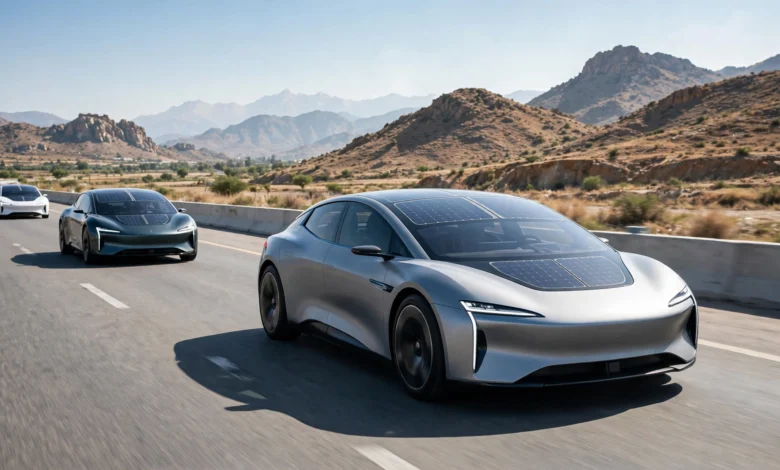
A solar car is an electric vehicle with solar panels built into its body, usually the roof, bonnet and boot lid. Those panels charge the car’s battery while it is parked or driving. The battery then powers the electric motor, just like any other EV. When the sun isn’t enough, the car is plugged into a charger.
The Space Problem
The biggest limit is surface area. A car only has a few square metres of space facing the sky, which is far less than a house roof. Even with efficient panels and strong sunshine, that area can only produce a small amount of power. Depending on the design, weather and how the car is parked, solar panels on a car typically add somewhere in the range of a few to a few dozen kilometres of range on a sunny day. That’s helpful for short city trips but nowhere near enough for a daily Lahore to Islamabad commute.
What Happened to the Big Solar Car Projects
The global record is mixed, and it’s worth being honest about it:
- Lightyear (Netherlands) built a striking long-range solar car, but production stopped and the company went into financial trouble in 2023 after struggling to reach volume at a viable price.
- Sono Motors (Germany) cancelled its planned Sion solar car in 2023 to focus on supplying solar panels for buses and trucks.
- Aptera (United States) has continued developing a very light, aerodynamic three-wheeled solar vehicle, but mass production has taken far longer than first promised.
- Major carmakers such as Toyota and Hyundai have offered solar panels on cars as an option on some hybrid models, mainly to top up the battery or run accessories.
The lesson is that the technology works, but building an affordable, practical car around it is very hard. That matters for a price-sensitive market like Pakistan.
Why Solar-Powered Cars in Pakistan Look Promising
For all the limits above, Pakistan has some genuine advantages that most countries don’t.
Strong Sunshine Most of the Year
Large parts of Sindh, Balochistan and southern Punjab get intense sunlight for long hours across most of the year. More sun per day means more energy from every panel, whether it’s on a car or a rooftop.
A Massive Solar Boom Already Under Way
Pakistan has become one of the world’s biggest buyers of solar panels. Energy think tank Ember’s Global Electricity Review 2025 reported that the country imported around 17 gigawatts of solar panels in 2024, roughly double the year before. Homes, shops, farms and factories have turned to rooftop solar to escape rising electricity bills and load-shedding. That means installers, panels and know-how are already spread across the country.
A Government Push Toward Electric Vehicles
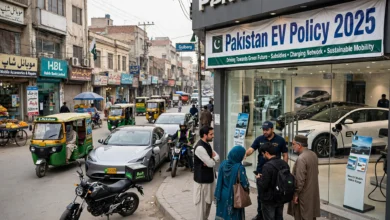
The government launched its NEV policy 2025-30 (New Energy Vehicle policy) in 2025. Its headline target is for 30 percent of all new vehicles sold in Pakistan to be electric by 2030 (Business Recorder). The policy includes:
- Rs9 billion allocated in 2025-26 to support about 116,000 electric bikes and 3,100 electric rickshaws
- Plans for 40 new EV charging stations on motorways
- Battery swapping pilots and vehicle-to-grid schemes
- Charging points built into new building codes
The Real Opportunity: Solar-Charged EVs
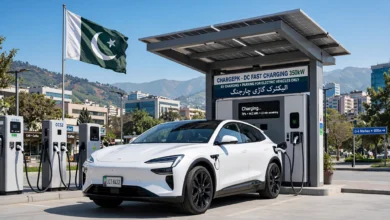
Put those together and a practical model appears. Instead of cars covered in panels, the realistic future is solar charging: EVs plugged in at home, at offices or at charging stations powered by solar panels. A family with a rooftop solar system can charge an electric bike or car during the day at very low running cost. In effect, the car runs on sunshine, even if the panels aren’t on the car.
The Hard Problems Facing Solar Cars on Pakistani Roads
Optimism is useful, but it shouldn’t hide the obstacles. These are the problems any solar or electric car will face here.
Extreme Heat
Solar panels become less efficient as they get hotter, and a car roof in a Jacobabad summer gets extremely hot. Heat is also hard on lithium-ion batteries, which age faster and lose range when they are kept hot for long periods. Any car designed for Pakistan needs good battery cooling, which adds cost.
Dust and Smog
A layer of dust can noticeably cut a panel’s output. In cities like Lahore, Karachi and Multan, a car parked outside for a day collects plenty of it. Winter smog in Punjab also reduces the sunlight reaching panels. Owners would need to clean the panels often for them to be worth having.
Price and Affordability
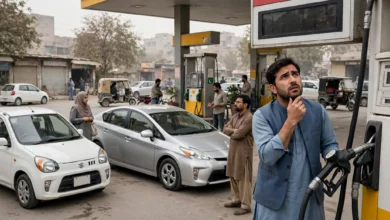
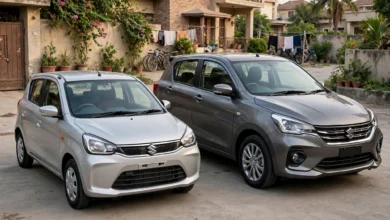
EVs are still expensive in Pakistan compared with local petrol cars, and solar body panels add more cost. With car prices already out of reach for many families, a premium-priced solar car would be a niche product. The most affordable electric options today are bikes and rickshaws, not cars.
Road Conditions and Repairs
Potholes, speed breakers and flooded roads put stress on suspensions and body panels. A cracked solar roof or bonnet is far more expensive to replace than a normal steel panel, and few workshops know how to repair one.
Charging Infrastructure
Even with the NEV policy, public charging is limited, especially outside the major cities and motorways. Load-shedding and grid instability also make charging less predictable, which is one reason home solar charging is so attractive.
Parking and Shade
Here’s the irony: Pakistanis park in the shade whenever they can to protect their cars from the heat. A solar car wants the opposite. In crowded cities with limited parking, getting several hours of direct sun each day isn’t always possible.
The Dark Side: Fraud Around Solar and EVs in Pakistan
Any conversation about solar-powered cars in Pakistan has to include the fraud that has followed the solar boom. These cases show why buyers and policymakers need to be careful.
The Solar Panel Over-Invoicing Scandal
Because solar panels were imported free of duty and sales tax, they became an attractive cover for moving money out of the country. In October 2022, the FBR began an audit of solar panel importers and found solar panel over-invoicing of about Rs69.5 billion by 63 importers covering 2017 to 2022. Two of those firms alone sent around Rs72.8 billion abroad while the panels they imported sold for far less in Pakistan, and their registered offices turned out to be non-existent or fake (Business Recorder).
The case kept growing. A Senate committee was later told that more than 80 companies, some of them dummy firms, were involved in fraud and money laundering worth over Rs110 billion under the cover of solar imports (Dawn). Customs investigators separately broke up a network of seven fake companies that had over-invoiced panels by 235 to 500 percent. The FBR imposed a record Rs111 billion penalty and seized 327 containers of panels, and in 2026 the Prime Minister ordered legal action against everyone involved, including officials who allowed it to happen.
This matters for clean transport because the same pattern could repeat with EVs, batteries and chargers if they receive tax breaks without strong checks.
Fake and Substandard Panels
Alongside the money laundering, the market has been flooded with panels whose real output is far below the wattage printed on the label, along with used or rejected panels sold as new. A buyer paying for a 550-watt panel may get much less. For a car or home charging system, that means much less range per day than promised.
- Buy from established distributors who provide a warranty in writing.
- Ask for test reports and serial numbers you can verify with the manufacturer.
- Be wary of prices far below the market.
Unsafe EV Conversions and Cheap Batteries
As fuel prices rise, some workshops offer to convert petrol cars or rickshaws to electric, sometimes with solar panels added. Many use cheap, unbranded lithium batteries, poor wiring and no proper battery management system. Like the substandard CNG cylinders that caused deadly van fires in the past, these conversions can catch fire, especially in extreme heat.
Electricity Theft for Charging
The growth of electric rickshaws has come with reports of vehicles being charged through illegal hook connections (kundas) to avoid paying for electricity. This adds to the burden on paying customers and creates fire and electrocution risks.
Subsidy and Scheme Fraud
Whenever the government offers subsidies, such as for electric bikes and rickshaws under the NEV policy, fraudsters follow with fake registration websites, middlemen charging “processing fees” and false promises of guaranteed approval. Apply only through official government portals.
Could Solar-Powered Cars Work in Pakistan? The Realistic Paths
So, could solar-powered cars in Pakistan work? A car that runs only on sunlight isn’t practical for most people yet. But solar energy can absolutely power Pakistani transport in other ways, and some are already happening.
1. Solar-Charged Electric Bikes
Electric motorcycles are cheap to run, light on energy and perfect for rooftop solar charging. With the NEV policy supporting e-bikes, this is likely the first place solar transport becomes common.
2. Electric Rickshaws With Solar Support
Electric rickshaws cover short, predictable routes and spend time parked in the sun between rides. Solar roofs can extend their daily range, and solar-powered charging hubs could serve whole fleets.
3. EVs Charged at Home From Rooftop Solar
For families who already have rooftop solar, adding an EV makes the panels even more valuable. Charging during sunny hours cuts both fuel and electricity costs. Check your distribution company’s current net metering or billing rules, since these have been under review, and make sure your inverter and wiring can handle the extra load.
4. Solar Charging Stations on Highways and in Parking Lots
Shaded parking structures with solar roofs can protect cars from heat and charge them at the same time. Malls, offices, universities and motorway service areas are ideal for this.
5. Small Solar Panels as Range Extenders
On cars, the most sensible use of solar today is as a helper: a roof panel that keeps the battery topped up, runs ventilation in a parked car, or adds a few kilometres a day. It won’t replace charging, but it can reduce how often you need it.
What Needs to Happen First
- Affordable EVs, ideally assembled locally
- Reliable charging networks beyond the big cities
- Strict quality testing for panels, batteries and chargers
- Strong controls on imports to prevent another over-invoicing scandal
- Clear safety rules for EV conversions and battery installations
Conclusion
Solar-powered cars in Pakistan are not ready to replace petrol cars, because a car’s small surface area, the country’s extreme heat, dust and smog, high EV prices, rough roads and limited charging all hold back vehicles that run on sunlight alone, and even well-funded solar car startups abroad struggled to reach ordinary buyers. Yet Pakistan has real advantages in strong sunshine, a huge rooftop solar boom and an NEV policy targeting 30 percent electric sales by 2030, which makes solar-charged electric bikes, rickshaws and home-charged EVs a realistic and promising path. That future will only work if it is built honestly, since the Rs69.5 billion and larger solar panel over-invoicing cases, fake panels, unsafe battery conversions, electricity theft and subsidy scams show how quickly clean energy can be exploited, so buyers should insist on verified equipment and official channels while policymakers enforce strict import and safety checks.
Keywords