Understanding Pakistan’s New Auto Policy and Its Impact on Prices
Auto Policy 2026-31 explained: proposed duty cuts, used car import rules, EV incentives and what they really mean for car prices in Pakistan right now.
Auto Policy 2026-31: 7 Critical Changes and Their Costly Impact on Car Prices in Pakistan
Introduction
Auto policy news in Pakistan usually comes with one hopeful question: will cars finally get cheaper? The new Auto Policy 2026-31 has raised that hope again. It promises lower duties on imported cars, a legal route for commercial used car imports, stronger safety rules and more support for electric vehicles.
The reality is slower and messier. As of early October 2026, the Prime Minister has approved the draft in principle, but it still needs IMF review, the Economic Coordination Committee and the federal cabinet. Not a single duty or tax from the new auto policy has been notified yet, so it has changed nothing on today’s price lists.
To understand where this auto policy could take car prices in Pakistan, you also need to know why this auto policy exists. For years, buyers paid illegal “own money” premiums to dealers, waited months for cars they had already paid for, and watched import schemes meant for overseas Pakistanis turn into a commercial business. Regulators and courts have been chasing these problems for nearly a decade.
This article walks through the seven biggest changes proposed in the auto policy, what each one could mean for prices, the past abuses it is trying to fix, and who stands to win or lose. It ends with practical advice for anyone planning to buy a car while the policy is still being finalised.
What Is Pakistan’s Auto Policy 2026-31?
The Auto Policy 2026-31 is the government’s five-year plan for how cars, parts, motorcycles and electric vehicles are made, imported and taxed in Pakistan. It replaces the Auto Industry Development and Export Policy 2021-26, whose term ended on 30 June 2026. The new auto policy was meant to start on 1 July 2026, but it missed that date.
The auto policy is shaped by two forces pulling in different directions. The Ministry of Industries and Production wants to keep protecting local assemblers and push localisation. The Ministry of Commerce, backed by the National Tariff Policy and Pakistan’s IMF programme, wants lower tariffs and more competition. The final auto policy is a compromise: protection now, cheaper imports later.
Where the Auto Policy Stands Right Now
The Prime Minister approved the draft in principle on 9 September 2026, according to reports. On 18 September, the government’s industries adviser said the auto policy would be unveiled “shortly”, without giving a date. Before anything changes for buyers, the auto policy still has to pass these steps:
- Review by the IMF, with talks on tax and tariff measures reported for October
- Approval by the Economic Coordination Committee (ECC)
- Approval by the federal cabinet
- Notification of the actual duty and tax changes through official orders
Until step four happens, today’s duties and today’s import rules apply. That is the single most important fact about this auto policy for anyone shopping for a car. A clear breakdown of the reported draft and its status is available in this guide to what the Auto Policy 2026-31 changes for car buyers.
7 Critical Changes in the New Auto Policy
The full text of the auto policy has not been published, so the details below come from consistent media reports on the approved draft. Some numbers may still change before the cabinet signs off.

1. Lower Customs Duty on Imported New Cars
The headline change is a step-by-step cut in customs duty on cars imported fully built (CBU) until 2030-31. Regulatory duty and additional customs duty on these cars would also be phased out. The reported draft sets these customs duty rates for 2030-31:
| Engine size of imported new car | Proposed customs duty by 2030-31 |
|---|---|
| Up to 850cc | 35 percent |
| 851cc to 1,000cc | 40 percent |
| 1,001cc to 1,500cc | 45 percent |
| 1,501cc to 1,800cc | 77 percent |
| Above 1,800cc | 115 percent |
Some reports describe even deeper cuts in the final year, and the government has said it will review the structure after two years. Big engines also face a proposed environmental levy of 10 percent on 2,001cc to 3,000cc vehicles and 19.5 percent above 3,000cc.
2. A Simpler Tariff Structure
The auto policy reportedly adopts four tariff slabs of 0, 5, 10 and 15 percent for the sector, in line with the National Tariff Policy 2025-30. The aim is to bring the average import tariff down sharply by 2030. Reported starting and ending figures vary between sources, but every version points the same way: less protection for local assembly over time.
3. Commercial Used Car Imports Through Dealers
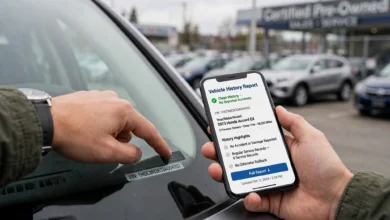
The draft auto policy would allow commercial imports of used vehicles up to five years old, but only by active corporate taxpayers with sales, service and spare parts networks. A 40 percent regulatory duty would apply at first and fall to zero by 2030. For buyers, that means used imports with a dealer and a workshop behind them, instead of a car bought from an unknown importer.
4. Stronger Push for Electric Vehicles
The auto policy works alongside the New Energy Vehicles Policy 2025-30, which targets 30 percent of new vehicle sales being electric or other new energy vehicles by 2030, with 3,000 charging stations. Reported incentives include a 1 percent sales tax on battery electric cars, range-extended EVs and plug-in hybrids, and a higher car loan limit of Rs10 million for these vehicles, up from Rs3 million.
5. Changing Treatment of Hybrids
Hybrids are the messiest part of the story. Reports on the auto policy disagree on how imported hybrids will be taxed. Separately, the sales tax on locally made hybrids up to 2,000cc was reportedly cut from 25 percent to 18 percent from 13 September 2026, and some assemblers have since lowered hybrid prices. That cut came from a tax order, not from the new auto policy.
6. Higher Local Content Targets
The auto policy sets minimum local value addition targets for 2030-31, enforced by the Engineering Development Board. Reported targets include 40 percent for passenger cars, 45 percent for light commercial vehicles, 90 percent for motorcycles and rickshaws, and 15 percent for new energy vehicles.
7. Mandatory International Safety Standards
The draft reportedly requires compliance with 62 UNECE safety regulations. This could matter more to ordinary buyers than any tariff. Pakistani cars have long been criticised for missing basic safety features, and this part of the auto policy would decide what every new car must include. Which rules apply, and from when, has not yet been published.
How the Auto Policy Could Affect Car Prices
The honest answer is that the auto policy will not crash prices. Its effect on car prices in Pakistan will arrive slowly, and other factors may outweigh it. Here is a realistic auto policy timeline.
Right Now: No Change
No duty from the auto policy has been notified, so the October 2026 price lists from Suzuki, Toyota, Honda and others still reflect the old rules. Any recent price movement, such as cheaper local hybrids, comes from separate tax decisions. If a dealer tells you a car is cheaper “because of the new policy”, ask for the notified order.
The Next Two to Four Years: Limited Relief
Under the auto policy, reports say the government will keep protecting existing conventional assemblers for about four years. During that period, duty on imported cars falls only gradually, so local assemblers face little real price pressure. Expect small or uneven changes on popular locally made cars like the Alto, Cultus, Yaris and City.
Toward 2030: Real Competition, If the Rules Hold
If the auto policy survives intact, imported new cars and commercially imported used cars become meaningfully cheaper toward 2030 as duties fall and the 40 percent regulatory duty on used imports reaches zero. That competition is what could finally push local prices down, or at least stop them rising so fast.
What Could Cancel Out the Benefit
- Rupee depreciation: Most car parts are still imported, so a weaker rupee raises costs regardless of duty cuts.
- Sales tax changes: Federal budgets can raise sales tax and wipe out a duty cut overnight.
- Policy reversals: Pakistan has a history of revising auto rules mid-term. The government itself plans an auto policy review after two years.
- Supply shortages: If assemblers cut production, own money and delivery delays could return.
The bottom line: the auto policy sets a direction toward cheaper cars, but the speed depends on the economy and on whether future governments stick to it.
The Illegal Practices Behind the New Auto Policy
No auto policy is written in a vacuum. Several of the biggest auto policy changes respond directly to abuses that buyers, regulators and courts have documented over the past decade.
Own Money: Paying Extra for Your Own Car
For years, buyers paid own money, an unofficial premium charged by dealers or middlemen for quick delivery of a new car. In 2021, members of the National Assembly’s Public Accounts Committee said buyers were paying premiums of up to Rs800,000 because automakers failed to deliver on time. A study by the Pakistan Institute of Development Economics estimated that undocumented premium payments over five years ran to Rs150 billion to Rs170 billion, untaxed and outside any receipt.
The Competition Commission of Pakistan (CCP) opened an inquiry in November 2018 into own money, delayed deliveries and price increases after booking. Its 2018 report described the auto industry as lacking real competition and recommended that prices should not rise after a customer has booked a car. The inquiry then stalled for years in court. In late 2025, as Dawn reported on the CCP car price inquiry, the Lahore High Court upheld the CCP’s notices to a major carmaker and ordered the inquiry concluded within six months.
The new auto policy tackles the root cause rather than the symptom. Own money thrives on shortage. More imports and more competition reduce shortage, which is why many analysts see tariff cuts as the most effective anti-premium tool.
Import Schemes Turned Into a Business
The Personal Baggage, Gift and Transfer of Residence schemes were created so overseas Pakistanis could bring a car home. In practice, commercial importers used the passports of overseas Pakistanis to bring in used cars and sell them straight into local markets. Local automakers claimed at least 40,000 cars arrived each year this way, often sold for cash through unregistered dealers outside the tax net.
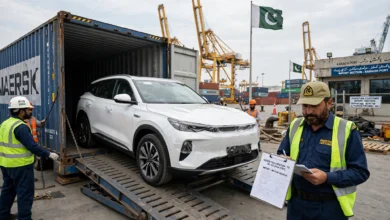
In 2024 the Prime Minister directed the FBR to stop this misuse. In January 2026 the government went further and abolished the Personal Baggage Scheme for used cars, keeping the Gift and Transfer of Residence routes under tighter conditions. These include meeting commercial safety and environmental standards, a reported one-year ban on resale, and a longer gap between imports. The dealer-only commercial import route in the new auto policy is the next step: it gives used imports a legal, taxed channel instead of a grey one.
Fake Paperwork in the Registration System
Weak documentation has also cost the state and buyers. In 2020, Punjab’s Anti-Corruption Establishment exposed a scheme in which excise officials and private agents registered vehicles on fake army auction vouchers, with around 7,000 vehicles flagged for fake or unverified papers. Routing used imports through registered, tax-filing dealers under the auto policy should make this kind of fraud harder.
Winners and Losers Under the Auto Policy
Every auto policy shifts money and power from one group to another. This auto policy mainly shifts it from protected assemblers toward buyers, but only over time.
| Group | Likely effect | Why |
|---|---|---|
| Car buyers | Gain, slowly | More choice, safer cars and pressure on prices as duties fall toward 2030 |
| EV buyers | Gain sooner | Low sales tax, tax exemptions and bigger car loan limits, if the IMF agrees |
| Local assemblers | Lose protection over time | Four years of cover, then real competition from imports |
| Parts makers | Mixed | Higher localisation targets bring work, but cheaper imported parts bring competition |
| Registered used car dealers | Gain | A legal commercial import route for those with service networks |
| Informal importers and middlemen | Lose | Personal Baggage closed, tighter Gift and Transfer of Residence rules, less shortage to profit from |
| Government revenue | Uncertain | Lower duties cut income, while new levies and a bigger tax net may offset it |
The biggest risk for buyers is that the losers lobby hard enough to delay or water down the auto policy before it is notified. That has happened before, and it is why it pays to watch the ECC and cabinet decisions closely.
Should You Buy a Car Now or Wait for the Auto Policy?
For most people, waiting for the auto policy to cut prices is not a good plan. The duty cuts are spread over five years, and nobody knows exactly when they start. Here is a practical approach.
- Buy now if you need a car now. Plan on today’s prices and rules. Waiting for the auto policy could mean waiting until 2030.
- Lock your price in writing. Ask whether the booking price is fixed. Under current terms, that depends on the booking order, not on the draft auto policy.
- Never pay own money. Pay only the official price, only into the manufacturer’s account, and get a signed booking order with a delivery month.
- Recheck hybrid prices. The September 2026 sales tax cut has already moved some hybrid prices, separately from the auto policy.
- Use current import rules for imports. The Gift and Transfer of Residence schemes still apply. The dealer import route in the auto policy is only proposed.
- Compare EV loans carefully. Current car loan limits apply until any auto policy change is officially notified.
- Watch for official notifications. Only ECC and cabinet decisions followed by notified orders change duty or tax. Treat social media claims about the auto policy with caution.
FAQs About the Auto Policy 2026-31
Is the new auto policy in force?
No. The Prime Minister approved it in principle in September 2026, but it still needs IMF review, ECC and cabinet approval, and notified orders before it changes any duty or tax.
Will the auto policy make cars cheaper?
Over time, probably, especially imported cars toward 2030. In the next few years, local car prices may see only limited relief because assemblers keep protection for about four years.
Can I import a used car under the new auto policy?
Not yet. The commercial dealer route in the auto policy is only proposed. Today, overseas Pakistanis can use the Gift or Transfer of Residence schemes, with a three-year age limit on the car.
What does the auto policy mean for electric cars?
It supports the official target of 30 percent electric or new energy vehicle sales by 2030, with reported incentives including a 1 percent sales tax and higher loan limits.
Conclusion
Pakistan’s Auto Policy 2026-31 points the car market toward lower duties on imported cars, a legal dealer route for used imports, stronger safety standards, higher local content targets and real support for electric vehicles, but as of October 2026 it is approved only in principle and has not changed a single duty or price. Its design is shaped by years of documented abuse, from own money premiums worth billions and a CCP inquiry stuck in court, to import schemes for overseas Pakistanis turned into a cash business and fake registrations inside the excise system. If the auto policy survives IMF review, cabinet approval and future budgets intact, buyers should see more choice and gradual price pressure toward 2030, while protected assemblers and informal middlemen lose ground; until then, the smart move is to buy on today’s rules, refuse any premium, pay only through official channels and treat every price claim about the new auto policy with healthy caution until it is officially notified.