How Ride-Hailing Apps Are Changing Transport in Pakistani Cities
Ride-hailing apps in Pakistan have changed how cities move, from cheap bike rides to new jobs, but bans, data leaks and harassment show the risks.
Ride-Hailing Apps in Pakistan: 7 Powerful Changes and the Shocking Truth for City Commuters
Introduction
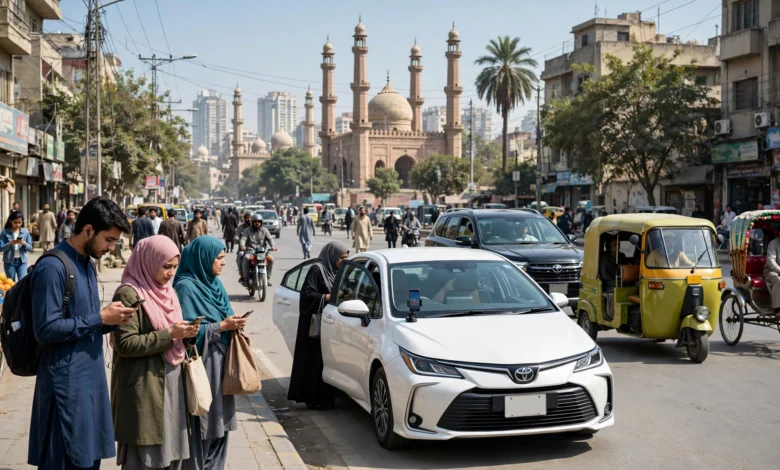
Ride-hailing apps have quietly rewritten the daily commute in Pakistan. Ten years ago, getting across Karachi or Lahore meant haggling with a rickshaw driver, waiting at a packed bus stop, or begging a cousin with a car. Now people open an app, pick a bike, rickshaw or car, and see a price before they step outside.
That shift did not happen smoothly. Ride-hailing apps in Pakistan arrived in 2016, were declared illegal in Punjab within a year, lived through a major data breach, and then watched the two biggest brands, Uber and Careem, walk away from rides altogether. Today inDrive, Yango and Bykea run most of the market, and fuel prices have pushed fares up sharply in 2026.
There is also a darker side that deserves an honest look. Police in Lahore have broken up a gang using fake driver accounts to rob passengers, and the federal harassment ombudsperson has demanded answers from the largest ride-hailing apps after repeated complaints from women.
This article covers both halves of the story. You will see the seven biggest ways ride-hailing apps have changed urban transport in Pakistani cities, the illegal activities that followed them, how regulators are responding, and what riders can do to stay safe. The goal is simple: a clear, fact-based picture of what ride-hailing apps get right, what they get wrong, and where they are heading next.
A Short History of Ride-Hailing Apps in Pakistan
The story of ride-hailing apps in Pakistan is only ten years old, but it has packed in a lot. Bans, a data leak, two big exits and a price war all happened in that decade. Here is the timeline that shaped today’s market.
| Year | What happened |
|---|---|
| 2016 | Careem launches in Pakistan in March, with Uber close behind. |
| 2017 | Punjab’s Provincial Transport Authority declares Careem, Uber and A-One illegal for running private cars as taxis without permits. Sindh and Islamabad follow with crackdowns. |
| 2018 | Careem discloses a cyber attack that exposed data of up to 14 million customers across 13 countries, including Pakistan. |
| 2023 | Yango enters the market, starting in Lahore, Islamabad and Rawalpindi. |
| 2024 | Uber shuts down its app in Pakistan. |
| 2025 | Careem suspends its core ride-hailing service in June, citing the economy and tough competition. |
| 2026 | Yango reportedly becomes the first operator to receive a Transport Network Company license from Punjab. Fuel hikes push fares up. inDrive now runs in 30 cities. |
The big takeaway is that the companies that built the market are not the ones running it now. inDrive’s bid-your-own-fare model and Yango’s low prices suit a price-sensitive country better than the fixed fares Uber and Careem relied on. Data cited by Rest of World once put inDrive at over two million daily active users in Pakistan, against roughly 374,000 for Careem. Cheap and flexible ride-hailing apps won.
7 Ways Ride-Hailing Apps Are Changing Transport in Pakistani Cities
Strip away the marketing and ride-hailing apps have changed seven concrete things about how people move in Karachi, Lahore, Islamabad and beyond.
1. Bikes and Rickshaws Became Bookable Transport
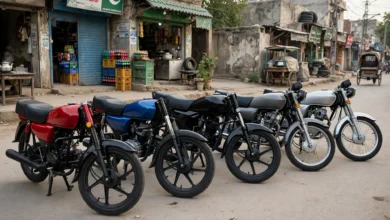
Bykea started in Karachi as a motorcycle ride and delivery service, and it proved early that ride-hailing apps did not need cars to work. Today nearly all ride-hailing apps in Pakistan offer bikes and rickshaws alongside cars. For a student or office worker crossing a congested city, a bike ride booked through ride-hailing apps is often faster and far cheaper than a car. It also slips through narrow lanes where cars cannot go.
2. Fare Bidding Replaced Street Haggling
Pakistanis have always negotiated fares. Fare bidding on inDrive simply moved that negotiation into the app. The rider offers a price, drivers accept or counter, and both sides know the number before the trip starts. That is more transparent than shouting over a rickshaw stand. The downside is that very low bids push some drivers on ride-hailing apps to cancel late or demand extra cash once a rider is already waiting, a common complaint in user reviews.


3. Women Gained More Independent Mobility
For many women, ride-hailing apps solved a real problem: getting to work or university without depending on a male relative or a crowded bus. Women-only services grew out of this need. VSisters, Pakistan’s first women-only ride-hailing service, had 464 female captains across Islamabad, Rawalpindi and Lahore in 2025, and riders said they felt more at ease with female drivers. As the cases later in this article show, that sense of safety is not guaranteed on mainstream ride-hailing apps.
4. A New Source of Income for Hundreds of Thousands
Ride-hailing apps turned private cars and motorbikes into income. A young man who moved to Karachi from a rural district, an unemployed graduate in Rawalpindi, a retired clerk with an old car: all can sign up on ride-hailing apps and start earning within days. Careem and Bykea captains reported take-home pay of around Rs3,500 a day in 2025, though it varies with hours. This gig economy work has no pension, no health cover and no fixed salary, which is why fuel hikes hit drivers so hard.
5. Filling the Gaps Left by Public Transport
Cities like Karachi have grown far faster than their bus networks. Metro and BRT lines help, but they cover only a few corridors. Ride-hailing apps fill the last-mile gap between a bus stop and a home, and they serve whole areas where no reliable public transport exists. During the 2017 Punjab ban, critics made exactly this point: ride-hailing apps were filling a vacuum left by years of weak public transport planning.
6. From Rides to Deliveries and Super Apps
The biggest ride-hailing apps now double as delivery services. The same riders who carry passengers also carry parcels, groceries and medicine. Bykea built much of its business on deliveries, and inDrive has announced plans for a super app with quick commerce. For users, one app now handles a ride to the office, a parcel to a relative and a pharmacy order.
7. A Digital Trail That Helps Accountability
Every trip on ride-hailing apps leaves a record: the driver’s name, the vehicle, the route and the time. That record matters. In 2026, Lahore police traced a driver accused of harassing and slapping a woman within an hour by tracking the car. A street taxi leaves no such trail. The record only helps, though, when ride-hailing apps share it quickly and police act on it.
The Dark Side: Illegal Activities Linked to Ride-Hailing Apps in Pakistan
An honest look at ride-hailing apps in Pakistan has to include the problems. Some came from the companies, some from regulators playing catch-up, and some from criminals who saw a new way to reach victims.
2017: Running Without Permits
In late January 2017, Punjab’s Provincial Transport Authority declared Careem and Uber illegal for using private cars as taxis without fitness certificates or route permits. The province asked the Pakistan Telecommunication Authority to block the ride-hailing apps. Lahore traffic police impounded several Careem cars and detained drivers, Islamabad authorities seized vehicles, and Sindh pushed for legal action. A Sindh transport official said only a handful of an estimated 1,000 to 1,500 Uber cars had obtained the required NOCs.
The crackdown lasted days, not months. The Punjab Chief Minister gave the companies 15 days to register, and the dispute ended with an agreement that commercially used vehicles would register under the Motor Vehicles Ordinance 1965. The episode set a pattern that still holds: ride-hailing apps launch first, and the law catches up later.
2018: The Careem Data Breach
In April 2018, Careem admitted that hackers had broken into its systems that January. The breach exposed names, emails, phone numbers and trip data of up to 14 million customers, plus records of 558,000 captains across 13 countries, Pakistan included. Profit later reported that local security researchers had flagged weaknesses well before the attack. Trip data stored by ride-hailing apps shows where people live, work and travel, so a leak like this is a physical safety risk, not just a privacy one.
Fake Driver Accounts and Robbery Gangs
In 2025, Lahore police broke up a gang that used fake inDrive accounts to pose as drivers and rob passengers. In one case, a man booked a ride on Jail Road and lost valuables worth millions of rupees. Police recovered weapons, vehicles and more than 200 SIM cards. Reports said the alleged mastermind worked as a software operator in inDrive’s office after an earlier job at Careem. The scheme worked because passengers trust ride-hailing apps more than strangers on the street, and insider access made the fake profiles look real.
Harassment and Assault Cases
Harassment is the most common serious complaint against ride-hailing apps in Pakistan. As early as 2022, the Digital Rights Foundation logged complaints about Careem and inDrive involving abusive messages, explicit content and stalking. Some documented cases since then:
- August 2024, Lahore: A woman in Sabzazar accused an online cab driver of following her into a friend’s home after the ride and assaulting her.
- December 2025, Lahore: An inDrive motorcycle rider was arrested for allegedly taking a matric student to the wrong location and harassing her.
- April 2026, Lahore: Police arrested a ride-hailing driver accused of harassing a woman during a trip, then slapping her and fleeing.
- September 2026: Nishtar Colony police arrested an online rickshaw driver for posting a female passenger’s number on a matchmaking app after an argument, which flooded her with calls from strangers.
None of this means every driver is a threat. Most trips on ride-hailing apps end without a problem. It does mean that driver vetting, in-app safety tools and fast police response are basic requirements for ride-hailing apps, not optional extras.
How Regulators Are Responding to Ride-Hailing Apps
Regulation of ride-hailing apps in Pakistan has moved from outright bans toward licensing and accountability. It is slow, but the direction is right.
Licensing Under Provincial Transport Authorities
After the 2017 standoff, Punjab drafted a policy treating app vehicles as commercial, which meant commercial registration and taxes. In early 2026, Yango reportedly became the first operator to receive a formal Transport Network Company license from Punjab’s Provincial Transport Authority. Licensing gives the government a clear way to demand driver checks, vehicle fitness and data sharing from ride-hailing apps, instead of chasing them after something goes wrong.
Harassment Law and the Federal Ombudsperson
In late 2025, the Federal Ombudsperson Secretariat for Protection Against Harassment (FOSPAH) issued notices to Yango Pakistan and inDrive Pakistan after multiple complaints. As The Express Tribune reported, both were told to prove compliance with the Protection Against Harassment of Women at the Workplace Act 2010. The ombudsperson asked for:
- Proof of a legally required inquiry committee
- Internal protocols for handling harassment complaints
- Details of passenger safety systems, including driver vetting, route monitoring and in-app tools
- A full record of harassment complaints from the past three years
Both ride-hailing apps said they follow zero-tolerance policies. Yango said drivers found responsible are removed permanently, and inDrive pointed to GPS tracking that flags unusual routes.
Police and Safe City Technology
Punjab Safe City cameras and the Virtual Women Police Station have helped police trace drivers from ride-hailing apps within hours. That matters, because a fast arrest is one of the few things that actually deters offenders.
Fuel Prices, Fares and Driver Earnings in 2026
The biggest pressure on ride-hailing apps this year has nothing to do with technology. It is the price of petrol. In March 2026 the government raised petrol by Rs55 a litre overnight, and by May it had reached about Rs415 a litre.
Here is how that played out for riders and drivers:
- Driver costs jumped. Dawn calculated that a ride-hailing car’s daily fuel bill rose from Rs3,795 to Rs6,225, an increase of 64 percent. A delivery rider told Dawn his daily fuel went from about Rs1,000 to Rs1,600.
- Fares followed. Yango said cumulative fare changes reached up to 20 percent in Karachi and Lahore and up to 35 percent in Islamabad and Rawalpindi, where trips tend to be longer. One Karachi commuter said her usual fare felt like it had doubled.
- Some riders left. Drivers reported weaker demand as commuters left ride-hailing apps for buses, while office workers formed WhatsApp carpool groups to split costs.
This is the core tension in ride-hailing apps in Pakistan. Riders want cheap fares, drivers need to cover fuel and still feed their families, and ride-hailing apps take a commission from the middle. When fuel spikes, someone loses. Usually it is the driver, whose take-home pay shrinks while the app’s share stays the same. Fair commission rates and fuel support for drivers deserve as much attention as passenger discounts.
How to Use Ride-Hailing Apps Safely in Pakistan
A few simple habits cut most of the risks described above. They take seconds, and they work on all the major ride-hailing apps.
- Book only inside the official app. If someone claims to be from inDrive or Yango but asks you to cancel and pay off the app, say no. The Lahore robbery gang relied on exactly this kind of misplaced trust.
- Match the car, plate and face. Check the vehicle number, model and driver photo before you get in. If anything differs, cancel and rebook.
- Share your trip live. Most ride-hailing apps let you share your route with a family member in real time. Use it every time, especially at night.
- Watch the route. Keep your own map open. If the driver leaves the expected route without a clear reason, ask why, and be ready to end the trip in a busy area.
- Keep personal details private. Use the in-app call feature, and avoid discussing your address or daily schedule. The matchmaking app case shows how a phone number can be misused after one argument.
- Know the emergency tools. Find the SOS button in your app before you need it, and save 15 for police. In Punjab, the Safe City and Virtual Women Police Station services can respond fast.
- Report every incident. Complain in the app first, then go to the police or FOSPAH for harassment. Every report adds to the record that pushes ride-hailing apps to remove bad drivers.
Drivers face risks too, from robbery to riders who refuse to pay. Staying inside ride-hailing apps and keeping trip records protects them in the same way.
What Comes Next for Ride-Hailing Apps in Pakistan
For all the noise, ride-hailing apps in Pakistan are still early. At a September 2026 panel, inDrive’s regional director said only about 5 percent of Pakistanis use ride-hailing services, compared with roughly 20 percent worldwide. inDrive runs in 30 cities and says it plans to invest more, while Yango and Bykea have a smaller footprint.
A few trends are worth watching:
- Smaller cities. Growth now depends on towns where digital literacy and internet access are limited. Simpler ride-hailing apps and cash payments will matter more than flashy features.
- Super apps. Expect ride-hailing apps to bundle food, groceries and payments, as inDrive has already signalled.
- New entrants. Women-only services like VSisters, per-seat carpooling apps and newcomers such as Drivver are chasing gaps the big ride-hailing apps leave open.
- Tighter rules. Licensing in Punjab and the ombudsperson’s notices suggest regulators will keep asking for proof of safety, not just promises.
The winners will be the ride-hailing apps that keep fares affordable, treat drivers fairly and can show, with real data, that their rides are safe.
Conclusion
In ten years, ride-hailing apps have changed how Pakistani cities move: bikes and rickshaws became bookable, fare bidding replaced haggling, women gained more freedom to travel, and hundreds of thousands of people found a way to earn. The same decade also brought the 2017 permit crackdown, the 2018 Careem data breach, fake-driver robbery gangs and a steady stream of harassment cases, alongside a 2026 fuel shock that squeezed riders and drivers alike. With Uber and Careem gone and inDrive, Yango and Bykea leading, ride-hailing apps in Pakistan now face a simple test: grow beyond the 5 percent of people who use them today while proving, through licensing, vetting and fast responses to complaints, that every ride is both affordable and safe.