How to Build a Brand on a Small Budget in Pakistan
Build a brand on a small budget in Pakistan with low-cost social media, trademark and packaging tips, plus real cases of deceptive marketing to avoid.
Build a Brand on a Small Budget in Pakistan
Introduction
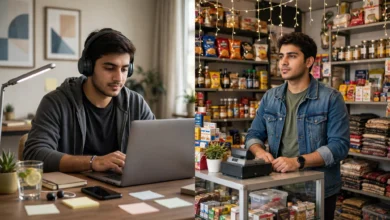
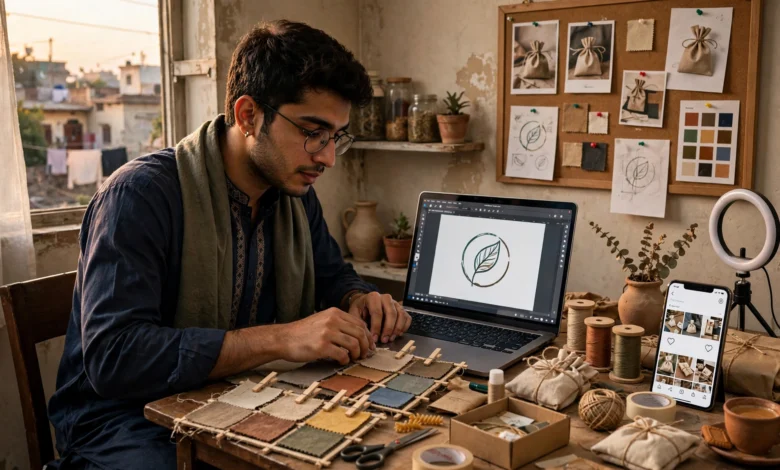
You can build a brand on a small budget in Pakistan, and many of today’s best-loved local names prove it. Clothing labels that began on Instagram, home bakeries that now supply cafés, skincare brands started from a single kitchen counter, and tech startups that grew through word of mouth all began with very little money. What they had instead was a clear idea, consistent effort, and customers who trusted them.
Branding is often confused with logos and expensive advertising. In reality, a brand is what people say about you when you are not in the room. It is the feeling customers get when they open your parcel, read your reply on WhatsApp, or recommend you to a cousin. Much of that costs time and care rather than money.
The pressure to grow fast pushes some small businesses toward shortcuts: buying fake followers, posting fake reviews, copying a famous brand’s name or design, making health claims they cannot prove, or using misleading discounts. Pakistan’s Competition Commission, courts, and regulators have taken action against these practices again and again, and the damage to reputation usually lasts longer than any fine.
This guide shares practical, low-cost ways to build a real brand in Pakistan, from choosing a name and protecting it legally, to growing on social media, packaging, partnerships, and customer service. It also covers real cases of deceptive marketing and trademark disputes, so you know which lines not to cross.
What It Really Means to Build a Brand on a Small Budget in Pakistan
Before spending a single rupee, it helps to be clear about what a brand is and what the Pakistani market looks like for a small business.
A brand is more than a logo
A strong brand has a few core parts:
- Identity: Your name, logo, colours, and the way you write and speak.
- Promise: What customers can always expect from you, such as quality, speed, price, or style.
- Experience: How it feels to buy from you, from the first message to after-sales support.
- Reputation: What people say about you in reviews, comments, and conversations.
A beautiful logo cannot save a business that delivers late or ignores complaints. A plain logo can belong to a much-loved brand if the promise is kept every time.
The realities of branding in Pakistan
- Trust is low and must be earned. Many shoppers have been burned by online sellers whose products looked nothing like the photos. Cash on delivery remains popular for this reason.
- Word of mouth is powerful. Family WhatsApp groups and local communities spread recommendations, and complaints, very quickly.
- Social media is crowded. Thousands of small brands compete for attention on Instagram, Facebook, and TikTok.
- Language matters. Urdu, Roman Urdu, and regional languages often connect better than polished English.
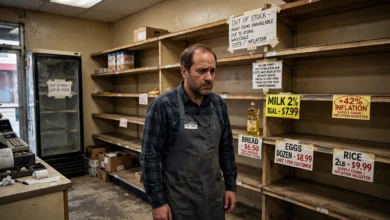
- Price sensitivity is high. Inflation makes customers compare prices carefully, so your value must be obvious.
- Copying is common. Successful designs, names, and ideas get copied fast, which makes legal protection important.
The good news is that these same realities reward small brands that are honest, consistent, and close to their customers. Big companies often struggle to feel personal. You do not have that problem.
11 Low-Cost Ways to Build a Brand on a Small Budget
These strategies are ordered roughly in the sequence most small businesses should follow. Most cost very little money but need steady time and attention.


1. Define who you serve and why you are different
Before designing anything, write down in one or two sentences who your ideal customer is and why they should choose you. “Affordable, modest office wear for working women in Lahore” is much stronger than “clothing for everyone.” A clear brand positioning makes every later decision easier, from colours to captions.
2. Pick a name you can actually own
Choose a name that is short, easy to spell in English and Urdu, and not already used by someone in your category. Search Google, Instagram, Facebook, and Daraz before deciding. Then check whether a similar mark is already registered with the Intellectual Property Organization of Pakistan.
3. Register your trademark early
Trademark registration in Pakistan is one of the best-value investments a small brand can make. Official filing fees are modest compared with the cost of rebranding later because someone else registered your name first. Registration gives you legal grounds to stop copycats and makes your brand more valuable if you ever sell or franchise it. Check the current fee schedule on the IPO website, and consider a qualified trademark agent if the process feels confusing.
4. Create a simple, consistent visual identity
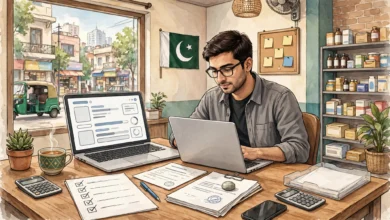
You do not need an expensive agency. Free and low-cost tools like Canva let you create a clean logo, colour palette, and post templates. Stick to two or three colours and one or two fonts, and use them everywhere: social media, packaging, invoices, and shop signs. Consistent branding makes even a small business look established.
5. Tell a real story
People connect with people. Share why you started, who is behind the brand, and what you care about. A mother who started baking to pay her children’s school fees, or two friends who left jobs to revive Sindhi embroidery, are stories that make customers want to support you. Keep it honest. Invented backstories tend to unravel.
6. Grow organically on social media
Pick one or two platforms where your customers actually spend time, rather than trying to be everywhere.
- Instagram: Strong for fashion, food, beauty, and home decor.
- TikTok: Huge reach for short, entertaining videos, especially among younger audiences.
- Facebook: Still powerful for community groups and older customers.
- YouTube: Good for tutorials, reviews, and longer content.
Post regularly, show behind-the-scenes work, answer comments quickly, and use Urdu or Roman Urdu where it fits. Short videos of packing orders, making products, or answering common questions often perform better than polished ads.
7. Turn WhatsApp into a brand channel
WhatsApp Business is free and is where many Pakistani customers prefer to talk. Set up a catalogue, quick replies, a greeting message, and business hours. Reply politely and quickly, even to difficult customers. A well-run WhatsApp chat can feel more personal than any website.
8. Make packaging part of the experience
You do not need custom boxes on day one. A branded sticker, a stamped paper bag, a handwritten thank-you note, or a simple card with care instructions can turn an ordinary delivery into a memorable moment. Customers often share good unboxing experiences on social media, which is free promotion.
9. Earn genuine reviews and user-generated content
Ask happy customers to leave a review, share a photo, or tag you. Make it easy with a polite message after delivery. Feature real customer posts on your page with permission. Real reviews, including a few honest critical ones handled well, build far more trust than a wall of perfect five-star ratings.
10. Work with micro-influencers and partners
Instead of paying celebrities, work with micro-influencers who have smaller but engaged audiences in your niche. Many will accept free products or modest fees. Always ask them to clearly disclose paid or gifted posts. You can also partner with complementary local brands, such as a bakery and a florist, for joint giveaways or bundles.
11. Get found on Google
Create a free Google Business Profile if you have a physical location or serve a specific area. Add accurate hours, photos, and contact details, and respond to reviews. If you have a website, write helpful content that answers your customers’ questions. Over time, this brings free traffic that does not depend on paid ads.
A Sample Low-Budget Branding Plan for Small Businesses
A common question is how much to spend on low-cost branding. There is no fixed answer, but having a monthly plan stops money from leaking into random boosts and freebies. Here is an example for a small online brand with Rs 25,000 a month to spend on brand building. Adjust the figures to your own situation.
| Area | Monthly amount (Rs) | What it covers |
|---|---|---|
| Content creation | 6,000 | Props, basic lighting, occasional freelance photographer or editor |
| Paid social promotion | 8,000 | Small, targeted boosts on your best-performing posts |
| Packaging and inserts | 5,000 | Stickers, thank-you cards, branded tape |
| Micro-influencer collaborations | 4,000 | Products or small fees for one or two creators |
| Tools and subscriptions | 2,000 | Design tools, domain, or scheduling apps |
| Total | 25,000 |
One-time costs such as trademark filing, a basic website, and a logo refresh can be planned separately and spread over a few months.
Where to spend first
- Product quality and customer service. No branding fixes a poor product.
- Legal protection. Register your trademark before you invest heavily in promotion.
- Content. Good photos and videos are reused across every platform.
- Paid promotion last. Boost only what is already working organically.
Free tools worth using
- Canva for designs and templates
- CapCut or similar apps for short video editing
- Meta Business Suite for scheduling Facebook and Instagram posts
- Google Business Profile for local visibility
- WhatsApp Business for customer communication and catalogues
- Google Forms for simple customer feedback surveys
Illegal and Unethical Branding Shortcuts: Real Cases From Pakistan
When money is tight, shortcuts look tempting. Pakistan’s Competition Act 2010 bans deceptive marketing under Section 10, and the Competition Commission of Pakistan has penalised companies of every size for breaking it. These cases show exactly where the lines are.
Copying another brand’s look: the “Taizgaam” case
This is the most relevant case for small businesses. A Bahawalpur oil mill complained that nine local businesses, including small traders and a kiryana store, were using its registered trademark “Taizgaam” with slight changes on their own products. The CCP fined each of the nine Rs 300,000 and ordered them to stop, ruling that parasitic copying of packaging and labels was deceptive. You do not need to be a big company to get caught.
Lookalike packaging: Storm versus Sting
In January 2026, the CCP fined Mezan Beverages Rs 150 million after finding that its “Storm” energy drink imitated the overall look, colours, bottle design, and branding of PepsiCo’s Sting, creating a likelihood of consumer confusion. Notably, Mezan held a registered trademark for “Storm”, but the Commission held that a trademark registration does not protect a brand from competition law when its packaging misleads buyers. The lesson: own your trademark, but also make sure your overall look is genuinely your own.
Unproven comparisons with competitors
In September 2026, the CCP fined 3M Pakistan Rs 10 million over a marketing demonstration that compared its Scotch-Brite scrubber with Colgate-Palmolive’s Max Scrub, showing the competitor’s product deteriorating. The company could not substantiate the comparison, as Business Recorder reported. Small brands often post “our product vs theirs” videos on TikTok and Instagram. If you cannot prove the claim, do not make it.
Exaggerated health and safety claims
In 2024, the CCP fined Unilever Pakistan Rs 60 million over deceptive claims in television commercials for Lifebuoy soap and hand wash. In another case, PREMA Milk was found to have implied on social media that other dairy products were unfit to drink. The Competition Appellate Tribunal upheld the finding of deceptive marketing in 2025, though it reduced the fine. Food, skincare, and wellness brands should be especially careful with words like “germ-free”, “100% pure”, “cures”, or “doctor recommended” unless they have solid evidence.
Misleading claims about location and features
The CCP fined Kingdom Valley Rs 150 million for advertising its housing project as being in Islamabad when it was located in Rawalpindi. Small businesses do similar things on a smaller scale, such as claiming “imported” materials, “original” brands, or “limited stock” that never runs out. Each of these can count as deceptive.
Fake followers, fake reviews, and hidden sponsorships
Buying followers, likes, or reviews breaks the rules of every major platform and can get accounts restricted or banned. It also misleads customers who rely on social proof. Similarly, paying influencers without disclosure makes ads look like honest opinions. Platforms provide paid partnership labels for a reason. Use them.
Other lines not to cross
- Using copyrighted music, photos, or designs without permission
- Using a celebrity’s photo or name without their consent
- Running fake giveaways that never pick a winner
- Sending bulk promotional SMS or WhatsApp messages to people who never agreed to receive them
- Making medical or drug-like claims for cosmetics, food, or supplements without regulatory approval
Every shortcut above can lead to fines, takedowns, legal notices, or simply a ruined reputation. A slower, honest brand is still a brand. A fast, dishonest one rarely survives.
How to Measure Brand Growth Without Expensive Tools
You cannot improve what you do not track. The good news is that most of the data a small brand needs is free.
Numbers worth watching every month
- Repeat customers: The share of orders coming from people who bought before. This is the clearest sign of a healthy brand.
- Referrals: Ask new customers how they found you. A simple “Who recommended us?” question tells you a lot.
- Engagement, not just followers: Saves, shares, comments, and direct messages matter more than follower count.
- Reviews and ratings: Track the average rating and, more importantly, what people actually say.
- Branded searches: Check in Google Search Console or Google Business Profile whether more people are searching for your brand name.
- Return and complaint rates: Rising complaints are an early warning that your promise is slipping.
Listen to your customers directly
Send a short Google Form after delivery, or simply ask on WhatsApp: What did you like? What could be better? Would you recommend us? Many brands in Pakistan have found new product ideas, packaging fixes, and even their best tagline through customer feedback.
Review and adjust every quarter
Every three months, look at what worked and what did not. Drop platforms or tactics that bring little return, and put more effort into what customers respond to. Brand building on a small budget is less about one big campaign and more about steady, smart adjustments over time.
Conclusion
You can build a brand on a small budget in Pakistan by focusing on the things that money cannot buy: a clear promise, a real story, consistent quality, and customers who feel looked after. Start by defining who you serve, choosing a name you can own, and registering your trademark early. Then build a simple visual identity, grow organically on one or two social platforms, use WhatsApp Business well, make packaging memorable, earn genuine reviews, work with micro-influencers who disclose partnerships, and get found on Google. Plan a modest monthly budget, spend on quality and protection before promotion, and track repeat customers, referrals, and feedback rather than vanity numbers. The Competition Commission’s actions in the Taizgaam, Storm, Scotch-Brite, Lifebuoy, PREMA, and Kingdom Valley cases show that copying, unproven comparisons, exaggerated claims, and misleading ads lead to real penalties for businesses of every size. A small brand built honestly may grow slowly at first, but trust compounds, and that is what turns a small budget into a lasting name.