Top Home-Based Business Ideas for Women in Pakistan
Home-based business ideas for women in Pakistan with real costs, legal steps and lessons from past scams, so you can earn safely and honestly from home.
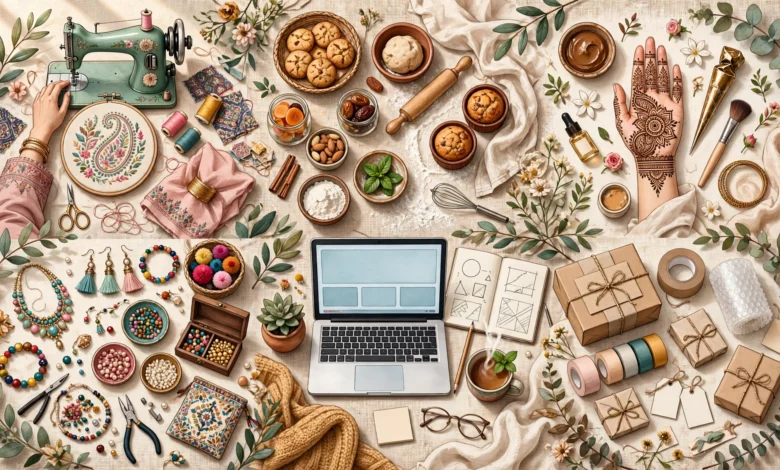
10 Best Home-Based Business Ideas for Women in Pakistan
Introduction
Home-based business ideas for women in Pakistan are searched by thousands of people every month, and the reason is simple. Prices keep climbing, commutes are long and often unsafe, and family duties still fall mostly on women. Pakistan’s latest Labour Force Survey puts female participation in the workforce at only about 24 percent, which means millions of skilled women are earning nothing, or earning quietly in ways the numbers never capture.
At the same time, plenty of women are already running real businesses from their homes. They stitch suits for neighbours, bake birthday cakes, teach Quran and maths online, manage social media pages for shops, and design logos for clients in Dubai and Toronto. Some earn pocket money. Some out-earn their husbands.
The trouble is that the same search for work from home in Pakistan also leads women into traps. Over the last two decades, ordinary families have lost billions of rupees to fake online earning apps, pyramid schemes, and fraudsters pretending to be from BISP. A lot of the victims were women at home who were promised easy daily income.
This guide is written to be honest. It covers ten home-based business ideas for women in Pakistan that real people run today, what they actually cost, where customers come from, and the legal basics like NTN registration. It also walks through real scams and illegal schemes from the past, so you can spot the warning signs before you hand over money or your CNIC details.
Why Home-Based Business Ideas for Women in Pakistan Matter Right Now
Working from home is not a lifestyle trend here. For many women it is the only realistic way to earn. Before picking an idea, it helps to look at the situation clearly.
The numbers behind the problem
According to the Pakistan Bureau of Statistics Labour Force Survey 2024-25, female labour force participation rose from 21.4 percent to 24.4 percent over four years. That is progress, but it is still far below most countries at a similar income level. The same survey found that around 76 percent of working-age women do unpaid domestic and care work, compared to 55 percent of men.
There is a hopeful side too. The Planning Commission reported that women’s share in entrepreneurship rose from 19 percent to 25.2 percent between 2020-21 and 2024-25, and women rely on gig work more than men for second incomes. In plain words, more women are building their own small income streams, and home is where most of it happens.
The real barriers women face
Any honest discussion of small business ideas for women in Pakistan has to name the obstacles:
- Mobility: Many women cannot travel freely to markets, banks, or suppliers without help from a male relative.
- Time: Childcare, cooking, and elder care eat up most of the day. A business has to fit around these hours.
- Money: Few women have their own savings or property to use as collateral for a loan.
- Bank access: A lot of women still do not have a personal bank account, which makes taking online payments harder.
- Family approval: In some households, a woman earning money is still seen as a problem rather than a blessing.
- Online harassment: Women who sell through Facebook or WhatsApp often deal with inappropriate messages from strangers.
None of these are reasons to give up. They are reasons to choose an idea that suits your actual life, not someone else’s success story on YouTube.


10 Best Home-Based Business Ideas for Women in Pakistan
The ideas below are ordered roughly from the lowest skill barrier to the ones that need more training. Start-up costs are rough 2026 estimates in Pakistani rupees and will vary by city and quality. Treat them as a starting point for your own research, not a promise.
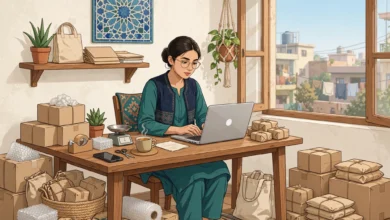
1. Home stitching and online boutique
Stitching is the most common home business in Pakistan for a reason. Almost every family needs suits tailored for Eid, weddings, and daily wear, and good tailors are always booked out before festivals.
- Start-up cost: A reliable sewing machine, measuring tools, and thread can run roughly Rs 30,000 to Rs 70,000.
- Where customers come from: Neighbours, relatives, school mothers’ WhatsApp groups, and later an Instagram or Facebook page.
- How to grow: Move from stitching to designing. Buy unstitched fabric in bulk, design your own neckline and sleeve patterns, and sell ready-to-wear pieces.
Reality check: Eid season brings more orders than you can handle, then the work dries up for weeks. Keep a waiting list, charge an advance, and never sell “replica” designer suits under a brand’s name. Copying a brand’s prints and labels is trademark infringement, and some sellers have had their pages reported and shut down.
2. Home bakery or home kitchen
Cakes, cupcakes, frozen samosas, lunch boxes for office workers, and weekly meal prep are all in demand, especially in Karachi, Lahore, and Islamabad.
- Start-up cost: An oven, mixer, moulds, and packaging can cost roughly Rs 50,000 to Rs 150,000.
- Where customers come from: Instagram, Facebook food groups, and food delivery apps once you are registered.
- How to grow: Pick one item you make better than anyone else, such as brownies or chicken patties, and become known for it.
Reality check: Food businesses are regulated. Provinces have food authorities, such as the Punjab Food Authority and Sindh Food Authority, and home-based food sellers are generally expected to register. Cleanliness matters legally and morally. Selling food that makes a customer sick can end a business overnight.
3. Online tutoring and Quran teaching
If you are good at maths, science, English, or Quran recitation, online teaching jobs from home are one of the steadiest earners. Pakistani tutors teach students locally and in the UK, US, Gulf, and Australia, where families pay in foreign currency.
- Start-up cost: A laptop or good phone, headset, and stable internet. If you already own these, the cost is close to zero.
- Where customers come from: Local referrals, tutoring platforms, and overseas Pakistani families through community groups.
- How to grow: Get a teaching certificate or a Tajweed certification, collect written parent reviews, and record a short demo lesson.
Reality check: Load shedding and slow internet can ruin a class. A UPS and a backup mobile data plan are business costs, not luxuries. Also be careful with “tutoring academies” that ask you to pay a registration fee before giving you students. Real academies pay you, not the other way around.
4. Freelancing: writing, design, and virtual assistance
Pakistan is one of the bigger freelancing countries in the world. Online earning in Pakistan for females through legitimate platforms like Upwork and Fiverr is real, but it takes skill and patience.
- Popular services: Content writing, graphic design, video editing, bookkeeping, data entry for real businesses, and virtual assistant work.
- Start-up cost: A laptop and internet, plus free or low-cost courses. The government’s DigiSkills programme offers free online training.
- Getting paid: Payoneer and direct bank transfers are common routes. Freelancers can register with the Pakistan Software Export Board (PSEB) for benefits on IT export income.
Reality check: Your first client can take months. Most new freelancers give up in the first 90 days. Build a small portfolio first, even if it means doing two or three free samples for local shops.
5. Social media management for local businesses
Every salon, clinic, restaurant, and clothing shop in your area wants more followers and customers, but most owners have no time to post consistently. That is a gap you can fill from home.
- What you do: Plan posts, design simple graphics in Canva, reply to messages, and run small paid ads.
- Start-up cost: Minimal. A phone and a free design tool will get you started.
- Pricing: Many beginners charge a fixed monthly package per business. Three or four steady clients can add up to a decent monthly income.
Reality check: Do not buy fake followers or fake reviews for clients. It breaks platform rules, gets accounts restricted, and it is dishonest to the customers who rely on those reviews.
6. Handmade crafts, embroidery, and jewellery
Pakistani handicrafts, from Sindhi ralli and mirror work to hand-embroidered dupattas and resin jewellery, sell well locally and to overseas Pakistanis.
- Start-up cost: Roughly Rs 10,000 to Rs 40,000 for materials, depending on the craft.
- Where customers come from: Instagram, exhibitions, wedding seasons, and online marketplaces.
- How to grow: Tell the story behind the craft. Buyers pay more when they know who made it and how.
Reality check: Price your time properly. Many craftswomen sell a dupatta that took 40 hours for less than the cost of the thread plus a few hundred rupees. That is not a business, it is charity.
7. Reselling genuine products online
You can buy from wholesale markets like Karachi’s Bolton Market or Lahore’s Shah Alam Market and resell online through Daraz, Instagram, or Facebook. Cosmetics, home decor, kids’ clothing, and kitchen tools are popular.
- Start-up cost: Roughly Rs 20,000 to Rs 50,000 for initial stock.
- How it works: Buy in small quantities, test what sells, then reorder winners.
Reality check: This is where many women accidentally break the law. Selling smuggled goods, fake branded perfumes, counterfeit makeup, or unregistered whitening creams can lead to legal trouble and harm customers. We cover a real example of toxic creams in the scams section below.
8. Home salon, makeup, and mehndi art
Bridal makeup, party makeup, threading, waxing, and mehndi are always in demand. Many women would rather visit a trusted woman’s home than a busy salon.
- Start-up cost: Roughly Rs 40,000 to Rs 120,000 for a basic setup, chair, lighting, and branded products.
- How to grow: Build an Instagram portfolio of your work. Bridal season is where the real money is.
Reality check: Use only registered, sealed products with proper labels. Cheap loose products can cause allergic reactions, and a single bad experience shared in a WhatsApp group can wipe out your reputation.
9. Homemade pickles, spices, and traditional foods
Achar, masala blends, desi ghee, jams, and dried fruit packs have a loyal market, especially among working families and overseas Pakistanis who miss home flavours.
- Start-up cost: Roughly Rs 15,000 to Rs 40,000 for ingredients, jars, and labels.
- How to grow: Good packaging and clear labels with ingredients and expiry dates make a small kitchen product look professional.
Reality check: Never claim medical benefits you cannot prove, such as “cures diabetes” or “guaranteed weight loss”. False health claims mislead people and can attract legal action.
10. Home daycare or tuition centre
With more mothers working, trusted daycare is hard to find. If you have space and patience, caring for a few children or running evening tuition for school students can be a steady business.
- Start-up cost: Low, mainly toys, books, a first aid kit, and safety fixes like socket covers.
- How to grow: Start with two or three children from families you know. Word of mouth does the rest.
Reality check: This involves other people’s children, so safety is everything. Keep emergency contacts, never leave children unattended, and set clear rules with parents about pickup and payment.
How to Start a Home-Based Business in Pakistan Legally and Ethically
A lot of women skip this part because it sounds complicated. It is less scary than it looks, and doing it early protects you later when your business grows.
Step-by-step legal basics
- Open a bank account in your own name. An Asaan account or a regular account lets you receive payments without depending on a relative’s account. Mobile wallets like JazzCash and Easypaisa are useful too, but keep them in your own name.
- Get your NTN. You can register for a National Tax Number for free through the Federal Board of Revenue’s IRIS portal. Being on the Active Taxpayers List usually means lower withholding tax on bank transactions.
- File your annual tax return. Even if your income is small, filing builds a financial record that helps when you apply for a loan or a visa.
- Register with your provincial food authority if you sell any food item.
- Register with PSEB if you are a freelancer earning from IT or IT-enabled services abroad.
- Consider SECP registration later. A sole proprietorship is fine to start. If you partner with others or grow large, registering a company through the Securities and Exchange Commission of Pakistan adds credibility and legal protection.
Financing without falling into debt traps
The best business for women in Pakistan is usually one you can start with savings, not loans. If you do need money, stick to licensed sources:
- Banks and microfinance banks regulated by the State Bank of Pakistan
- Government youth and women’s loan schemes, after checking current terms on official websites
- SMEDA, which offers business guidance and templates for small enterprises
Stay away from unregistered instant loan apps. In recent years, several illegal loan apps in Pakistan charged huge hidden interest and harassed borrowers by contacting their family members and sharing private photos. The SECP has repeatedly published lists of approved digital lending apps for this exact reason.
The ethical side of running a business
Being legal is the minimum. Being ethical is what builds a brand people trust. A few simple rules go a long way:
- Charge fair prices and be clear about delivery times.
- Do not post fake reviews or buy followers.
- Do not copy other women’s designs or photos and pass them off as your own.
- Pay any helpers you hire fairly and on time.
- Keep customer details private.
Illegal Schemes and Scams Every Woman Should Know About
Any list of home-based business ideas for women in Pakistan is incomplete without this section. Scammers know that women at home want to earn, and they design their traps around that wish. Here are real patterns from the past and what they teach us.
The Double Shah Ponzi scheme
In the mid-2000s, a schoolteacher in Wazirabad known as Double Shah promised to double people’s money in a matter of weeks. Early investors were paid out of later investors’ deposits, so the word spread fast across Punjab. Families sold jewellery and land to invest. When the scheme collapsed in 2007, billions of rupees were gone, and he was later convicted in an accountability court case. The lesson has not changed since: no real business doubles your money in weeks.
Online earning apps that disappear
In 2023, a popular online earning app used by residents of Rawalpindi and Islamabad suddenly shut down, as HUM News reported. It had promised big returns in a short time, then the administrator vanished with the money and was reportedly believed to have fled to Dubai. Victims had to go to the FIA’s cybercrime cell.
The same model keeps coming back under new names: join for free, “upgrade” to a paid plan, then earn by watching ads, liking videos, or recruiting friends. In one case documented by Pakistan’s Financial Monitoring Unit, organisers of a paid-to-click programme collected more than 25,000 bank transfers from housewives, students, and salaried people, using personal accounts instead of company accounts. Both organisers were arrested.
Fake investment call centres
In August 2026, the FIA detained 258 foreign nationals from a building in Islamabad’s Gulberg Greens over an alleged illegal call centre. According to officials, many suspects posed as women on apps and social media, built trust with Pakistanis, then pulled them into fake business and investment opportunities with unusually high returns. Once the money was sent, contact stopped.
Fraud in the name of BISP
Women who receive Benazir Income Support Programme payments are a constant target. Fraudsters send SMS messages saying a stipend has been approved and ask for a “fee” or CNIC details. BISP has repeatedly warned that genuine messages come only from 8171, that registration is free, and that no one is asked to pay to receive money. Any message from another number asking for payment is fake.
Toxic beauty products sold from home
Not every illegal activity is a scam aimed at you. Some are mistakes women make as sellers. In 2018, the Pakistan Standards and Quality Control Authority banned Faiza Beauty Cream after tests found mercury, hydroquinone, and steroids in it. Later testing coordinated by SDPI and the Zero Mercury Working Group found high mercury levels in several other locally made whitening creams. Many small resellers had been selling these from home on Facebook, unknowingly putting customers’ health at risk. If you sell cosmetics, sell only registered products with proper labels.
Illegal loan apps
Unlicensed lending apps offered quick cash to people in a hurry, then charged huge hidden fees and harassed borrowers by messaging their contacts. Several women were shamed in front of their families. Always check whether a lending app appears on the SECP’s approved list before downloading it.
Red flags to watch for
If you notice any of these, walk away:
- You must pay before you can earn
- Fixed daily or weekly “profit” on money you deposit
- Income comes mainly from recruiting other people
- Payment goes to a personal JazzCash, Easypaisa, or bank account
- Pressure to decide quickly, “only today” offers
- Requests for your CNIC copy, OTP codes, or biometric verification
- A stranger who builds a friendship online, then brings up an investment
Where to report fraud
If you have been targeted, report it to the National Cyber Crime Investigation Agency (NCCIA), which now handles cybercrime complaints that were earlier handled by the FIA’s Cyber Crime Wing. Fake SMS can also be reported to the PTA, and BISP-related fraud to the BISP helpline. Reporting quickly sometimes helps freeze accounts before money moves abroad.
Practical Tips to Grow a Home-Based Business in Pakistan
Choosing one of the home-based business ideas for women in Pakistan is the easy part. Keeping it running for years is where most people struggle. These habits make the difference.
Start small and test first
Do not spend your savings on stock or equipment before you know people will buy. Bake for five friends, stitch for three relatives, or teach one student. Their feedback tells you more than any online course.
Separate business money from household money
Keep a simple notebook or a free app to record every sale and expense. When business cash mixes with grocery money, you never really know whether you are making a profit.
Protect your privacy and safety online
- Use a separate WhatsApp Business number for customers.
- Do not share your home address publicly. Give it only to confirmed customers, or use a pickup point.
- Block and report anyone who sends harassing messages.
- Use cash on delivery or advance payment through your own account to avoid fake payment screenshots.
Talk openly with your family
Family support often decides whether a home business survives. Share your plan, your working hours, and what help you need. Many women find that once the first earnings come in, attitudes change quickly.
Keep learning
Free programmes like DigiSkills, SMEDA workshops, and YouTube tutorials can teach pricing, photography, marketing, and bookkeeping. One new skill a month adds up over a year.
Conclusion
The best home-based business ideas for women in Pakistan are not secret formulas. They are ordinary skills like stitching, baking, teaching, designing, and caring, turned into honest income with patience and a bit of planning. With female workforce participation still around 24 percent, every woman who earns from home is helping her family and the wider economy. The path works best when you start small, keep money in your own name, register your NTN, follow food and product rules, and treat customers fairly. Just as important, learn from the past: Double Shah, vanishing earning apps, fake call centres, BISP fraud SMS, and toxic creams all hurt real families who trusted easy promises. If an offer asks you to pay first and promises fixed profits, walk away. Real businesses grow slowly, and that slow growth is exactly what makes them last.
Keywords and SEO Check Points
Focus keyword: home-based business ideas for women in Pakistan
LSI keywords used: work from home in Pakistan, home business in Pakistan, online earning in Pakistan for females, small business ideas for women, online teaching jobs from home, best business for women in Pakistan, start a home-based business in Pakistan, freelancing in Pakistan, NTN registration, online scams in Pakistan
10 keywords: n