How Pakistani Exporters Can Reach International Markets Online
Pakistani exporters can win buyers online through B2B platforms, Amazon, LinkedIn and legal payment channels, without repeating past export frauds.
How Pakistani Exporters Can Reach International Markets Online
Introduction
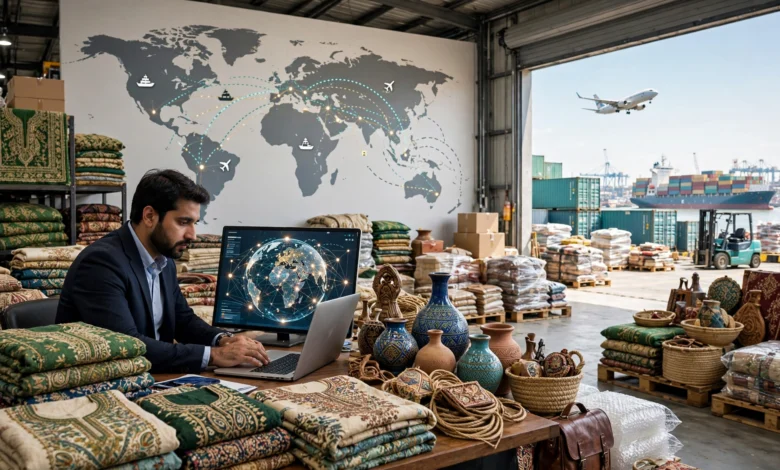
Pakistani exporters no longer need a stall at a foreign trade fair or a cousin in Dubai to find overseas buyers. A Sialkot sports goods maker can win a German order through LinkedIn. A Karachi home textile firm can list on a global B2B marketplace. A Lahore software house can sign a US client through a well-built website, and a craftswoman in Hunza can sell handmade shawls on Amazon or her own online store.
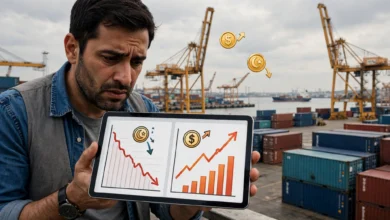
The numbers show both the promise and the problem. In fiscal year 2026, Pakistan’s IT exports hit a record of about $4.6 billion, with freelancers alone earning over $1 billion. Goods exports, however, fell by around $2 billion to roughly $30 billion, dragged down largely by rice. Online channels are one of the few ways small and medium exporters can find new buyers without huge marketing budgets.
But going global online also exposes weaknesses. Rice shipments rejected in Europe for pesticide residues, exporters caught claiming fake refunds, and companies abusing export schemes to sell duty-free goods locally have all damaged Pakistan’s reputation and cost honest exporters dearly. International buyers check suppliers carefully, and one bad case can make them wary of an entire country.
This guide explains how exporters can reach international markets online through marketplaces, websites, social platforms, and digital trade events, how to get paid legally, which compliance rules matter, and what past illegal practices teach anyone trying to build a lasting export business.
Where Pakistani Exporters Stand Today
Before planning an online export strategy, it helps to understand the current picture and the realities of selling across borders.
The export picture in 2026
- Goods exports are under pressure. According to Topline Securities, based on provisional PBS data, goods exports fell about 6 percent to roughly $30 billion in FY2026, mainly because of a sharp correction in rice exports. Textiles stayed broadly stable.
- Services are growing fast. IT and IT-enabled services exports reached a record of about $4.6 billion in FY2026, around 21 percent higher than the year before, according to State Bank data reported in the press.
- Freelancers matter. Freelancer earnings crossed $1 billion for the first time, showing that individuals and small teams can compete globally.
- Total exports are flat. Combined goods and services exports stayed close to $40 billion, which means new markets and new products are badly needed.
Why online channels matter for exporters
- Lower cost of finding buyers than traditional trade fairs and foreign offices
- Direct contact with importers, wholesalers, and even end customers
- Ability to test markets before committing to large shipments
- Better margins for value-added and branded products sold directly
- Year-round visibility, not just during trade show seasons
The realities of exporting online from Pakistan
- Payments are harder than elsewhere. PayPal has long been unavailable for Pakistani sellers, so most exporters rely on bank transfers, licensed payment providers, and marketplace payout partners.
- Trust must be earned. Many foreign buyers are cautious about new suppliers, especially after high-profile quality and fraud cases.
- Logistics can be costly and slow for small parcels, so pricing must include shipping and returns.
- Compliance is strict. Food, textiles, toys, cosmetics, and medical goods face detailed safety, labelling, and certification rules in target markets.
- Competition is global. You are compared with suppliers from China, India, Bangladesh, Vietnam, and Turkey on price, quality, and reliability.
9 Proven Ways Pakistani Exporters Can Reach International Buyers Online
No single channel works for every product. A rice mill, a software house, and a handicraft brand will each need a different mix. Pick the channels that match your product and buyers, and do them well.
1. List on B2B marketplaces
B2B marketplaces connect manufacturers with importers, wholesalers, and distributors. Alibaba, Global Sources, and TradeKey are widely used by Pakistani suppliers, especially in textiles, leather, surgical instruments, sports goods, and rice.
- Use clear product photos, specifications, minimum order quantities, and lead times.
- Reply to enquiries quickly, ideally within 24 hours.
- Highlight verified certifications and factory details.
- Expect many low-quality enquiries. Qualify buyers before sending samples.
2. Sell on global B2C marketplaces
Amazon for Pakistani sellers became a real option after Pakistan was added to Amazon’s seller registration list in 2021. Home textiles, apparel, leather goods, and handicrafts can do well, especially when branded. Most sellers use Amazon’s fulfilment centres in the target country, shipping stock in bulk rather than sending individual parcels from Pakistan.
Reality check: Marketplace fees, storage charges, advertising costs, and strict policies mean margins can be thin. Account suspensions for policy violations, such as fake reviews or misleading listings, can wipe out a business overnight.


3. Build an export-focused website
A professional website is your digital office. It should include company history, product catalogues, certifications, factory photos and videos, export markets served, and a clear enquiry form. Write content in English and, where possible, in your target market’s language. Use export SEO by targeting searches like “leather jacket manufacturer Pakistan” or “organic Himalayan salt supplier.”
4. Use LinkedIn for B2B outreach
LinkedIn is where many importers, sourcing managers, and retail buyers spend time. Create a strong company page, share factory updates and product launches, and connect with buyers in your target industry. Personalised, polite messages work far better than copy-paste sales pitches.
5. Join virtual trade fairs and B2B matchmaking
The Trade Development Authority of Pakistan (TDAP) organises and supports participation in international exhibitions, single-country shows, and buyer-seller matchmaking sessions, including virtual and hybrid events. These give smaller exporters access to buyers they could not reach alone. Check TDAP’s announcements regularly for upcoming events.
6. Show your process through video
Buyers want to see who they are dealing with. Short videos of your factory, quality checks, packing, and team build trust faster than catalogues. Post them on YouTube, LinkedIn, and your website. For branded consumer products, Instagram and TikTok can help reach end customers abroad.
7. Run ethical email outreach
Email remains useful for B2B exporting, but only when done carefully. Research buyers, send short personalised messages, and follow up politely. Do not buy random email lists or spam thousands of contacts. In markets like the European Union, data protection rules restrict unsolicited marketing, and spam damages your domain’s reputation.
8. Display certifications and compliance online
For many buyers, certifications decide whether they even reply. Depending on your product, these may include ISO quality standards, OEKO-TEX or GOTS for textiles, BSCI or similar social compliance audits, CE marking for certain goods in Europe, or FDA-related registrations for food and medical products sold to the US. Display only genuine, current certificates, and keep copies ready to share.
9. Sell services through freelance and agency platforms
For IT, design, content, and business services, platforms like Upwork, Fiverr, and agency directories are powerful export channels. Pakistani freelancers and agencies have shown that strong portfolios, reliable delivery, and good reviews can win clients across North America, Europe, the Gulf, and Asia. As teams grow, many move from platforms to direct contracts through their own websites and LinkedIn.
Getting Paid and Staying Compliant as an Exporter
Finding a buyer is exciting. Getting paid safely and legally, and keeping the paperwork right, is what keeps you in business.
Registrations exporters need
- NTN and active taxpayer status with the FBR
- Company or business registration, often with the SECP for larger exporters
- Pakistan Single Window (PSW) registration for export documentation and customs filing
- Membership of a chamber of commerce or trade association, often needed for certificates of origin
- TDAP registration, useful for trade events and export support
- PSEB registration for IT and IT-enabled service exporters
- Sector-specific approvals, such as plant protection certificates for agricultural goods or DRAP-related approvals for certain health products
Legal ways to receive export payments
- Bank transfers into your business account, linked to proper export documentation
- Letters of credit for larger or first-time trade deals, where the buyer’s bank guarantees payment
- Advance payments for samples or small orders
- Licensed payment providers such as Payoneer and marketplace payout partners that transfer to Pakistani bank accounts
- Exporter’s Special Foreign Currency Accounts (ESFCA), which let eligible exporters keep part of their earnings in foreign currency
The State Bank of Pakistan sets rules on how and when export proceeds must be brought back into Pakistan, and on simplified procedures for small-value e-commerce exports. Your bank can explain the current requirements for your type of export.
Avoid informal payment channels
Hawala, hundi, and receiving export payments into relatives’ accounts abroad may look convenient, but they leave no legal record, can break foreign exchange rules, and can expose you to money laundering investigations. Banks and regulators increasingly track whether goods shipped match money received.
Logistics options
- International couriers for samples and small parcels, with higher per-kilo costs
- Air freight for urgent or high-value goods
- Sea freight for bulk orders, using FCL or LCL containers
- Marketplace fulfilment centres, such as sending stock in bulk to Amazon warehouses abroad
Always agree on Incoterms with buyers, such as FOB or CIF, so both sides know who pays for freight, insurance, and customs at each stage.
Protect yourself from buyer fraud
Honest exporters can also be targets. Common tricks include fake purchase orders, buyers who ask for samples and disappear, requests to ship before payment, and fraudulent letters of credit. Verify company details, use secure payment terms for new buyers, and ask your bank to check any LC before shipping.
Illegal Export Practices and Quality Failures: Lessons for Pakistani Exporters
Foreign buyers do not judge you alone. They judge Pakistan as a sourcing country. When some Pakistani exporters cut corners, every honest supplier pays the price through extra checks, lost orders, and lower prices. These real cases show what to avoid.
Rice consignments rejected in Europe
Pakistan’s rice exports suffered a serious blow from food safety failures. A Senate committee was told that the European Union intercepted 61 Pakistani rice consignments in 2023 over pesticide residues and aflatoxin, and that this rose to 106 in 2024, according to Profit by Pakistan Today. A government inquiry blamed 17 plant protection inspectors and a former director general for issuing phytosanitary certificates without requiring residue and aflatoxin test reports, and the FIA opened corruption cases against officials. Reforms in 2025 reportedly reduced interceptions, but the damage to buyer confidence took time to repair.
Lesson: Certificates obtained without real testing protect no one. Test your products in accredited labs, follow buyer-country limits, and never treat compliance documents as a formality to be bought.
Abusing export schemes to sell duty-free goods locally
Pakistan offers schemes that let exporters import raw materials without duties, provided those materials are used to make export goods. Some businesses have abused these schemes. In one case, Customs post-clearance audit found that a company called Qazi Sanjrani Enterprises imported raw and packaging materials under export facilitation schemes but sold them in the local market instead of manufacturing for export, with duties and taxes worth about Rs 2.4 billion involved, as The Express Tribune reported. In another, a firm registered with fake addresses and a bogus NTN obtained Export Finance Scheme facilities, never exported anything, and evaded around Rs 140 million in duties on imported goods.
Lesson: Export incentives come with strict conditions and audits. Misusing them is treated as tax fraud.
Fake exports and inflated refund claims
Research on Pakistan’s sales tax system by economist Mazhar Waseem estimated that in 2004 exporters over-reported exports by around Rs 76 billion and overclaimed sales tax refunds by about Rs 23 billion, often backed by invoices from paper companies. Since then, the FBR has repeatedly busted networks issuing fake invoices that end up in exporters’ refund claims.
Lesson: Refund claims must match real purchases, real production, and real shipments. Modern data matching between customs, banks, and tax records makes fake claims far easier to catch.
Over-invoicing and trade-based money laundering
Some traders inflate or understate export invoice values to move money across borders illegally. This kind of trade-based money laundering was one of the concerns behind Pakistan’s years on the FATF grey list. Banks now compare export prices with market rates and ask questions when values look unusual.
Online marketplace violations
On platforms like Amazon, sellers have lost accounts for buying fake reviews, misrepresenting products, selling counterfeits, or using another person’s identity to open accounts. Suspensions can freeze stock and payouts held in foreign warehouses, turning a growing business into a total loss.
The honest exporter’s checklist
- Declare true values, quantities, and product descriptions.
- Use export schemes only for genuine export production.
- Test products against buyer-country standards before shipping.
- Receive all payments through legal banking channels.
- Display only genuine certifications and reviews.
- Keep complete records for every shipment and payment.
Government Support and Practical Tips for Pakistani Exporters
Exporting online does not mean doing everything alone. Several public bodies offer help, and a few simple habits make a big difference.
Where to get support
- Trade Development Authority of Pakistan (TDAP): Trade fairs, buyer matchmaking, market information, and export awards.
- State Bank of Pakistan financing schemes: Concessional export financing through commercial banks, such as working capital and long-term financing for machinery. Ask your bank which schemes currently apply.
- Pakistan Software Export Board (PSEB): Registration, support, and incentives for IT and IT-enabled service exporters.
- SMEDA: Business guidance and feasibility studies for small and medium exporters.
- Chambers of commerce and trade associations: Certificates of origin, sector updates, and delegation opportunities.
- Pakistani trade and investment officers in embassies: Market insights and introductions to buyers in their countries.
Practical tips for exporting online
- Start with one or two target markets. Learn their rules, buyer habits, and price expectations before spreading out.
- Get samples right. The sample is often your only chance. Make it match exactly what you will ship in bulk.
- Price for the full journey. Include freight, insurance, platform fees, returns, and currency risk.
- Respond fast and professionally. Clear English, quick replies, and honest timelines build trust.
- Protect your brand. Register trademarks in key export markets if you sell branded goods.
- Ask for reviews and references. Satisfied buyers are your best marketing for the next buyer.
- Invest in quality systems early. Certifications and testing cost money, but rejections and lost buyers cost more.
- Keep learning. Join exporter groups, attend webinars, and watch for changes in buyer-country regulations.
A realistic timeline
Most new exporters take months, not weeks, to land their first serious international order online. Expect a period of building profiles, answering enquiries, sending samples, and losing some deals. Exporters who stay consistent for a year or more are far more likely to build regular buyers than those who expect instant results.
Conclusion
Pakistani exporters have more ways than ever to reach international markets online, from B2B marketplaces and Amazon to export-focused websites, LinkedIn outreach, TDAP’s virtual trade events, factory videos, ethical email campaigns, visible certifications, and freelance and agency platforms for services. The opportunity is real, as record IT exports and rising freelancer earnings show, but so are the challenges of falling goods exports, limited payment options, high logistics costs, and strict buyer-country rules. Success depends on getting registered properly, receiving payments only through legal banking channels, agreeing clear Incoterms, and protecting yourself from buyer fraud. Past failures offer clear warnings: rice consignments rejected in Europe after certificates were issued without proper testing, companies abusing export schemes to sell duty-free inputs locally, fake exports and inflated refund claims, and trade-based money laundering that pushed Pakistan toward tighter scrutiny. Exporters who test their products honestly, declare true values, and build trust one buyer at a time are the ones who will turn online visibility into long-term international business.