Best Health Gadgets to Monitor Blood Pressure at Home
Blood pressure monitor guide: which home BP gadgets are accurate, how to check validation, how to measure correctly and which fake devices to avoid.
Blood Pressure Monitor Guide: 7 Best Health Gadgets to Check BP at Home and the Fake Ones to Avoid
Introduction
A blood pressure monitor has become as common in Pakistani homes as a thermometer, and for good reason. High blood pressure rarely causes symptoms, yet it quietly damages the heart, brain and kidneys for years. Experts citing WHO figures say about 44% of Pakistani adults have hypertension and more than half of them do not know it. Checking with a blood pressure monitor at home is one of the easiest ways to catch the problem early and keep it under control once it is diagnosed.
The trouble is that buying the right blood pressure monitor has become confusing. Pharmacies, online marketplaces and Facebook sellers offer everything from cheap wrist devices to smartwatches promising “medical-grade” readings. Some are excellent. Many have never been tested for accuracy, and a few are counterfeit or unregistered products that should not be on sale at all.
This guide explains the best types of home BP monitor gadgets, from the trusted upper arm cuff to Bluetooth monitors and wearables, and how to check whether a model has passed independent validation. It also covers how to take accurate readings, what the numbers mean, and real cases where regulators acted against misleading health gadgets and illegal medical devices. A wrong reading can lead to the wrong treatment, so choosing an accurate blood pressure monitor is not a small decision. It is a health decision.
Why Every Family Should Own a Blood Pressure Monitor
Before comparing gadgets, it helps to understand why a home blood pressure monitor matters so much in Pakistan.
Hypertension Is Common and Often Silent
According to the second National Diabetes Survey of Pakistan, the age-adjusted prevalence of hypertension was about 46%, and nearly half of those found to have it were newly diagnosed. In other words, many people walk around with dangerously high blood pressure without any idea. A blood pressure monitor at home turns an invisible problem into a number you can act on.
Clinic Readings Can Be Misleading
Some people have high readings only at the doctor’s clinic because of anxiety, known as “white coat hypertension.” Others have normal clinic readings but high pressure at home or at work, called “masked hypertension.” Regular readings from a home blood pressure monitor give your doctor a much truer picture.
Better Control for Those Already on Medicine
If you already take medicine for hypertension, home readings show whether the treatment is working. Doctors can adjust doses based on a week of morning and evening blood pressure monitor readings rather than a single clinic visit.
7 Best Health Gadgets to Monitor Blood Pressure at Home
Not every blood pressure monitor is equal. Below are the main types of blood pressure monitor available, ranked roughly from most to least recommended for everyday home use.
1. Automatic Upper Arm Cuff Blood Pressure Monitor
This blood pressure monitor is the gold standard for home use. The American Heart Association recommends an automatic, cuff-style, upper arm monitor. You wrap the cuff around your upper arm, press a button and the device inflates, measures and shows your systolic pressure, diastolic pressure and pulse.


Why it is the best choice:
- Most accurate type of digital blood pressure machine for home use
- Easy to use, even for elderly family members
- Widely validated models are available from well-known brands such as Omron and A&D
- Reasonably priced and easy to find in Pakistani pharmacies
Who it suits: almost everyone, especially people diagnosed with hypertension, diabetes, kidney disease or heart disease.
2. Bluetooth or Smart Upper Arm Blood Pressure Monitor
A smart blood pressure monitor works just like a standard upper arm device but sends your readings to a phone app. The app stores your history, draws charts and lets you share results with your doctor.
Benefits:
- No need to write readings in a notebook
- Easy to spot trends over weeks and months
- Helpful for children who manage the health of parents living in another city
Accuracy depends on the cuff device, not the app, so this blood pressure monitor still needs to be validated.
3. Large Cuff and Multi-User Monitors
Cuff size is one of the most ignored factors in blood pressure monitor accuracy. A cuff that is too small gives falsely high readings, and one that is too large can give falsely low readings. Harvard Health advises that the cuff should cover about 80% of your upper arm and match the circumference of your arm at the biceps.
Look for:
- A wide-range cuff (roughly 22 to 42 cm) or a separate large cuff if your arm is bigger
- Multi-user memory if more than one family member will use the same blood pressure monitor
- A clear, large display for older users
4. Wrist Blood Pressure Monitor
A wrist BP monitor is compact and convenient, but readings are more sensitive to arm position. If your wrist is not exactly at heart level, the result can be off. A validated wrist blood pressure monitor can be a reasonable option for people whose upper arms are too large for standard cuffs, or who find an arm cuff painful, but most experts still prefer upper arm models.
If you choose a wrist device:
- Pick a validated model
- Keep your wrist at heart level during every reading
- Sit still and avoid talking
5. Monitors With Irregular Heartbeat or AFib Detection
Some upper arm blood pressure monitor models can flag an irregular heartbeat, and a few are designed to screen for atrial fibrillation (AFib), a common rhythm problem that raises stroke risk. These blood pressure monitor features do not replace an ECG, but they can prompt a timely visit to a doctor. They are especially useful for people over 60 or those with heart disease.
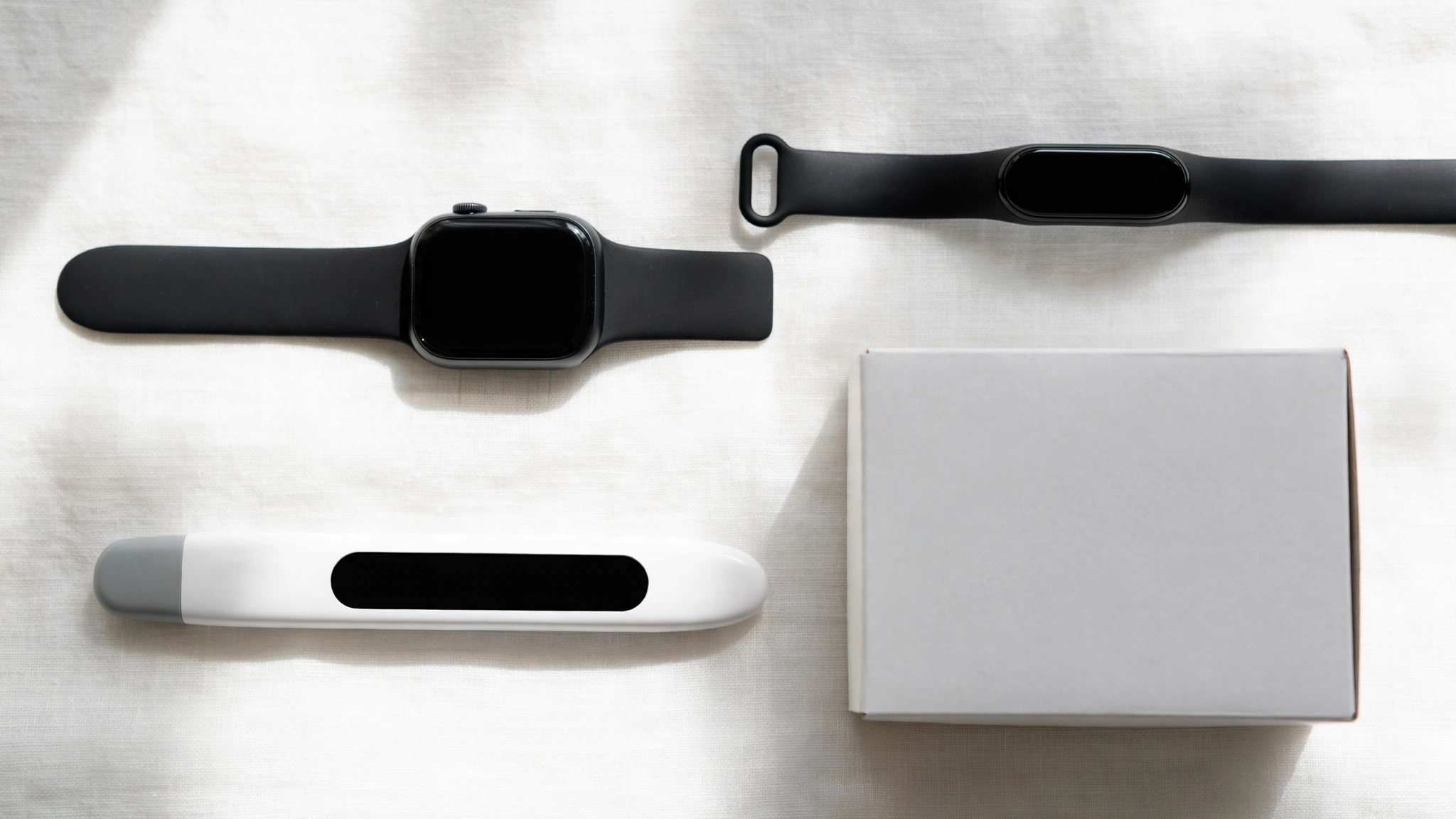
6. Smartwatches and Cuffless Wearables
Smartwatches and fitness bands increasingly promise blood pressure readings. Some cuffless devices have received regulatory clearance in certain countries, often with the requirement of regular calibration against a cuff device. Many others offer only “insights” or estimates that have not been independently validated.
Use them wisely:
- Treat wearable readings as general trends, not diagnosis
- Never change medicine based on a smartwatch reading alone
- Confirm any worrying reading with a validated cuff blood pressure monitor
7. 24-Hour Ambulatory Blood Pressure Monitor
An ambulatory monitor is a small device worn for 24 hours that automatically takes readings every 15 to 30 minutes, including during sleep. It is a specialised blood pressure monitor, usually arranged through a doctor or hospital rather than bought for home. It is the best test for confirming hypertension and detecting white coat or masked hypertension. If your home and clinic readings do not match, ask your doctor about ambulatory monitoring.
How to Check if a Blood Pressure Monitor Is Accurate
Checking accuracy is the single most important step in choosing a blood pressure monitor, and most buyers skip it. Packaging claims like “clinically proven” or “doctor recommended” mean very little on their own.
Use Independent Validation Lists
Independent organisations review whether a blood pressure monitor has passed accepted accuracy tests. The two most useful lists are:
- STRIDE BP’s list of validated BP monitors, an international nonprofit registry that marks recommended upper arm models as “Preferred.”
- The US Validated Device Listing at validatebp.org, run with support from the American Medical Association.
Type the exact brand and model number of your blood pressure monitor into the search box. Even a small difference in the model number can mean a different device.
Why Validation Matters So Much
Blood pressure monitor validation is not a formality. Harvard Health reported on research into blood pressure devices sold online and found that most of them, 79% of upper arm models and 83% of wrist models, were not validated. Many of the non-validated arm devices were sold in India and Australia, markets similar to Pakistan’s online space. An unvalidated blood pressure monitor may look professional and still give readings that are wrong by 10 points or more.
Check DRAP Registration in Pakistan
In Pakistan, medical devices are regulated under the Medical Devices Rules 2017 by the Drug Regulatory Authority of Pakistan (DRAP). Buy your blood pressure monitor from licensed pharmacies or authorised distributors, keep the receipt and warranty card, and check that the importer details are printed on the box. DRAP publishes a list of registered and enlisted medical devices and licensed importers.
The Reality Check: Misleading Claims and Illegal Medical Devices
The market for health gadgets, including the blood pressure monitor, has grown faster than regulation. Real cases show why buyers need to be careful.
The FDA’s Warning Over a Wearable Blood Pressure Feature
In July 2025, the US Food and Drug Administration issued a warning letter to wearable maker WHOOP, saying its “Blood Pressure Insights” feature was being marketed without required FDA clearance or approval. The FDA argued that any feature estimating blood pressure is closely tied to diagnosing high or low blood pressure, and that wrong readings can have serious consequences. WHOOP disagreed and kept the feature, and the FDA later issued a broader safety communication warning consumers about unauthorised wearable blood pressure features. In 2026, after the company changed the feature’s design and labelling and the FDA updated its guidance on wellness products, the agency closed the matter. The lesson for buyers is simple: a wearable’s blood pressure number is not the same as a reading from a validated blood pressure monitor.
Illegal and Smuggled Medical Devices in Pakistan
Pakistan has its own history of illegal medical devices. In 2025, DRAP raided premises in Islamabad, including a former pharmaceutical facility whose licence had been cancelled, and found medical devices being illegally manufactured and stored. The devices were seized and the facility was sealed. DRAP has also directed its field staff to act against smuggled and unregistered devices in the open market, warning that products not evaluated by the regulator cannot be guaranteed safe.
The Pakistan Pharmacists Association has also warned about counterfeit diagnostic kits and reagents, often relabelled as branded products, which can lead to misdiagnosis. Pakistan has faced bigger scandals too, including the fake cardiac stents case that drew national attention in 2018.
What These Cases Teach Buyers
- A blood pressure monitor’s marketing is not proof of accuracy.
- Unusually cheap “branded” devices on social media may be counterfeit or smuggled.
- Wearables are improving, but cuff devices are still the reference for diagnosis.
- Buy from trusted sellers and check validation and registration before paying.
How to Measure Blood Pressure Correctly at Home
Even the best blood pressure monitor gives misleading numbers if used incorrectly. Follow these steps every time:
- Avoid caffeine, smoking and exercise for 30 minutes before measuring.
- Empty your bladder first.
- Sit quietly for five minutes with your back supported and feet flat on the floor.
- Rest your arm on a table so the cuff is at heart level.
- Wrap the cuff on bare skin, not over a sleeve, about two finger-widths above the elbow.
- Do not talk or move during the reading.
- Take two readings, one minute apart, and record both.
- Measure at the same times each day, ideally morning before medicine and evening before dinner.
- Before a doctor’s visit, measure for seven days and take the record or app history with you.
Understanding Your Blood Pressure Readings
Your blood pressure monitor shows two main numbers: systolic (the top number, pressure when the heart beats) and diastolic (the bottom number, pressure between beats). The American Heart Association uses these general categories for adults:
- Normal: below 120/80 mmHg
- Elevated: 120 to 129 systolic and below 80 diastolic
- Stage 1 hypertension: 130 to 139 systolic or 80 to 89 diastolic
- Stage 2 hypertension: 140/90 mmHg or higher
- Hypertensive crisis: above 180/120 mmHg
If your reading is above 180/120 and you have chest pain, breathlessness, weakness, vision changes or difficulty speaking, seek emergency care immediately. If it is high without symptoms, rest for five minutes and measure again, then contact your doctor promptly. Never start, stop or change blood pressure medicine based on home readings without medical advice.
Buying Checklist: Choosing the Right Blood Pressure Monitor
Use this quick checklist before you buy a blood pressure monitor:
- Upper arm cuff, unless your doctor advises otherwise
- Model listed on STRIDE BP or validatebp.org
- Correct cuff size for your arm
- Large, clear display
- Memory or app storage for readings
- Irregular heartbeat alert if you are older or have heart disease
- Bought from a licensed pharmacy or authorised dealer with a warranty
- Importer or manufacturer details clearly printed on the box
Caring for Your Blood Pressure Monitor
Blood pressure monitor accuracy can drift over time. To keep your home BP monitor reliable:
- Store it in a cool, dry place away from direct sunlight.
- Do not fold the cuff tightly or let the tube kink.
- Replace batteries when the low-battery sign appears, since weak batteries can affect readings.
- Take your blood pressure monitor to your doctor’s clinic once a year and compare its reading with the clinic’s device.
- Replace the cuff if it becomes worn or the Velcro stops holding firmly.
Frequently Asked Questions About Home Blood Pressure Monitors
Which type of blood pressure monitor is most accurate for home use?
A validated, automatic upper arm cuff blood pressure monitor with the correct cuff size is the most accurate option for most people.
Are wrist blood pressure monitors reliable?
A validated wrist blood pressure monitor can work if used carefully with the wrist at heart level, but it is more prone to error than an upper arm device. It is best for people who cannot use an arm cuff.
Can a smartwatch replace a blood pressure monitor?
No. Smartwatches can show trends, but most are not validated for diagnosis. Always confirm readings with a validated cuff blood pressure monitor.
How often should I check my blood pressure at home?
If you have hypertension, measure twice in the morning and twice in the evening for a week before doctor visits, and a few times a week otherwise, or as your doctor advises.
Conclusion
Choosing the right blood pressure monitor is one of the most useful health decisions a Pakistani family can make, because with hypertension affecting a huge share of adults and many cases undiagnosed, accurate home readings can catch problems early and guide better treatment; the best choice for most people is a validated automatic upper arm cuff device with the correct cuff size, while Bluetooth models, irregular heartbeat detection and ambulatory monitoring add value for specific needs, and wrist devices and smartwatches should be treated with caution; real cases, from the FDA’s warning over an uncleared wearable blood pressure feature to DRAP’s raids on illegal and smuggled medical devices, show that marketing claims are no substitute for validation, so check STRIDE BP or validatebp.org, buy from licensed sellers, measure correctly and always discuss your readings with a qualified doctor.