Comparing Prepaid Mobile Packages From Major Networks
Prepaid mobile packages in Pakistan compared across Jazz, Zong, Telenor, Ufone and Onic, with tax costs, illegal SIM cases, and smart picks.
Prepaid Mobile Packages in Pakistan: 5 Networks Compared and Costly Traps to Avoid
Introduction
Prepaid mobile packages are how most Pakistanis stay connected. Students buy weekly data bundles for online classes, workers rely on call minutes to stay in touch with family, and freelancers need steady internet to meet deadlines. With Jazz, Zong, Telenor, Ufone, and Ufone’s digital brand Onic all competing for attention, there’s no shortage of offers. Picking the right one is harder than it looks.
The advertised numbers rarely tell the full story. On a Rs 100 recharge, about Rs 13 disappears immediately as advance income tax, and sales tax is charged again when you use the balance, so the real value is far lower than the card price. Bundles come with fair-use limits, validity rules, and auto-renewal settings that quietly drain balance. And packages that look cheap on paper can be useless if the network is weak where you live or study.
There’s also a serious integrity problem in the industry. In July 2026, the Pakistan Telecommunication Authority fined all four major operators a combined Rs 740 million after investigations found SIMs issued on people’s identity cards without their consent. Separately, operators have been fined repeatedly for failing quality-of-service tests.
This guide explains how packages really work, compares the major networks honestly, walks through these real cases, and gives you a checklist to choose a package that matches how you actually use your phone.
How Prepaid Mobile Packages Really Work in Pakistan
Where your recharge money goes
According to figures shared by the PTA in 2025, a Rs 100 recharge credits about Rs 86.96 to your account because of a 15 percent withholding (advance income) tax. Then a 19.5 percent sales tax is charged on what you use, whether calls, SMS, or data, which takes roughly another Rs 14.19. In total, about Rs 27 of every Rs 100 goes to taxes. The Express Tribune’s breakdown of taxes on mobile services explains this in detail.
Two practical points follow. First, compare packages by what you get for the full price you pay, not the balance shown. Second, the withholding tax is adjustable against income tax, so salaried people and tax filers may be able to claim it back when filing returns.
Package types
- Daily bundles: small amounts of data or minutes for 24 hours. Convenient, but usually the most expensive per GB.
- Weekly bundles: popular with students. Good for moderate, predictable use.
- Monthly bundles: usually the best value per GB and per minute if you use your phone heavily every day.
- Hybrid or “all-in-one” bundles: combine on-net minutes, off-net minutes, SMS, and data. Check how each part is split.
- Social and app bundles: cheap data restricted to WhatsApp, Facebook, YouTube, or similar apps. They don’t work for other apps or browsing.
- Night packages: large data allowances valid only at certain late-night hours.
The fine print that matters
- Validity: what happens to unused data when the bundle expires. Most packages don’t carry leftover data forward.
- Fair usage: “unlimited” offers often have a hidden cap, after which speeds drop sharply.
- On-net vs off-net minutes: on-net minutes only work for calls to the same network.
- Auto-renewal: many bundles renew automatically and deduct balance. Turning this off avoids surprise charges.
- Out-of-bundle rates: once a bundle runs out, standard rates apply, and data billed per megabyte can drain balance quickly.
Prices change often
Telecom tariffs in Pakistan are revised frequently. In July 2026, operators raised the prices of several call and data packages after receiving PTA approval for revised tariffs. That’s why this guide focuses on how to compare rather than listing exact prices. Always check the official app or website on the day you subscribe.
Comparing Prepaid Mobile Packages From 5 Major Networks
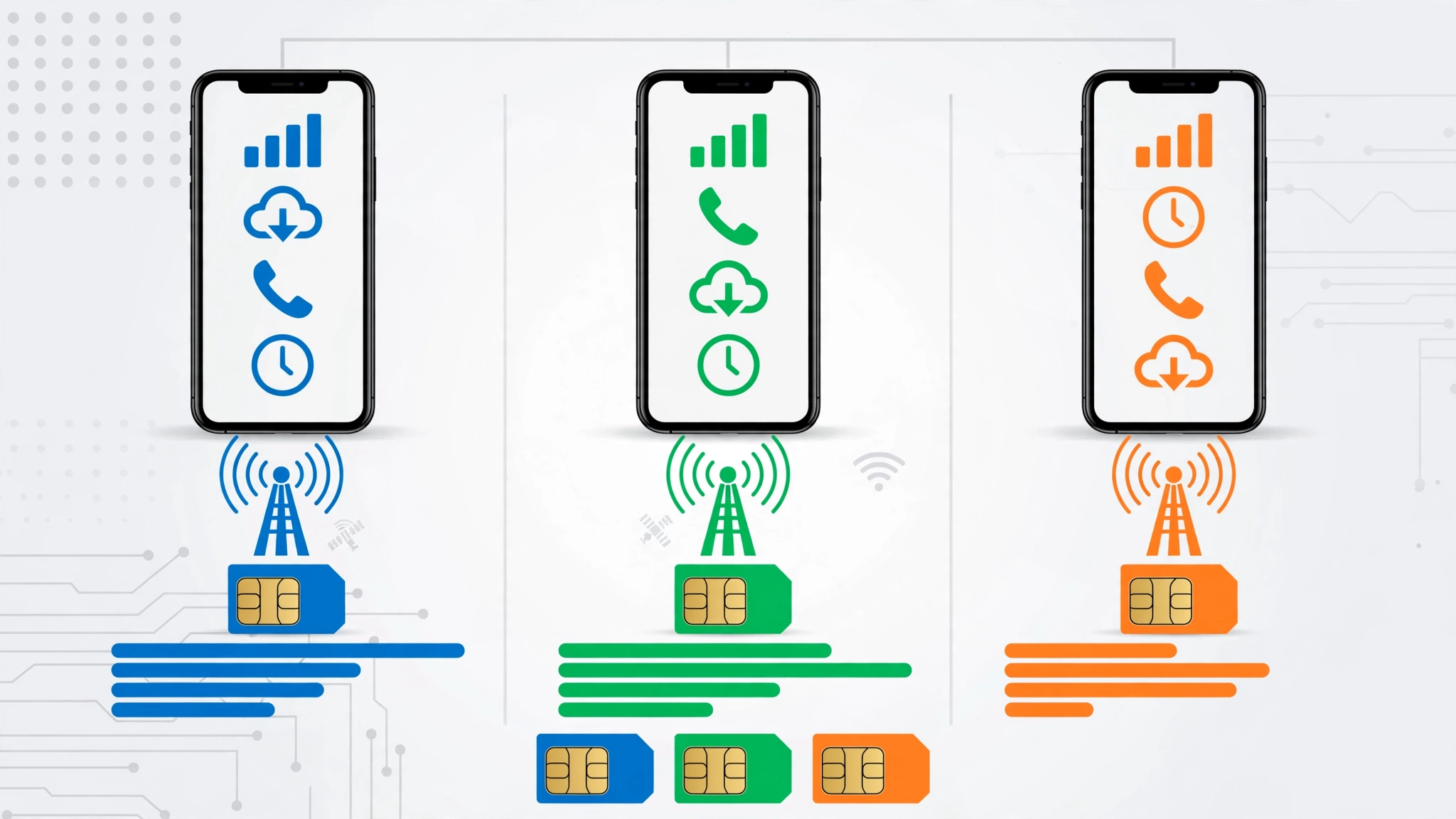
No single network is “best” everywhere. Coverage, speed, and value change from city to city and even street to street. Here is how the main options compare on the things that last longer than any one bundle price.


| Network | Owner | Strengths | Watch out for | Best for |
|---|---|---|---|---|
| Jazz | VEON group | Largest subscriber base, wide coverage, JazzCash integration | Compare value per GB with rivals; complaint volumes | People who want broad coverage nationwide |
| Zong | China Mobile | Strong data focus in many cities | Quality-of-service fines in several areas | Heavy data users in well-covered cities |
| Telenor | PTCL (acquired) | Large rural footprint, Easypaisa link | Weaker QoS compliance in some 2026 surveys | Users where Telenor signal is strongest |
| Ufone | PTCL | Competitive call bundles, simple offers | Smaller network historically | Call-heavy users |
| Onic | PTCL (Ufone’s digital brand) | App-based, customisable bundles | Digital-only service; relies on Ufone network | Young, app-comfortable users |
Jazz
Jazz is Pakistan’s largest mobile operator and offers a wide range of daily, weekly, and monthly bundles through its app. In PTA’s first-quarter 2026 quality survey, Jazz recorded the highest overall KPI compliance among the four national operators, at 95 percent. It has also topped PTA’s consumer complaint list in some months. It suits people who travel and need dependable coverage across many cities.
Zong
Zong, owned by China Mobile, built its reputation on data. It offers large monthly internet bundles that appeal to students and heavy streamers. Its record is mixed: PTA has fined Zong repeatedly for failing service standards in certain areas, including a Rs 68.9 million penalty over poor service in Peshawar. Check Zong’s speed in your own area before committing to a monthly bundle.
Telenor
Telenor Pakistan was acquired by PTCL after the Competition Commission approved the deal in October 2025 and the PTA followed in December 2025, with strict conditions to prevent abuse of market power. For now, Telenor continues to operate as its own brand, and the PTA barred merging networks or decommissioning sites without approval. Telenor has a large rural footprint, but in PTA’s first-quarter 2026 survey it recorded the lowest overall compliance among the four operators, at 78 percent, and in September 2026 it was fined Rs 68.1 million for quality-of-service failures in several locations.
Ufone
Ufone, also owned by PTCL, has long been known for straightforward call bundles and competitive offers. It’s often a good choice for people who make lots of calls rather than using heavy data. After the merger, Ufone and Telenor sit under the same parent company but must keep separate accounts and avoid cross-subsidies under regulator conditions.
Onic
Onic is a digital-only brand that runs on Ufone’s network. You order and manage the SIM through an app and can often build a custom bundle. It suits younger users who are comfortable managing everything online, but it depends entirely on Ufone’s coverage in your area.
Which network should you choose?
- Check coverage first. Ask friends and neighbours which network works inside their homes, and test speeds yourself.
- Match the package to your use. Heavy data users should compare price per GB on monthly bundles. Call-heavy users should look at off-net minute allowances.
- Consider a second SIM. Many people keep one SIM for calls and another for data, which often costs less than one oversized bundle.
Real Cases: Illegal SIMs, Service Failures, and Fraud
Rs 740 million in fines over SIMs issued without consent
In July 2026, the PTA fined Pakistan’s four mobile operators a combined Rs 740 million under the Telecom Re-organisation Act after investigations found repeated violations of SIM issuance rules. Zong was fined Rs 155.6 million, while Jazz, Telenor, and Ufone were each fined Rs 116.7 million, and Ufone received two further penalties of Rs 77.8 million and Rs 38.9 million, taking its total to over Rs 233 million. The cases involved SIMs activated on citizens’ CNICs without their knowledge, weak oversight of franchises, and lapses in biometric verification. In one case, authorities recovered more than 12,600 active SIMs along with biometric verification devices, as reported in Business Recorder’s coverage of the PTA fines.
These SIMs aren’t just paperwork errors. Illegally issued SIMs are used for fraud calls, fake bank and wallet accounts, and other crimes, and the person whose CNIC was used can end up being questioned for something they never did.
Silicone thumbs and SIM factories
Behind many illegal SIMs are organised gangs. Over the years, the FIA and its successor cybercrime agency have raided operations holding thousands of silicone thumb impressions, stacks of activated SIMs, and biometric verification devices taken from franchises. One raid in Lahore recovered 15 Jazz BVS devices, one Zong device, 12,000 digital fingerprints, and 460 paper fingerprints. Earlier, the PTA reported blocking 18.2 million illegal SIMs and imposing about Rs 4.2 billion in penalties on operators, though courts have stayed some of those fines.
Fines for poor service quality
The PTA regularly tests networks against licence standards for call completion, data speed, and network availability. In September 2026, it fined Telenor Rs 68.1 million and Ufone and Zong Rs 38.9 million each after surveys found failures in places including Murree, Buner, Risalpur, Pindi Bhattian, and Matiari, as covered in ProPakistani’s report on the quality fines. Over four years, the regulator imposed about Rs 3.41 billion in quality-of-service penalties, though collecting them has been difficult because of court cases.
Why this matters for buyers: an operator’s advertised bundle is only useful if the network actually works where you are. A cheaper package on a weak network is false economy.
Everyday scams through your SIM
Many frauds start with a phone call or SMS from someone pretending to be from your network, offering a “free bundle,” a prize, or a SIM upgrade. They ask for an OTP, your CNIC details, or for you to visit a fake verification point. Real operators don’t ask for your OTP or PIN over the phone. If you share them, criminals can take over your SIM, mobile wallet, or WhatsApp account.
How to Pick the Right Prepaid Mobile Packages
Step 1: Know your real usage
Open your phone’s settings and check how much mobile data you used last month, and look at your call history. Most people overestimate or underestimate badly. A student streaming lectures may use 20 GB or more a month, while someone mainly using WhatsApp may need only a few GB.
Step 2: Test the network where you are
Run a speed test at home, at work or college, and on your usual routes. If possible, borrow a friend’s SIM from another network for a day. Coverage beats price every time.
Step 3: Compare by cost per unit
- Divide the bundle price by the GB it includes to get price per GB.
- For calls, divide by the number of off-net minutes if you call other networks.
- Compare monthly bundles against four weekly bundles. Monthly is usually cheaper, but only if you’ll actually use it.
- Ignore “bonus” app data unless you really use those apps.
Step 4: Subscribe safely
- Use the official app (such as Jazz World, My Telenor, My Zong, My Ufone, or the Onic app) or the operator’s official short codes listed on its website.
- Don’t subscribe through unknown websites or social media pages promising “special” codes.
- Turn off auto-renewal if you don’t want the bundle every week or month.
- Check balance and bundle status regularly in the app.
Step 5: Protect your SIM and identity
- Check how many SIMs are registered on your CNIC by sending your CNIC number to 668, PTA’s SIM information service, and get any unknown SIMs blocked.
- Never give your thumbprint or CNIC copy to anyone outside an official franchise or service centre, and don’t let a shopkeeper take your fingerprint more than once without explanation.
- Set a SIM PIN or ask your operator about SIM-lock options to make SIM-swap fraud harder.
- Report misleading offers or unresolved complaints to the PTA through its complaint management system.
Money-saving habits
- Use Wi-Fi at home and college for large downloads and app updates.
- Turn off auto-play videos on social media and set streaming apps to lower quality on mobile data.
- File your tax return if you’re eligible, so you can adjust the withholding tax already paid on recharges.
The Ethical Side of Mobile Packages
Taxes fall hardest on the poorest users
Because tax is deducted on every recharge, a daily wage earner loading Rs 50 at a time pays the same percentage as a business owner, but feels it much more. Many low-income users also aren’t tax filers, so they can’t adjust the withholding tax later. It’s fair for customers and civil society to keep pressing for a simpler, fairer system, and for operators to show the real post-tax value clearly at the point of sale.
Honest advertising
“Unlimited” data with a hidden cap, “free” bundles that auto-renew into paid ones, and prices shown without taxes all mislead customers. Operators should display total cost, real data limits, validity, and renewal terms upfront. Customers can help by reporting misleading offers to the PTA and choosing operators that are transparent.
Retailers and franchises carry responsibility too
The July 2026 fines showed that illegal SIMs often come from franchise and retail channels chasing sales targets. A shopkeeper who takes extra fingerprints or activates SIMs on someone else’s CNIC isn’t just breaking company rules. They’re enabling fraud that can ruin innocent people’s lives. Operators need to monitor their channels properly, and retailers need to refuse shortcuts.
Your own responsibilities
- Don’t buy pre-activated SIMs registered in someone else’s name, even if they’re cheaper or quicker. They’re illegal and often linked to crime.
- Don’t lend your SIM or CNIC to anyone for “registration help.”
- Don’t forward fake “free package” messages that circulate on WhatsApp. They often lead to scams.
- Use data and calls responsibly, especially in shared family plans or when using a company-paid SIM.
Conclusion
Prepaid mobile packages from Jazz, Zong, Telenor, Ufone, and Onic can all be good value, but only when you look past the headline price: roughly a quarter of every recharge goes to taxes, bundles carry validity limits, fair-use caps, and auto-renewal, and the cheapest offer is worthless if the network is weak where you live. Jazz led PTA’s early-2026 quality survey, Telenor and Ufone now sit under PTCL after the 2025 merger approvals, Zong remains popular for data despite repeated quality fines, and Onic offers an app-based option on Ufone’s network. The real risks are in identity and integrity: the PTA’s Rs 740 million fines over SIMs issued without consent, years of raids on silicone-thumb SIM gangs, and billions of rupees in quality-of-service penalties show how much can go wrong behind the counter. Check your real usage, test coverage, compare by price per GB and minute, subscribe only through official apps, turn off auto-renewal when you don’t need it, verify your SIMs through 668, and never share your OTP or fingerprints outside official channels.